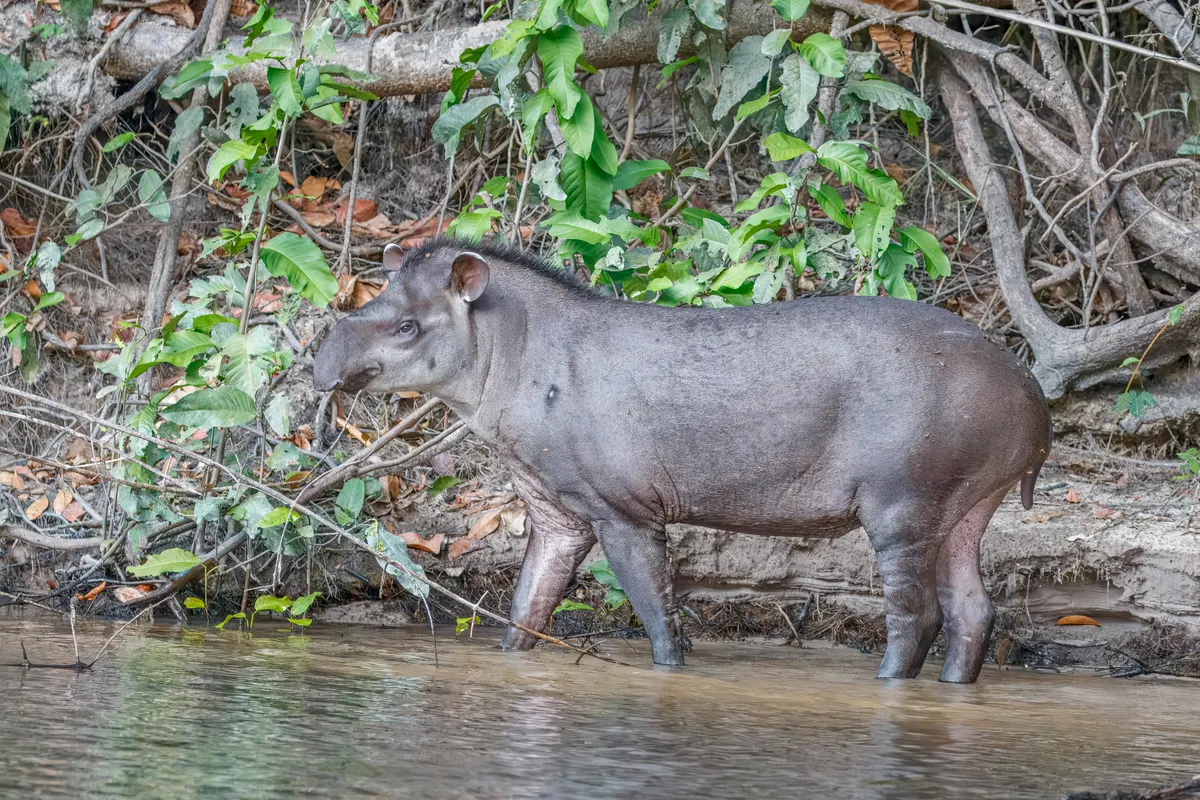
Brazilian tapirs occupy much of tropical and subtropical South America, from the Guianas and Amazon basin through Brazil, Peru, and Bolivia into parts of Argentina and Paraguay, favouring moist forest near permanent water — river edges, flooded woodland, swamps, and wetland mosaics like the Pantanal, plus Cerrado and Atlantic Forest. Daily routes connect fruiting trees, mineral licks, and cool mud wallows, and large home ranges mean even "empty-looking" forest can be fully used by a few adults. Occupancy is uneven, though: deep water, seasonal flooding, hunting pressure, and roads decide whether a landscape holds resident animals or is only a passage, and in floods tapirs shift to higher forest islands while in dry spells they concentrate near reliable pools — which makes wide, sheltered riparian corridors valuable well beyond the water's edge.