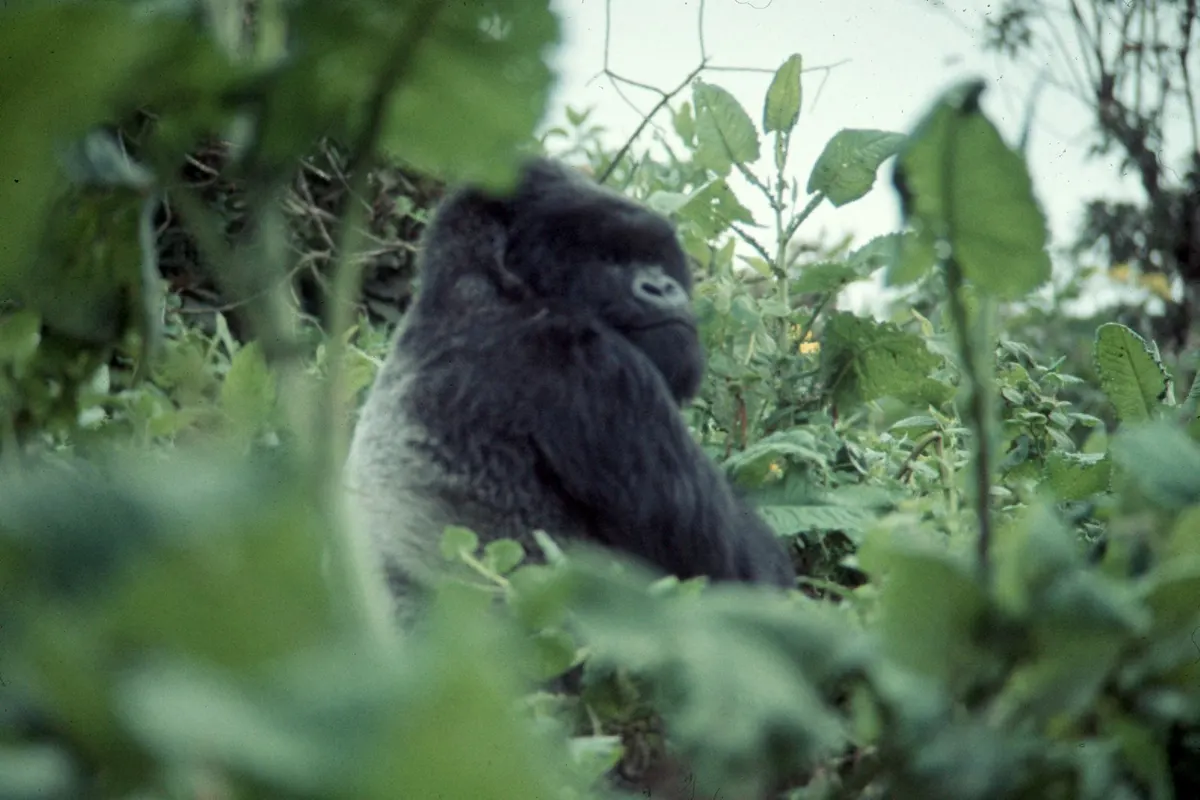
Gorilla Facts
"Gorillas share about 98 percent of their DNA with humans."
Gorillas are huge gentle apes that live in African forests. They eat plants, travel in family troops led by a silverback, and are among our closest living...
Loading page content

"Gorillas share about 98 percent of their DNA with humans."
Gorillas are huge gentle apes that live in African forests. They eat plants, travel in family troops led by a silverback, and are among our closest living...
Gorilla gorillaPrimatesHominidae
Explore western gorilla photos organized for learning and classroom observation.
Click any photo to view it larger. 8 images available.
Core article
Habitat, diet, behavior, and more — everything on one page.
Deep within the verdant, mist-shrouded tropical and swamp forests of equatorial Africa resides one of the most awe-inspiring and genetically proximate relatives to humanity: the gorilla. A quintessential symbol of raw primate power tempered by profound gentleness, the gorilla commands the understory of its biome with a stoic and intelligent presence. As the largest extant primates on the planet, gorillas possess a captivating blend of immense physical strength, complex social hierarchies, and deeply ingrained emotional intelligence. Despite their fearsome reputation in early exploration lore, empirical ethological studies have revealed a creature of remarkable tranquility, predominantly focused on foraging, resting, and nurturing their young. Exploring the biology, ecology, and social dynamics of the gorilla offers profound insights not only into the intricate web of tropical ecosystems but also into the evolutionary trajectory of the hominid lineage, as these magnificent apes share approximately 98 percent of their genetic code with Homo sapiens.
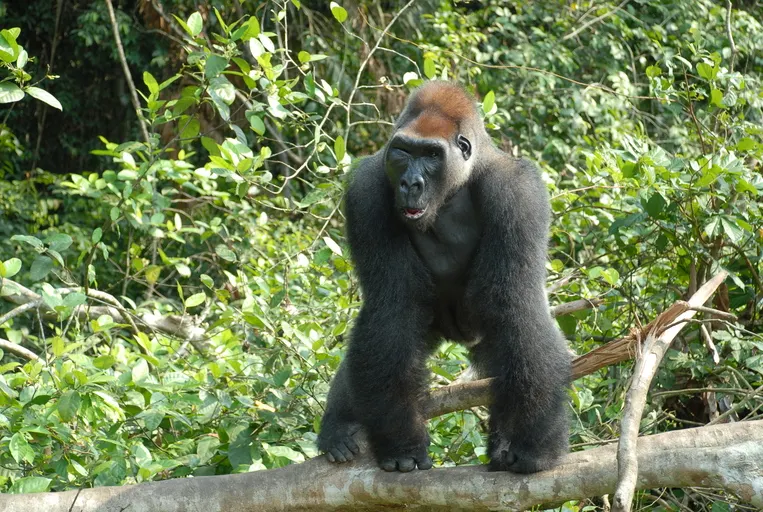
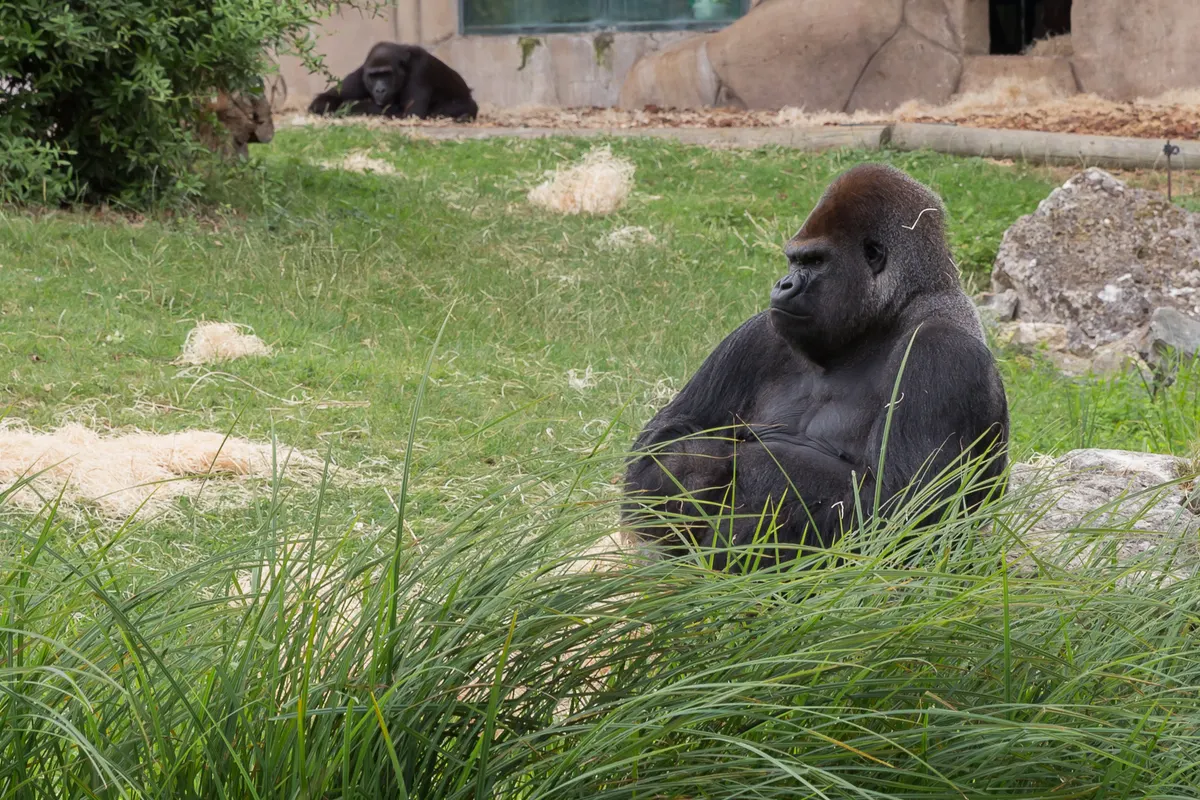
The scientific classification of the gorilla places it firmly within the complex evolutionary tree of the great apes. Belonging to the kingdom Animalia, phylum Chordata, and class Mammalia, the gorilla is a prominent member of the order Primates. Further categorization places them in the family Hominidae, alongside chimpanzees, orangutans, and humans. Within the genus Gorilla, there are two primary recognized species: the Western Gorilla (Gorilla gorilla) and the Eastern Gorilla (Gorilla beringei). The data provided primarily aligns with the Western Lowland Gorilla (Gorilla gorilla gorilla), a subspecies of the Western Gorilla.
Evolutionary biologists estimate that the gorilla lineage diverged from the common ancestor shared with humans and chimpanzees approximately 7 to 9 million years ago during the late Miocene epoch. This divergence was likely driven by climatic shifts that altered the African landscape, pushing the ancestors of gorillas to specialize in terrestrial, forest-dwelling herbivory. Over millions of years, they developed specialized morphological traits, such as robust cranial anatomy for processing tough vegetation and unique locomotory adaptations, distinguishing them from their more arboreal or omnivorous primate cousins.
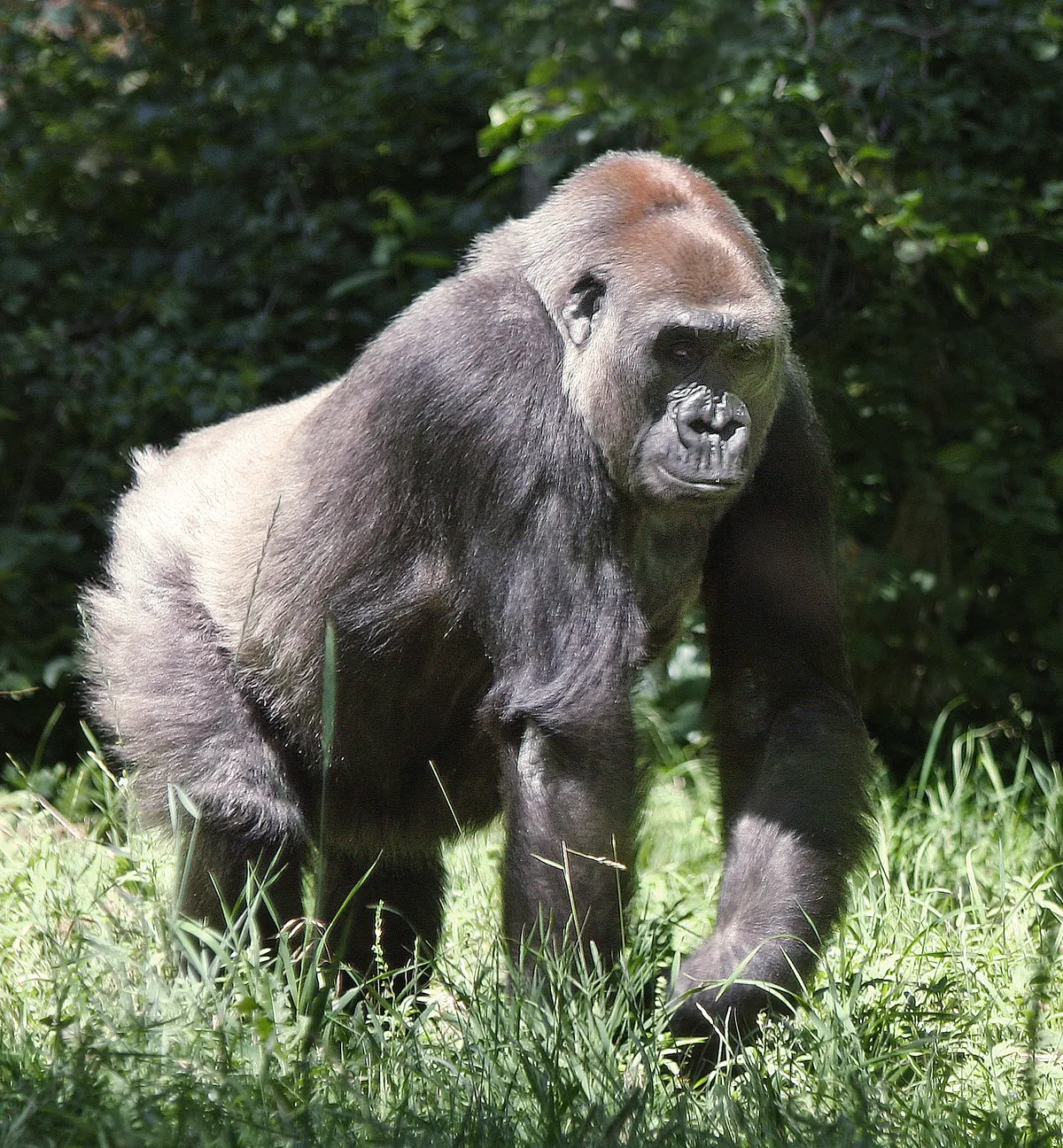
The anatomy of a gorilla is a fascinating example of evolutionary engineering, perfectly adapted for a life of terrestrial foraging in dense forests. Sexual dimorphism is highly pronounced in this species; adult males, known as silverbacks due to the distinctive saddle of gray-white hair that develops on their backs and hips upon reaching maturity, are significantly larger than adult females. A mature silverback typically measures between 4.5 to 5.5 feet in height when standing bipedally, with a body length extending up to 6 feet. Their weight is equally formidable, ranging from 300 to an astounding 440 pounds, whereas females generally weigh between 150 and 250 pounds.
Despite their massive bulk, gorillas are capable of impressive, albeit brief, bursts of speed, reaching up to 25 mph on the ground. Their primary mode of locomotion is knuckle-walking, a specialized quadrupedal movement where the weight of the upper body is supported on the dorsal surface of the middle phalanges. This adaptation protects their highly sensitive and dexterous opposable thumbs and fingers, which are essential for precise manipulation of food and meticulous social grooming.
The cranial anatomy of the gorilla is characterized by a prominent sagittal crest, particularly pronounced in males, which serves as a robust anchor for the massive temporalis muscles required for grinding coarse, fibrous plant matter. Their large molars, broad and relatively flat, are perfectly designed for this continuous mastication. Furthermore, their long, incredibly powerful arms—often spanning wider than their height—provide the necessary leverage for breaking thick stems and branches, while their thick, dark hair offers insulation and protection against the damp chill of the forest environment.

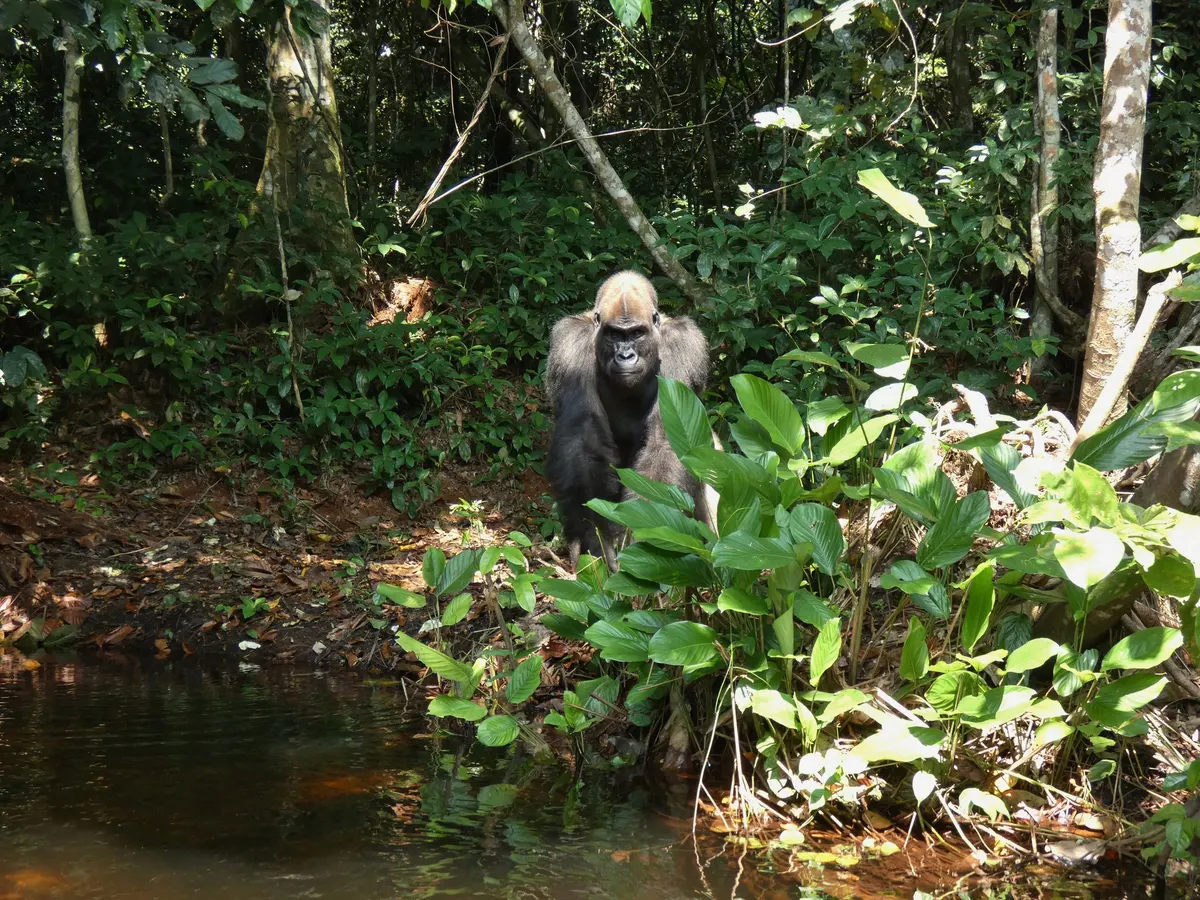
Gorillas are highly endemic to the dense, equatorial forests of Central and West Africa. Their distribution spans several countries, including Gabon, the Republic of the Congo, Cameroon, the Central African Republic, Equatorial Guinea, Nigeria, and Angola. Within these geopolitical boundaries, gorillas exhibit a strong preference for specific ecological niches, primarily lowland tropical forests and extensive swamp forests.
These biomes are characterized by high levels of annual precipitation, dense canopies that limit direct sunlight reaching the forest floor, and an incredibly high concentration of plant biodiversity. Swamp forests, in particular, offer a unique habitat rich in aquatic and semi-aquatic vegetation, which forms a crucial component of their diet during certain seasons. Gorillas are predominantly terrestrial, spending the vast majority of their time on the forest floor, though females and juveniles are known to climb trees more frequently to forage or play. Their habitat is not merely a backdrop but an active provider, supplying the massive quantities of vegetation required to sustain their immense metabolic needs while offering dense cover for protection and nesting.

As obligate herbivores, gorillas have evolved highly specialized feeding strategies to process massive quantities of low-calorie, fibrous plant matter. A fully grown adult silverback can consume dozens of pounds of vegetation in a single day. Their diet is remarkably diverse, incorporating hundreds of different plant species depending on seasonal availability and geographic location. The core of their daily intake consists of leaves, pith, stems, and shoots, which provide essential roughage and hydration.
During fruiting seasons, gorillas exhibit a strong preference for ripe fruit, which offers a high-energy caloric boost. Their powerful arms and dexterous hands allow them to efficiently strip bark from trees to access the nutrient-rich cambium layer beneath, a vital food source during times of scarcity. The specialized large molars and heavily muscled jaws enable them to crush tough bamboo shoots and fibrous stalks with ease. Interestingly, while they are strict herbivores, gorillas inadvertently consume small insects and grubs that happen to be attached to the vegetation they ingest, though this does not constitute a deliberate or significant portion of their nutritional intake. Foraging is a time-consuming activity, often dominating the majority of their waking hours, interspersed only by periods of rest and socialization.

The social structure of the gorilla is highly cohesive, hierarchical, and deeply complex, revolving around a family unit known as a troop or band. A typical troop consists of 5 to 30 individuals, unequivocally led by a single dominant adult male: the silverback. The silverback is the focal point of the group, responsible for mediating conflicts, determining foraging routes, and, most importantly, defending the troop against external threats, including rival males and predators such as leopards.
Interactions within the troop are characterized by a subtle and continuous stream of vocalizations, postures, and facial expressions. While generally peaceful, dominance is maintained through ritualistic displays rather than actual physical violence. The iconic chest-beating display, often accompanied by hooting, tearing of vegetation, and charging, is primarily a mechanism to intimidate rivals and assert dominance without resorting to potentially fatal combat.
Social bonds are continually reinforced through reciprocal grooming, which serves both a hygienic purpose and a vital role in maintaining group cohesion and reducing tension. Infanticide is a grim but real biological phenomenon within gorilla society; if a new silverback successfully challenges and ousts the resident dominant male, he may kill the dependent infants of his predecessor to bring the females back into estrus, ensuring his own genetic legacy. At night, gorillas exhibit the fascinating behavior of constructing elaborate sleeping nests from woven branches and leaves, building a new, clean nest almost every single evening on the ground or in low branches.

The reproductive strategy of the gorilla is characterized by significant maternal investment and a slow rate of maturation, typical of large-bodied, highly intelligent mammals. Female gorillas reach sexual maturity around 10 to 12 years of age, while males mature slightly later. Following a gestation period of approximately 8.5 months, a female gives birth to a single infant, though twins are exceptionally rare.
The newborn infant is remarkably altricial—tiny, weighing only about 4 pounds, and entirely dependent on its mother for survival and transport. For the first few months, the infant clings desperately to the mother's ventral side, gradually transitioning to riding on her back as it gains strength and coordination. The nursing period is prolonged, often lasting for 3 to 4 years. During this time, the infant learns critical survival skills, foraging techniques, and complex social etiquette by intensely observing its mother and other members of the troop.
Because of this extended period of dependency and care, female gorillas typically only give birth once every 4 to 6 years. This slow reproductive rate makes populations highly vulnerable to decline. In the wild, gorillas have a life expectancy of 35 to 40 years, navigating the perils of disease, predation, and human encroachment. In the protected environments of captivity, where veterinary care is available and environmental stressors are minimized, gorillas have been known to live up to 50 years or more.
(Population and conservation trend data sourced from the IUCN Red List of Threatened Species)
The survival of the gorilla hangs in a precarious balance, with the species currently classified as Critically Endangered by the International Union for Conservation of Nature (IUCN). The population trend is alarmingly decreasing, driven by a confluence of severe anthropogenic threats.
The foremost threat to gorilla populations is relentless habitat destruction and fragmentation. As human populations expand, pristine tropical forests are systematically cleared for commercial logging, agricultural expansion, and mining operations, particularly for minerals like coltan. This not only destroys their homes but also fragments populations, reducing genetic diversity and making them highly susceptible to local extinction.
Furthermore, the expansion of logging roads has opened previously inaccessible forest areas to poachers. Gorillas are heavily hunted for the illegal bushmeat trade, where their meat is sold as a premium commodity in urban markets. Additionally, because of their close genetic proximity to humans, gorillas are highly susceptible to human-borne diseases. Outbreaks of the Ebola virus have decimated wild populations, wiping out entire troops in a matter of weeks and causing catastrophic localized population crashes. Comprehensive conservation efforts, including strict anti-poaching patrols, habitat preservation, and community-based ecotourism, are desperately required to prevent the imminent extinction of these magnificent great apes.
Gorillas share about 98 percent of their DNA with humans.
A dominant male gorilla is called a silverback because of the gray hair on his back.
Gorillas build a new leafy nest to sleep in almost every night.
Adult gorillas eat dozens of pounds of vegetation each day.
Gorillas usually beat their chests to warn rivals, not to start a fight.
Infants learn by watching mothers and other troop members.
Select a question to reveal the answer.
A gorilla is a large ape that lives in African forests. Gorillas are plant-eaters and live in family groups called troops.
Western lowland gorillas live in tropical forests and swampy lowlands in central and western Africa.
Gorillas are mostly herbivores. They eat leaves, stems, fruit, and other forest plants.
Gorillas are usually calm, but a silverback will defend his troop if he feels threatened. Wild gorillas should never be approached.
Yes. Western gorillas are listed as Critically Endangered because of habitat loss, disease, and hunting.
Gorillas live in troops led by one dominant silverback male, along with females and young gorillas.
Gorillas are great apes and are closely related to humans and chimpanzees.