Tuna Facts
"Yellowfin tuna are warm-blooded, which helps them swim fast in cool ocean water."
Yellowfin tuna are fast, powerful ocean fish with metallic bodies and bright yellow fins. They swim in warm seas around the world and are among the...
Loading page content

"Yellowfin tuna are warm-blooded, which helps them swim fast in cool ocean water."
Yellowfin tuna are fast, powerful ocean fish with metallic bodies and bright yellow fins. They swim in warm seas around the world and are among the...
Thunnus albacaresPerciformesScombridae
Explore yellowfin tuna photos organized for learning and classroom observation.
Click any photo to view it larger. 8 images available.
Core article
Habitat, diet, behavior, and more — everything on one page.
Slicing through the sunlit waters of the open ocean, the yellowfin tuna (Thunnus albacares) is a masterpiece of hydrodynamic engineering. Built for sheer speed and relentless endurance, these metallic giants are the wolves of the pelagic realm, undertaking massive, ocean-spanning migrations in pursuit of prey. Unlike the vast majority of fish, the yellowfin tuna is warm-blooded, an unique physiological adaptation that allows it to maintain optimal muscle function while diving into the frigid depths or sprinting at blistering speeds.
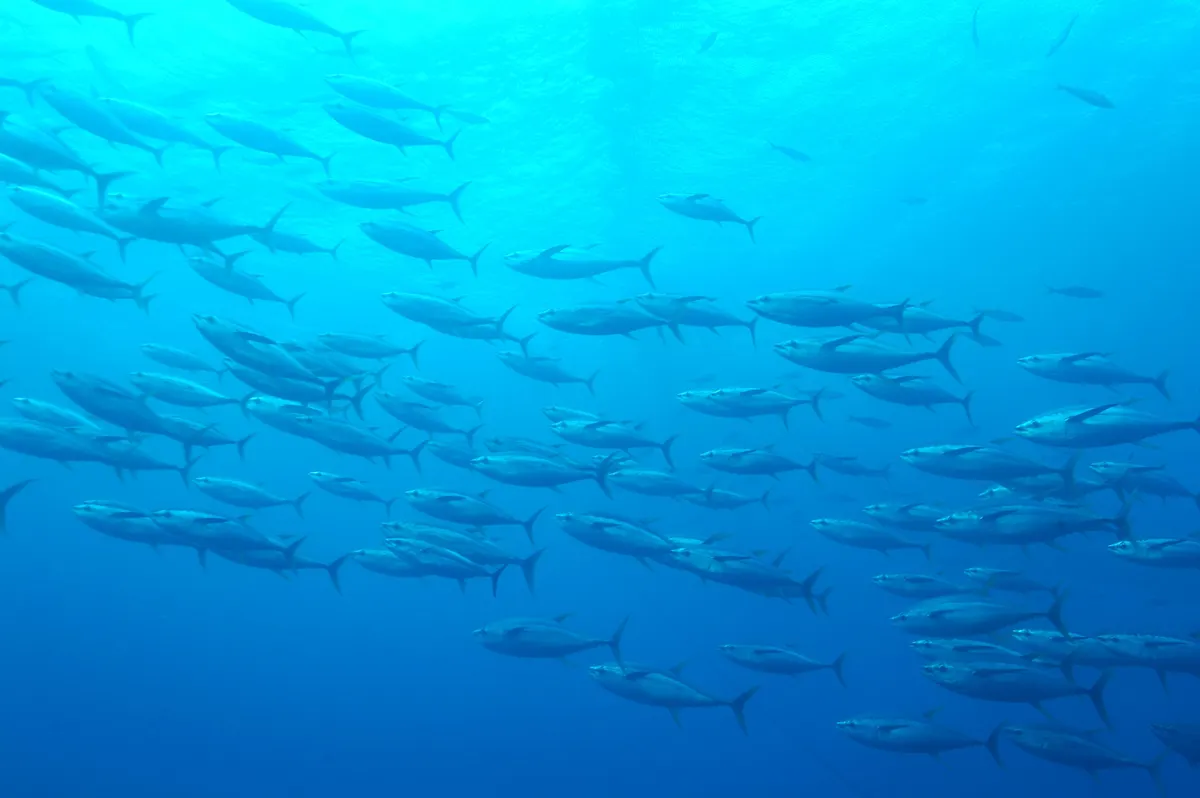
Adorned with striking, bright yellow dorsal and anal fins, they are both visually stunning and brutally effective predators. Traveling in massive schools that can number in the thousands, they coordinate chaotic, high-speed assaults on baitballs, churning the ocean surface into a frenzy. Yet, the very traits that make the yellowfin tuna such a spectacular apex predator—its rich, warm muscle tissue and immense size—have also made it one of the most relentlessly pursued and commercially valuable species on the planet, placing immense pressure on their global populations.
The yellowfin tuna is a prominent member of the mackerel and tuna family, representing the apex of pelagic fish evolution.
The family Scombridae includes mackerels, bonitos, and the "true tunas" of the genus Thunnus. The genus Thunnus contains some of the ocean's most formidable predators, including the massive Atlantic bluefin tuna and the bigeye tuna. The specific epithet albacares translates to "white meat" or "white-fleshed," a slight misnomer as their highly vascularized muscle tissue is distinctly red. Over millions of years, tunas evolved from slow-moving coastal fish into obligate ram ventilators, meaning they must swim constantly to force oxygen-rich water over their gills; if they stop swimming, they will suffocate.
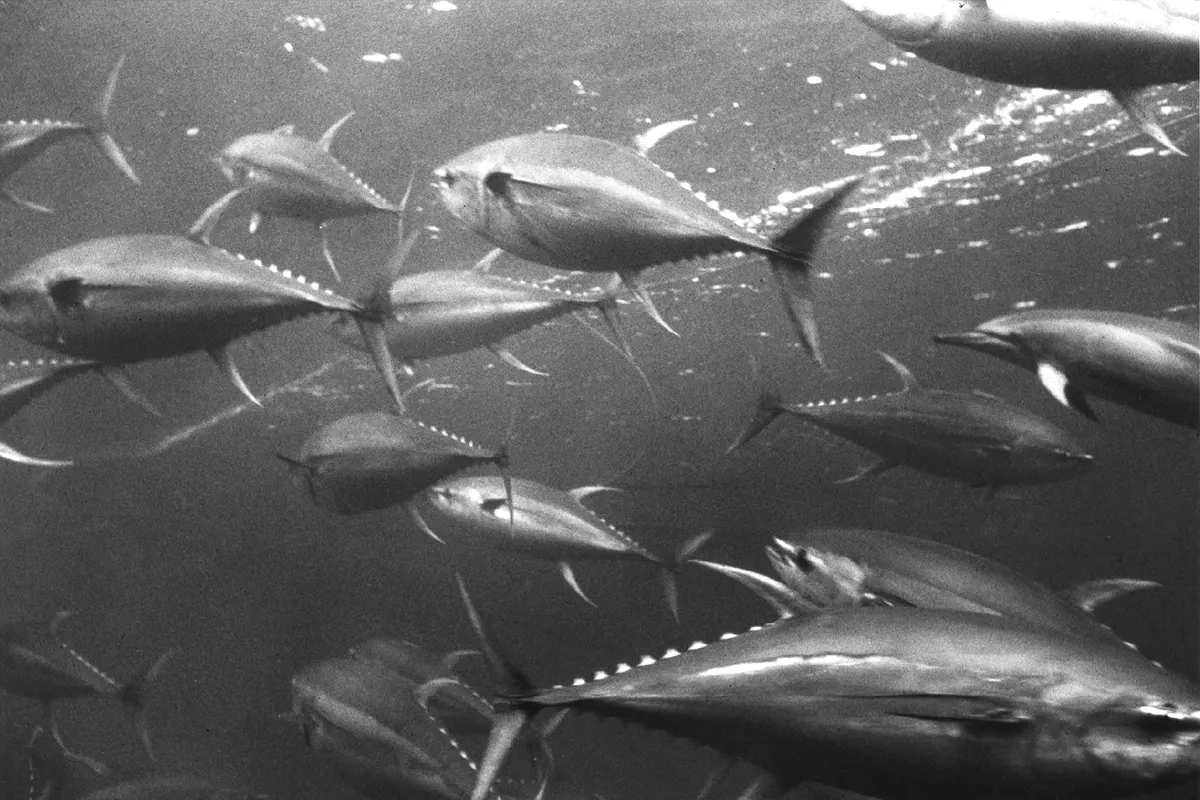
A yellowfin tuna is designed for absolute aquatic efficiency. Their bodies are perfectly fusiform (torpedo-shaped), tapering sharply from a thick, muscular midsection to a slender tail base. Adult yellowfin typically range from 3 to 6 feet in length, though massive individuals can reach 7 feet and weigh a staggering 440 pounds.
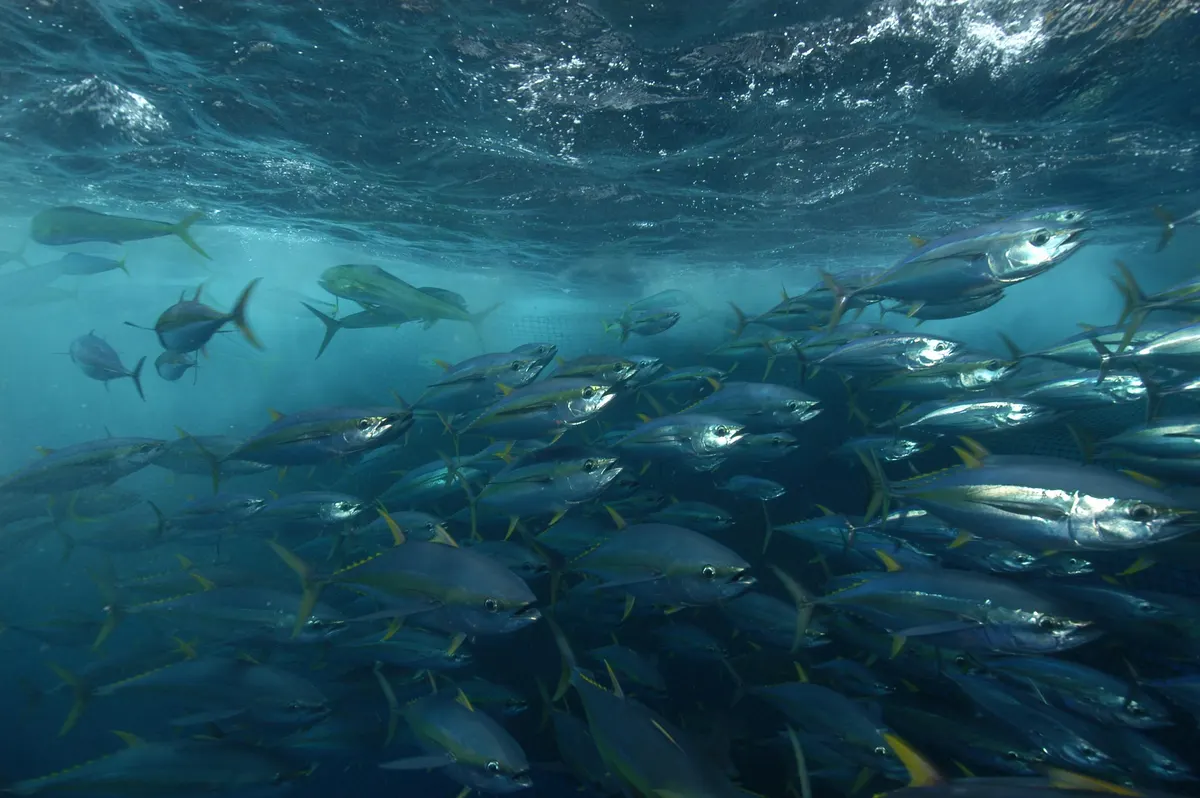
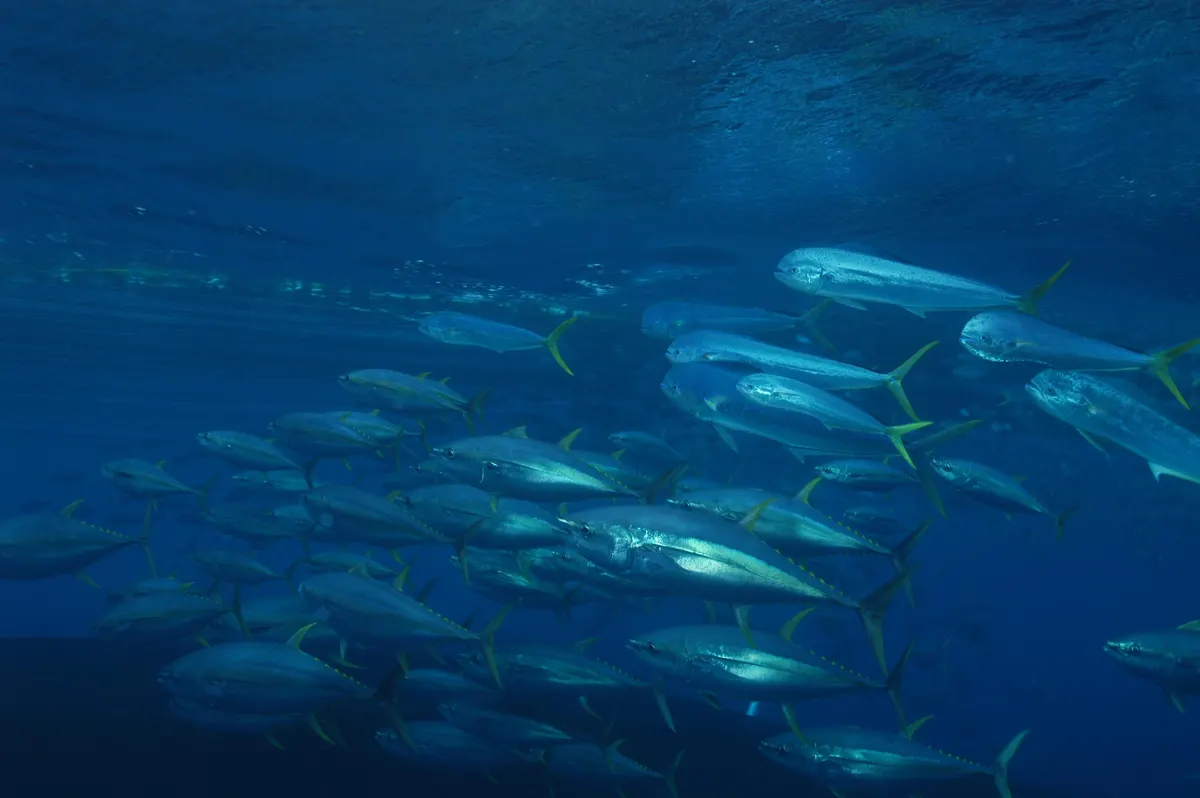
Their coloration is a classic example of pelagic countershading: their backs are a dark, metallic blue that blends into the deep water when viewed from above, while their bellies are silver-white, hiding them against the sunlit surface when viewed from below. Their defining feature is their exceptionally long, bright yellow second dorsal and anal fins, which trail gracefully behind them like sickles, alongside a series of small, bright yellow finlets running down the length of their tail.
The most incredible anatomical feature of the yellowfin tuna is its regional endothermy (warm-bloodedness). Through a complex network of blood vessels known as the rete mirabile ("wonderful net"), they utilize counter-current heat exchange. Heat generated by their massive swimming muscles is transferred to incoming, oxygen-rich blood from the gills, allowing them to keep their core body temperature significantly warmer than the surrounding ocean. This physiological fascinating example grants them highly efficient digestion, rapid nerve impulses for excellent vision, and the ability to output explosive muscle power in cold water.

The yellowfin tuna is a highly migratory, pelagic species with a circumglobal distribution. They inhabit the warm, tropical, and subtropical waters of the Atlantic, Pacific, and Indian Oceans. They are commonly found off the coasts of the United States, Mexico, Japan, Australia, the Philippines, France, the Seychelles, and Ecuador.
They are creatures of the open ocean, rarely venturing near coastal shallows unless steep drop-offs provide immediate access to deep water. They occupy the epipelagic zone—the sunlit top layer of the ocean—generally remaining in the upper 330 feet (100 meters) where the water is warmest. However, they are highly capable deep divers, plunging well below 3,000 feet to hunt squid in the freezing, dark mesopelagic zone, protected from the cold by their warm-blooded physiology.

Yellowfin tuna are apex carnivores and aggressive pursuit predators. Because they burn massive amounts of energy constantly swimming, they have voracious appetites. Their diet is diverse, consisting of smaller schooling fish such as mackerel, sardines, and sauries, as well as pelagic crustaceans and large quantities of squid. They are also famous for hunting flying fish, bursting out of the water to snatch them mid-air.
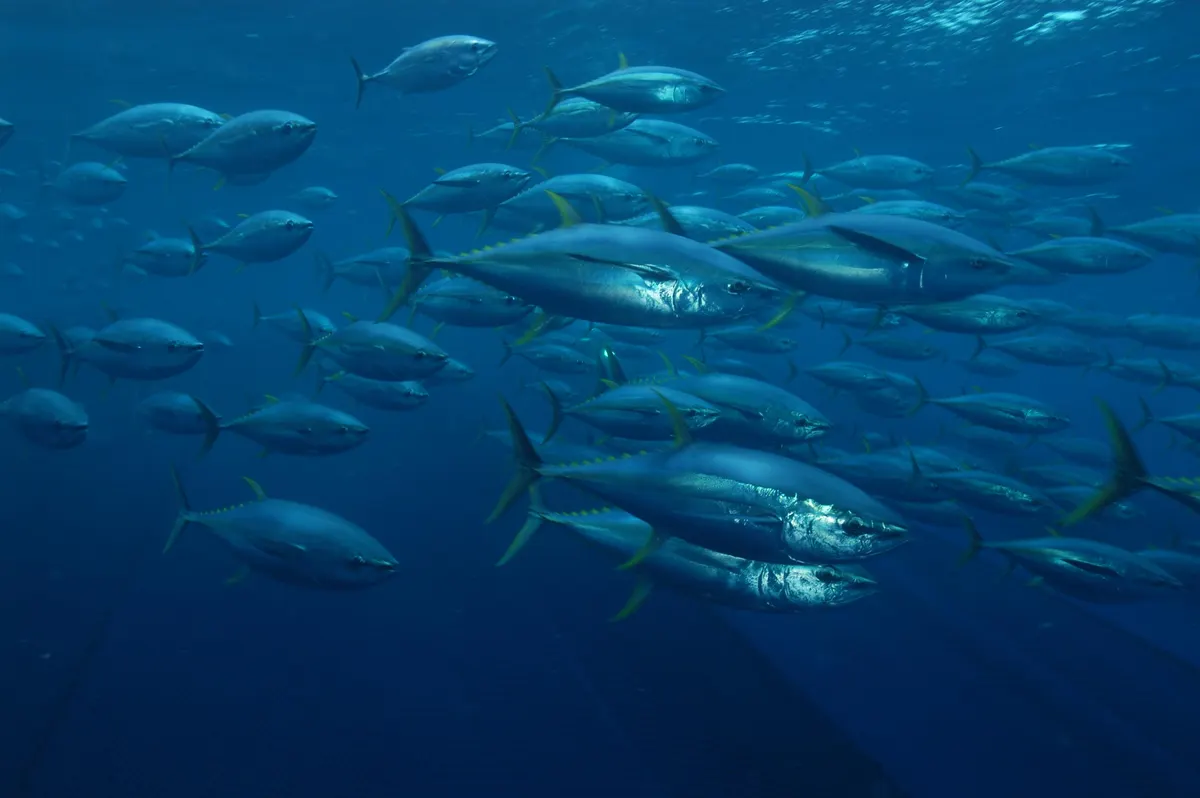
Their hunting strategy relies on sheer speed and coordinated pack behavior. A yellowfin tuna can reach speeds exceeding 40 mph (64 km/h) in short, explosive bursts. When a school of tuna locates a large baitball of smaller fish, they work together to corral the prey, forcing them toward the surface where they are trapped. The tunas then slash through the tightly packed school at lightning speeds, snapping up fish with their sharp, conical teeth.

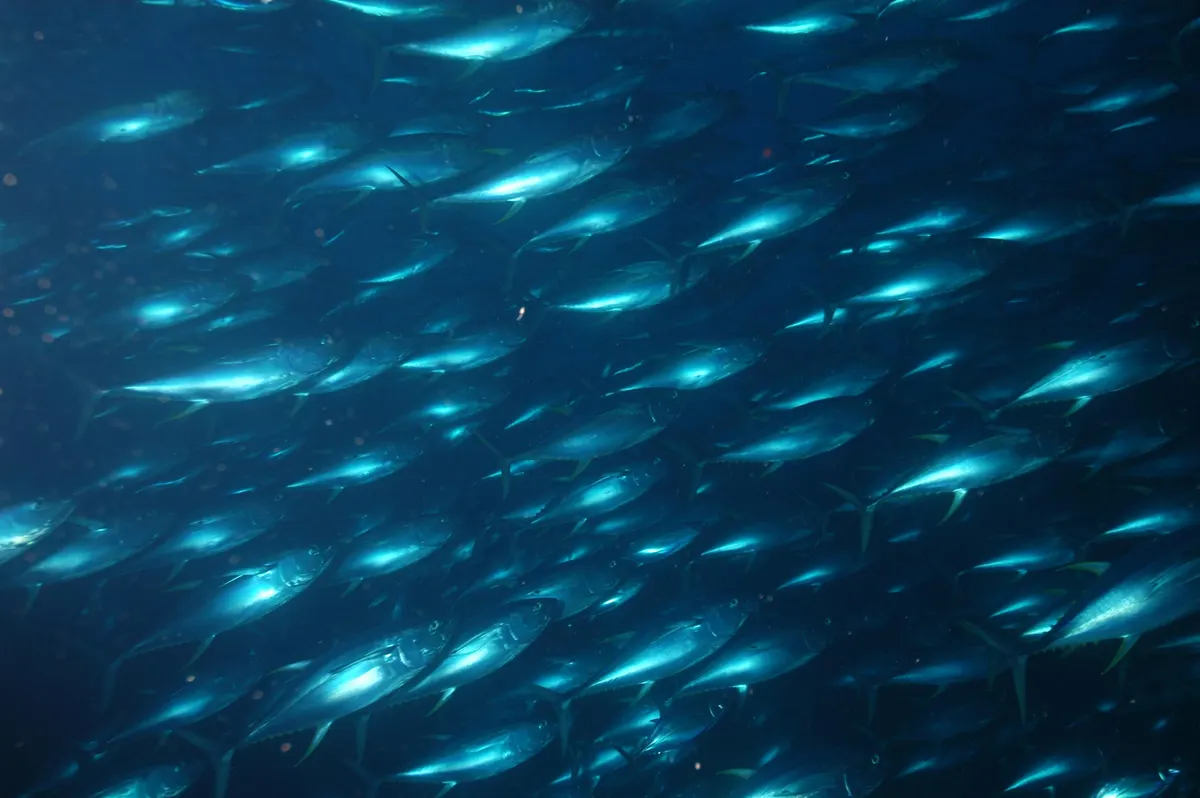
Yellowfin tuna are highly gregarious fish that form immense schools, sometimes numbering in the thousands of individuals. These schools are typically sorted by size rather than age, ensuring that the fish within a school have similar swimming speeds and nutritional needs.
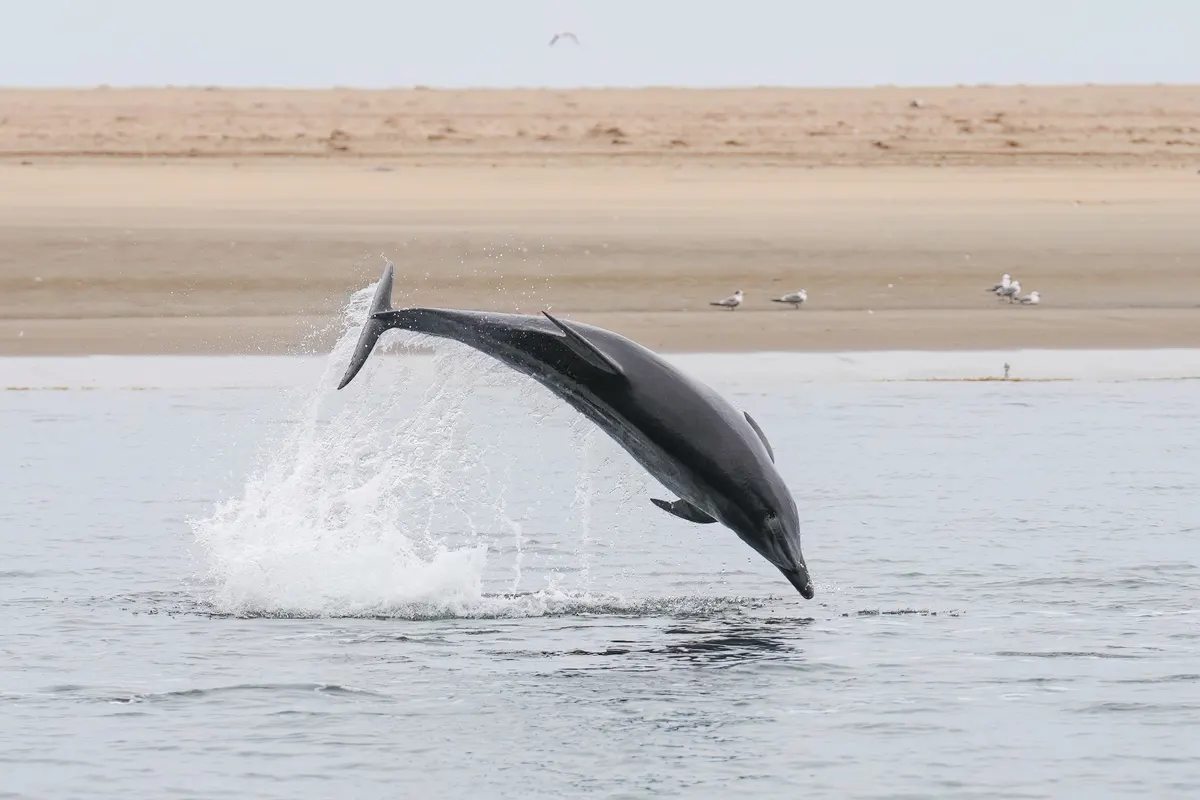
Fascinatingly, yellowfin tuna frequently form mixed-species aggregations. They are often found schooling alongside other tuna species, such as skipjack and bigeye tuna. In the Eastern Pacific Ocean, mature yellowfin tuna exhibit a unique and complex symbiotic relationship with several species of dolphins (primarily spotted and spinner dolphins). The tuna swim directly beneath the pods of dolphins, likely using the marine mammals' advanced echolocation to help locate prey or detect large predators like sharks and orcas. This association is so strong that commercial fisheries have historically tracked dolphin pods to locate the tuna swimming beneath them.

The reproductive strategy of the yellowfin tuna relies on overwhelming volume. They are broadcast spawners; during the warmer months, massive schools gather in specific tropical regions to spawn. A single, large female yellowfin tuna can release several million microscopic eggs into the water column in a single spawning event.
Simultaneously, the males release clouds of sperm, and fertilization occurs externally in the open water. The eggs drift as part of the pelagic zooplankton. Within just 48 hours, the eggs hatch into tiny larvae, measuring barely a few millimeters in length.
The larval stage is incredibly perilous; the vast majority are eaten by other fish, jellyfish, and filter feeders. However, those that survive grow at an astonishing rate. A yellowfin tuna can reach a weight of 10 pounds in just 18 months, at which point they reach sexual maturity and join the massive ocean migrations. In the wild, a yellowfin tuna typically lives between 6 to 9 years, a relatively short lifespan dictated by their high-metabolism, fast-paced lifestyle.
(Population and conservation trend data sourced from the IUCN Red List of Threatened Species)
The yellowfin tuna is currently classified as Near Threatened by the International Union for Conservation of Nature (IUCN), and their population trend is steadily decreasing worldwide.
The overwhelming threat to the yellowfin tuna is industrial overfishing. Because their meat is highly prized globally for sushi, sashimi, and canned goods, they are targeted by massive commercial fleets utilizing purse seine nets and longlines. Purse seine fishing, particularly when targeting tuna associated with dolphin pods, has historically resulted in massive dolphin bycatch and mortality, leading to the development of "dolphin-safe" certification standards. While regional fisheries management organizations attempt to implement catch quotas, illegal, unreported, and unregulated (IUU) fishing continues to severely deplete yellowfin stocks across the global ocean.
To learn more about the yellowfin tuna and sustainable marine conservation, consult the following authoritative resources:
Yellowfin tuna are warm-blooded, which helps them swim fast in cool ocean water.
Their fins flash yellow, which is how they got the name yellowfin.
Tuna can cross entire oceans during their lives.
Schools of tuna may contain hundreds or thousands of fish.
Large yellowfin tuna are popular food fish around the world.
Tuna use their speed to chase prey in the open sea.
Select a question to reveal the answer.
A tuna is a large, fast ocean fish in the genus Thunnus. Yellowfin tuna are named for the bright yellow color on their fins.
Yellowfin tuna live in warm tropical and subtropical oceans worldwide, usually far from shore in open water.
Tuna eat fish, squid, and crustaceans. They are fast hunters that chase prey in the open ocean.
Tuna are among the fastest fish and can swim faster than 40 miles per hour in short bursts.
Yellowfin tuna commonly grow 3 to 6 feet long. Very large adults can weigh more than 400 pounds.
Yellowfin tuna are listed as Near Threatened because heavy fishing has reduced populations in many regions.
Unlike most fish, tuna can keep their muscles warmer than the surrounding water, which helps them swim fast for long distances.