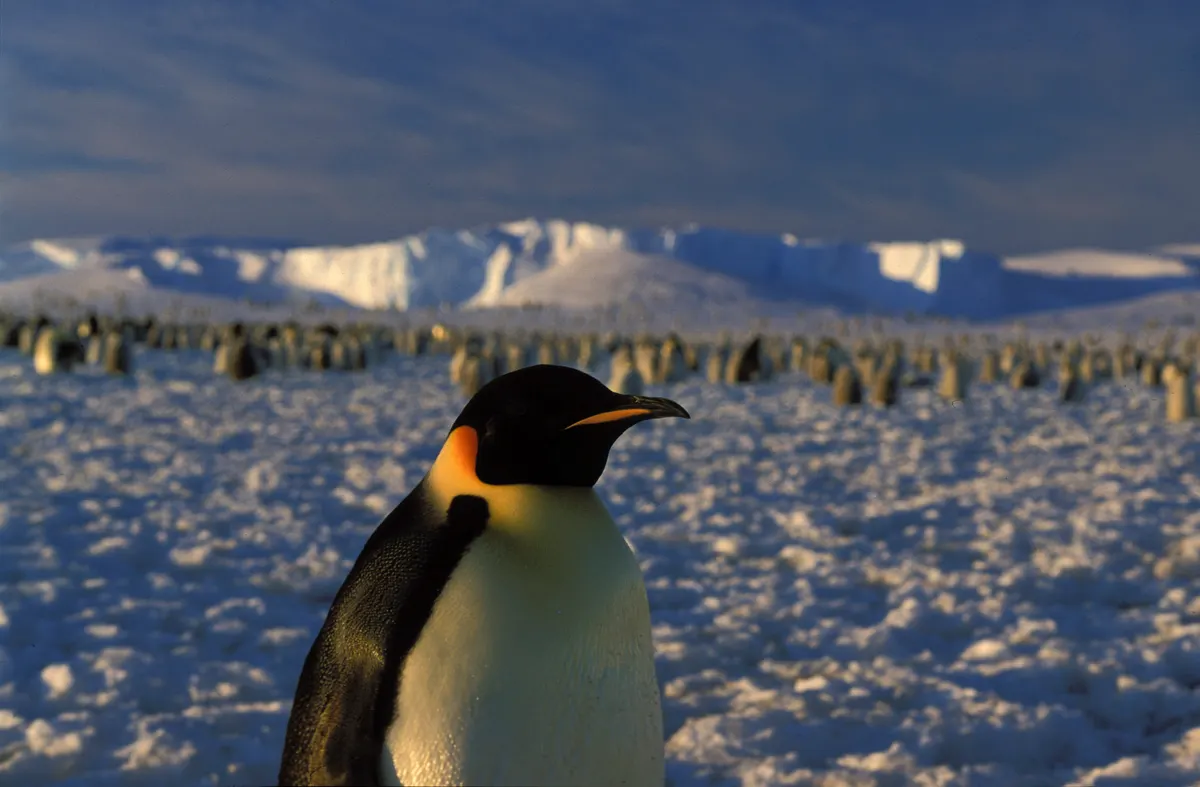
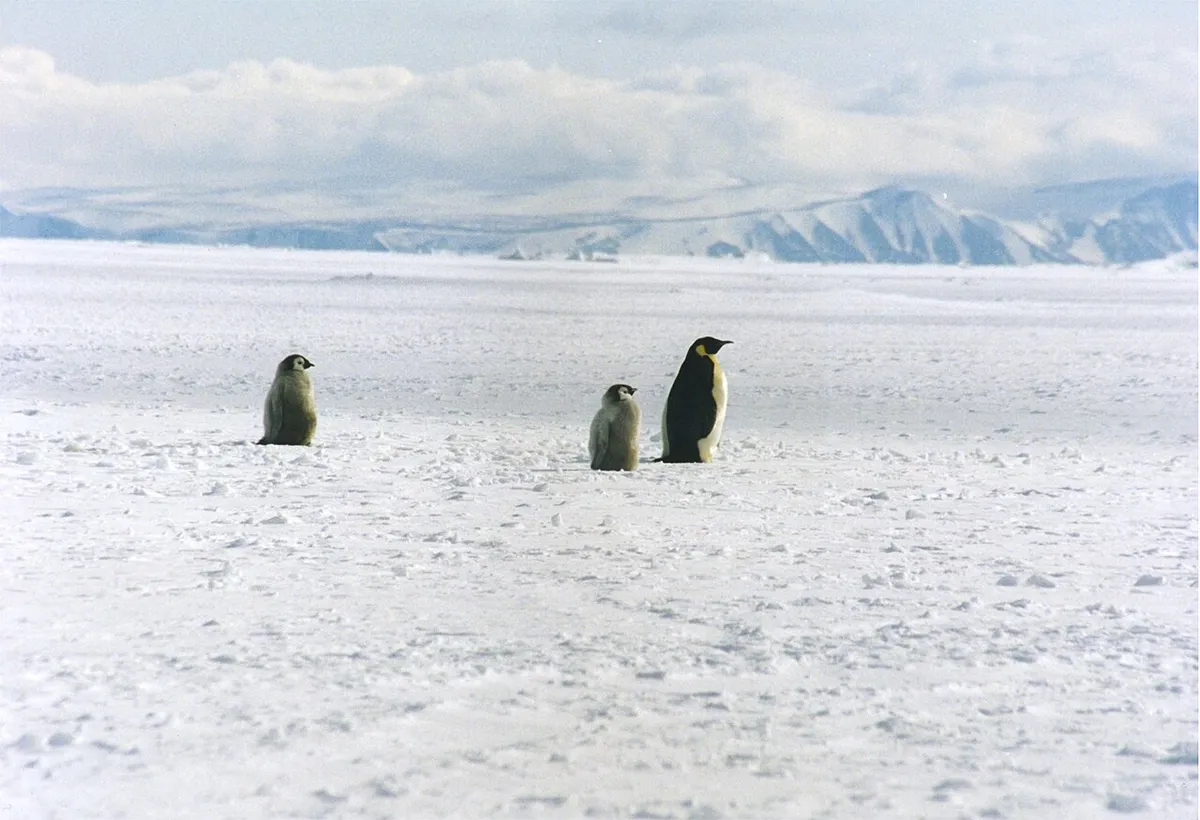
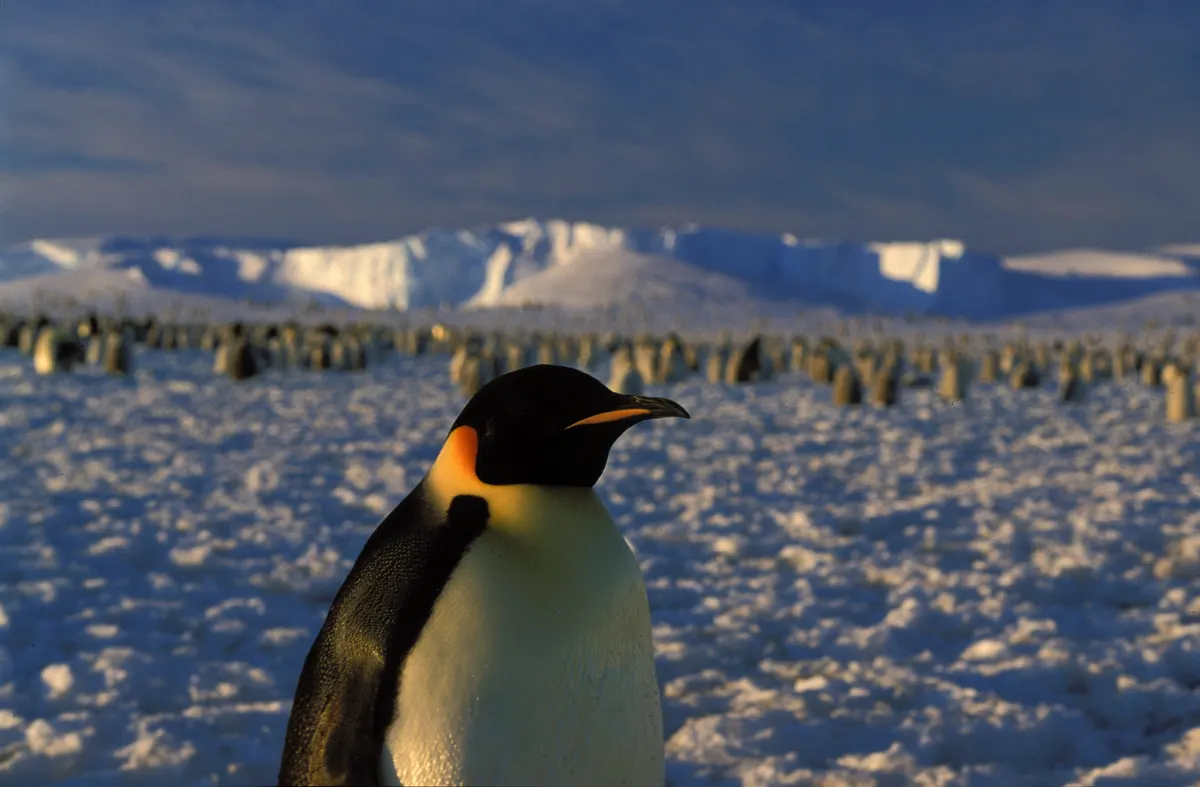
Emperor breeding runs backward compared with most birds. As the austral autumn cools, adults walk inland onto stable ice and pair up. The female lays a single egg, transfers it carefully onto the male's feet, and returns to sea to feed. The male then incubates the egg beneath a fold of skin, the brood pouch, for about two months of deep winter — standing through storms and darkness and eating nothing, living entirely on stored fat, often losing much of his body weight.
The female returns around hatching with food, and the pair share feeding after that. Chicks bunch into crèches for warmth as they grow, then molt into waterproof feathers and head for the sea. Emperors mature after several years and commonly live 15 to 20 years if they survive their first hazardous seasons.
Only two penguins carry their egg on their feet like this, both in the genus Aptenodytes:
| Feature | Emperor penguin | King penguin |
|---|
| Height | 3.5–4.3 ft (110–130 cm) | ~2.9–3.3 ft (85–95 cm) |
| Weight | 50–100 lb (22–45 kg) | ~24–40 lb (11–16 kg) |
| Breeds on | Antarctic fast sea ice | ice-free subantarctic islands |
| Breeding timing | through the Antarctic winter | warmer months, over a long cycle |
| IUCN status | Endangered | Least Concern |