Beluga Whale Facts
“Belugas are the only whales that are white as healthy adults.”
Beluga whales are white Arctic cetaceans with flexible necks, expressive melons, and complex social pods that live among polar seas and summer estuaries.
Loading page content
“Belugas are the only whales that are white as healthy adults.”
Beluga whales are white Arctic cetaceans with flexible necks, expressive melons, and complex social pods that live among polar seas and summer estuaries.
Delphinapterus leucasArtiodactylaMonodontidae
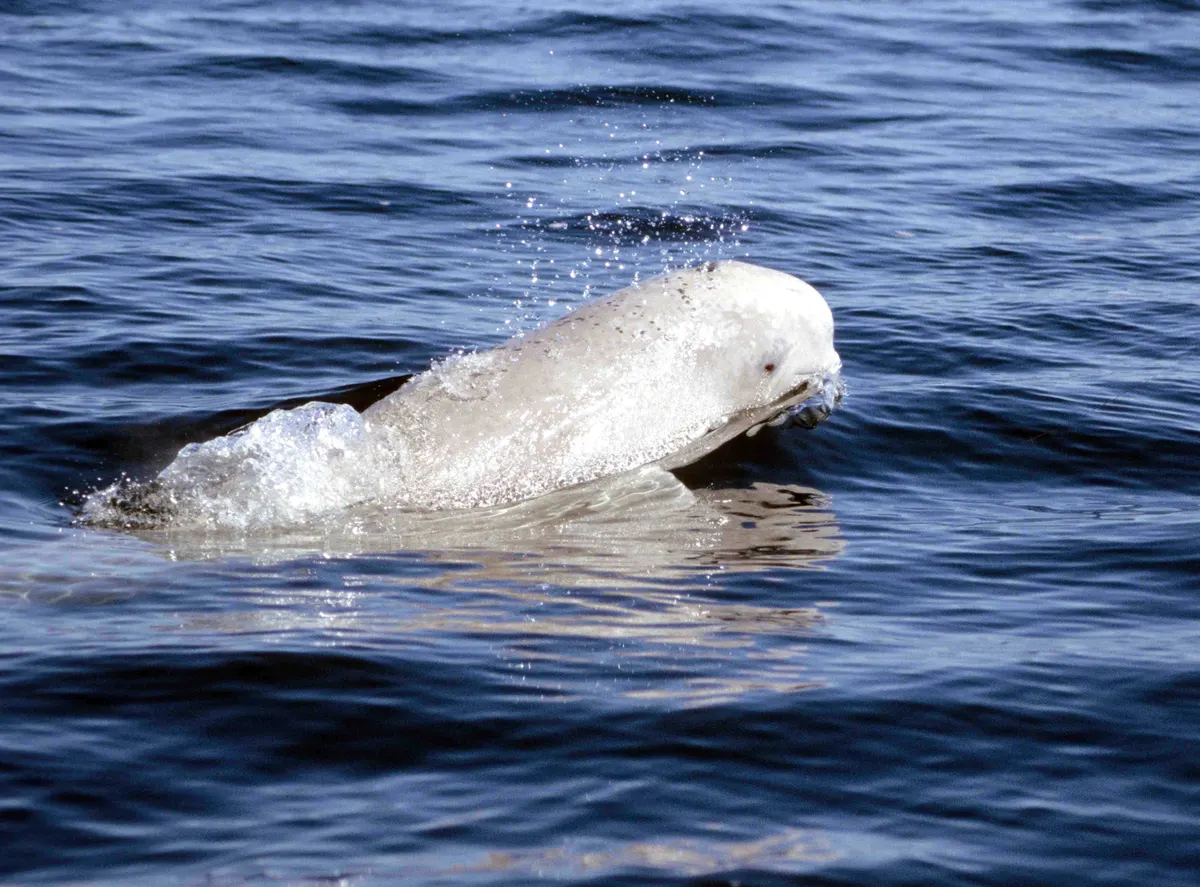
Browse beluga whale photographs—from white adults and gray calves to polar seas and summer estuaries.
Click any photo to view it larger. 8 images available.
Core article
A closer look at habitat, diet, behavior, reproduction, and conservation.
The beluga whale (Delphinapterus leucas) is one of the Arctic’s most distinctive marine mammals: a stocky white cetacean with a rounded forehead, mobile neck, and a voice so rich that sailors nicknamed it the “canary of the sea.” Unlike open-ocean dolphins that cruise warm temperate waters, belugas are tightly linked to polar seas, seasonal ice edge, and shallow coastal estuaries where entire stocks gather each summer to molt, feed, and raise calves.
Belugas belong to kingdom Animalia, phylum Chordata, class Mammalia, and order Artiodactyla (even-toed ungulates), reflecting the now-standard placement of whales among other even-toed mammals. Within the toothed whales (Odontoceti), the species sits in the family Monodontidae with only one close living relative: the narwhal. The genus Delphinapterus contains this single modern species; the name means “dolphin without a fin,” a reference to the beluga’s missing dorsal fin.
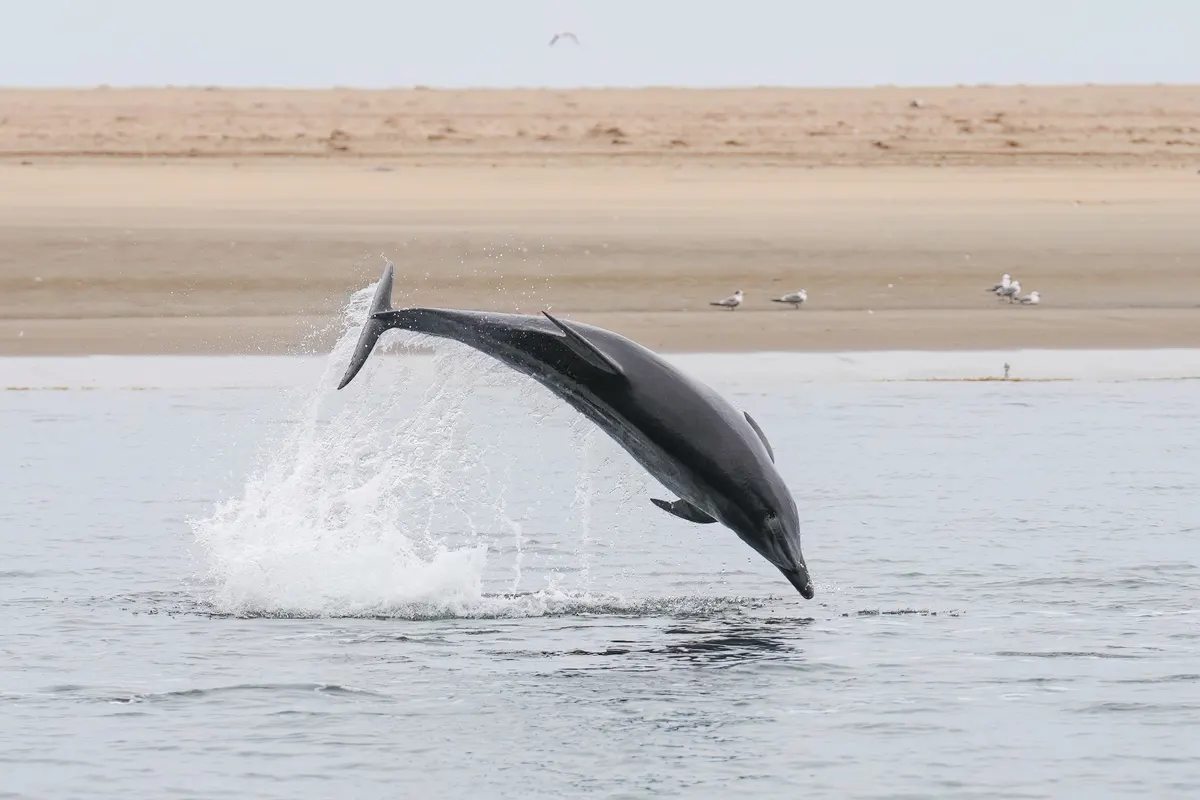
Monodontids are specialized Arctic survivors. Their evolutionary path favored thick blubber, ice-edge foraging, and acoustic communication in dark, turbid water rather than the high-speed pelagic hunting styles of oceanic Delphinidae such as the bottlenose dolphin or orca. Fossil relatives show that white whales and narwhals split from a shared monodontid ancestor millions of years ago and then divided ecological niches across high-latitude seas.
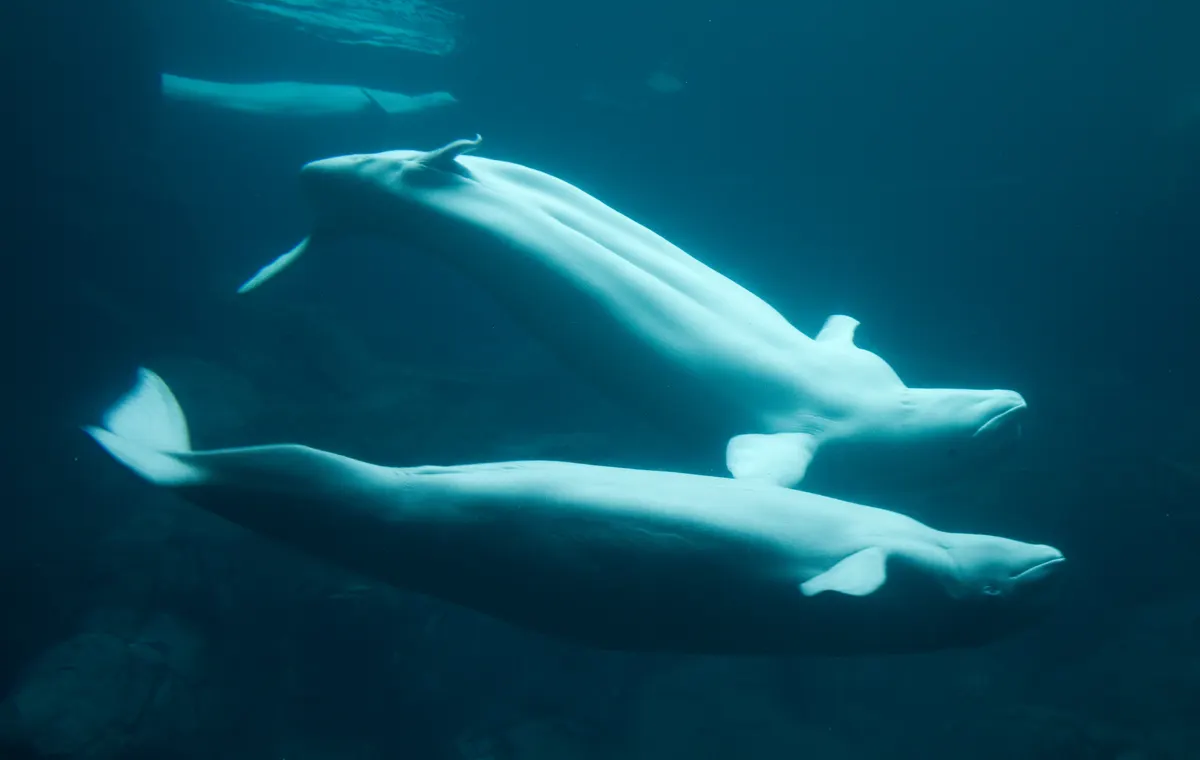
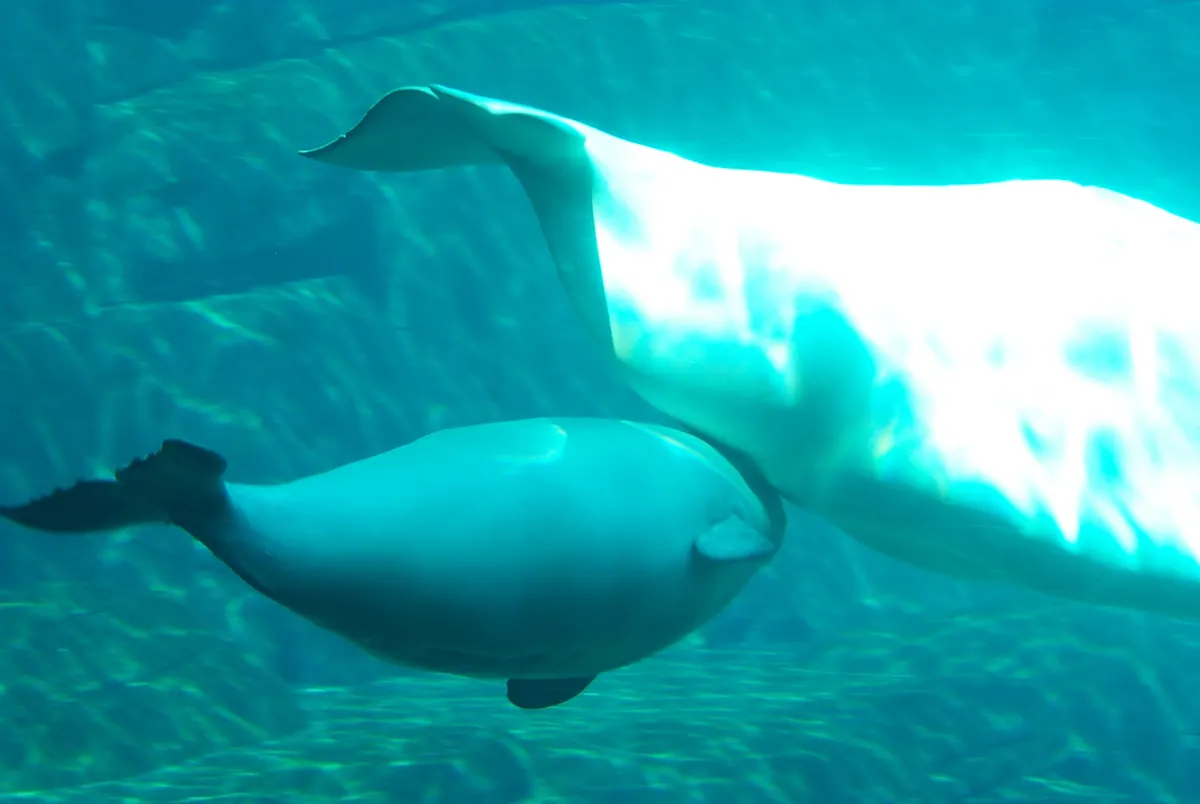
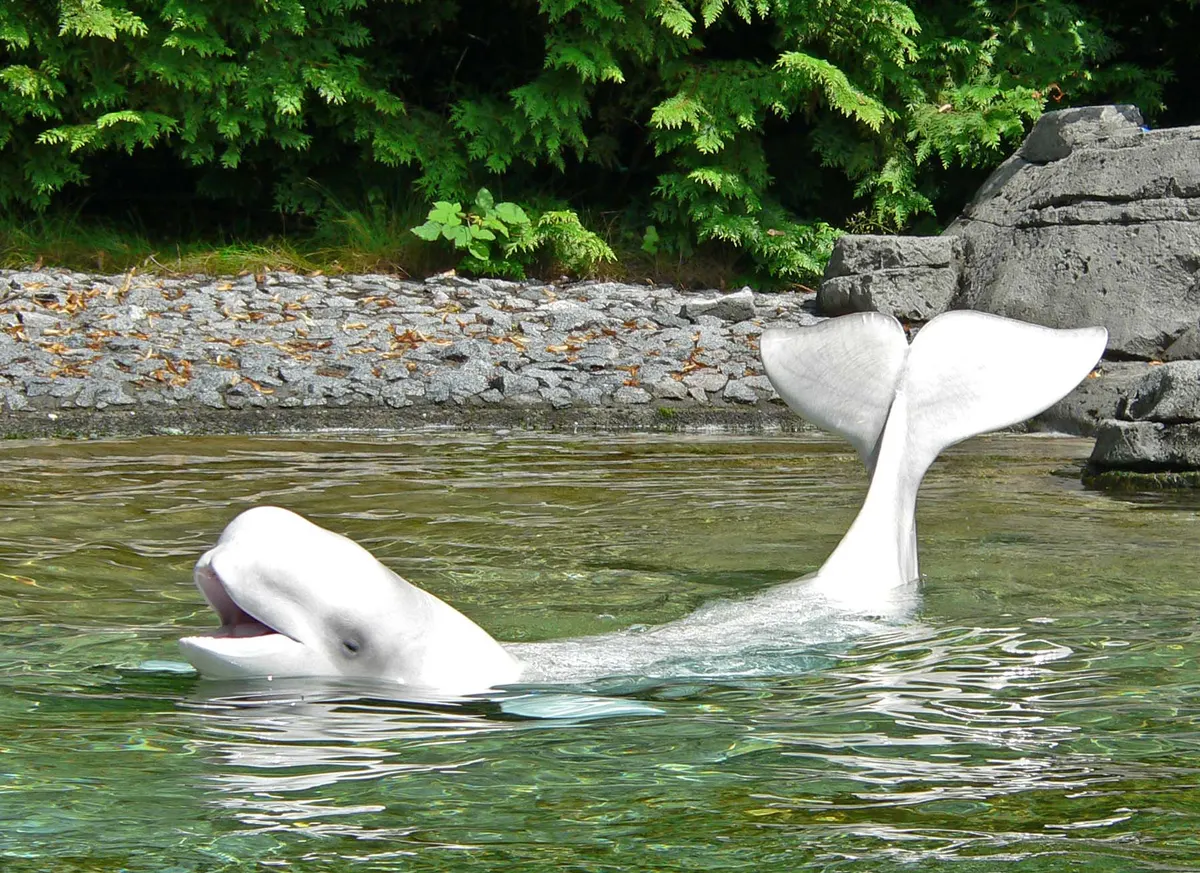
Adult belugas typically measure 11 to 18 feet in length and weigh roughly 1,200 to 3,500 pounds, with males larger than females. Their most recognizable trait is pure white adult skin. Calves are born gray, brown, or bluish and may take five to eight years to reach the clean white color associated with maturity.
The body is robust rather than ultrastreamlined. A thick blubber layer—often more than four inches deep—insulates against near-freezing seawater and stores energy for lean seasons. Unlike most cetaceans, belugas retain unfused cervical vertebrae, so they can turn their heads sideways to scan for prey along river bottoms and under ice. The forehead houses a large, soft melon that changes shape as the animal focuses echolocation beams. There is no dorsal fin; instead, a tough dorsal ridge helps the whale slip under pack ice without snagging. Broad flippers and a flexible tail deliver thrust in shallow water, while small rounded teeth grip slippery fish rather than chew them.

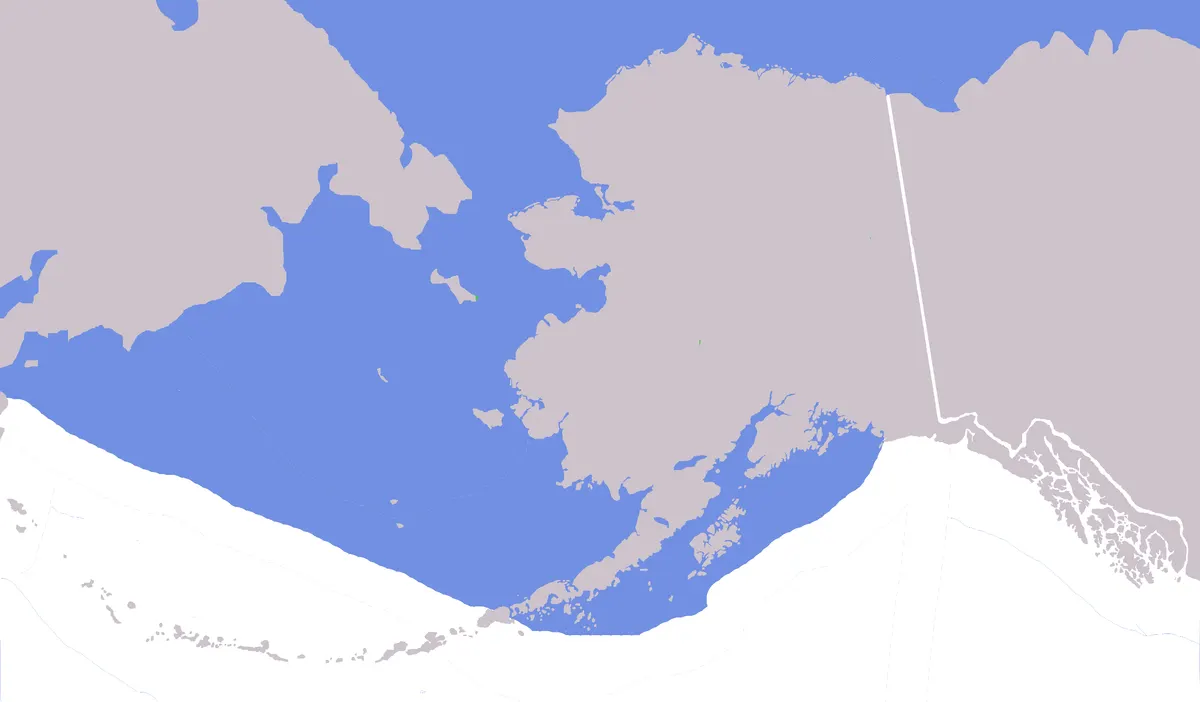
Belugas are circumpolar. Stocks inhabit Arctic and sub-Arctic waters of Alaska, northern Canada, Greenland, Svalbard, and Russia’s northern coasts. Their year is shaped by ice: in winter many animals remain near open leads and polynyas; in summer they push into warm, shallow river mouths such as the Churchill River on Hudson Bay or Alaska’s Cook Inlet.
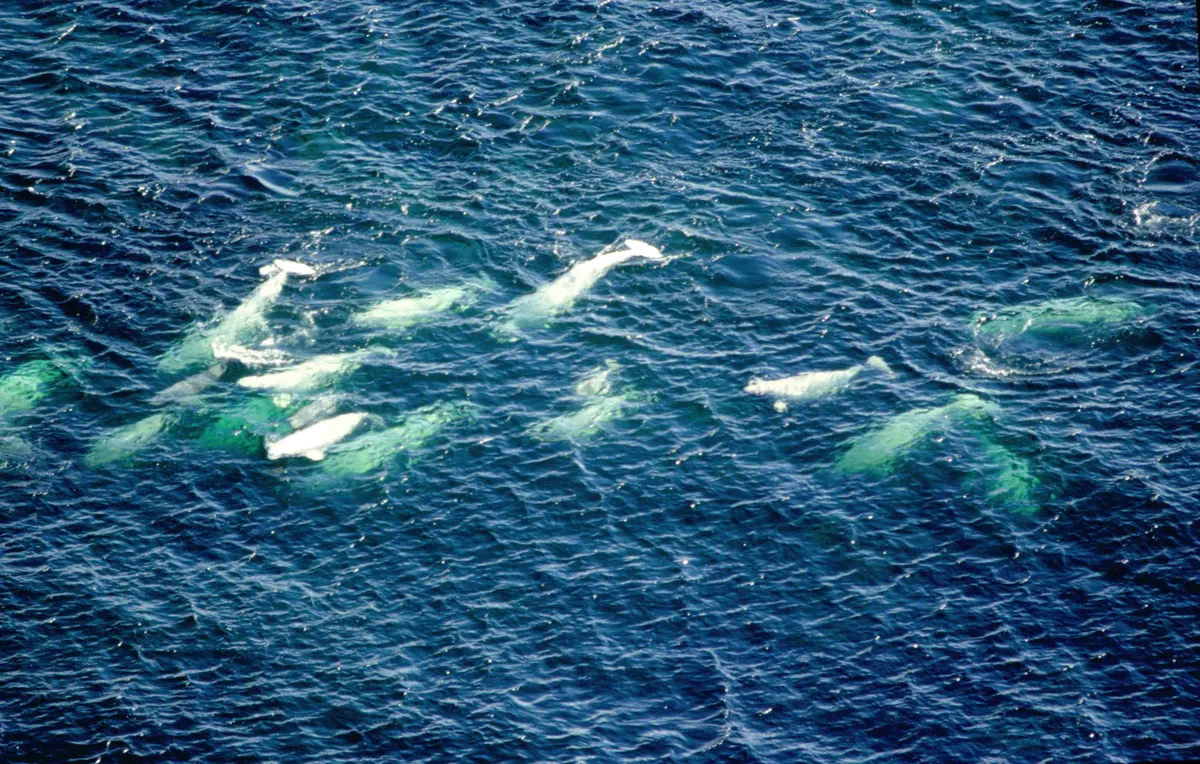
These habitats are not generic deep ocean basins. Belugas specialize in nearshore shelves, bays, and estuaries where freshwater mixes with cold marine water. That preference brings them near Indigenous communities, shipping corridors, and industrial development—and it also concentrates animals into countable summer aggregations that researchers survey from aircraft. Isolated stocks, especially Cook Inlet belugas, occupy tiny ranges and are far more vulnerable than the species as a whole.

Belugas are opportunistic marine carnivores. Their diet varies by region and season but consistently includes schooling and bottom-associated Arctic fish such as Arctic cod, capelin, and salmon, plus shrimp, crabs, clams, squid, and other invertebrates. In shallow estuaries they may dive only briefly, probing the seafloor with a flexible neck while using echolocation to sort prey from mud and rock.
Feeding success depends on seasonal prey pulses. Anadromous fish runs into rivers can draw dense pods, and fall migrations track ice formation and prey retreat. Predators of belugas include orcas in open water and polar bears that ambush animals stranded or surfacing near ice, while humans historically hunted them for meat, oil, and muktuk.

Beluga society is highly vocal and tightly maternal. Pods may include a few animals or swell to hundreds and even thousands during summer estuary gatherings. Females and calves form the core of many groups; adult males may travel separately or join larger assemblies. Because visibility under ice and in muddy river water is limited, acoustic contact is essential. Belugas produce clicks, whistles, chirps, and pulsed calls that maintain contact, coordinate movement, and support echolocation.
Play behavior is well documented. Captive and wild animals alike create bubble rings, mouth objects, and engage in mutual rubbing. Such flexibility is paired with curiosity: belugas investigate boats, ice edges, and unfamiliar sounds—traits that make them popular aquarium animals but also raise questions about disturbance in busy coastal habitats.
Gestation lasts about 14 to 15 months. A single calf is usually born in spring or early summer, often in relatively warm, shallow water where ice risk is lower. The newborn rides in the mother’s slipstream, rises frequently to breathe, and nurses on fat-rich milk for up to two years. Because calves darken waters with their gray-brown color and stay glued to adults, summer photographic surveys of pods regularly capture mother–calf pairs.
Sexual maturity arrives around 5 to 10 years of age, depending on sex and food availability. Females typically calve every two to three years once mature. Wild longevity commonly reaches the mid-thirties to about fifty years, long enough for cultural knowledge of migration routes, estuary timing, and ice navigation to pass across generations.

(Population and conservation trend data sourced from the IUCN Red List of Threatened Species)
The IUCN currently assesses the beluga whale as Least Concern at the global species level because several large Arctic stocks remain numerous. That headline status hides sharp local contrasts. Some populations are stable or increasing, while others—most dramatically Cook Inlet—are critically endangered due to cumulative noise, habitat loss, historical overharvest, and low genetic diversity.
Modern threats include underwater noise from shipping and industrial activity that masks echolocation, chemical contaminants that accumulate in blubber, climate-driven losses of stable ice habitat, and entanglement or disturbance in coastal corridors. Climate change does not simply “open” the Arctic for belugas; altered ice timing, prey shifts, and increased human traffic can scramble the seasonal schedules these whales depend on. Protecting belugas therefore means managing each stock’s estuary and ice-edge habitat, not only celebrating the species’ global count.
Belugas are the only whales that are white as healthy adults.
They can turn their heads sideways because their neck vertebrae are not fused.
People call them canaries of the sea for their rich mix of clicks and whistles.
Calves are born gray or brown and slowly fade to white over several years.
Belugas often gather by the thousands in shallow Arctic rivers each summer.
They lack a dorsal fin, which helps them swim under sea ice.
Select a question to reveal the answer.
A beluga is a medium-sized toothed whale from the Arctic and sub-Arctic. Adults are white, lack a dorsal fin, and live in social groups called pods.
Belugas live in cold polar seas around Alaska, Canada, Greenland, Norway, and Russia. In summer many stocks move into warm river mouths and shallow bays.
They are carnivores that eat Arctic fish such as cod and salmon, plus shrimp, crabs, squid, and other seabed prey.
Adult white skin helps camouflage them among sea ice and light surface waters. Newborns start darker and lighten as they grow.
Globally the species is listed as Least Concern, but some local stocks—especially Cook Inlet belugas—are critically depleted and heavily protected.
They use echolocation: clicking sounds focused by the melon bounce back as echoes that map fish, ice edges, and seafloor shapes in dark water.
A baby beluga is called a calf. Calves nurse for about two years and stay close to their mothers while learning migration routes.
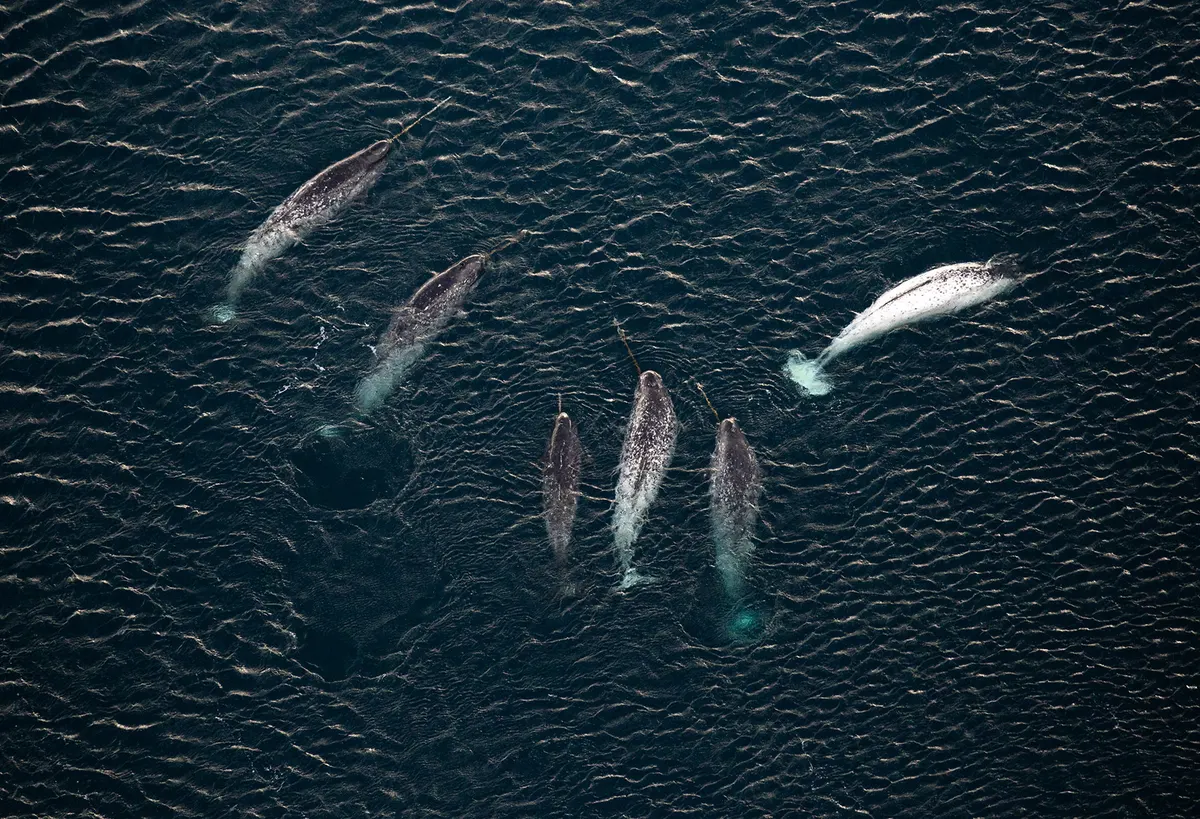
Yes. Belugas and narwhals are the only living members of the family Monodontidae, a small group of Arctic toothed whales.