Snowshoe Hare Facts
“Leverets are born furred, with their eyes open.”
The snowshoe hare is a North American woodland herbivore with broad, furry hind feet. Its seasonal coat and reliance on cover help it evade lynx and other predators.

“Leverets are born furred, with their eyes open.”
The snowshoe hare is a North American woodland herbivore with broad, furry hind feet. Its seasonal coat and reliance on cover help it evade lynx and other predators.
By An Nguyen · Published · Updated
Measured against the 179 species profiled on this site. Each figure is converted to one unit system from the published range on the page, so the ranks are computed, not quoted.
| Measure | This species | Rank here | Exceeds |
|---|---|---|---|
| Body mass | 1.8 kg | #131 of 179#88 of 93 Mammalia | 27% |
| Body length | 50.8 cm | #133 of 179#85 of 93 Mammalia | 26% |
| Lifespan in the wild | 5 yr | #160 of 172#87 of 88 Mammalia | 7% |
Closest in body mass
Ranks use the upper end of each published adult range, so they compare typical large adults rather than records, and metrics with no published number are left out rather than estimated. The full table is downloadable from the species dataset, and any two species can be put side by side in the comparison tool.
Explore snowshoe hare images with notes on the animal, its habitat and life history.
Click any photo to view it larger. 8 images available.
Core article
A closer look at habitat, diet, behavior, reproduction, and conservation.
The snowshoe hare (Lepus americanus) is a North American hare with broad, fur-covered hind feet and a coat that usually changes from brown in summer to white in winter. It feeds mainly on plants and is a major prey animal for the Canada lynx. Despite its winter appearance, it is primarily an animal of wooded cover rather than the open, treeless Arctic. Its feet, seasonal coat, and habit of staying near shelter solve different parts of the same problem: finding food without being caught.
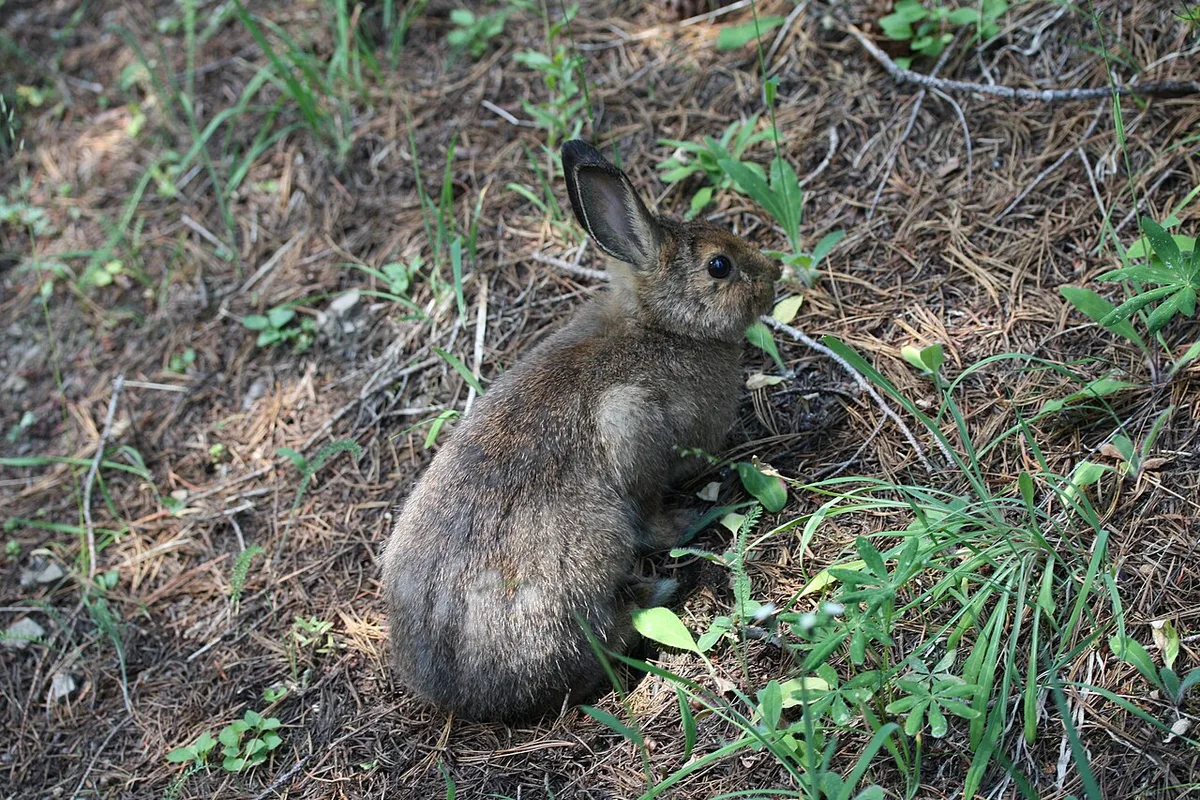
The name comes from the large hind feet. Fur on the soles and around the toes increases the surface supported by snow while also providing insulation. The Alaska Department of Fish and Game describes adults as roughly 18–20 inches (46–51 cm) long and 3–4 pounds (1.4–1.8 kg). Its profile also presents a broader length range in its fact summary, so those first figures are best read as a typical description, not strict limits.
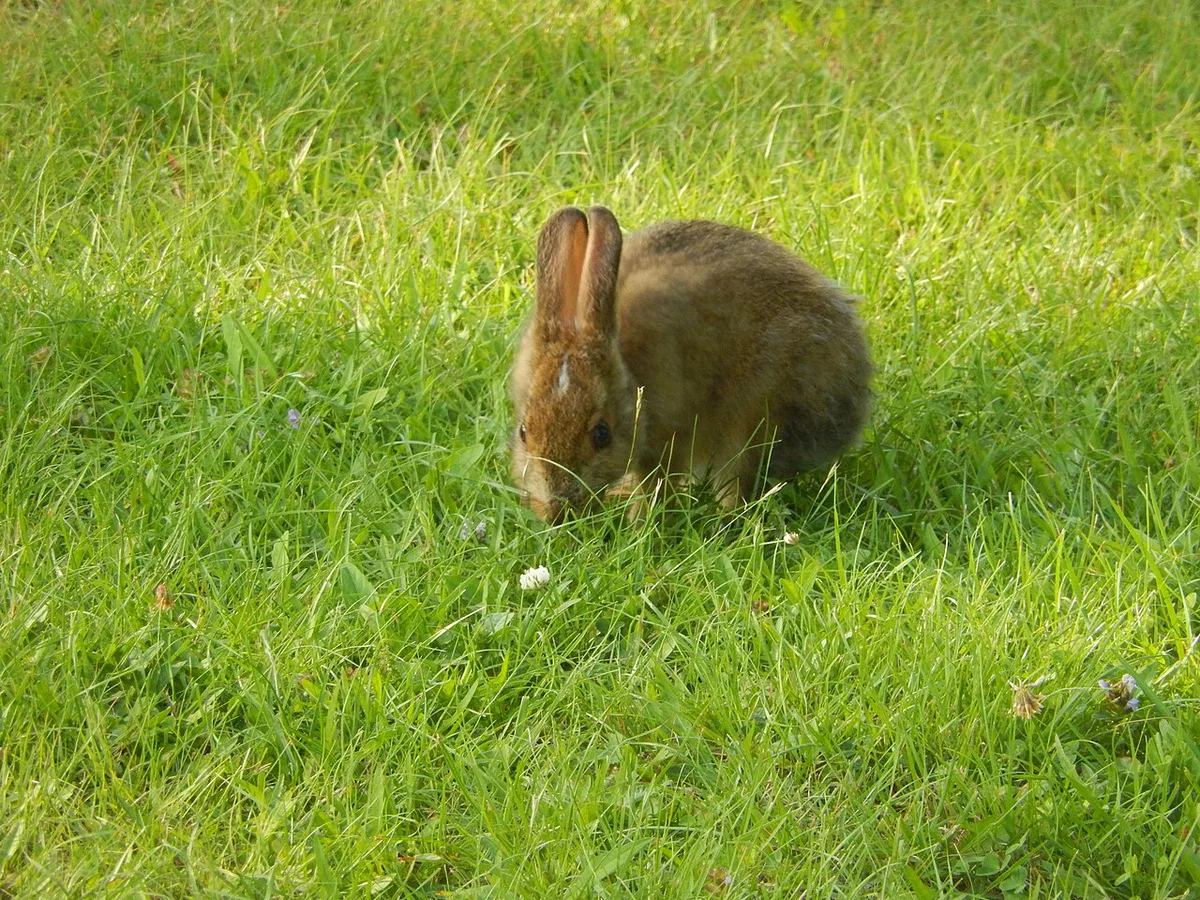
In many populations, a brown summer coat is replaced by a mostly white winter coat. This happens through molting: existing brown hairs do not simply turn white overnight. Changes in day length help trigger the seasonal replacement. During the transition, a hare can look patchy, with brown and white areas on the same body.
Winter whiteness is not universal across the range. Some populations in milder regions retain more brown fur. Nor is the change a direct reading of the snow on the ground. When snow arrives late or melts early, a pale animal can stand out against dark vegetation. That mismatch is one reason the timing of snow cover matters as well as the average winter temperature.

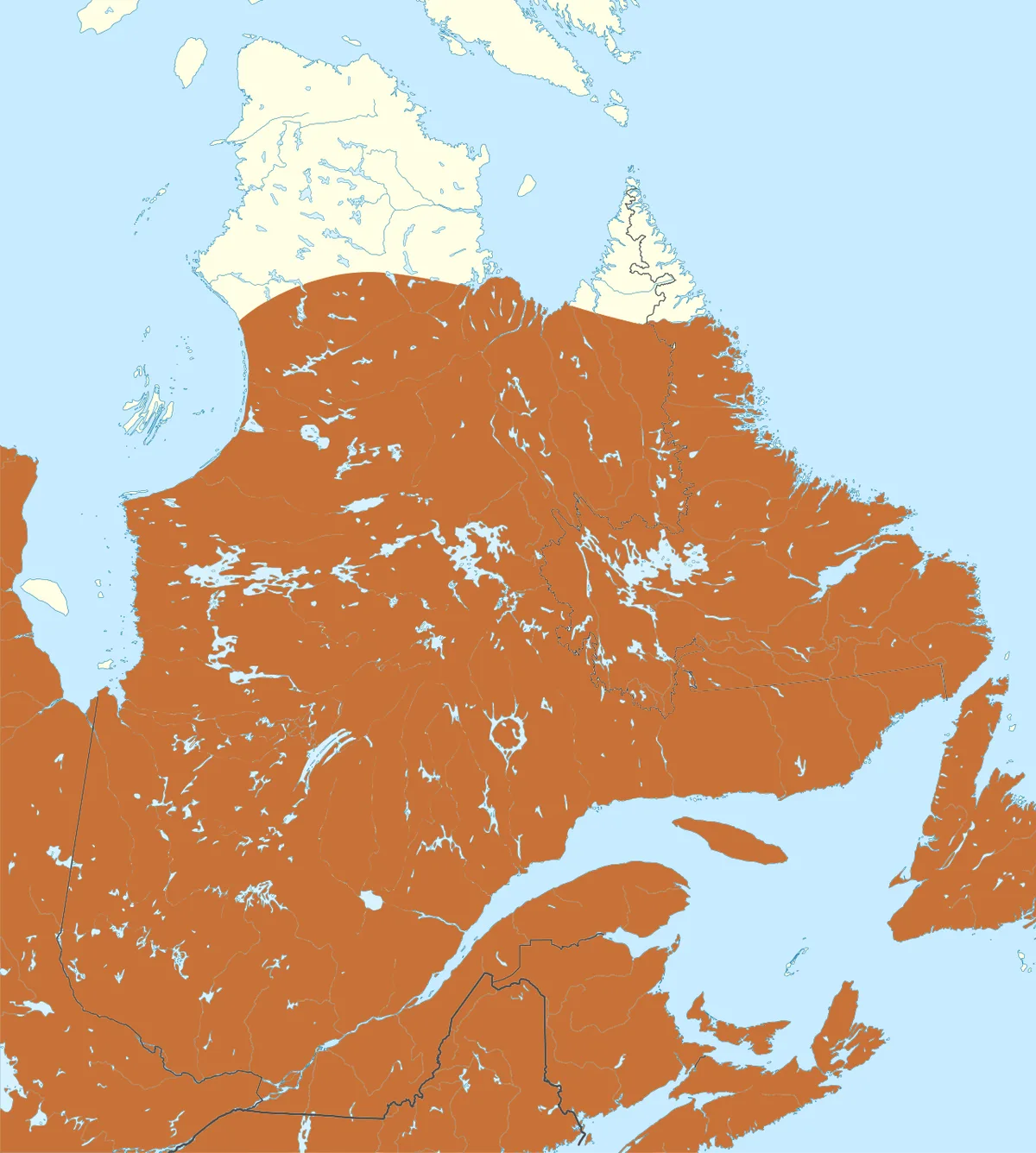
Snowshoe hares live across much of Canada and Alaska and in suitable parts of the northern and mountainous United States. Their habitats include boreal and mixed forest, brush, and wooded wetland edges. Dense low vegetation offers both food and places to hide.
They do not normally dig the extensive burrow systems associated with some rabbits. Instead, they rest in a shallow depression, often called a form, beneath vegetation or other cover. Repeated travel creates runways through the undergrowth and, in winter, recognizable paths in snow. A patch of open feeding ground may be used when escape cover is close, rather than being suitable on its own.
This helps explain why a map of forest cover cannot by itself predict hare abundance. A shaded stand with little undergrowth can provide fewer feeding and hiding opportunities than a dense patch of young growth. The important features are at the hare's height: edible stems, low branches, and connected shelter.

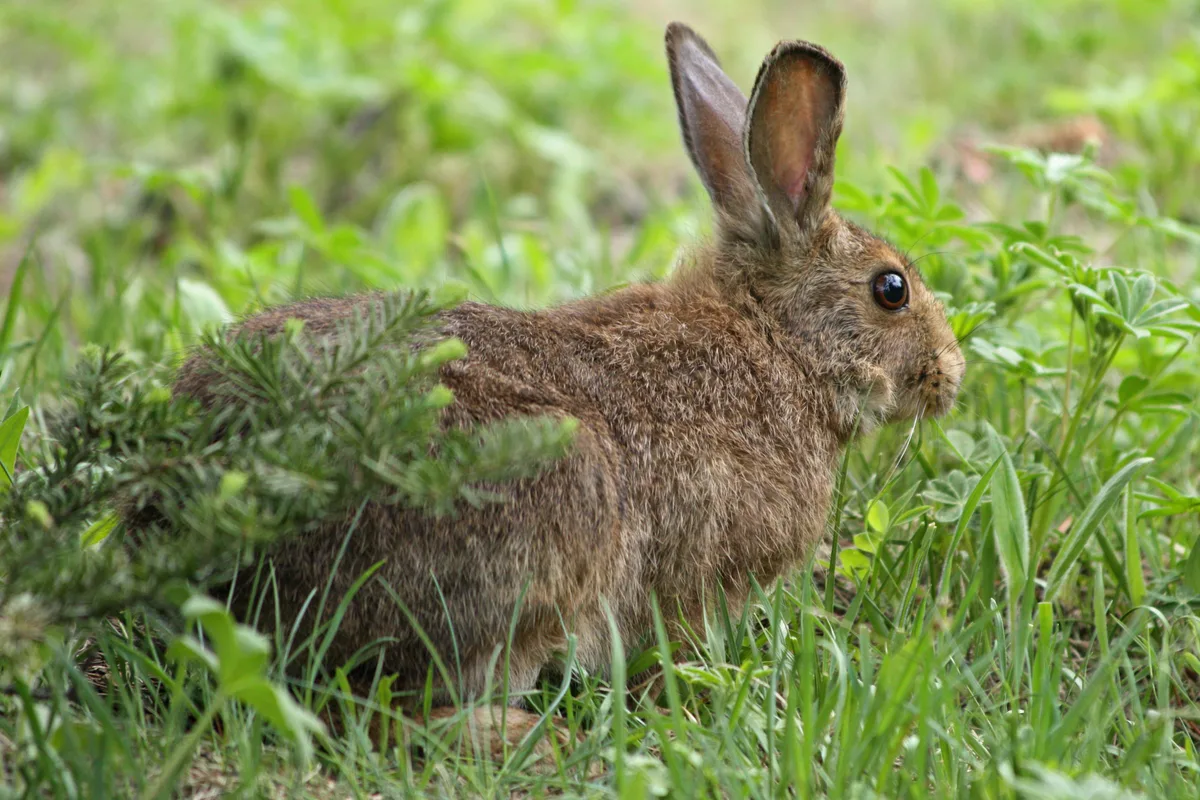
Snowshoe hares are primarily herbivores. In summer they take grasses, leaves, and other green plant material. Winter shifts the menu toward accessible twigs, buds, bark, and conifer needles. Willow, aspen, and spruce are among the plants named in Alaska's wildlife account.
The contrast is not just a change in preference. Snow can cover soft green food while leaving woody stems available above it. The hare must balance the amount and quality of food against the danger of moving out into the open. A twig close to shelter may be usable when a richer feeding patch is too exposed.
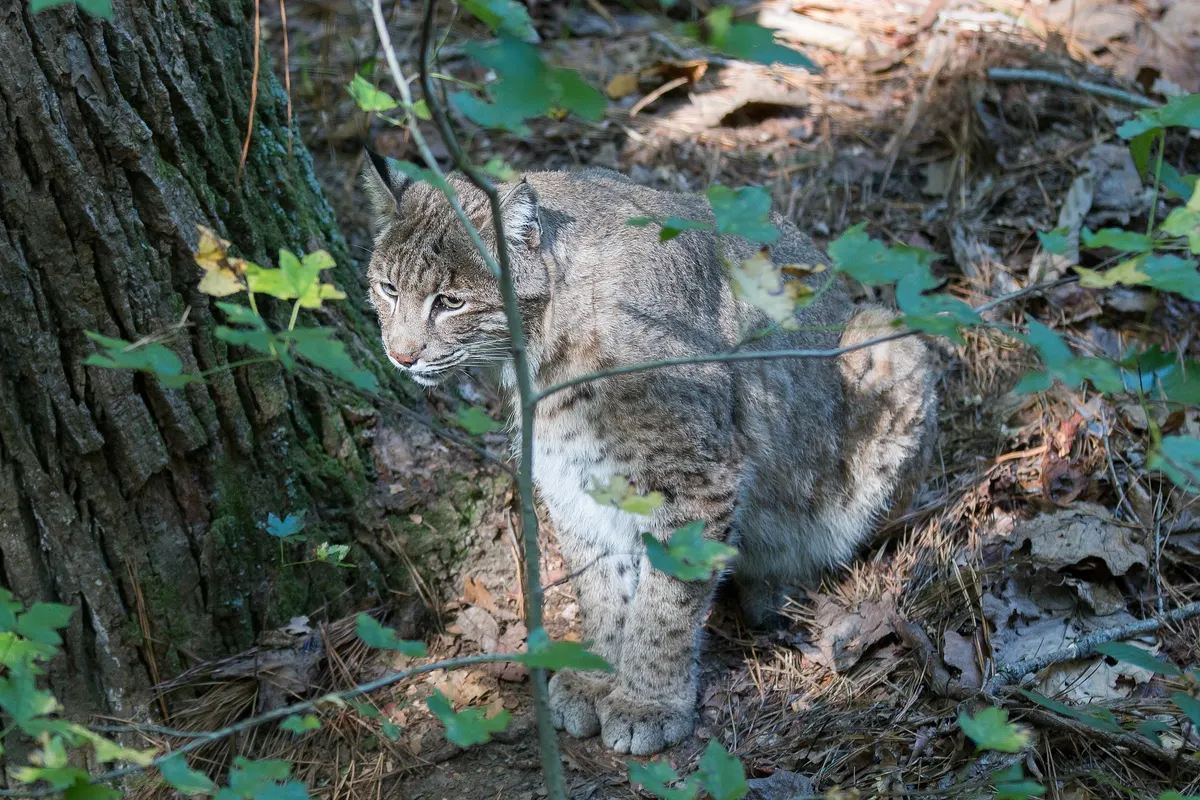
Like other lagomorphs, snowshoe hares also re-ingest soft droppings produced during digestion, allowing further recovery of nutrients. Their plant-based feeding is distinct from the hunting performed by a bobcat or lynx. The same forest therefore supports them in different roles: the hare converts vegetation into animal biomass, and predators feed on it.
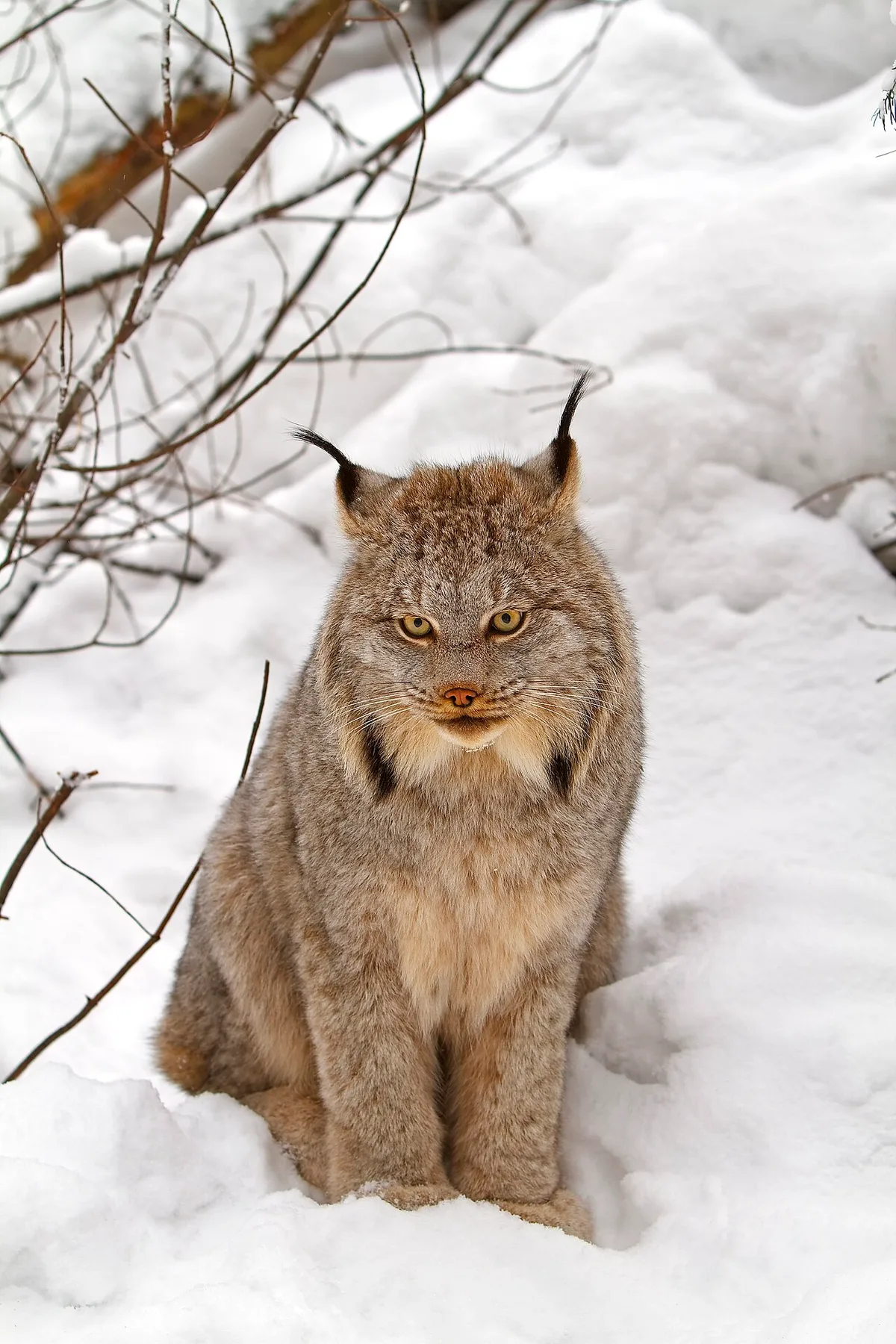
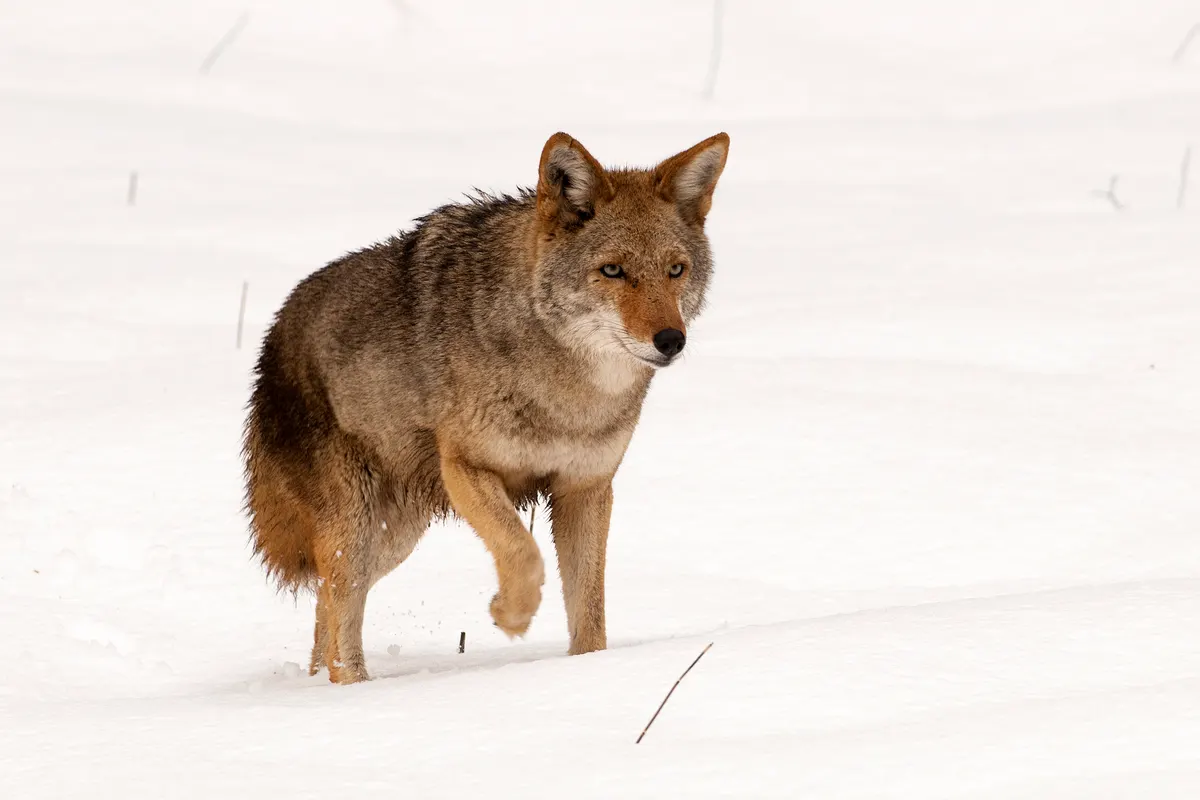
Snowshoe hares feed many predators, including Canada lynx, coyotes, red foxes, owls, and other raptors. Large ears help detect danger, while cover, camouflage, and rapid bounding help the animal avoid capture. No one adaptation eliminates the risk: a motionless white hare may blend into snow, but still leave tracks and scent.
Northern populations are known for substantial rises and falls in abundance. The familiar lynx–hare cycle is a useful introduction, but not a complete explanation. Predation and food conditions interact with reproduction and survival; timing and intensity also vary by region. A forest with few hares in one survey is not necessarily outside their range.
Hare numbers also affect animals that do not specialize as strongly as lynx. When hares become scarce, generalist predators can switch to other prey. Looking at the whole food web is more useful than treating the two species as a sealed system. The Canada lynx profile explains how a prey downturn can reduce kitten production and encourage long-distance movements.
Young snowshoe hares are called leverets. They are born furred and with their eyes open, unlike the blind, relatively undeveloped newborns of many rabbits. Birth usually occurs in a shallow sheltered form, rather than a deep nest burrow. Being mobile early helps, but the young still depend on nursing and concealment.
Gestation lasts about 36–37 days. Litter size and the number of litters vary with region, season, and conditions. Alaska's account describes two to three litters a year, with about four young in a typical first litter and larger second litters in favorable years. These are regional observations, not a promise that every female produces the same annual total.
Leverets begin sampling vegetation while still nursing and become independent within weeks. Alaska's profile gives a lifespan range of roughly one to five years. Predation is a major reason that the ability to reproduce quickly does not translate into uninterrupted population growth.

Snowshoe hares are Least Concern globally, as reported by Alaska's wildlife agency and Animal Diversity Web. This category does not mean every population is stable. Development and other land uses can remove or fragment dense cover, while changes in vegetation and snow conditions can alter the balance between feeding opportunities and exposure to predators.
The National Park Service highlights camouflage mismatch when white winter coats meet snow-free ground. Responses may differ between populations, including those that already retain brown winter coats. It would be misleading to say that every hare can simply change color whenever snow disappears, or that all regions face the same outcome.
For readers trying to understand a local population, the useful questions are therefore specific: is there dense low cover, is suitable food available, and does seasonal snow still match the population's coat pattern? Those details tell more than a photograph of a white animal alone.
Kingdom
Animalia
Phylum
Chordata
Class
Order
Lagomorpha
Family
Leporidae
Genus
Lepus
Species
L. americanus
Leverets are born furred, with their eyes open.
The brown-to-white change occurs by replacing hairs during a seasonal molt.
Not every population has a completely white winter coat.
Snowshoe hares usually rest in sheltered forms rather than excavating extensive burrow systems.
Select a question to reveal the answer.
Many populations grow white winter fur during a seasonal molt triggered partly by changing day length. This can provide camouflage on snow, but it is not an immediate response to the ground color.
No. Coat patterns vary geographically, and some populations in milder regions retain brown winter coats. A partly brown animal may also be between seasonal coats.
They are primarily herbivores. Summer foods include grasses and leaves; winter foods include twigs, bark, buds, and conifer needles.
A young hare is a leveret. Snowshoe hare leverets are born furred and with open eyes, and still depend on nursing even though they can move soon after birth.
They generally rest in shallow forms beneath vegetation or natural shelter rather than digging the extensive burrows used by some rabbits.
Snowshoe hares are the main prey of Canada lynx across much of its range. Northern hare populations often cycle in abundance; lynx reproduction, survival, and movements respond to the changing food supply.
Their global status is Least Concern. Local populations can still be affected by loss of dense cover, development, and changes in seasonal snow conditions.
For school and research