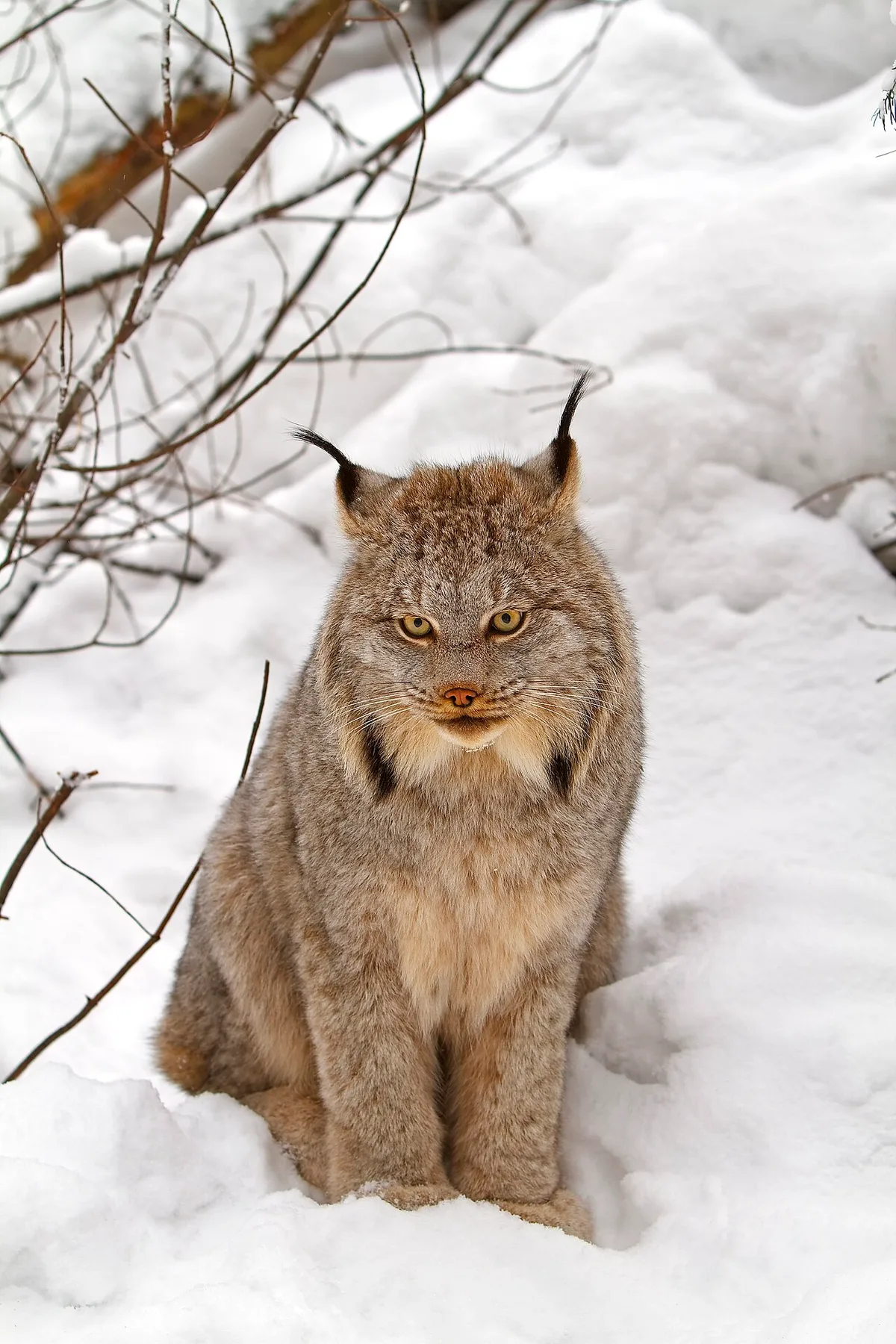
Canada lynx sitting in snow beneath bare branches
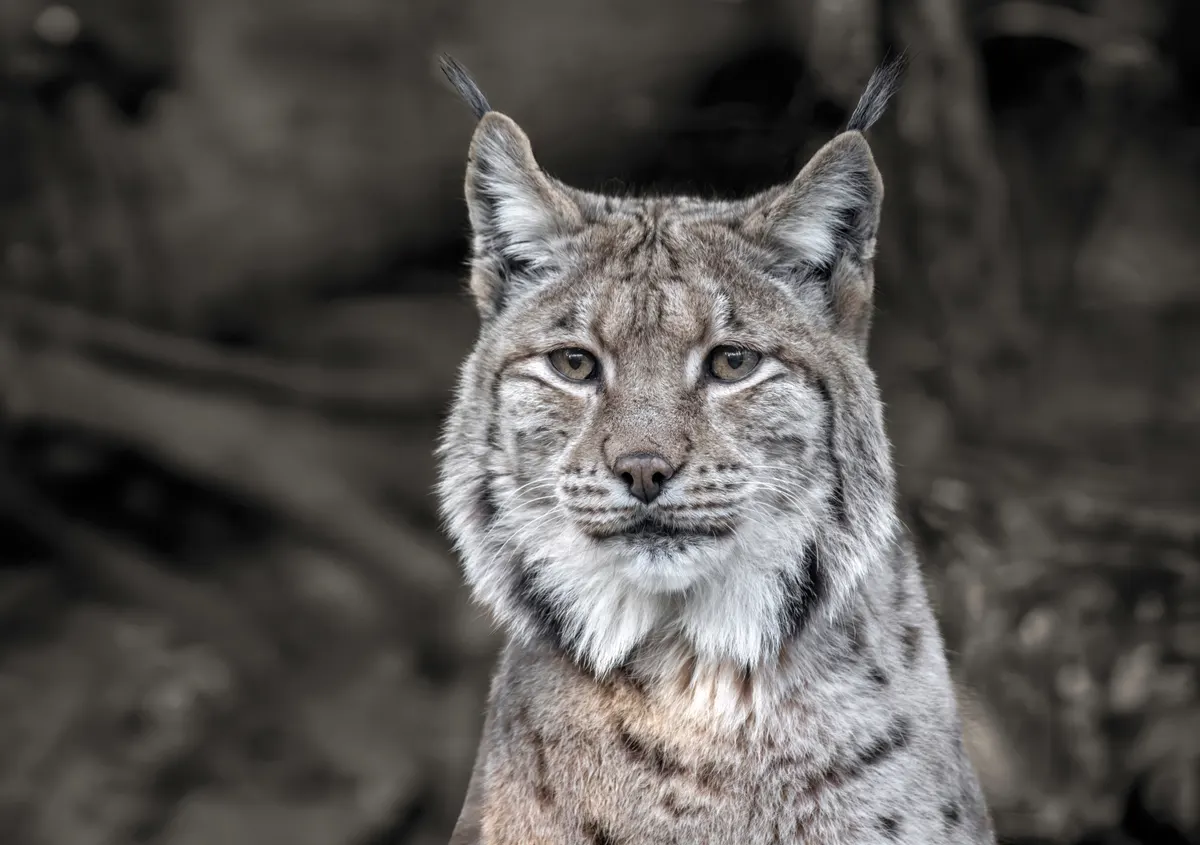
A Canada lynx rests in snow, showing its ear tufts and broad facial ruff.
MammaliaLeast Concern

Canada Lynx Facts

“Broad, fur-covered paws help a Canada lynx travel over soft snow.”

The Canada lynx is a North American forest cat with broad, furry paws and a diet centered on snowshoe hares. Deep snow shapes how it travels and hunts.

By · Published · Updated

Quick Facts

Canada Lynx at a glance

Lynx canadensis Carnivora Felidae

About their home

Kind of animal

Mammalia

Where they live

What they eat

How safe?

Least Concern

Size and speed

How heavy

18 pounds – 30 pounds

How long

67 cm – 107 cm

How fast

—

Lifespan

Up to about 14.5 years recorded

How the Canada Lynx compares

Measured against the 179 species profiled on this site. Each figure is converted to one unit system from the published range on the page, so the ranks are computed, not quoted.

MeasureThis speciesRank hereExceeds
Body mass13.6 kg#90 of 179#68 of 93 Mammalia49%
Body length1.07 m#88 of 179#57 of 93 Mammalia51%
Lifespan in the wild14.5 yr#102 of 172#53 of 88 Mammalia41%

Closest in body mass

Ranks use the upper end of each published adult range, so they compare typical large adults rather than records, and metrics with no published number are left out rather than estimated. The full table is downloadable from the species dataset, and any two species can be put side by side in the comparison tool.

Core article

Canada Lynx: ecology and life history

A closer look at habitat, diet, behavior, reproduction, and conservation.

Start here

Canada Lynx

The Canada lynx (Lynx canadensis) is a North American forest cat whose large, fur-covered paws help it hunt snowshoe hares in deep snow. It lives mainly in Alaska and Canada, with smaller populations in the contiguous United States. It is a different species from the Eurasian lynx and the bobcat, even though all three belong to the same genus. For identifying one, paw size and the completely black tail tip are more useful than guessing its weight.

Snow Adaptations and Bobcat Field Marks

Long hind legs, a short tail, a broad facial ruff, and black ear tufts give a Canada lynx its distinctive outline. The Alaska Department of Fish and Game reports that most adults weigh 18–30 pounds (8.2–13.6 kg), with males generally heavier. Animal Diversity Web gives a head-and-body length of 67–107 cm, plus a short tail. These are species accounts with different sampling scopes, rather than measurements of every population.

Its paws spread the animal's weight over a relatively large surface. Dense fur covers the feet as well as the body, helping the cat move across soft snow. That advantage is specific to snowy conditions: it does not mean a lynx is a faster runner than every competing predator on every surface. A deep, loose snowpack changes which animals can travel and catch prey efficiently.

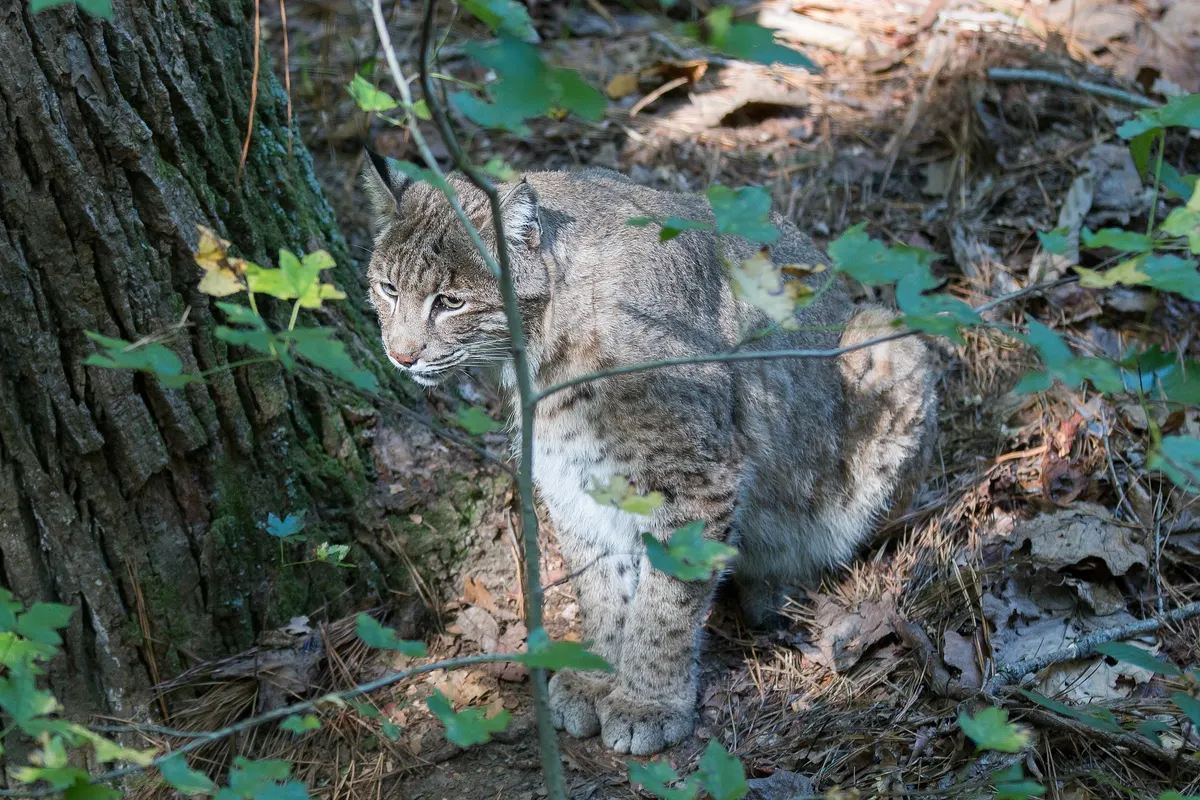
Canada lynx and bobcats overlap in size, so a heavy bobcat need not be a lynx. Look for the lynx's oversized paws, long legs, and tail tip that is black all around. A bobcat's tail tip is usually black above and pale below. Ear tufts alone are insufficient because both species have them. The lynx–bobcat comparison separates these North American field marks from the larger Eurasian species.

Where Snowy Forest and Hare Cover Meet

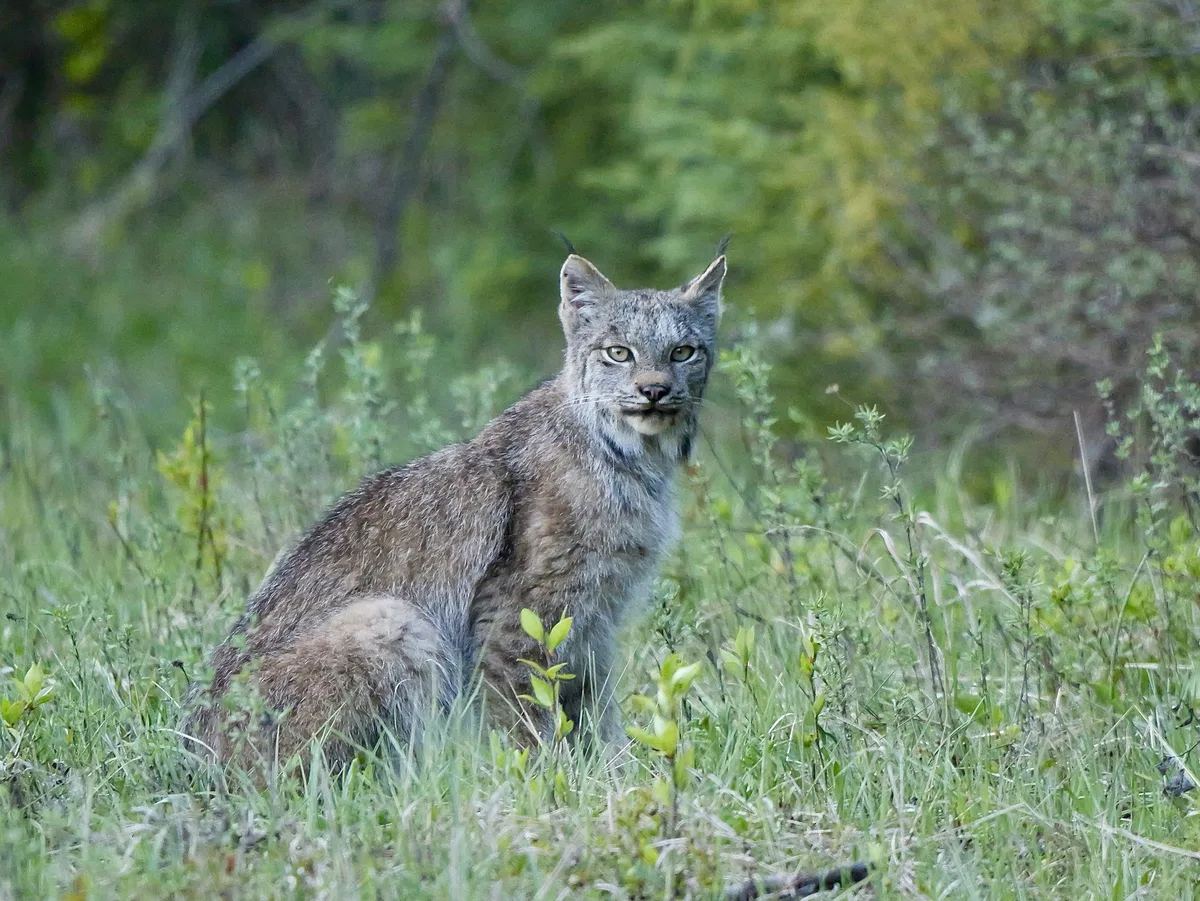
Canada lynx standing among grasses and low shrubs
A Canada lynx stands in low vegetation in Canada.

Canada lynx occupy the boreal forest belt and suitable mountain forests farther south. This is not simply a cat of the open Arctic: trees, cover, snow conditions, and prey all matter. Alaska's wildlife agency describes a mosaic of spruce, hardwood, subalpine, and regenerating forest as useful habitat, particularly where dense young vegetation supports hares.

The distinction between a forest's age and its structure matters. Young, thick growth can provide hare food and hiding places, while fallen trees and tangled woody cover can shelter lynx dens. A landscape with connected patches serving these different purposes is more useful than assuming that all old forest or all recently disturbed ground is equally suitable.

The southern populations occupy a smaller and more fragmented part of the species' range. A sighting in one forest does not establish a permanent breeding population there; individuals can travel long distances when food becomes scarce.

What Canada Lynx Eat When Hare Numbers Change

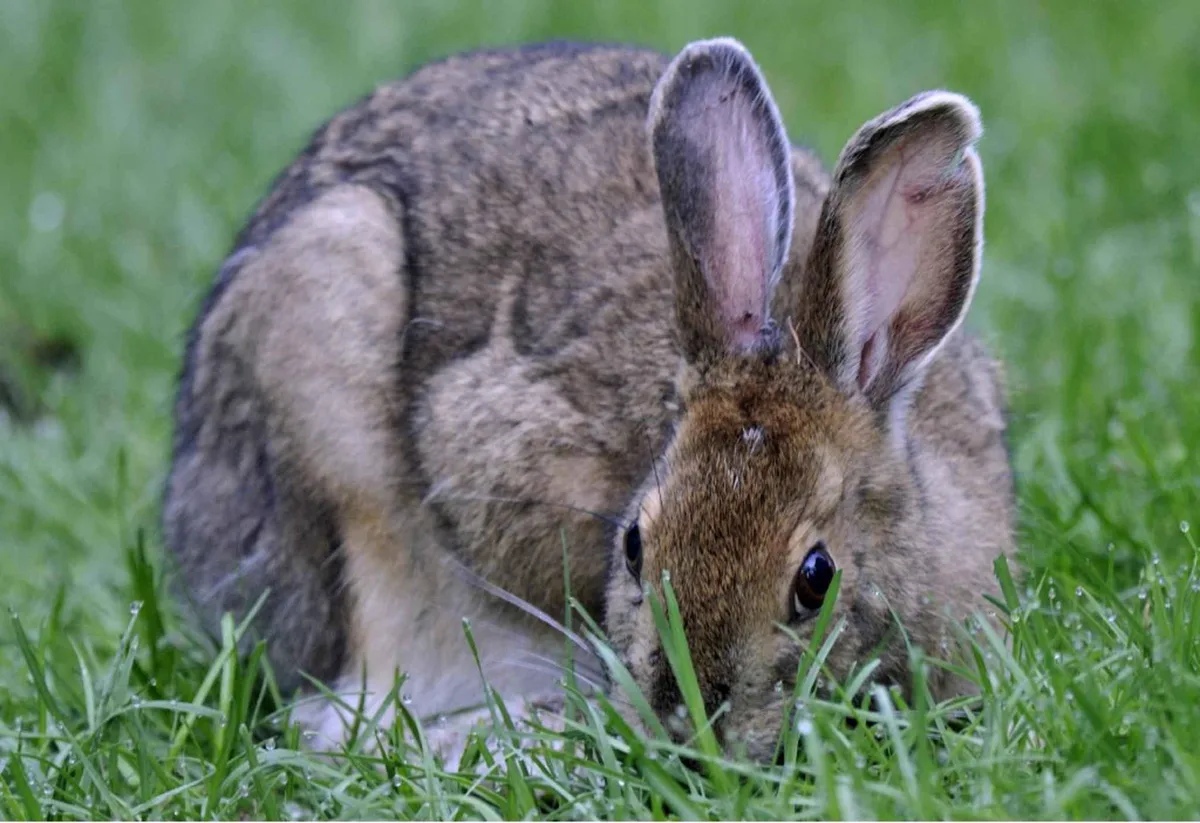
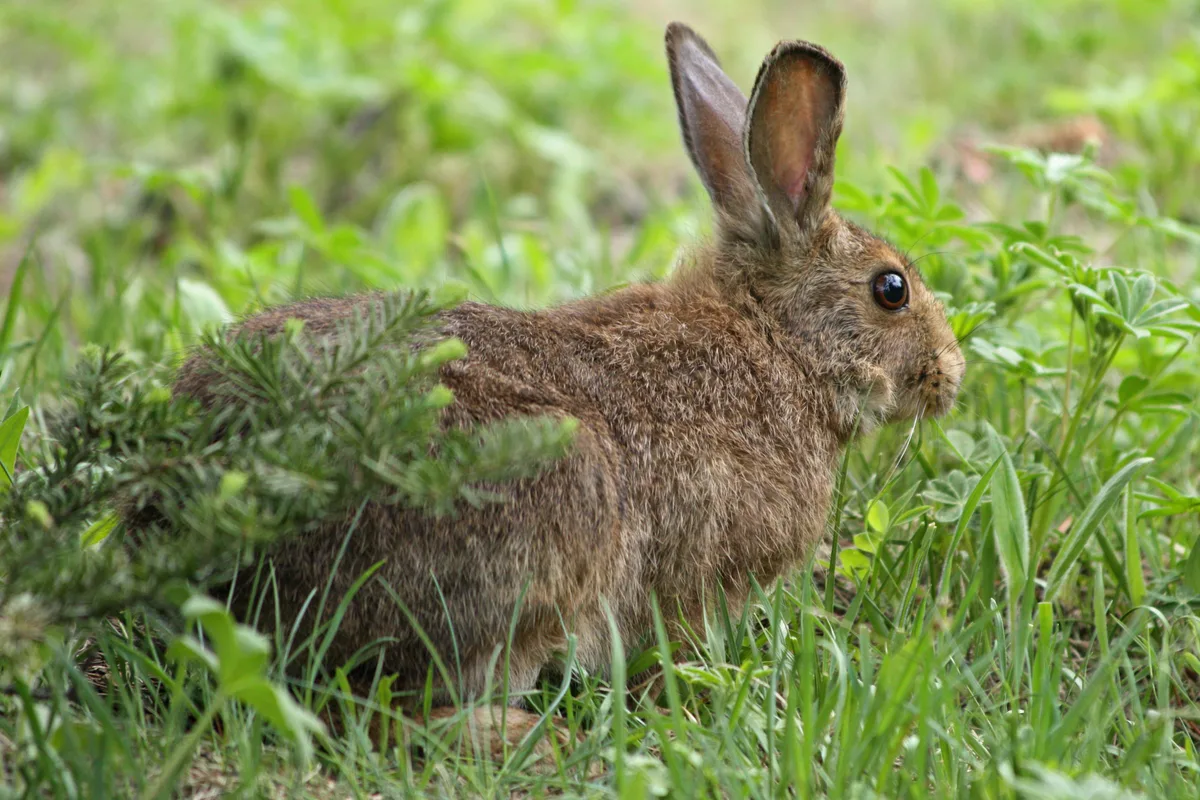
Snowshoe hare lowering its head to graze on grass
The snowshoe hare is the main prey of Canada lynx across much of the cat's range.

The Canada lynx is a carnivore, and snowshoe hares are its main prey across much of its range. It usually approaches quietly, waits near a travel route, or makes a short rush rather than pursuing prey over long distances. Grouse, squirrels, and other small animals supplement the diet, especially when hares are less available.

In northern study areas, hare abundance often rises and falls over roughly 8–11 years. Lynx numbers tend to follow with a delay. This is more than a simple story in which cats eat all the hares and then starve: food, predation, reproduction, and movements interact. When hare numbers decline, fewer females may reproduce successfully, fewer kittens reach winter, and some adults leave to find better feeding areas.

That connection helps explain why a lynx population estimate is a snapshot, not a fixed capacity of a forest. A year with few kittens can reflect a prey downturn as well as longer-term habitat problems. Monitoring needs to distinguish these processes rather than treating every fall in numbers as the same event.

Behavior on Hunting Trails and at Home

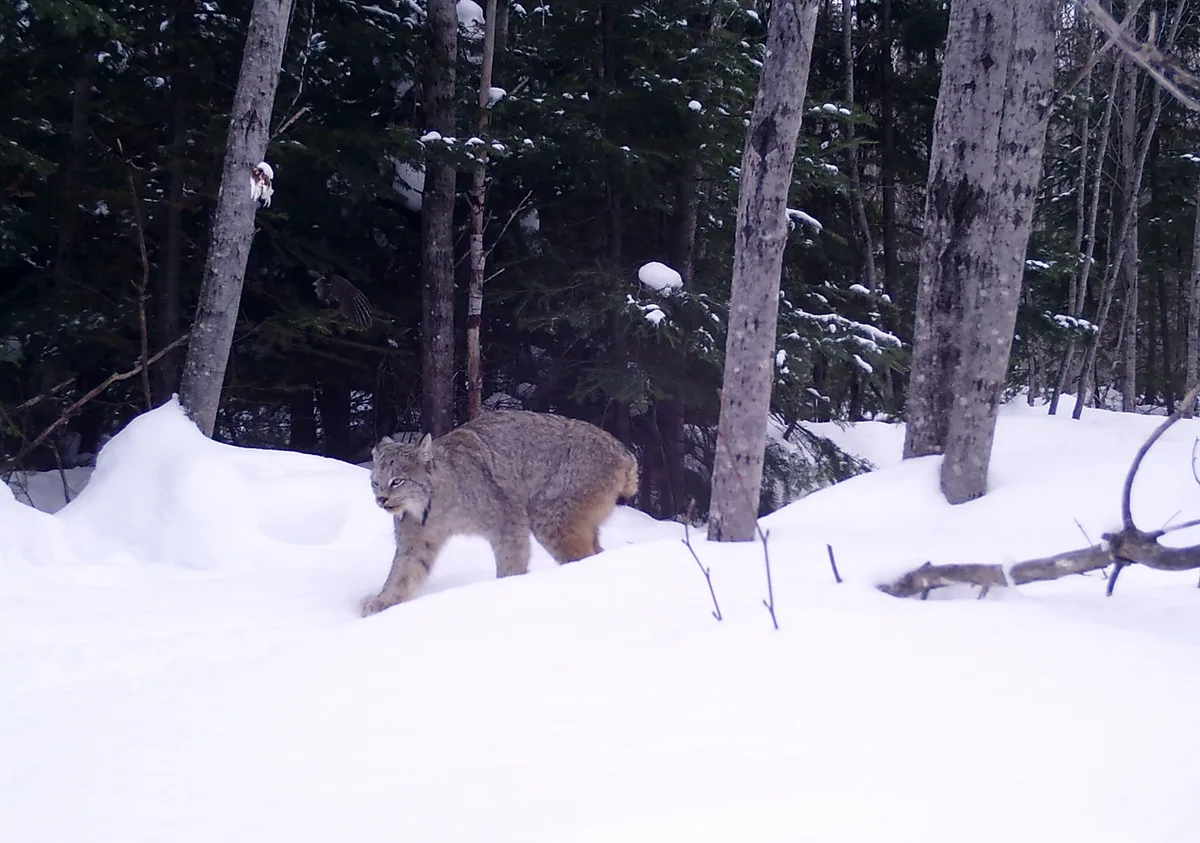
Canada lynx walking alone beside trees in deep snow
Adult Canada lynx usually travel alone outside mating and mother–kitten associations.

Adults generally travel and hunt alone, outside mating and mother–kitten associations. They use scent and other signals while moving through home ranges whose size depends partly on prey availability. Alaska's agency reports much larger ranges when food is scarce, so a single territory-size figure can be misleading.

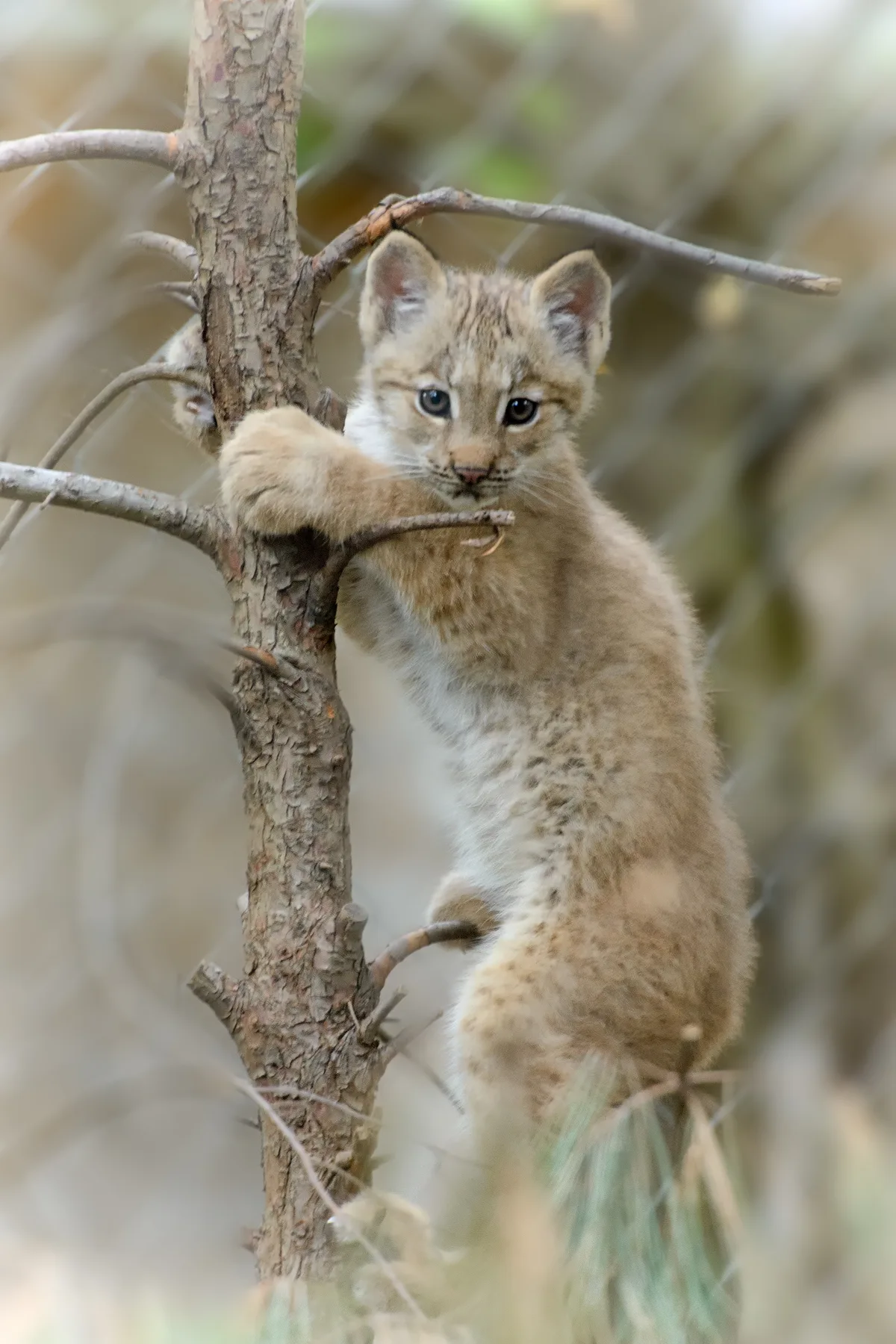
Lynx hunt mainly on the ground but can climb trees and swim. Tree climbing may provide refuge from a larger carnivore such as a wolf; it does not make the lynx a canopy hunter. Their ability to travel also makes connections between forest patches important. A road or cleared corridor may affect a moving lynx differently from a female remaining near a den.

The animal's quiet hunting style should not be mistaken for tameness. Observe from a distance and leave its route open. Kittens handled by researchers in the gallery are being examined during wildlife monitoring, rather than shown as pets or as animals that visitors should approach.

Life Cycle: A Litter Depends on the Food Supply

Young Canada lynx climbing a tree with large front paws
A young Canada lynx climbs a tree, showing its large paws.

In Alaska, mating usually occurs in March or early April, and birth follows about 63 days later. Females use natural cover such as fallen spruce, log tangles, or rock ledges. Litters there commonly contain two to four kittens, although larger litters occur. The mother provides care and brings the young through a period when they cannot hunt independently.

Kittens remain with her into late winter, learning to travel and find prey before the family separates around the next breeding period. Prey abundance influences both the chance of a female producing a litter and the survival of that litter. A large litter at a den is therefore not enough evidence that the same number of young will survive to disperse.

Animal Diversity Web records wild longevity up to about 14.5 years. This is a reported maximum, not the expected lifespan of every kitten. Survival varies with age, food conditions, and local hazards.

Conservation: Global Status and US Protection Differ

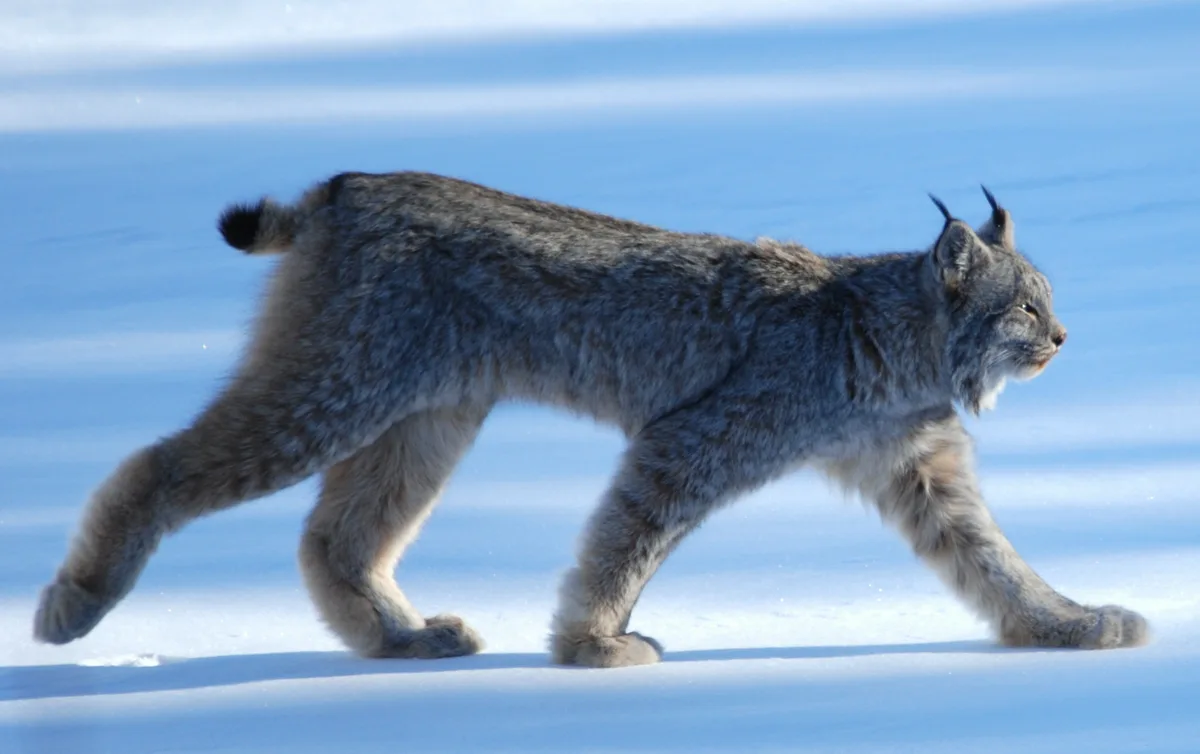
Canada lynx walking across snow with broad furry paws
A Canada lynx crosses snow near Annie Lake in the Yukon.

The Canada lynx is listed as Least Concern globally in the IUCN status presented by Animal Diversity Web. Separately, the contiguous-US distinct population segment is listed as Threatened under the US Endangered Species Act, as described by the US Fish and Wildlife Service. These assessments cover different geographic units and use different systems; neither cancels the other.

Habitat connectivity, changes in snow conditions, and management of forest landscapes remain relevant even for a species that is widespread farther north. Conservation decisions in the southern range must account for the availability of hare habitat and for the fact that population fluctuations are partly natural. Keeping those scales separate avoids describing every Canada lynx as federally threatened or assuming that a global category makes local protection unnecessary.

References and Further Reading

Canada Lynx: classification and fun facts

Classification

Scientific Taxonomy
  1. Kingdom

    Animalia

  2. Phylum

    Chordata

  3. Order

    Carnivora

  4. Family

    Felidae

  5. Genus

    Lynx

  6. Species

    L. canadensis

Did You Know?

Fun Facts

1

Broad, fur-covered paws help a Canada lynx travel over soft snow.

2

A Canada lynx has a completely black tail tip, unlike the usually pale underside of a bobcat tail tip.

3

Northern lynx populations often fluctuate after changes in snowshoe hare abundance.

4

Kittens stay with their mother into late winter while learning to hunt.

Common Questions

FAQ about Canada Lynx

Select a question to reveal the answer.

Is a Canada lynx the same as a bobcat?

No. Canada lynx are Lynx canadensis; bobcats are Lynx rufus. Canada lynx have larger, furry paws, longer legs, and a tail tip that is black all around. Their weights overlap, so size alone is unreliable. See the lynx–bobcat comparison.

What do Canada lynx eat?

Their main prey is the snowshoe hare. Grouse, squirrels, and other small animals supplement this carnivore diet, especially when hares are scarce.

Where do Canada lynx live?

They live mainly in boreal forests across Canada and Alaska, with smaller populations in suitable parts of the contiguous United States.

How big is a Canada lynx?

Most adults in the Alaska wildlife agency account weigh 18–30 pounds (8.2–13.6 kg). Animal Diversity Web reports a head-and-body length of about 67–107 cm, excluding the short tail. Males are generally heavier than females.

Why do Canada lynx have such big feet?

Their broad paws and dense foot fur spread their weight over soft snow. This helps them travel and hunt where smaller-footed predators can sink more deeply.

Are Canada lynx endangered?

The species is Least Concern globally in the IUCN status presented by Animal Diversity Web. The contiguous-US distinct population segment is separately listed as Threatened under the US Endangered Species Act. The categories refer to different geographic units.

Show 2 more questionsExpand
What is a baby Canada lynx called?

A baby is a kitten. In Alaska, litters commonly have two to four kittens after about 63 days of gestation. The mother raises them and they usually remain with her into late winter.

How is a Canada lynx different from a Eurasian lynx?

They are separate species. The Eurasian lynx, Lynx lynx, lives in Eurasia and is generally heavier. The Canada lynx, Lynx canadensis, is North American and strongly associated with snowshoe hares.

For school and research

Cite this page

APA
Nguyen, A. (2026, November 5). Canada Lynx Facts. Wildlife Encyclopedia. https://www.wildlifedb.com/animals/canada-lynx
MLA
Nguyen, An. “Canada Lynx Facts.” Wildlife Encyclopedia, 5 Nov. 2026, www.wildlifedb.com/animals/canada-lynx.