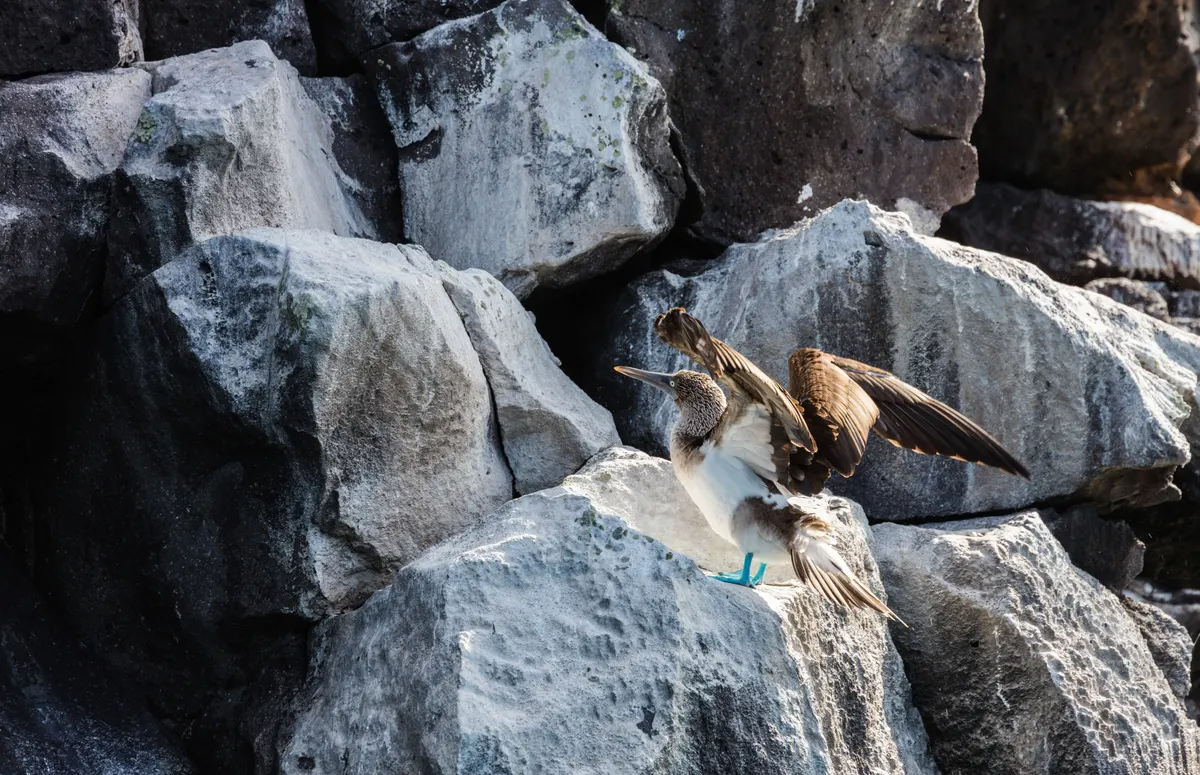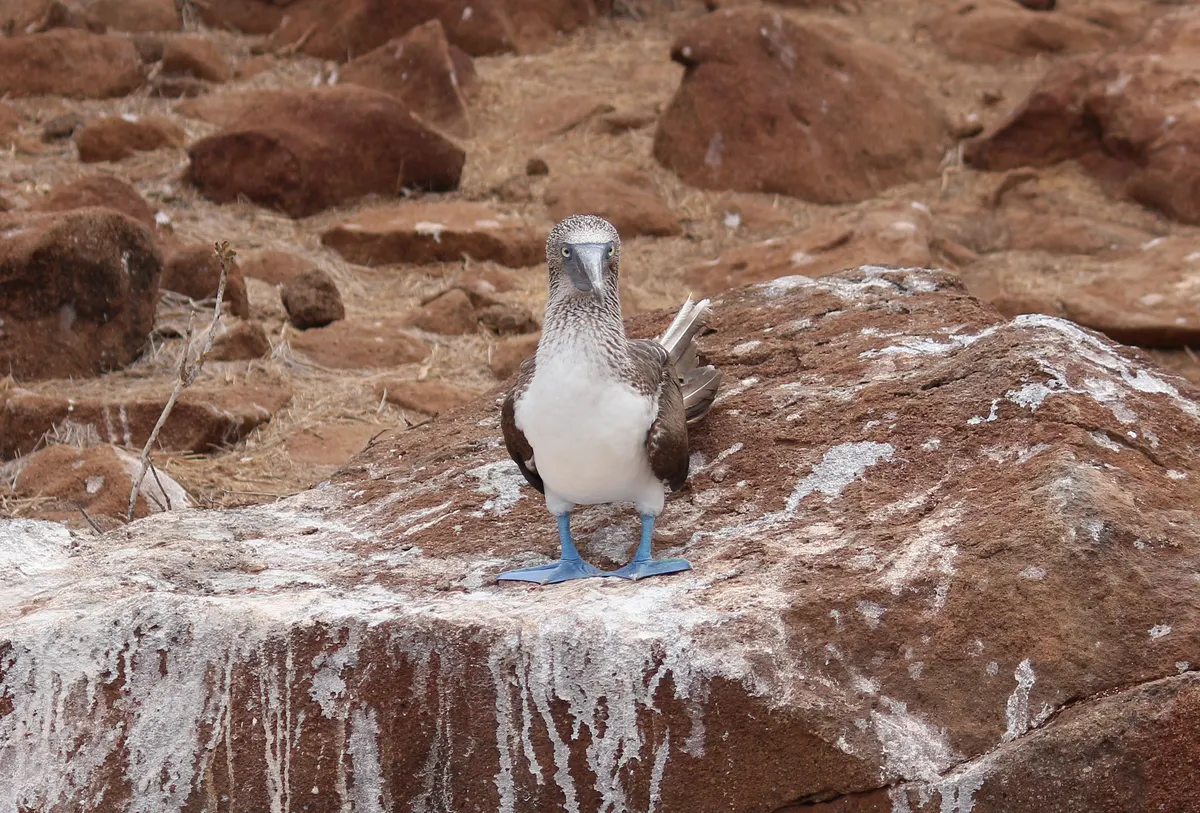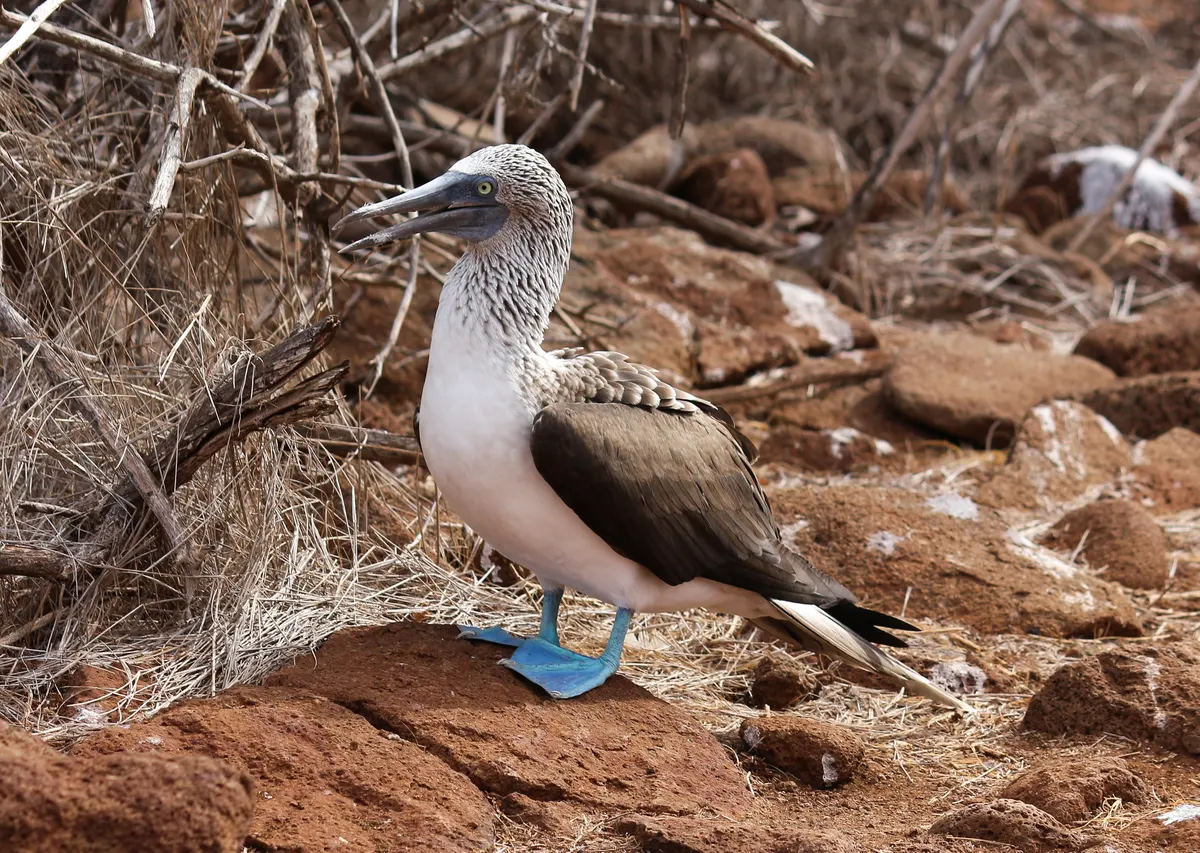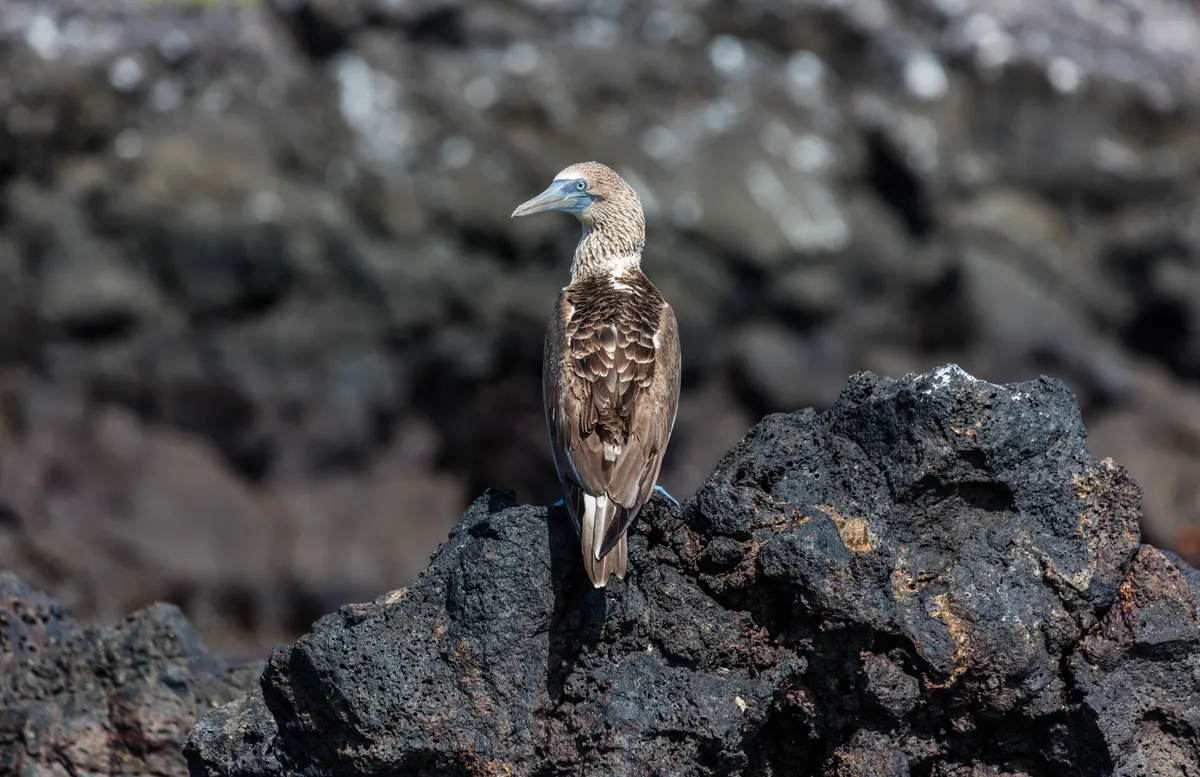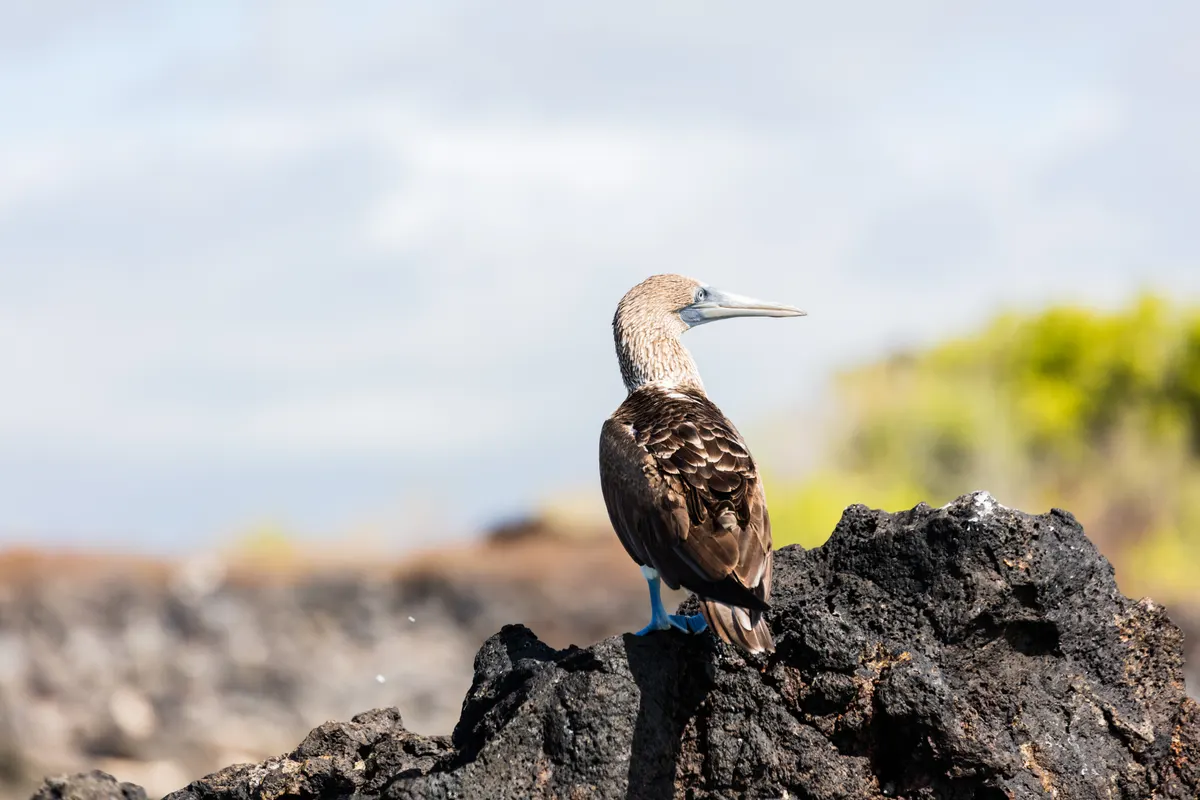
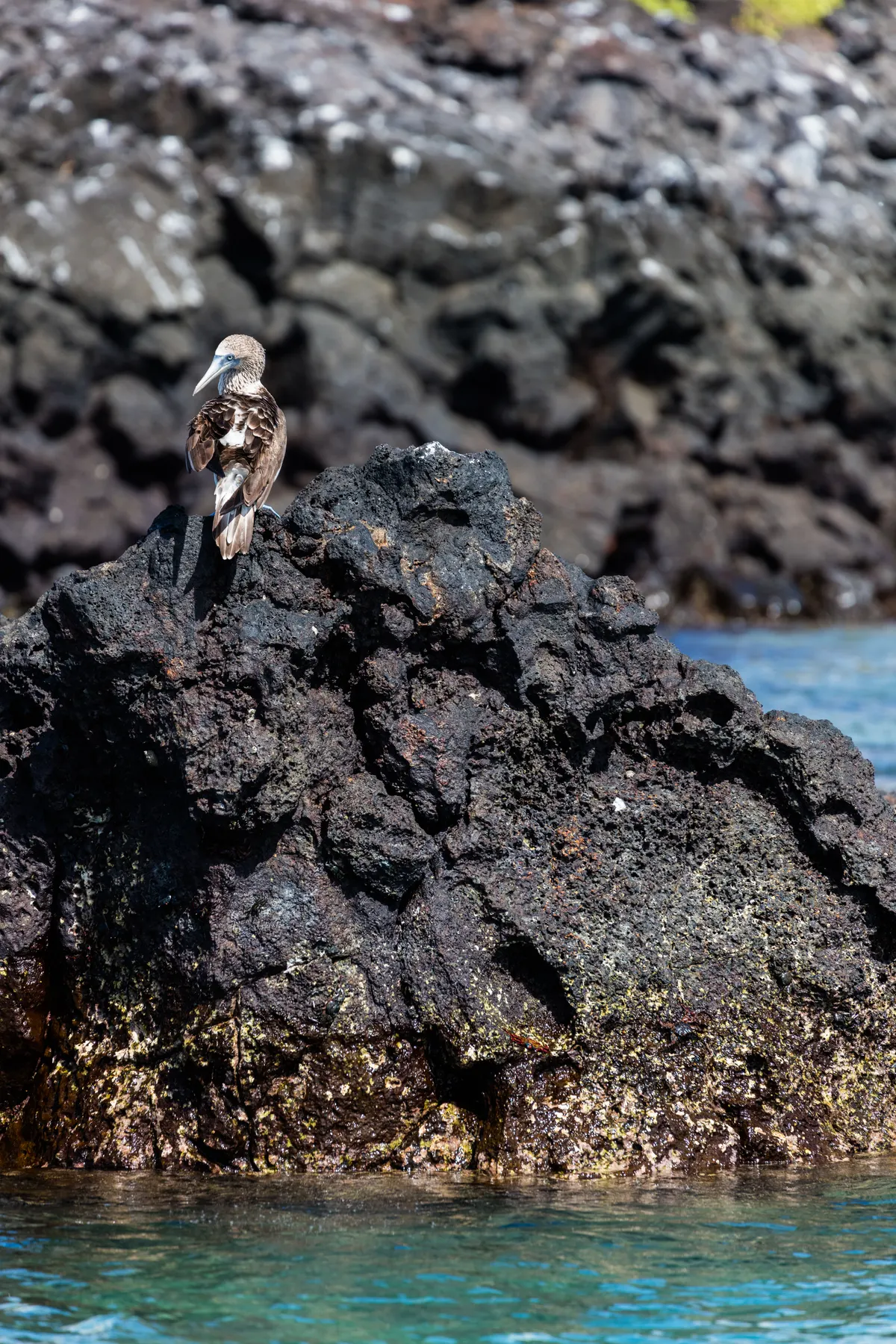
The morphology of the blue-footed booby is a masterclass in aerodynamic and hydrodynamic engineering. Adults are medium-sized seabirds, measuring roughly 2.5 to 3 feet in length, boasting a wingspan of up to 5 feet, and weighing between 3 and 4.5 pounds. They exhibit a sleek, torpedo-shaped body covered in dense, waterproof plumage that is stark white on the underbelly and mottled brown on the back and wings.
Their defining anatomical feature is, unequivocally, their webbed feet, which range in color from pale aquamarine to deep, vibrant cerulean. This pigmentation is not generated genetically; it is acquired strictly through their diet. The blue color is derived from carotenoid pigments absorbed from the fresh fish they consume. Because carotenoids act as crucial antioxidants supporting the immune system, a booby must sacrifice immunological defense to deposit these pigments into its feet. Therefore, brightly colored feet are an honest, unfalsifiable signal that the bird is a highly successful hunter with a robust immune system.
Furthermore, Sula nebouxii possesses incredible cranial and respiratory adaptations for high-speed plunge-diving. Unlike most birds, they completely lack external nostril openings. If they had nostrils, the sheer hydrostatic pressure of hitting the water at 60 mph would force water lethally into their lungs. Instead, they breathe through the corners of their closed mouths. To absorb the immense kinetic shock of impact, they have evolved a network of subcutaneous pneumatic air sacs within their skull and chest that act as biological airbags, protecting their brain and internal organs from trauma.