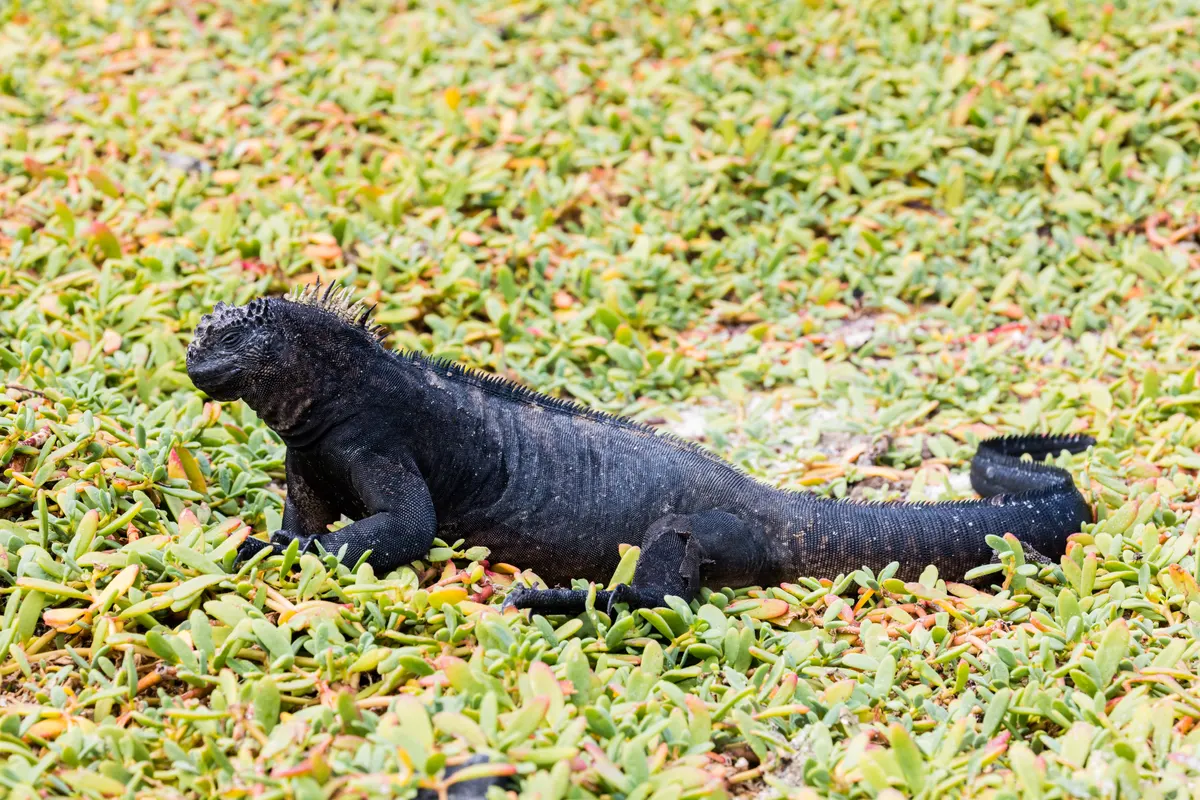
Day-to-day life alternates between two states: warming on rock and cooling in water. After a dive, an iguana's body temperature can drop sharply, so it returns to dark lava and basks, sometimes pressing flat against the stone or facing the sun to control how much heat it takes in. Large numbers often pile together on favored rocks, and this clustering can help retain warmth overnight.
Behavior shifts during the breeding season. Males become territorial, defending patches of rock and displaying to rivals with head-bobbing and, if pushed, wrestling matches in which they push head to head. The rest of the year the animals are far more tolerant of one another and gather in dense groups without much conflict. One of the species' most remarkable responses is physiological rather than social: during El Niño years, when warm water kills off the algae they depend on, marine iguanas can actually shrink in body length, reducing their food needs, and then regrow once cooler, productive conditions return.