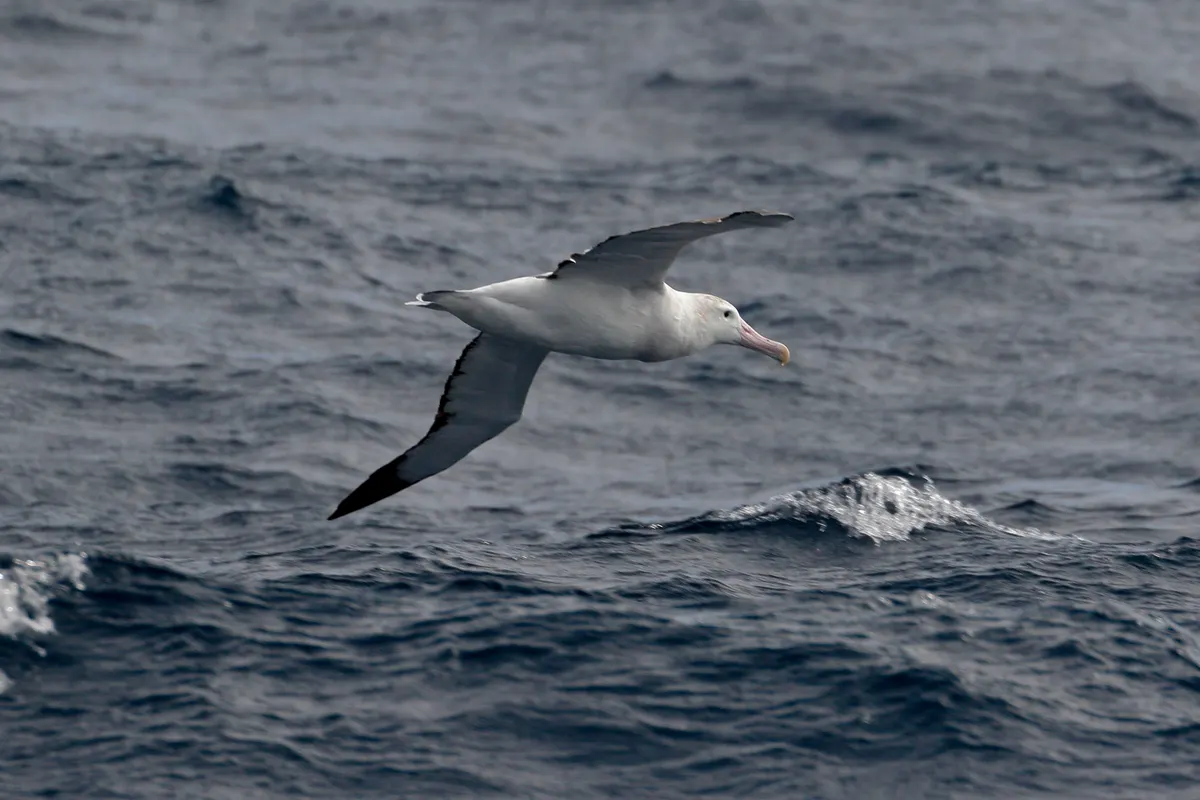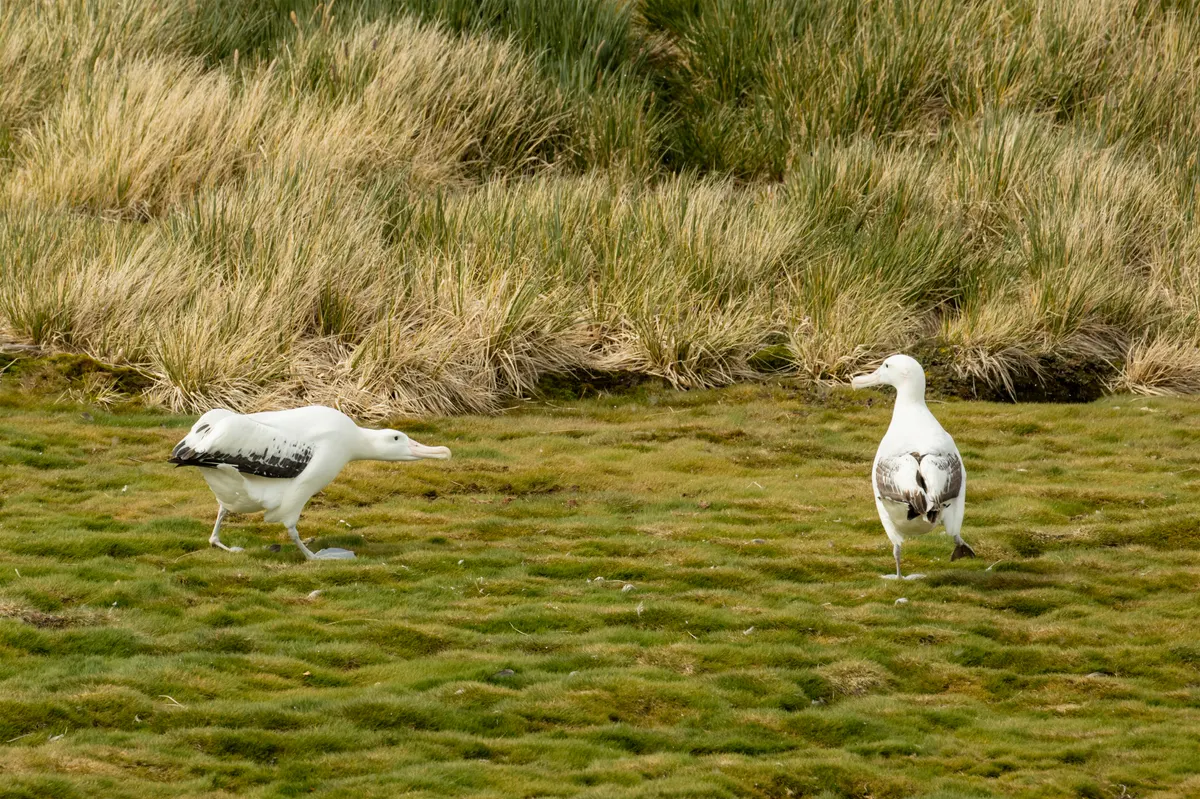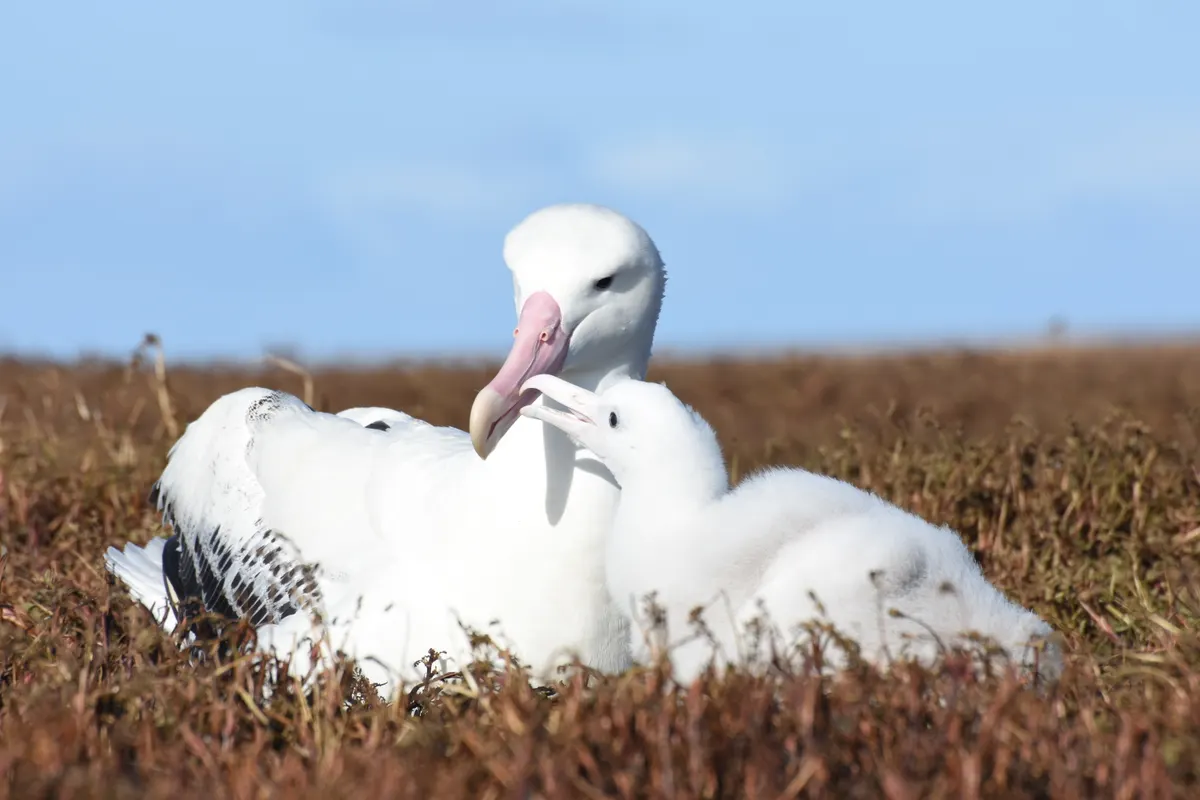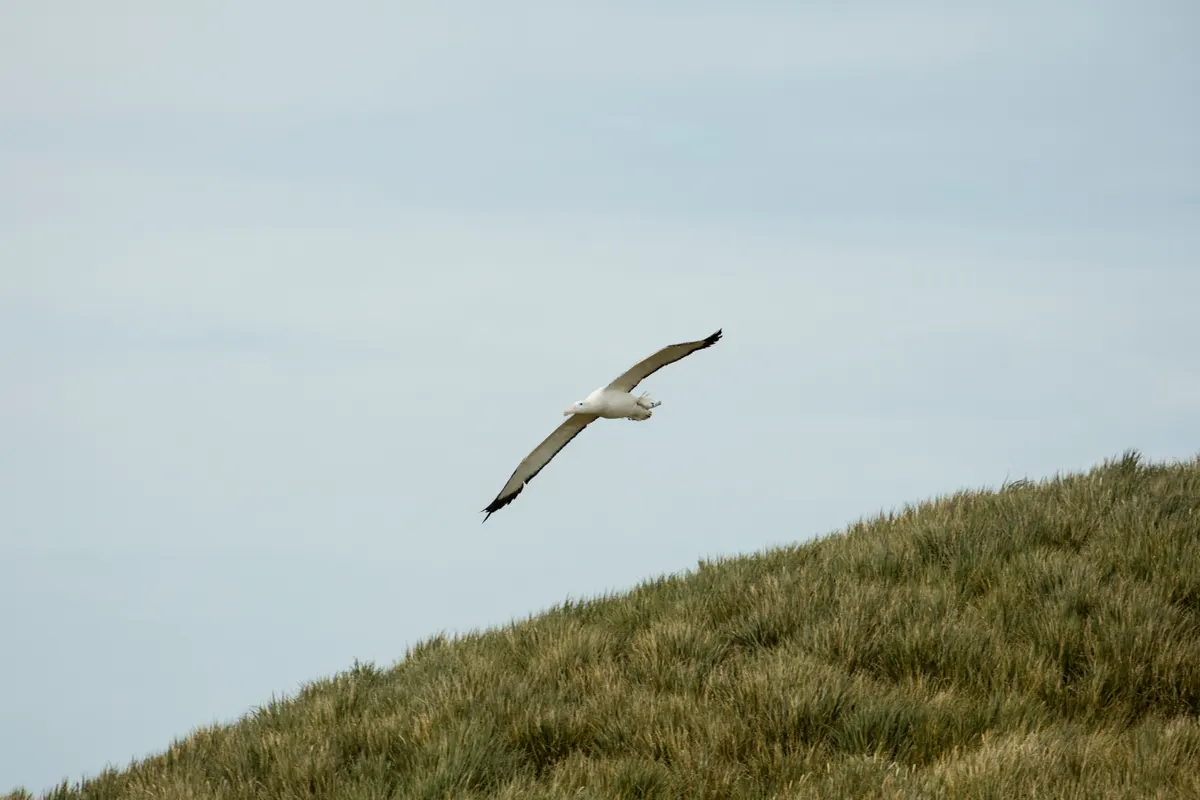
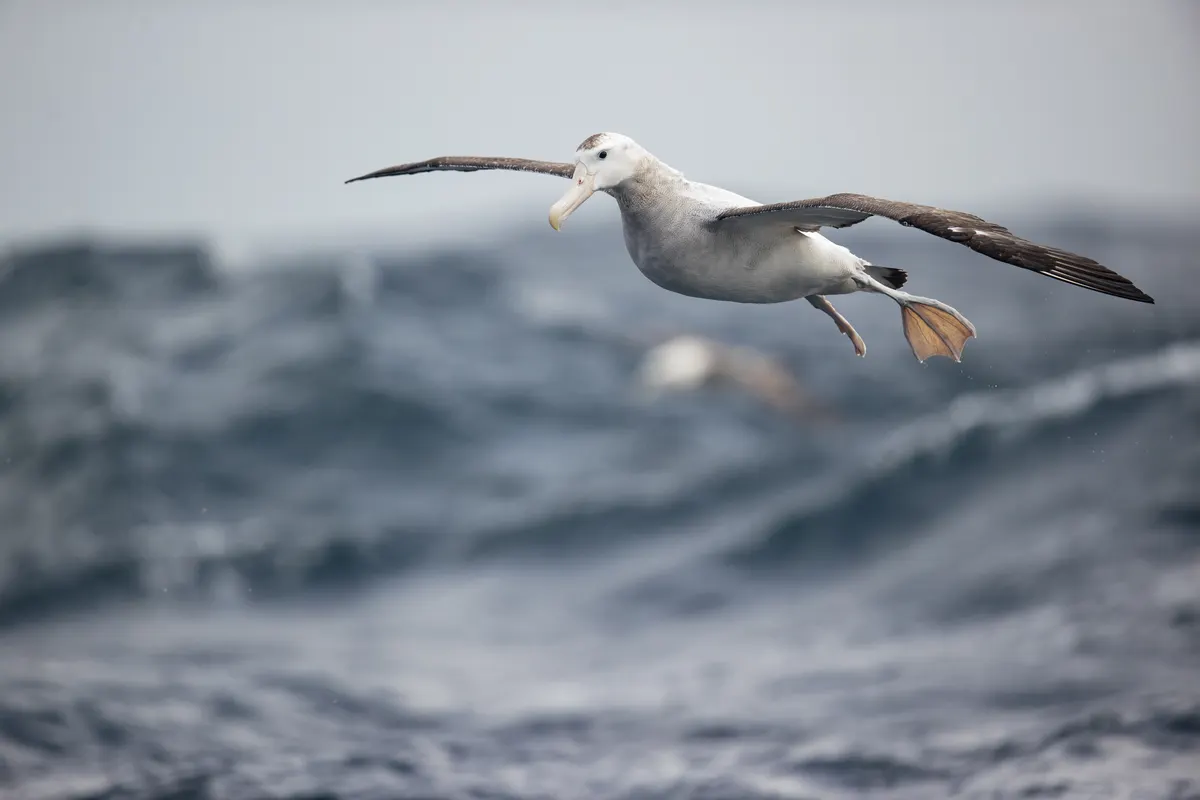
The wandering albatross is a pelagic seabird with the longest wingspan of any living bird.
AvesVulnerable
Wandering Albatross Facts
“The wandering albatross holds the record for the longest wingspan of any living bird, reaching up to 11.5 feet (3.5 meters) from tip to tip.”
Wandering albatrosses use the longest wingspan of any living bird to glide over Southern Ocean winds with little flapping. They spend years at sea between breeding attempts, taking squid and fish from the surface but remaining vulnerable to accidental capture on fishing lines.