Galápagos Tortoise Facts
"Galápagos tortoises can live longer than many people."
Galápagos tortoises are enormous island reptiles with heavy shells, long lives, and a calm, slow way of moving. They graze on grasses and cactus across the...
Loading page content

"Galápagos tortoises can live longer than many people."
Galápagos tortoises are enormous island reptiles with heavy shells, long lives, and a calm, slow way of moving. They graze on grasses and cactus across the...
Chelonoidis nigerTestudinesTestudinidae
Explore Galápagos tortoise photos organized for learning and classroom observation.
Click any photo to view it larger. 8 images available.
Core article
Habitat, diet, behavior, and more — everything on one page.
Navigating the rugged, volcanic terrain of a remote Pacific archipelago at a glacial pace of barely 0.2 miles per hour, the Galápagos tortoise is an enduring symbol of evolutionary isolation and biological resilience. These prehistoric giants possess an unimaginably slow metabolic rate, enabling them to survive harsh island droughts and achieve lifespans well over a century. Studying these massive herbivores helped Charles Darwin formulate his theory of natural selection, as their diverse anatomical forms tell a precise story of adaptation to highly specific, isolated microclimates.
The Galápagos giant tortoise complex is scientifically categorized under the genus Chelonoidis, specifically noted as Chelonoidis niger (though often treated as a species complex encompassing multiple distinct species or subspecies). They belong to the kingdom Animalia, phylum Chordata, class Reptilia, order Testudines, and the family Testudinidae.
Evolutionary genetics indicates that the ancestors of these giant tortoises arrived in the Galápagos Islands from mainland South America (likely related to the modern Chaco tortoise) approximately two to three million years ago. Swept out to sea, these pioneering reptiles survived the ocean crossing by floating on ocean currents—a feat made possible by their natural buoyancy and unique capacity to endure months without food or fresh water. Upon colonizing the archipelago, they underwent rapid adaptive radiation, physically diverging to exploit the unique ecological niches of the various islands.
As the largest living tortoise species on Earth, adult Chelonoidis niger males can attain immense proportions, measuring up to 6 feet (1.8 meters) in length and weighing an astonishing 900 pounds (400 kilograms). The females exhibit significant sexual dimorphism, generally being much smaller and lighter.
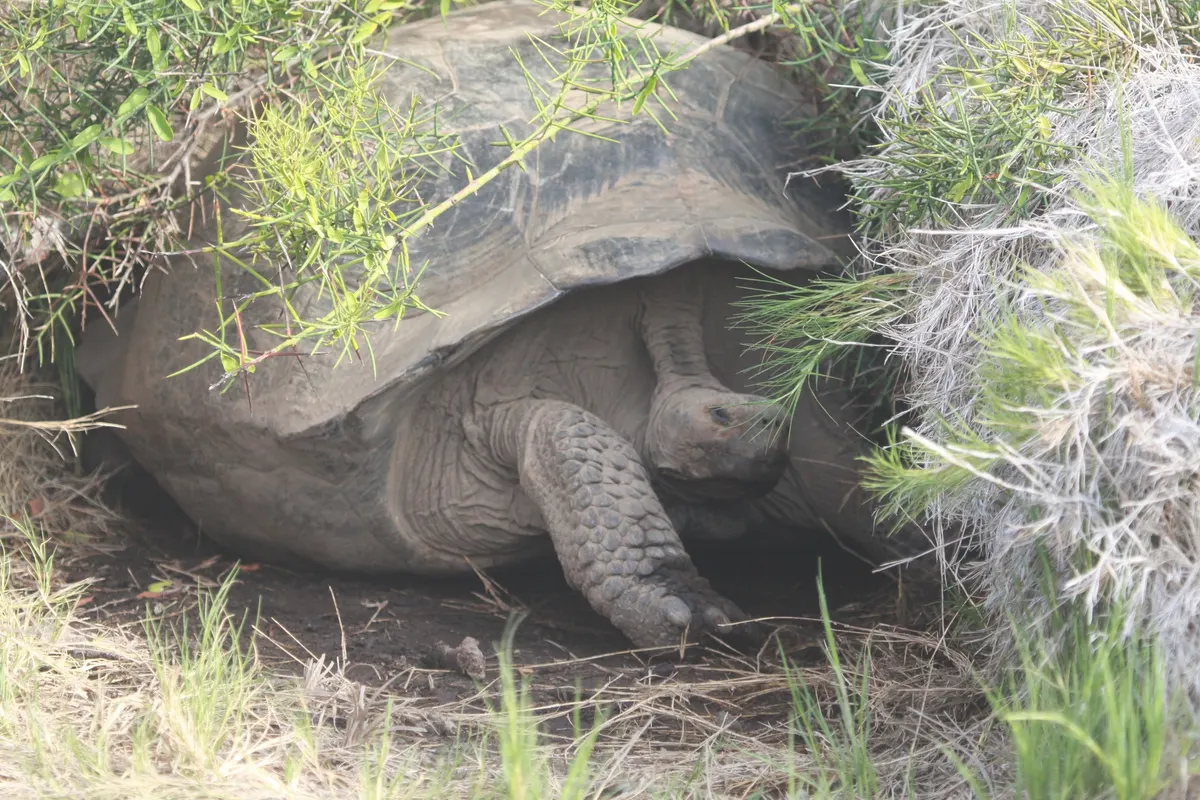
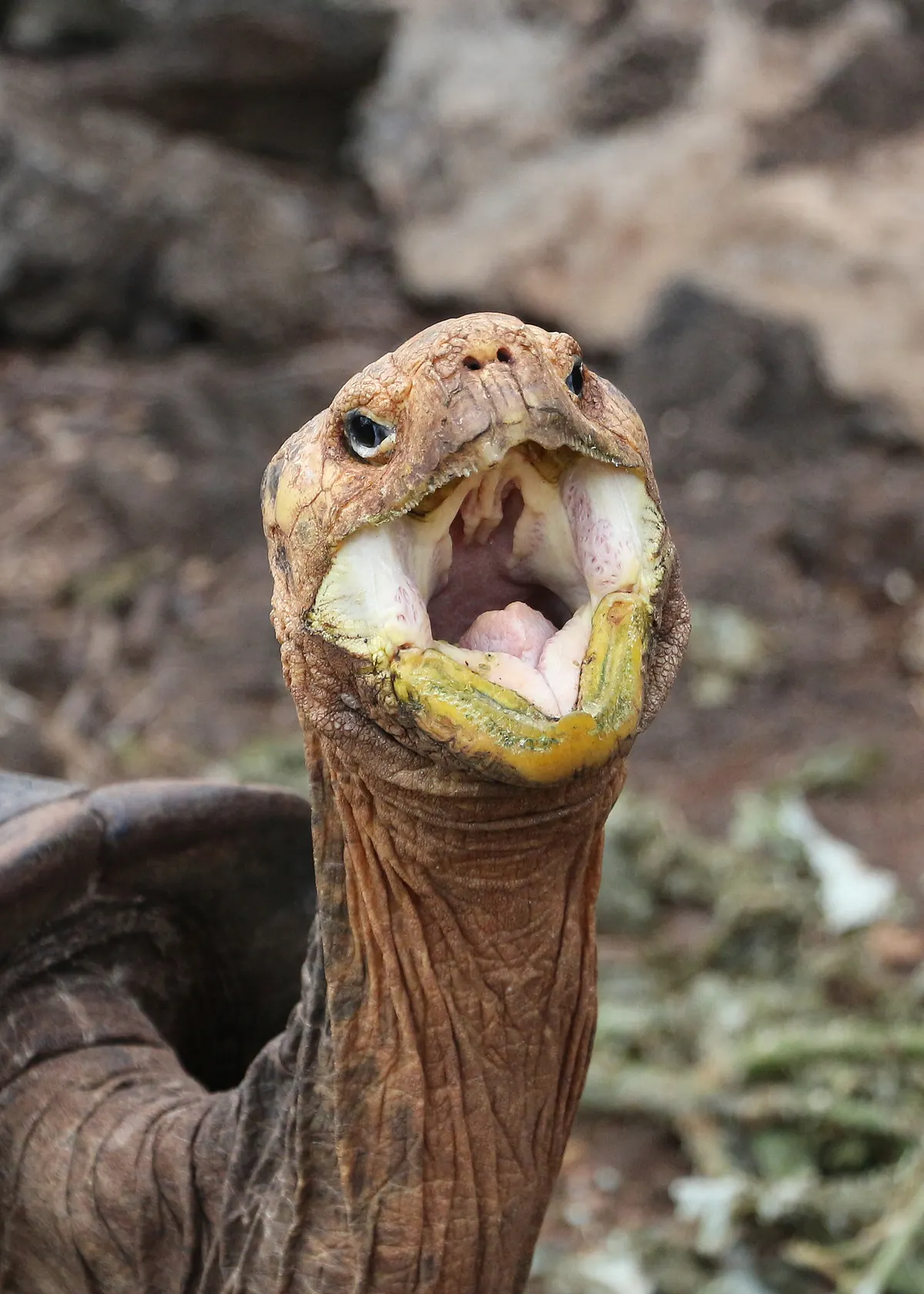
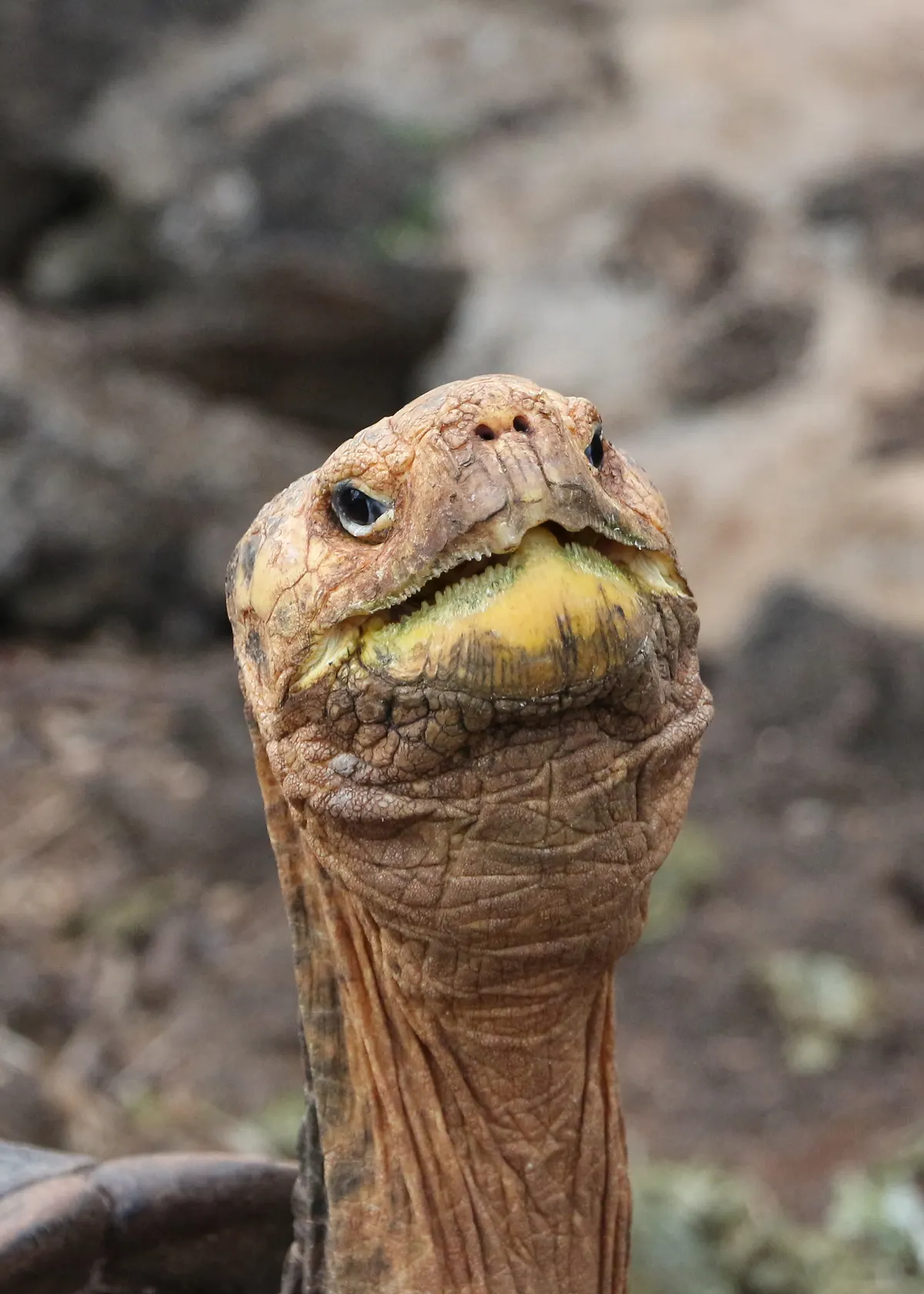
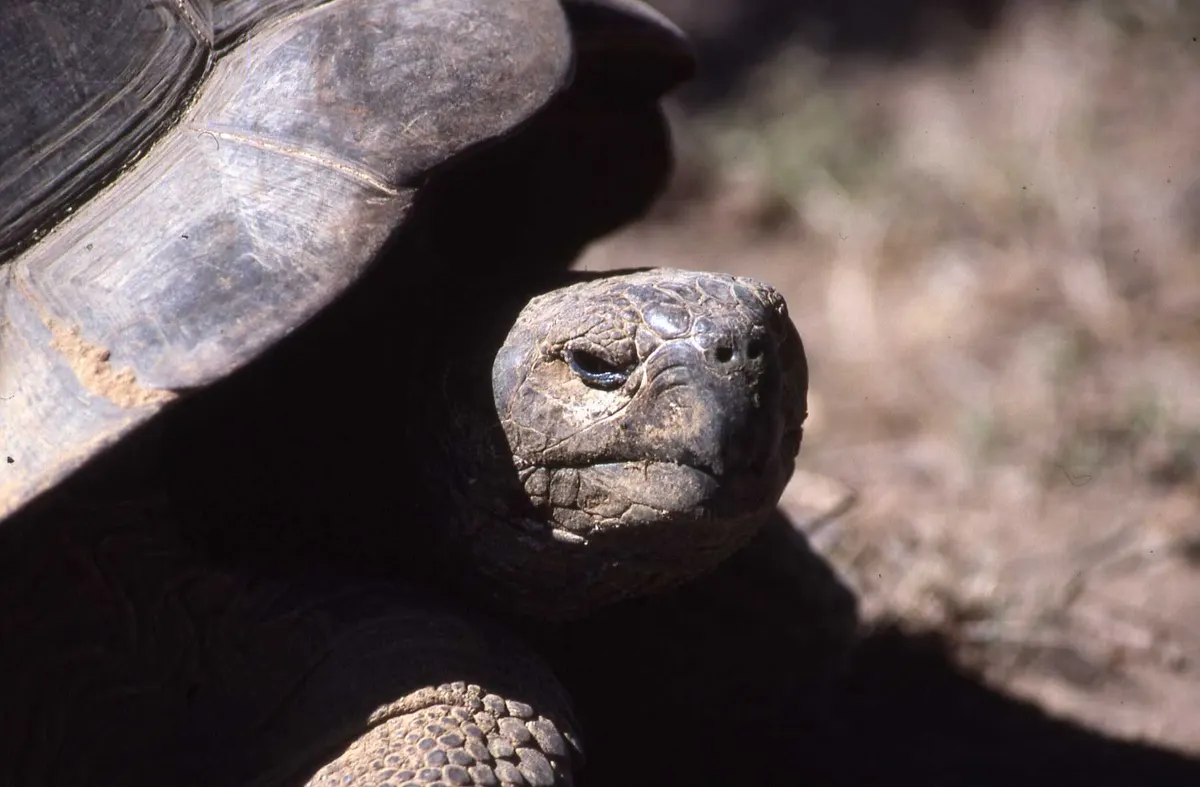
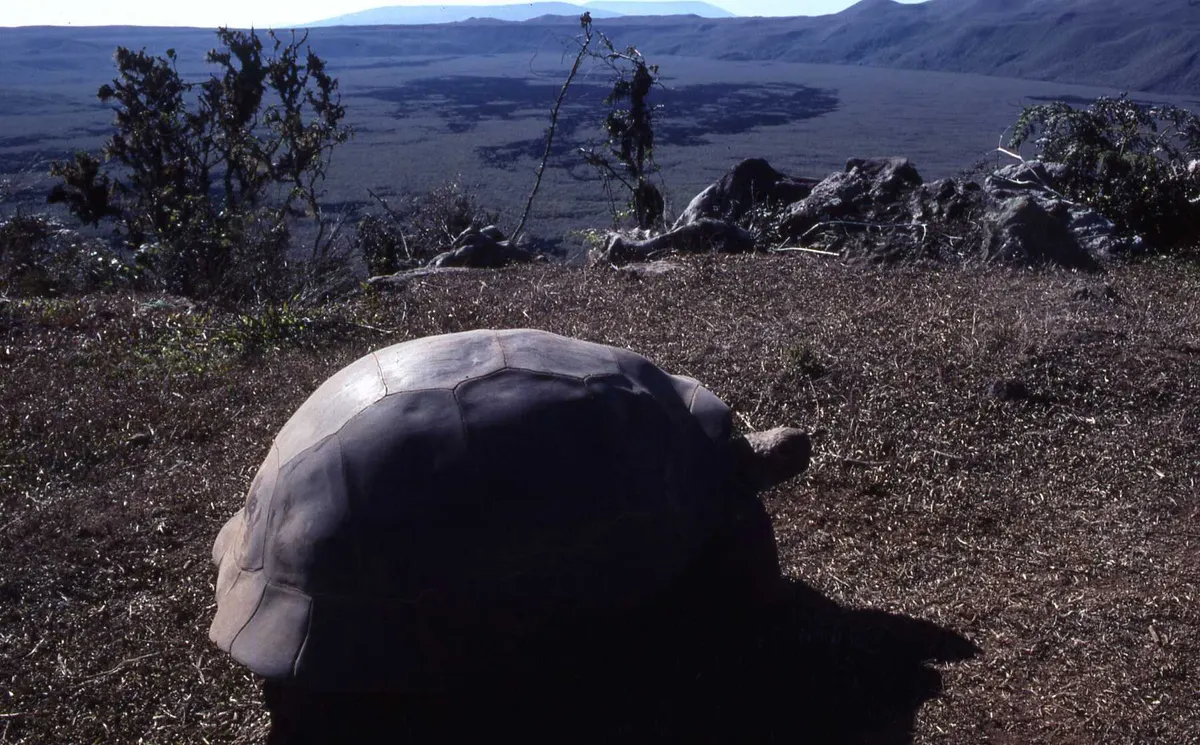
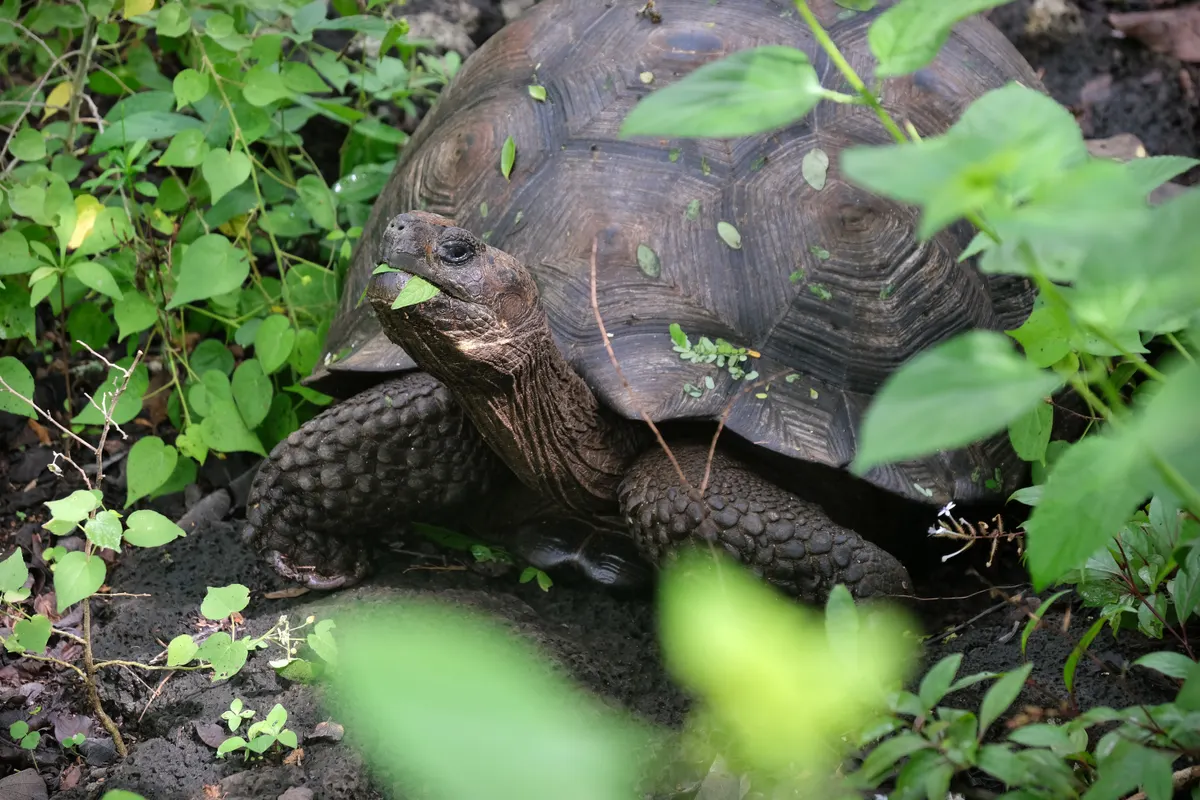
Their most critical anatomical structure is the carapace (the upper shell), which is fused to the spine and rib cage, functioning as an impenetrable biological fortress. Darwin observed that the morphology of this carapace varies dramatically based on island origin, generally falling into two primary morphotypes: "dome-shaped" and "saddleback." Dome-shelled tortoises inhabit larger, humid islands with abundant ground-level vegetation. Saddleback tortoises evolved on smaller, arid islands; their carapace arcs sharply upward above the neck, allowing them to dramatically extend their elongated necks vertically to browse on tall, arboreal Opuntia cactus pads.
Their limbs are heavily scaled, columnar, and elephantine, designed to bear massive weight rather than facilitate speed. Their tough, leathery skin and thick scales provide protection against the sharp volcanic rock and thorny vegetation endemic to their habitat.

The distribution of the Galápagos tortoise is completely endemic to the Galápagos Islands, an Ecuadorian archipelago situated roughly 600 miles off the western coast of South America.
Their habitat selection is tightly correlated with their shell morphotype. Populations occupy diverse island biomes, ranging from the lush, humid cloud forests and grassy highlands of the volcanic slopes, down to the desolate, arid coastal shrublands dominated by scrub brush and cacti. They exhibit a form of micro-migration; on larger islands, populations will slowly migrate downhill to the coastal zones during the wet season to exploit fresh vegetation, retreating back up into the cooler, mist-shrouded highlands during the dry season.

Galápagos tortoises are obligate herbivores and play a critical role as ecosystem engineers and mega-grazers within their island environments. Their diet is extensive and unspecialized, comprising over 50 different plant species.
They aggressively graze on native grasses, broad leaves, fallen fruits, lichens, and flowers. For saddleback populations in arid zones, the primary water and caloric source is the prickly pear cactus (Opuntia). Their specialized jaws possess a sharp, keratinous ridge rather than teeth, which functions like heavy-duty shears to slice through thick, fibrous plant matter and cactus pads, spines and all.
Because they inhabit environments prone to severe, prolonged droughts, these tortoises have evolved to be highly efficient in water conservation. They extract the majority of their required hydration directly from their plant diet and can store vast reserves of water within their bladders and the pericardium (the sac surrounding the heart), allowing them to survive for up to a year without drinking fresh liquid.

The social structure of the Galápagos tortoise is largely solitary and passive, though they regularly aggregate in high densities around limited resources, such as freshwater pools or muddy wallows.
Wallowing is a critical thermoregulatory and hygienic behavior. Because they are ectothermic, they rely on the environment to regulate core body temperature. During the intense equatorial midday heat, they submerge themselves in mud pools to prevent overheating and to suffocate parasitic ticks and mites embedded in their skin folds. In a fascinating display of interspecific mutualism, tortoises will often deliberately extend their necks and legs to allow Darwin's finches and mockingbirds to pluck these parasites directly from their bodies.
Aggressive interactions are largely restricted to males during the mating season. In saddleback populations, territorial or mating disputes are resolved through a unique ritualized combat: two males face off and stretch their necks as high as biologically possible. The tortoise capable of reaching the highest vertical elevation establishes dominance, and the subordinate male quickly retreats.

Reproduction is a physically taxing process. Following successful courtship, the female undertakes an arduous journey, often traveling several miles to arid, sandy coastal nesting zones where the soil temperature is optimal for incubation.
Using only her hind legs, she blindly excavates a deep, cylindrical nesting chamber in the soil. She deposits a clutch of 2 to 16 spherical, hard-shelled eggs, painstakingly backfills the nest with soil and urine to create a hardened, protective cap, and subsequently abandons the site.
Incubation spans a prolonged 4 to 8 months. As with many reptiles, they exhibit temperature-dependent sex determination. Upon hatching, the neonates (weighing a mere few ounces) must dig their way to the surface—a process that can take weeks. Survival rates for hatchlings are abysmally low, as they face intense predation before their shells harden. However, those that reach maturity possess negligible senescence, achieving extreme longevity. Wild individuals routinely live 80 to 120 years, and captive specimens are documented to have exceeded 150 years of age.
(Population and conservation trend data sourced from the IUCN Red List of Threatened Species)
Despite their legendary longevity, the Galápagos tortoise is classified globally as "Vulnerable" by the IUCN, with several specific island subspecies driven entirely to extinction in recent centuries.
The historical devastation of their populations was driven by human exploitation. During the 18th and 19th centuries, whalers and pirates harvested hundreds of thousands of tortoises, utilizing them as living, non-perishable meat sources stored in ship holds. Today, the primary threats are anthropogenic habitat destruction and, critically, invasive species. Feral pigs, dogs, and black rats aggressively prey upon tortoise eggs and hatchlings. Furthermore, introduced herbivores like feral goats utterly strip the landscape of vegetation, outcompeting the slow-moving tortoises for food and devastating the island ecosystems.
Intensive captive breeding and repatriation programs spearheaded by the Galápagos National Park and the Charles Darwin Foundation have successfully reversed the population trends of several subspecies, offering a beacon of hope for their continued survival.
Galápagos tortoises can live longer than many people.
Different island tortoises can have dome-shaped or saddleback shells.
They help spread plant seeds across the islands in their droppings.
A Galápagos tortoise can go a very long time without food or fresh water.
These giant reptiles often cool off in muddy wallows.
Some tortoise populations have recovered because of captive breeding and island restoration.
Select a question to reveal the answer.
A Galápagos tortoise is a giant tortoise native to the Galápagos Islands. It is one of the largest tortoises alive today.
They live only on the Galápagos Islands, an Ecuadorian archipelago in the Pacific Ocean west of South America.
They are herbivores that eat grasses, leaves, cactus pads, fruit, and other island plants.
Many live 80 years or more in the wild, and some in human care have lived well past 100 years.
Shell shapes vary by island habitat. Saddleback shells help tortoises stretch higher for food, while dome shells suit places with more low plants.
Many Galápagos tortoise populations were badly reduced in the past. Protection and breeding programs have helped some island groups recover, but they still need conservation.