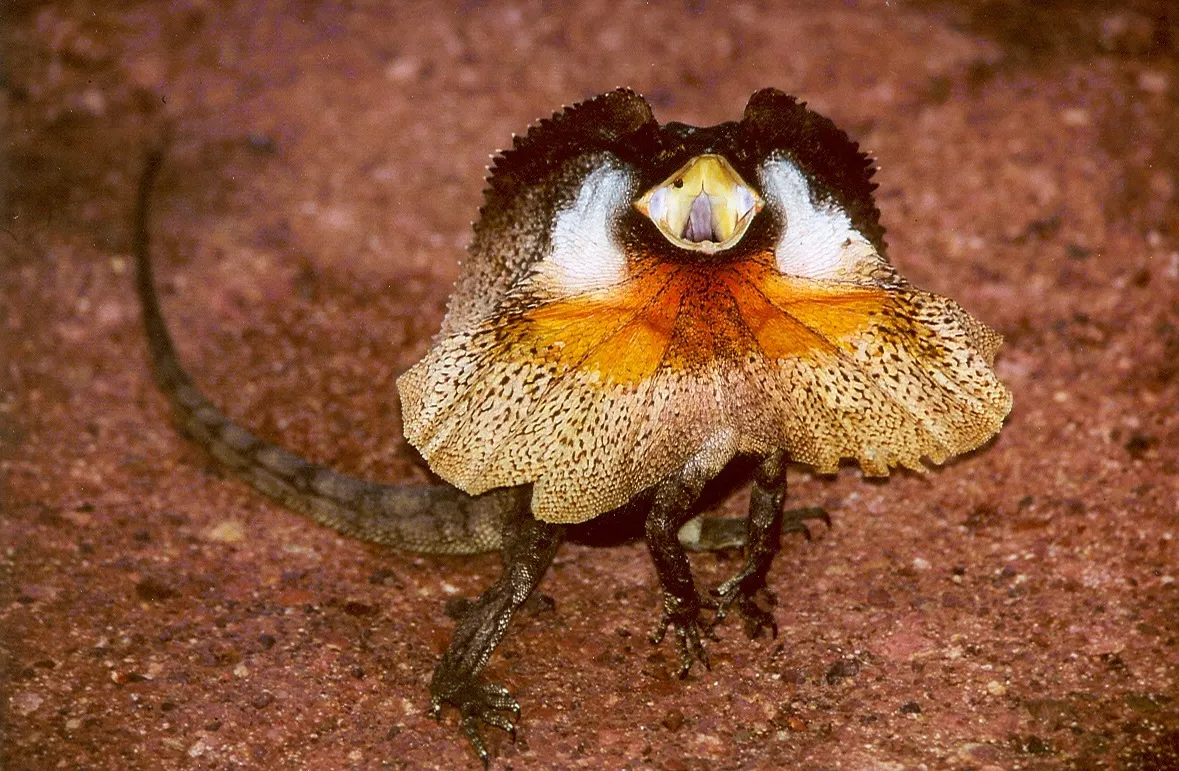
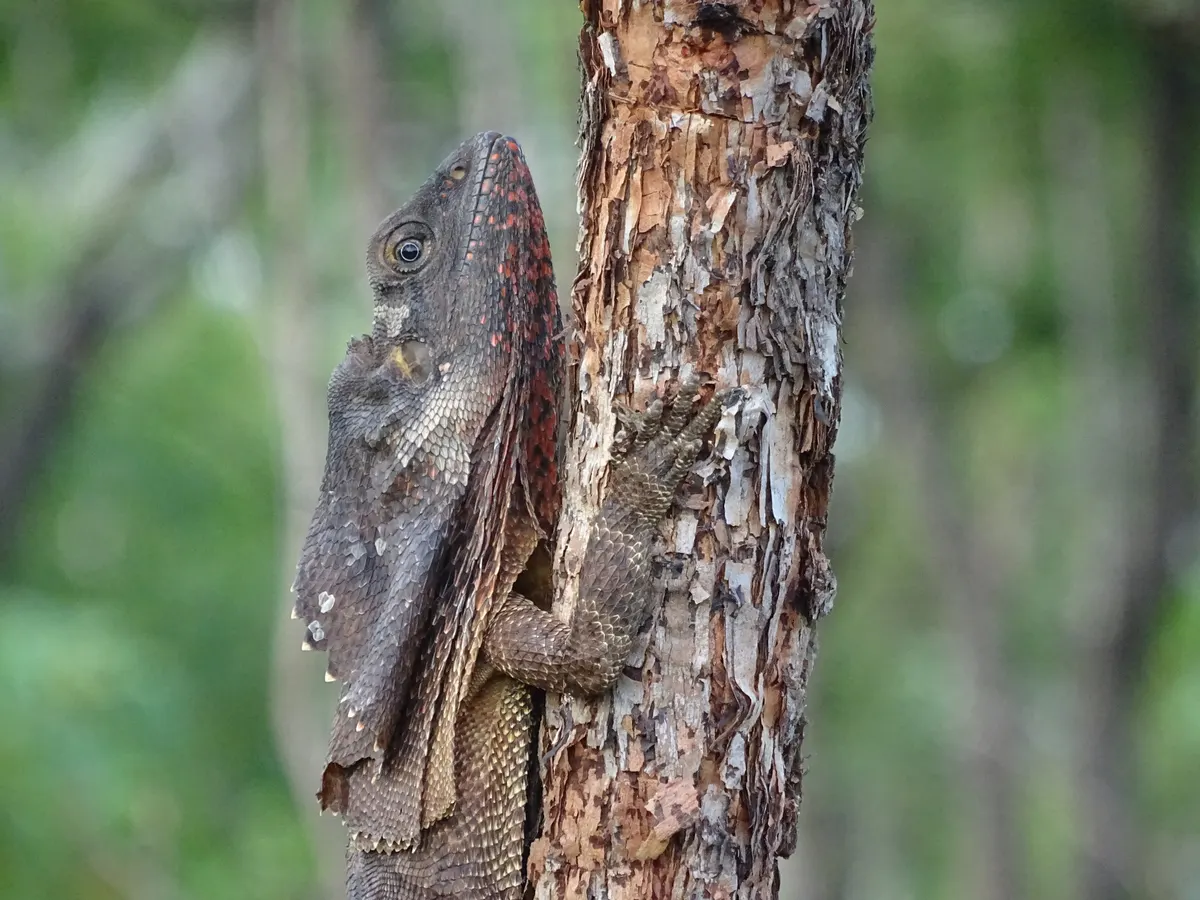
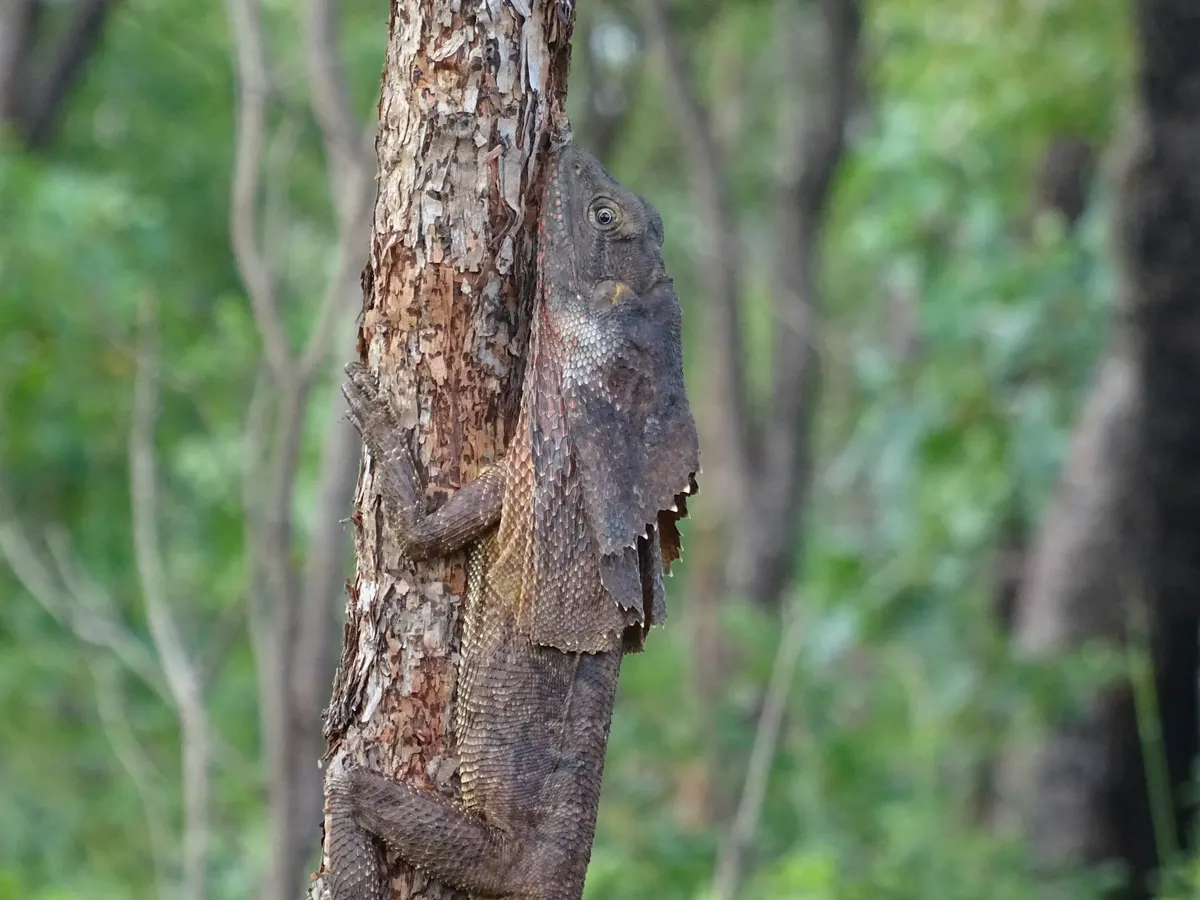
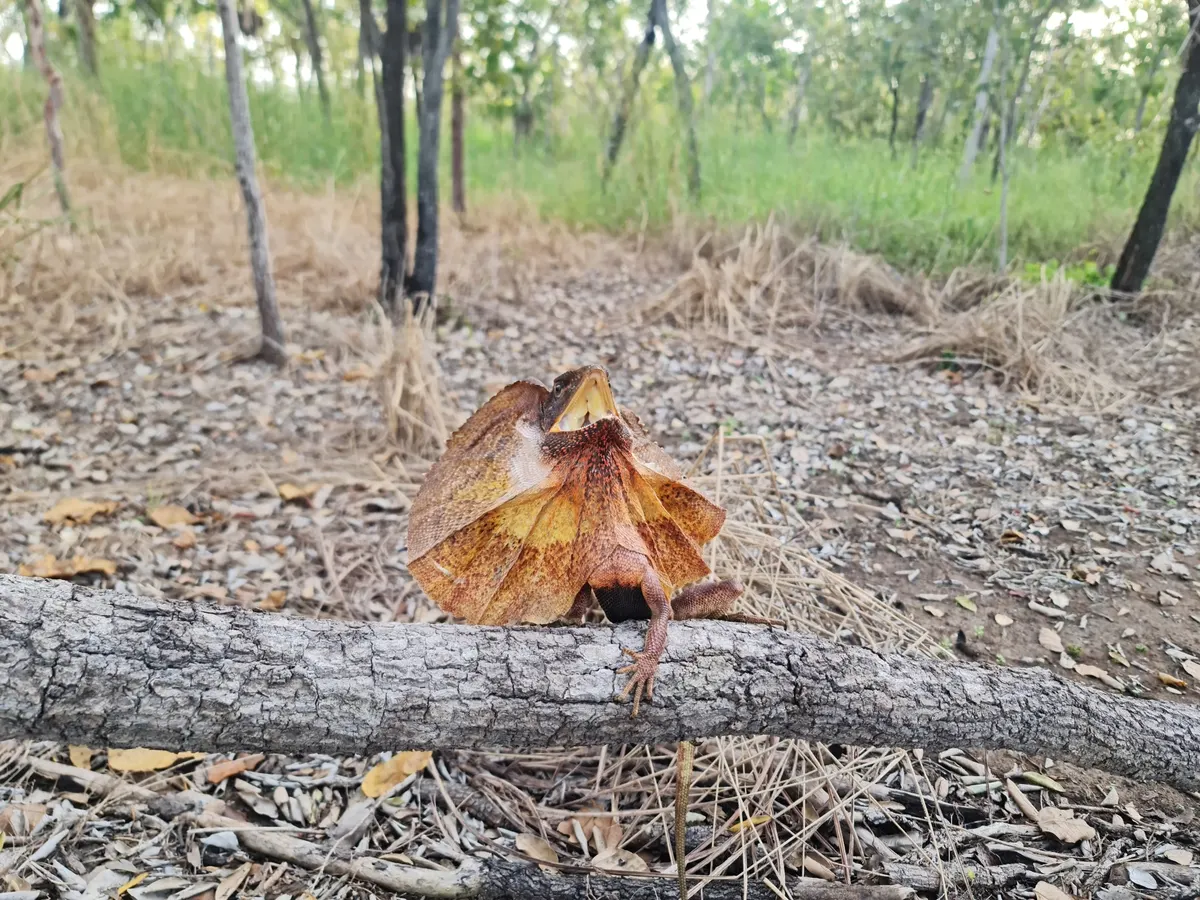
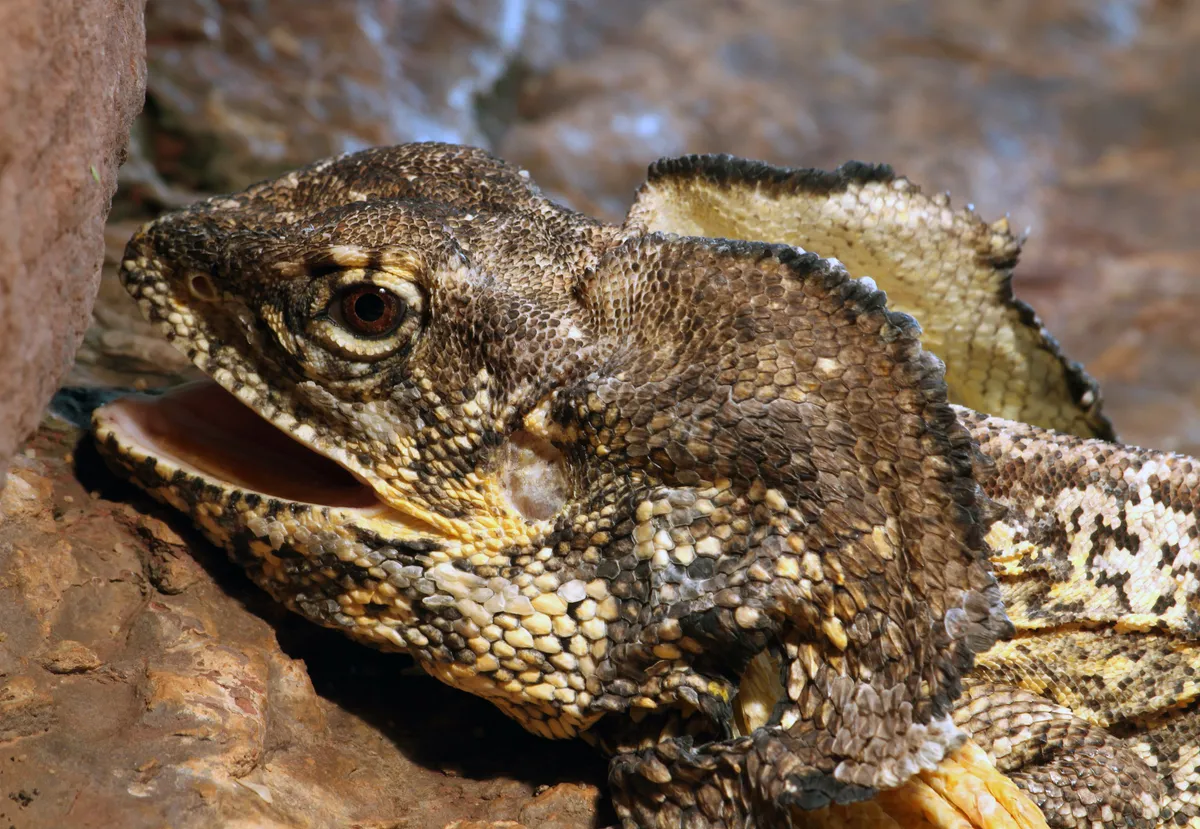
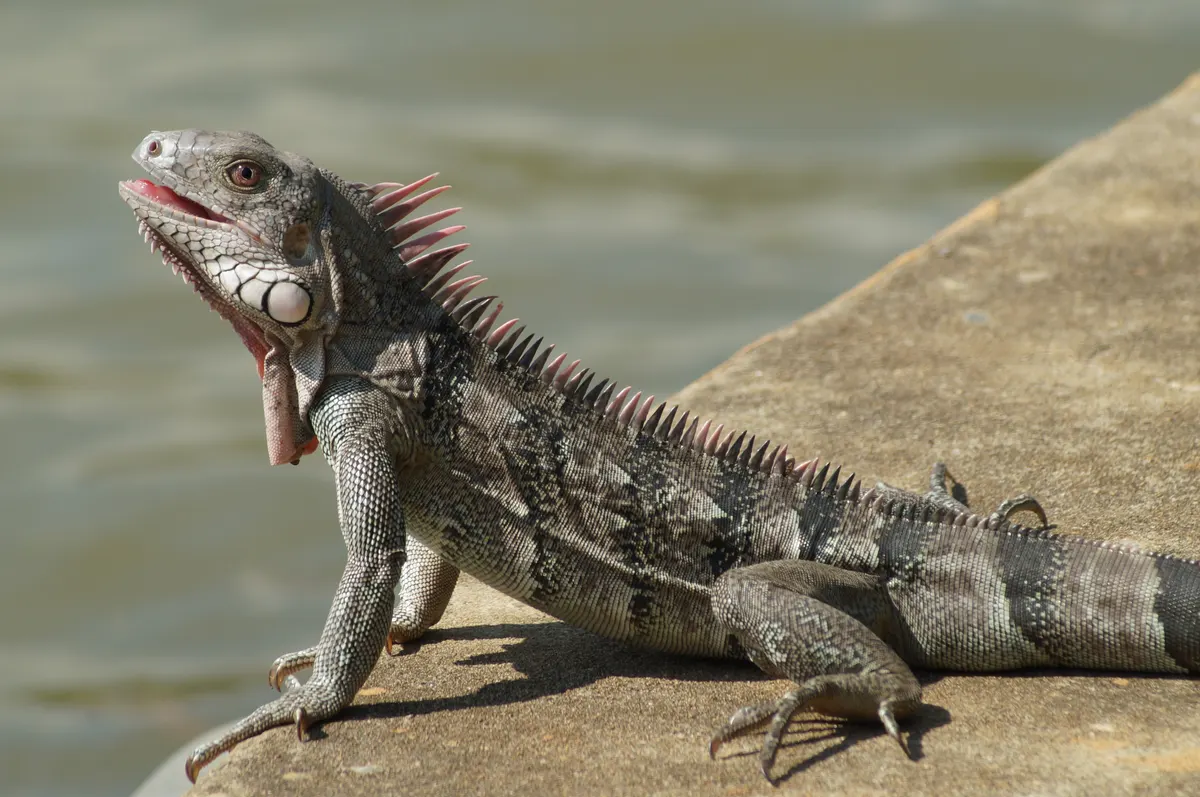
The folded frill lies along the neck and shoulders. Elongated supports connected to the hyoid apparatus hold the thin sheet of skin. When the lizard opens its jaws and moves this apparatus forward, the pleated skin spreads into a broad semicircle on each side of the head.
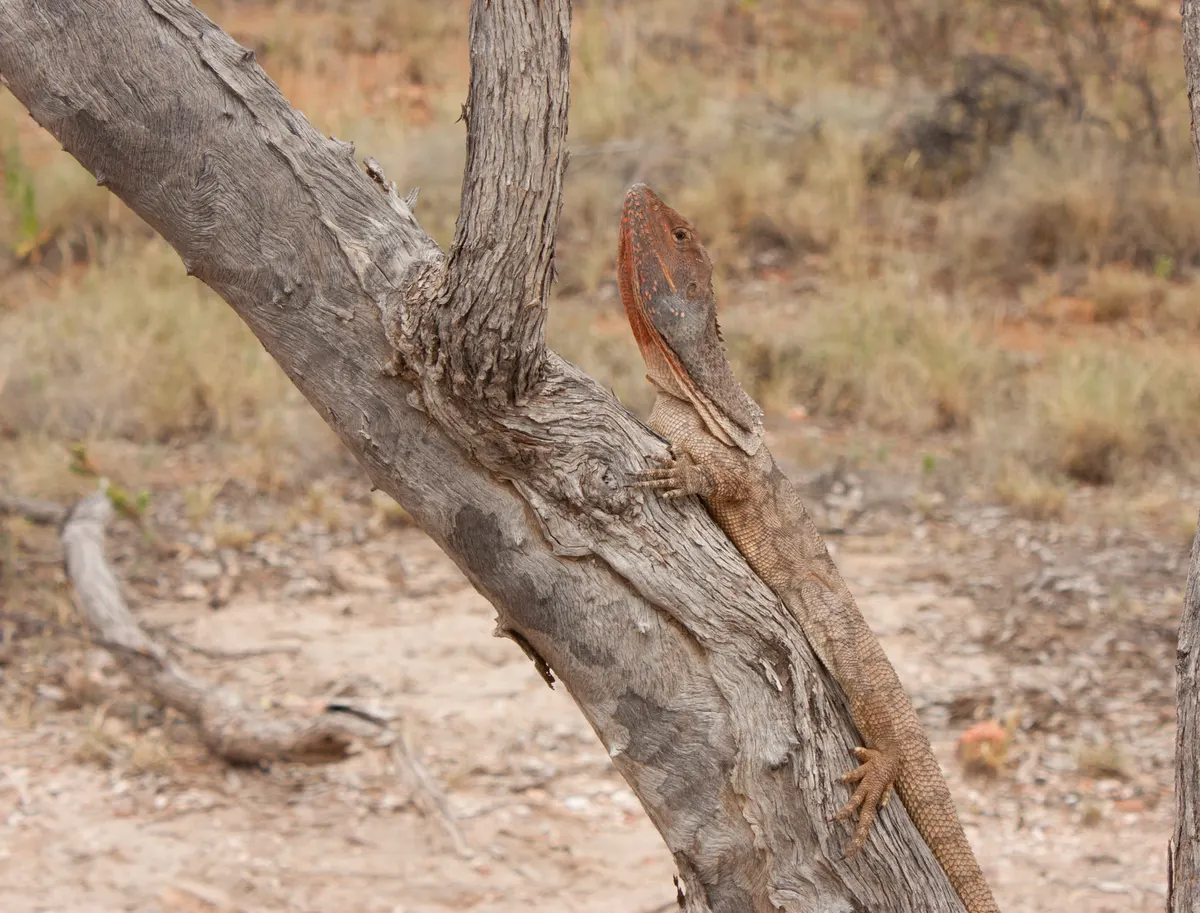
Color varies across the species' range. The body is usually grey, brown, orange-brown, or nearly black, while the exposed frill may show yellow, orange, red, or dark markings. Northern Territory guidance notes that a large frill can measure about 25 cm across. Adult males are larger and more robust than females, but field measurements found no matching sex difference in frill size relative to body size.
Adults can approach 90-95 cm in total length, although much of that measurement is tail. The tail is roughly twice the length of the body and helps balance the lizard during rapid movement. Curved claws and long toes provide grip on bark.