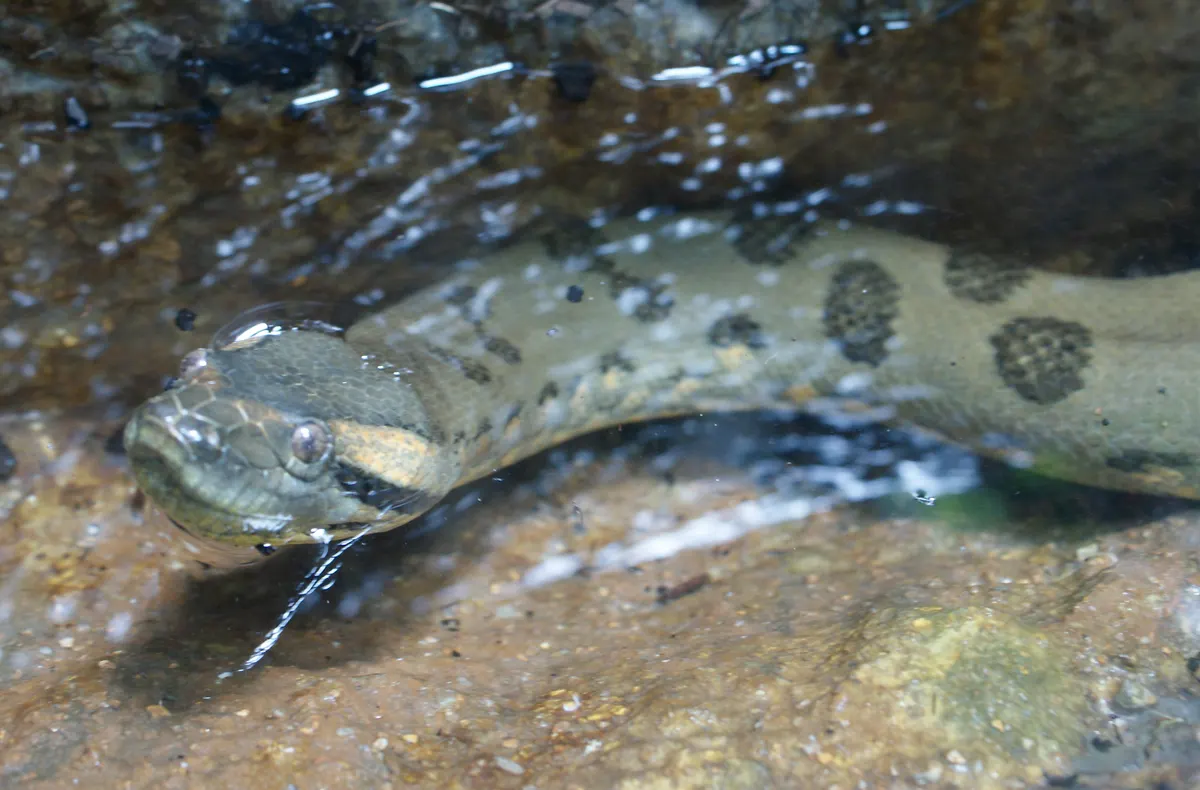
Thick olive-green anaconda with dark oval blotches
The green anaconda is the heaviest snake in the world, a non-venomous constrictor of South America.
ReptiliaLeast Concern

Green Anaconda

The green anaconda is the heaviest snake in the world, with documented specimens near 97 kg.

The green anaconda is a large, non-venomous constrictor of tropical South America. It is the heaviest snake in the world and among the longest, living a mostly aquatic life in slow rivers, swamps, and seasonally flooded savannas of the Amazon and Orinoco basins.

By · Updated

Quick Facts

Green Anaconda at a glance

Eunectes murinusSquamataBoidae

About their home

Kind of animal

Reptilia

Where they live

What they eat

How safe?

Least Concern

Size and speed

How heavy

30 kg – Up to about 97 kg in exceptional documented specimens

How long

3 m (males, average) – Up to about 5.2 m documented (females far larger than males)

How fast

Slow on land, fast and agile in water

Lifespan

About 10 years

Core article

Green Anaconda: ecology and life history

A closer look at habitat, diet, behavior, reproduction, and conservation.

Start here

Green Anaconda

The green anaconda is easy to mythologize and easy to misread. It is genuinely the heaviest snake in the world and one of the longest, yet it spends much of its life almost invisible, floating with only its eyes and nostrils above the surface of a slow tropical river. It is not venomous, it does not hunt people, and it is not the 12-metre monster of adventure stories. What field studies actually describe is a large, water-bound constrictor whose size and secrecy have made it one of South America's most talked-about and least-understood predators.

Anatomy and Adaptations

A green anaconda is built for water. Its eyes and nasal openings sit high on the top of the head, so the snake can watch the shoreline and breathe while the rest of its heavy body stays submerged. The body itself is thick and muscular, olive-green to brownish with two rows of dark oval blotches and smaller markings along the flanks. In murky, plant-choked water that pattern breaks up the outline and hides an animal that can weigh as much as a person.

Size is where accuracy matters most. Reliable measurements put large females at roughly 5 metres, with an exceptional documented specimen near 5.2 metres and about 97 kilograms. Typical adults weigh far less, often 30 to 80 kilograms. Claims of snakes 11 to 12 metres long circulate widely but are not backed by any preserved specimen in a museum collection, and researchers treat them as unverified. The snake's real distinction is not record length but mass: no other snake is as heavy for its size.

Like other boas, the anaconda is a carnivore that kills by constriction rather than venom. Backward-curved teeth hold struggling prey while the coils tighten. Loosely connected jaw and skull bones, joined by elastic ligaments, let the snake open its mouth around animals far wider than its own head and swallow them whole.

Habitat and Distribution

Green anaconda in a wetland setting
Warm, slow-moving water supports the fish and mammals the anaconda hunts and hides its bulk.

Green anacondas live in tropical South America east of the Andes, across the Amazon and Orinoco basins. Their range covers Brazil, Venezuela, Colombia, Ecuador, Peru, Bolivia, Guyana, Suriname, French Guiana, northern Paraguay, and Trinidad. Within that broad area they are tied closely to water, favouring swamps, marshes, lagoons, oxbows, and slow-moving streams inside rainforest and seasonally flooded savanna.
This is a wetland animal in the fullest sense. Water supports the anaconda's bulk, cools it, hides it, and delivers prey to the water's edge. The seasonal rhythm of flooding shapes its year: during the wet season the snake disperses across flooded ground, while in the dry season it concentrates in shrinking pools and channels where prey also gathers. On land the same body that moves easily in water becomes slow and heavy, which is one reason the snake rarely strays far from it.

Diet and Hunting

Green anaconda resting
After a large meal an anaconda may not need to eat again for weeks or months.

Green anacondas eat a wide range of vertebrates, and diet shifts with the size of the snake. Young and smaller individuals take mostly fish, along with birds and small mammals. Large females can handle much bigger prey, including caimans, capybaras, turtles, deer, and sizeable birds. Studies of wild anacondas record prey commonly weighing a substantial fraction of the snake's own mass, which is why a large meal can sustain the animal for weeks or months.

Hunting is built on patience rather than speed. The snake positions itself at the water's edge or just below the surface and waits for an animal to come within reach to drink or cross. When prey is close enough, the anaconda strikes, grips with its teeth, and throws coils around the body. Constriction does not crush; it works by tightening at each exhalation until circulation and breathing stop. The prey is then swallowed head-first, and a long, slow digestion follows.

Behavior and Ambush

Young green anaconda
During the breeding season, several males may coil around one female in a slow-moving breeding ball.

For most of the day a green anaconda is inconspicuous, resting in shallow water or basking where it can slip out of sight quickly. Activity tends to increase around dusk and into the night, though the snake is not strictly nocturnal and will move by day when conditions suit it. Ambush at the water's edge is the defining behaviour: rather than chasing prey, the anaconda relies on stillness, camouflage, and the concealing surface of the water.

Green anacondas are generally solitary outside the breeding season. When threatened they usually retreat into deeper water rather than confront a larger animal, and unprovoked attacks on people are not supported by field evidence. The animal's reputation for aggression owes more to its size and to fiction than to documented behaviour. Handled or cornered, a large snake can still deliver a powerful bite, so wild individuals are best observed at a distance.

Reproduction and Young

Breeding produces one of the species' most distinctive behaviours. Several males may locate a single, larger female and coil around her together in a slow-moving mass known as a breeding ball. Up to about a dozen males can take part, and the tangle may persist for two to four weeks as they compete to mate.

Green anacondas do not lay eggs. They are ovoviviparous: the eggs develop inside the female, and after a gestation of roughly six to seven months she gives birth to live young. A typical litter is around 20 to 40 neonates, though larger numbers are possible. Newborns measure roughly 70 to 80 centimetres and are independent from birth, receiving no parental care. They are vulnerable at this stage and many do not survive their first year.

Taxonomy and Relatives

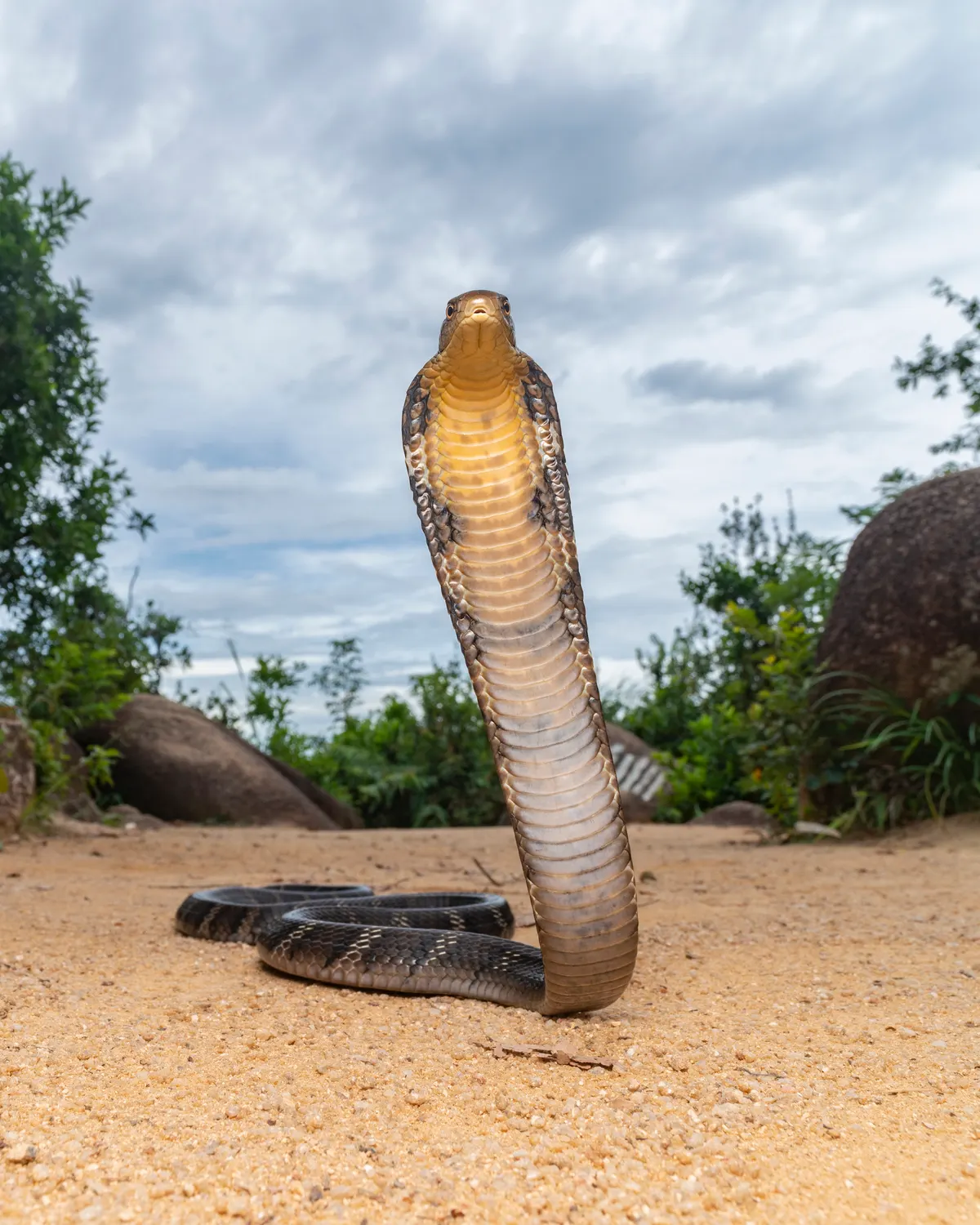
The green anaconda, Eunectes murinus, was described by Linnaeus in 1758. It belongs to the order Squamata and the family Boidae, the boas, and is one of several species in the genus Eunectes, which also includes the smaller yellow anaconda. As a boa it is a close relative of other large constrictors rather than of the venomous snakes such as the king cobra, which kills with venom instead of coils.

Taxonomy here is still moving. A 2024 genetic study proposed splitting northern populations into a separate species, the northern green anaconda, a reclassification that remains under scientific discussion and is not yet universally adopted. Reliable databases continue to treat South American green anacondas under Eunectes murinus while that work is evaluated.

Conservation and Threats

Green anaconda in its range
Listed as Least Concern, the green anaconda is still hunted for skins and killed out of fear.

The IUCN Red List classifies the green anaconda as Least Concern, reflecting a wide distribution and a population currently assessed as stable. It is listed on CITES Appendix II, which regulates international trade. Least Concern at the global scale does not rule out local pressures, and several are recognised across the range.

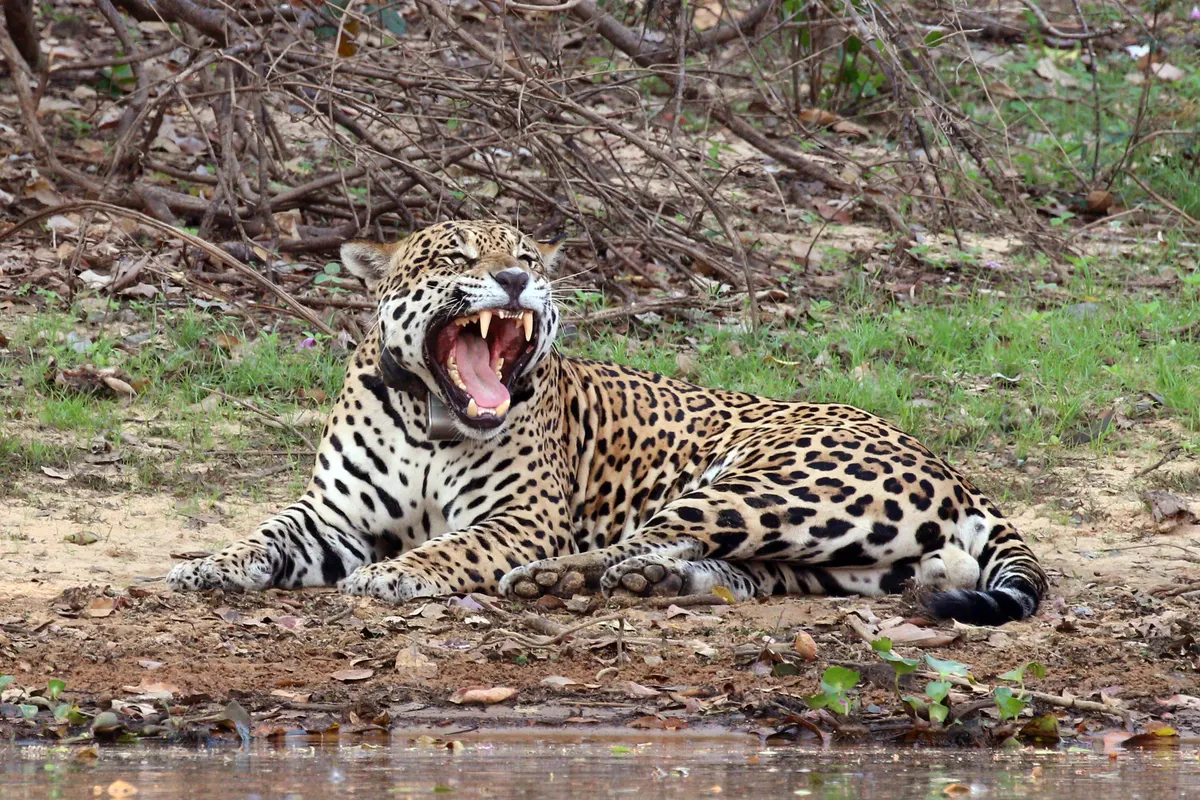
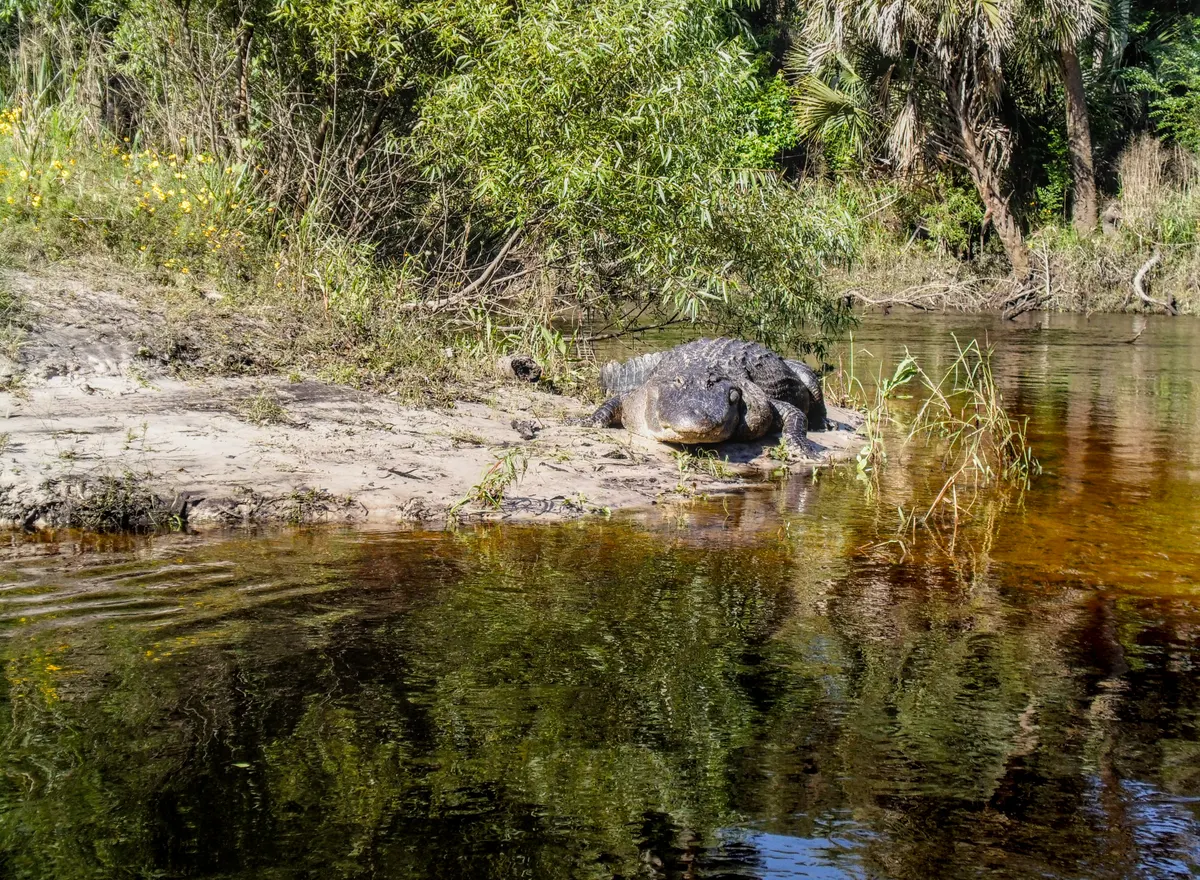
Habitat loss from deforestation, drainage, and the conversion of wetlands to farmland reduces the slow-water habitat the snake depends on. Anacondas are also killed out of fear, hunted for skins, and collected for the pet trade, and localised declines can occur even where the species is secure overall. As a large predator the green anaconda shares its wetlands with other apex hunters: adult anacondas are occasionally taken by jaguars, black caimans, and crocodiles, which are among the few animals large enough to prey on them. Protecting intact river and swamp systems is the most direct way to keep those relationships, and the snake, in place.

References and Authoritative Sources

Green Anaconda: classification and fun facts

Classification

Scientific Taxonomy
  1. Kingdom

    Animalia

  2. Phylum

    Chordata

  3. Class

    Reptilia

  4. Order

    Squamata

  5. Family

    Boidae

  6. Genus

    Eunectes

  7. Species

    E. murinus

Did You Know?

Fun Facts

1

The green anaconda is the heaviest snake in the world, with documented specimens near 97 kg.

2

Females are far larger and heavier than males, one of the most extreme size differences among snakes.

3

It does not lay eggs; it is ovoviviparous and gives birth to live young after roughly six months.

4

During mating, up to about a dozen males may coil around one female in a slow-moving 'breeding ball' that can last weeks.

5

It is non-venomous and kills by constriction, tightening its coils each time the prey exhales.

6

Its eyes and nostrils sit on top of the head, so it can watch and breathe while the rest of its body stays underwater.

Common Questions

FAQ about Green Anaconda

Select a question to reveal the answer.

What is a green anaconda?

The green anaconda (*Eunectes murinus*) is a large, non-venomous boa from tropical South America. It is the heaviest snake in the world and among the longest, and it lives a mostly aquatic life in slow rivers, swamps, and flooded savannas.

How big do green anacondas really get?

Reliable records show females reaching about 5 m and, exceptionally, around 5.2 m and 97 kg. Reports of 11 to 12 m snakes are not supported by any preserved specimen and should be treated as myth. Males are much smaller, averaging around 3 m.

Are green anacondas venomous?

No. Green anacondas are non-venomous constrictors. They seize prey with backward-curved teeth, coil around it, and tighten their grip until the animal stops breathing, then swallow it whole.

What do green anacondas eat?

They are carnivores that ambush a wide range of prey, including fish, birds, turtles, caimans, capybaras, and deer. Large females can take sizable mammals and reptiles, while smaller and younger snakes eat mostly fish and small vertebrates.

Do green anacondas lay eggs?

No. Green anacondas are ovoviviparous: the eggs develop inside the female and she gives birth to live young, usually about 20 to 40 neonates, after a gestation of roughly six to seven months.

Where do green anacondas live?

They occur in tropical South America east of the Andes, across the Amazon and Orinoco basins, in countries such as Brazil, Venezuela, Colombia, and the Guianas. They favor slow-moving water, swamps, marshes, and seasonally flooded grasslands.