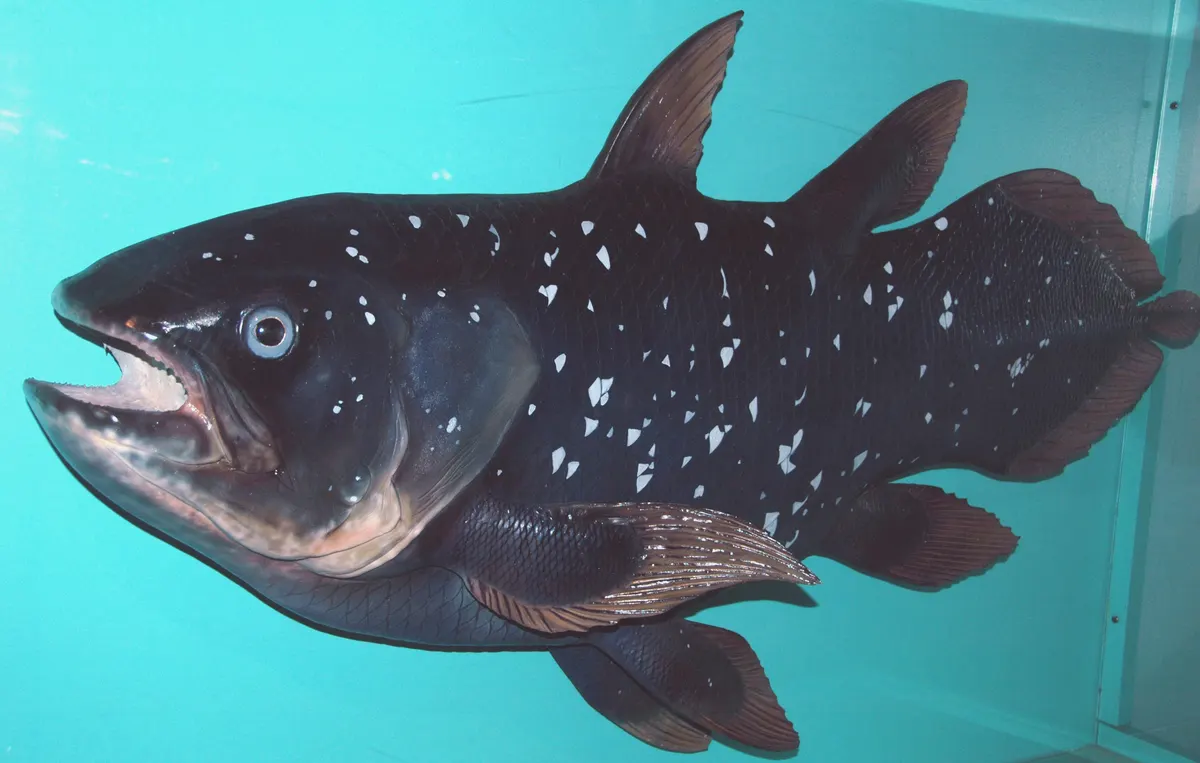
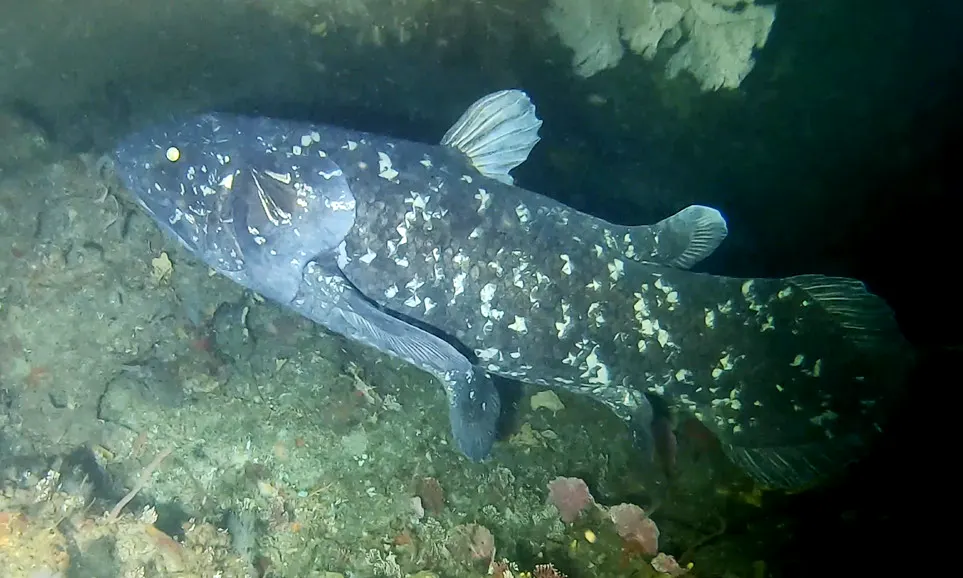
A living West Indian Ocean coelacanth (Latimeria chalumnae) in a deep reef off Pumula, South Africa—one of very few images of this 'living fossil' alive in the wild.
SarcopterygiiCritically Endangered
Coelacanth Facts
“Scientists considered coelacanths extinct for 65 million years until a living specimen was hauled onto a fishing boat in South Africa in 1938.”
The coelacanth is a rare deep-sea fish once known only from fossils and thought extinct for 65 million years, until one was caught off South Africa in 1938. It shelters in volcanic caves by day and is Critically Endangered.