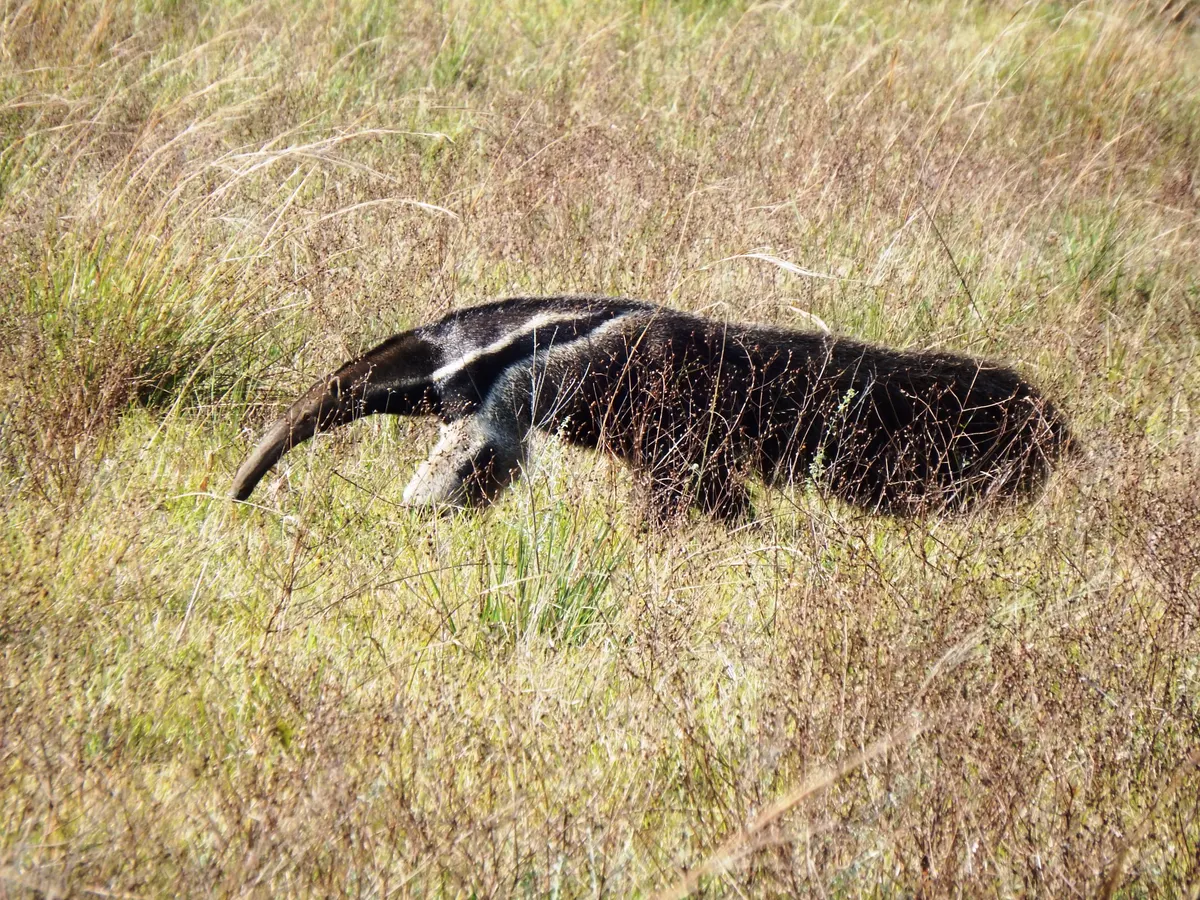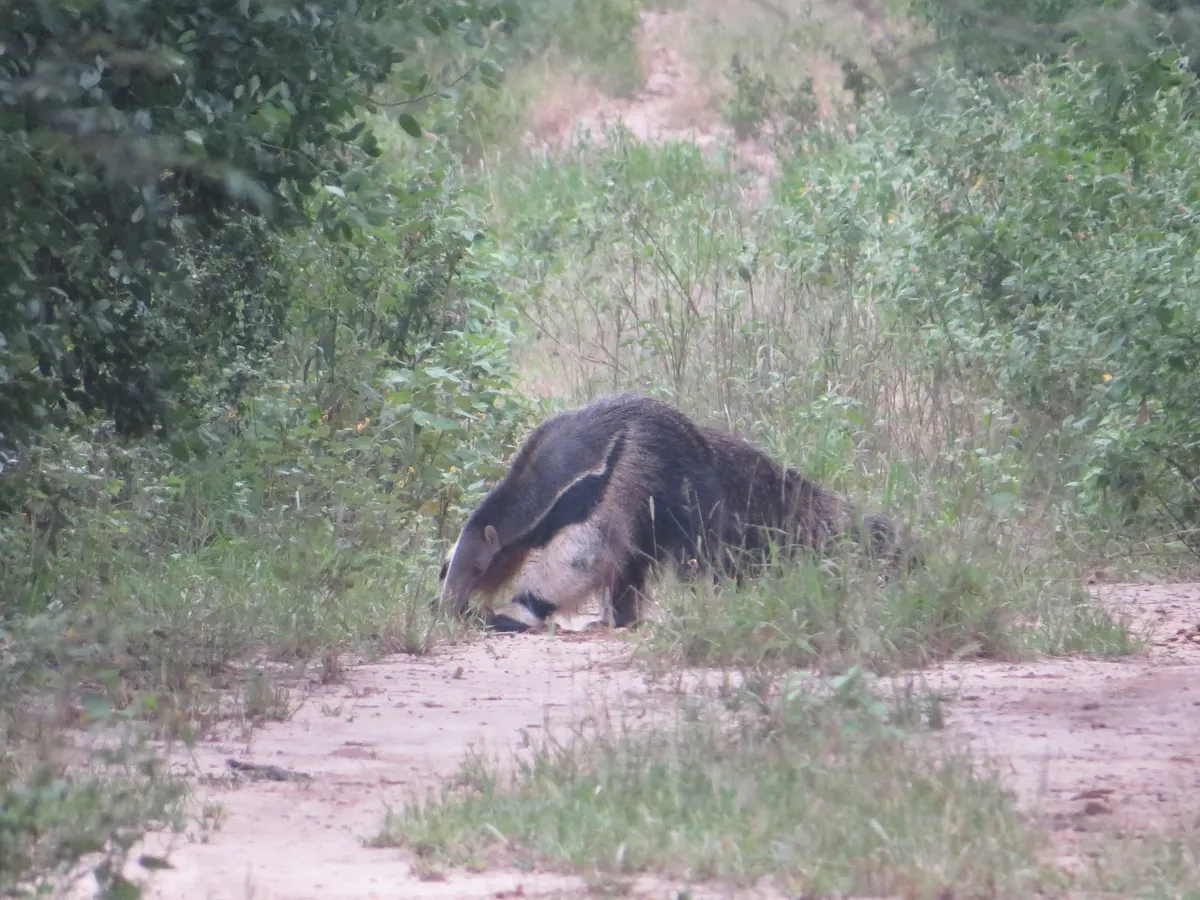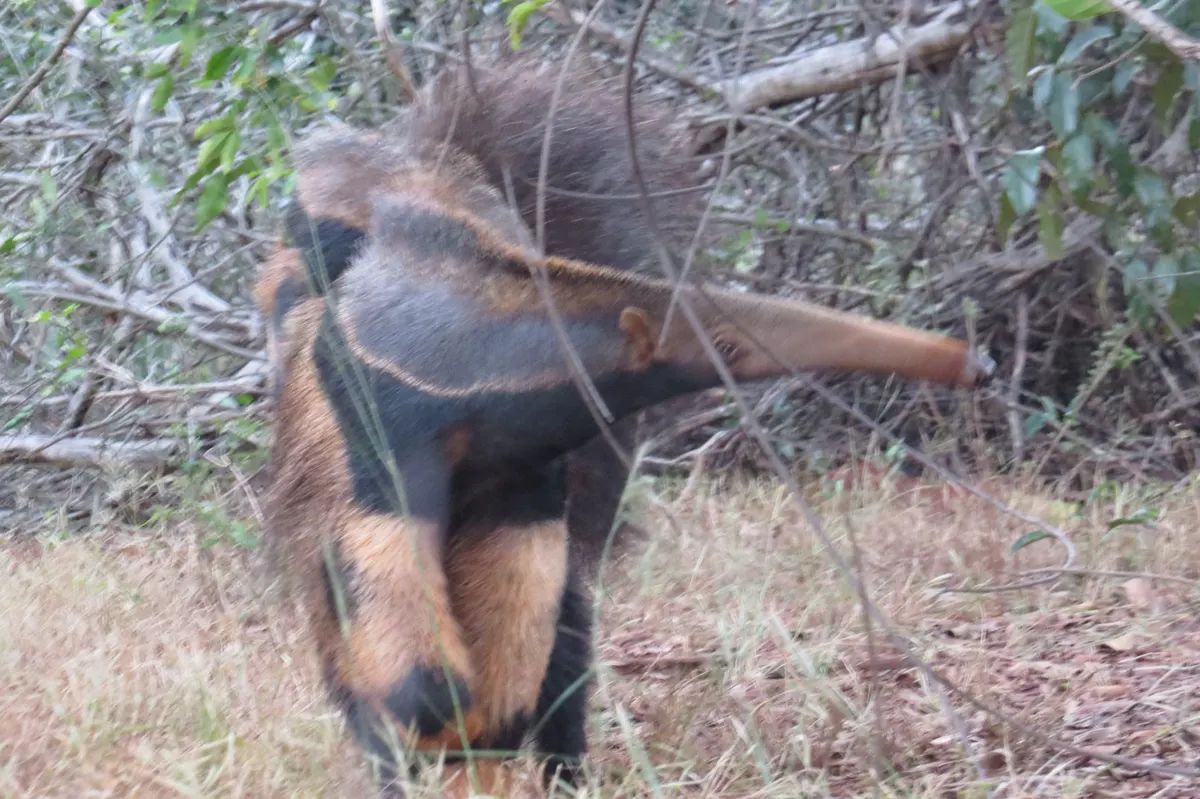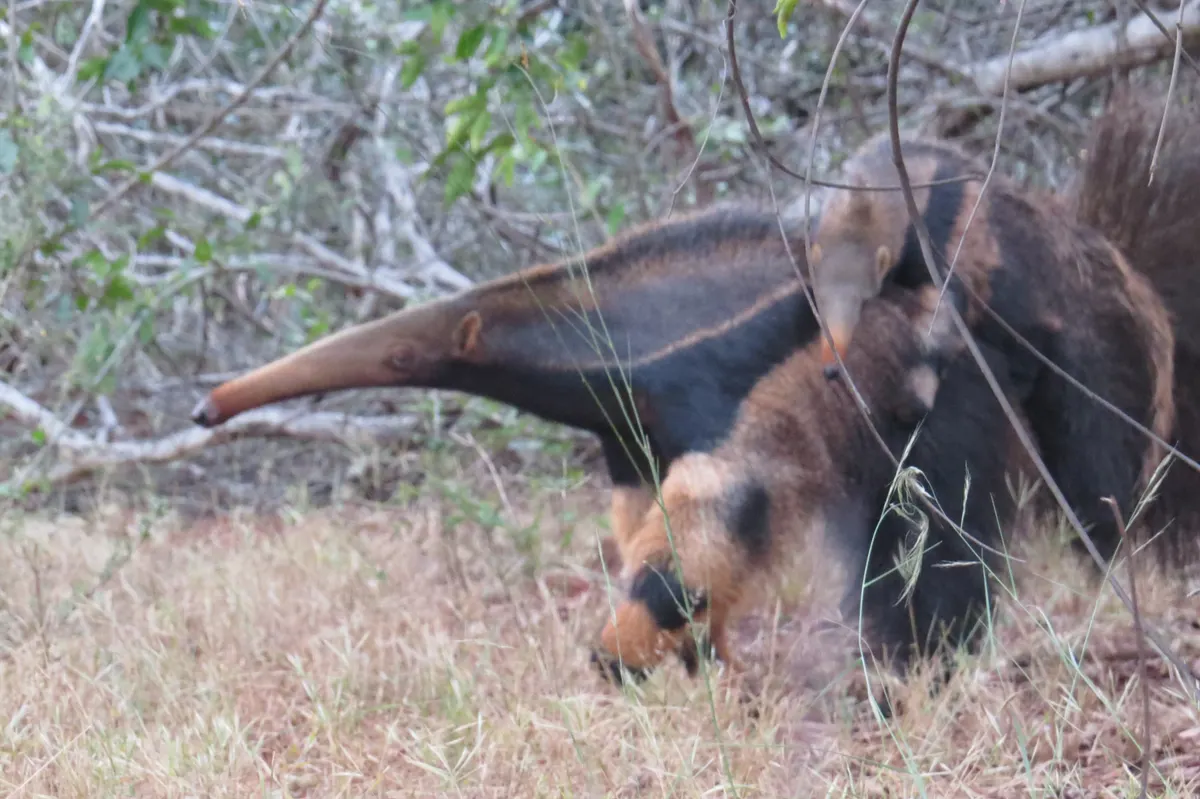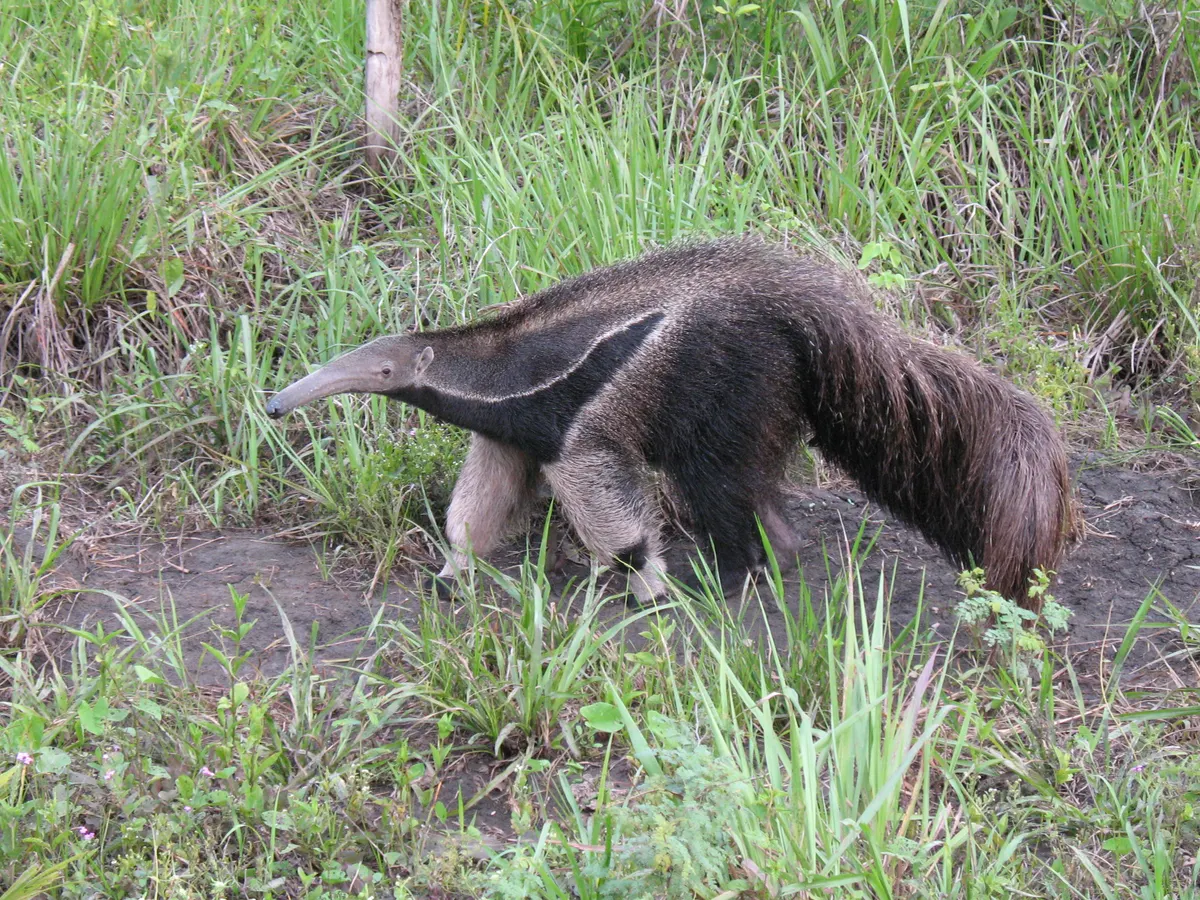
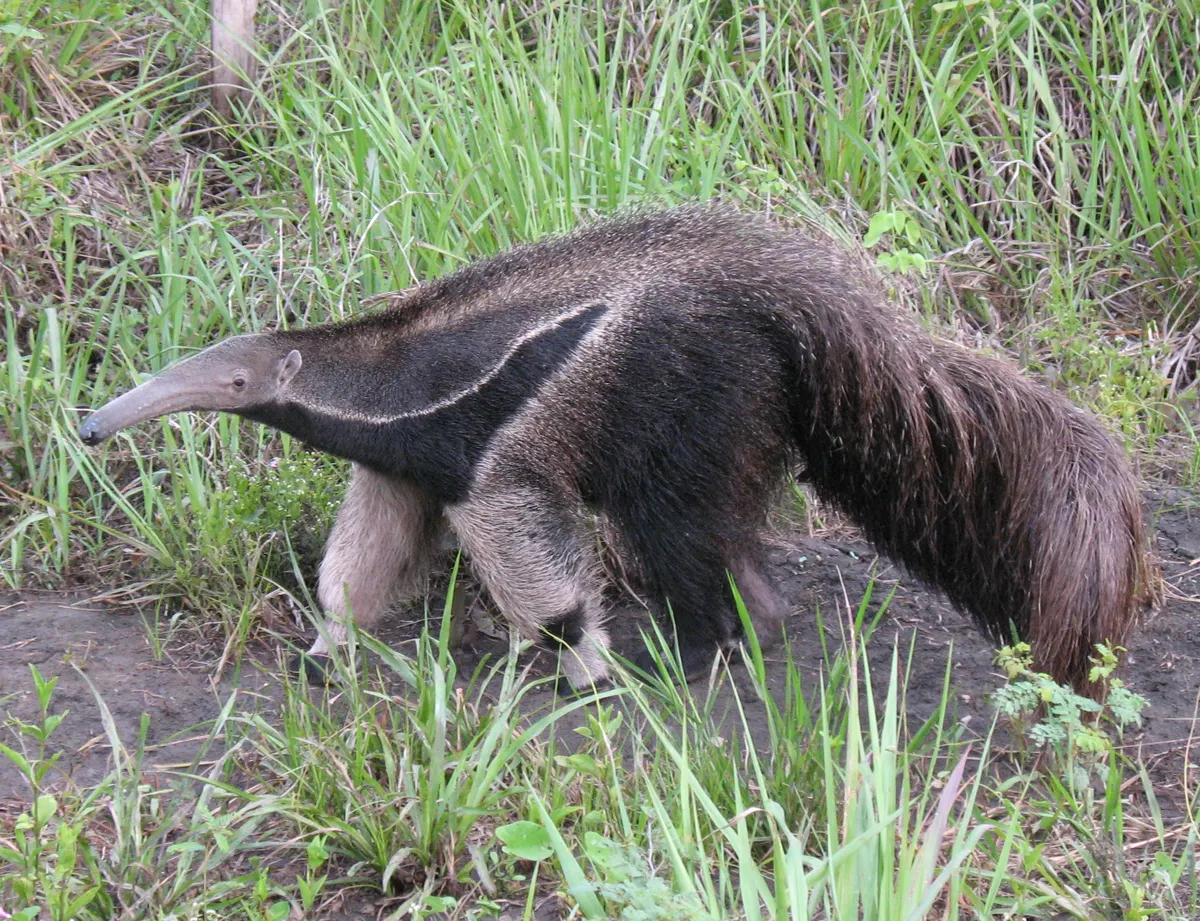
The giant anteater is the largest of all anteater species. Adults are formidable animals, measuring between 6 to 7 feet in total length from the tip of the snout to the end of the tail, and weighing between 60 and 100 pounds. They are covered in coarse, stiff, shaggy hair featuring a distinctive black diagonal stripe bordered by white.
Their forelimbs are staggeringly powerful, equipped with three massive, recurved claws (despite the specific name tridactyla meaning "three fingers," they actually have five digits, but three bear the massive claws). To prevent these vital excavation tools from dulling against the earth, the anteater practices knuckle-walking, folding its claws inward and walking on its wrists.
The skull is radically modified, elongated into a narrow, downward-curving rostrum. They possess absolute edentulism (no teeth). The most critical anatomical feature is the tongue, which can reach an astonishing 2 feet in length (longer than the skull itself) and is anchored not in the throat, but deep in the sternum. This muscular organ is coated in highly viscous, sticky saliva produced by enlarged parotid glands. Furthermore, giant anteaters exhibit one of the lowest basal body temperatures of any terrestrial placental mammal (around 32.7 °C or 91 °F), a metabolic adaptation to conserve energy on a low-calorie insect diet.