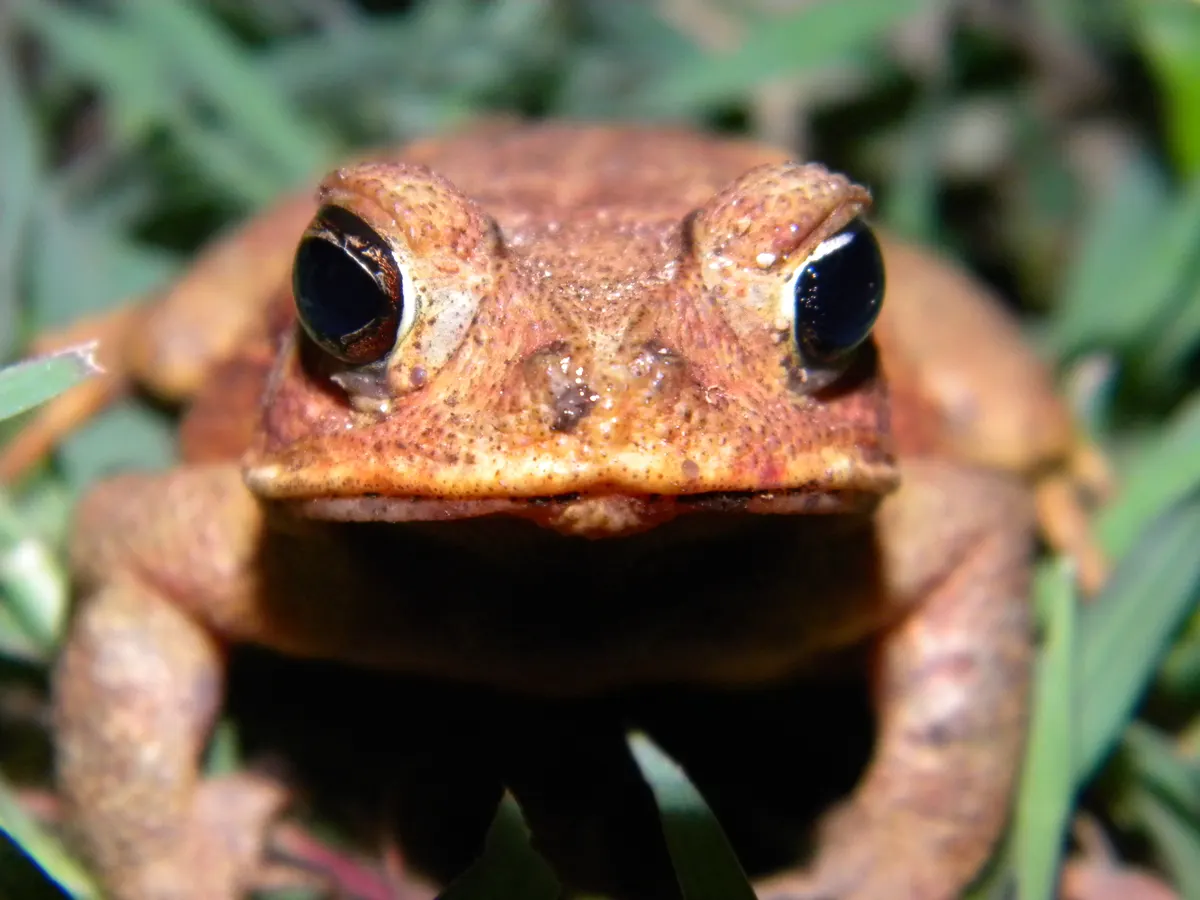
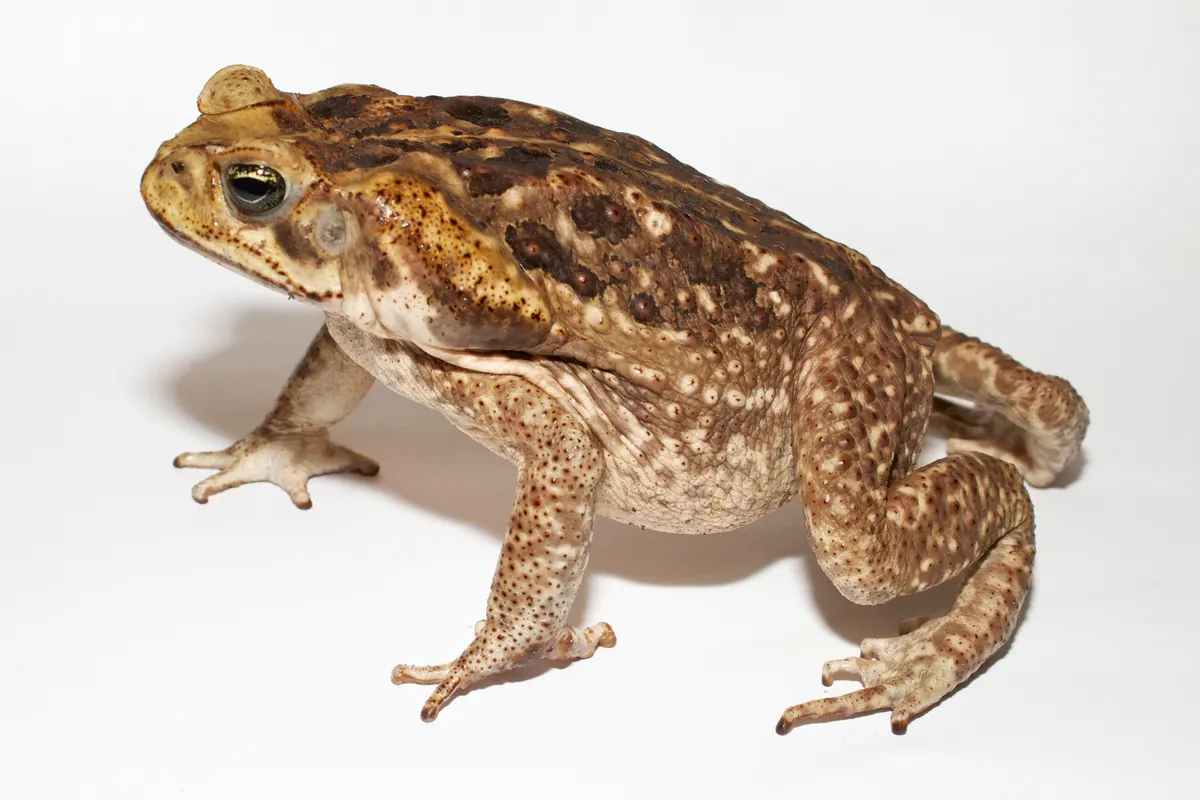
Cane toad standing on a white background, showing its warty skin and parotoid glands
Cane toads are one of the world's largest toads, with dry warty skin and a large parotoid gland behind each eye.
AmphibiaLeast Concern

Cane Toad Facts

Cane toads secrete bufotoxin from parotoid glands behind the eyes, a defense potent enough to kill many pets and native predators that try to eat them.

The cane toad is a large, terrestrial true toad native to Central and South America, with toxic skin glands that deter most predators. It is one of the world's most notorious invasive species, best known for its 1935 introduction to Australia to control cane beetles — an effort that failed and instead triggered widespread ecological damage.
By · Updated

Quick Facts

Cane Toad at a glance

Rhinella marinaAnuraBufonidae

About their home

Kind of animal

Amphibia

Where they live

What they eat

How safe?

Least Concern

Size and speed

How heavy

1 ounce for small individuals – up to 2.6 pounds (1.2 kg) for the largest recorded individuals

How long

4 inches – 6 inches

How fast

Slow-moving; walks or hops in short bursts rather than sprinting

Lifespan

About 5 years on average

Core article

Cane Toad: ecology and life history

A closer look at habitat, diet, behavior, reproduction, and conservation.

Start here

Cane Toad

The cane toad (Rhinella marina) is a large, terrestrial true toad native to Central and South America. It is best known outside its native range as one of the world's most damaging invasive species, notably in Australia, where it preys on native wildlife and poisons predators unaccustomed to its toxic skin secretions. This carnivore thrives in disturbed habitats close to human settlement.

Taxonomy and Evolution

The cane toad belongs to the true toad family Bufonidae, in the genus Rhinella, which contains dozens of Central and South American toad species. It was long classified under the genus Bufo before taxonomic revisions split most Neotropical toads into Rhinella.

The species evolved in the lowland forests and savannas of tropical South and Central America, where its toxic defenses developed alongside a range of specialized predators capable of tolerating or avoiding bufotoxin. Outside this native range, that same toxin has proven far more effective against predators with no evolutionary exposure to it.

Anatomy and Physical Characteristics

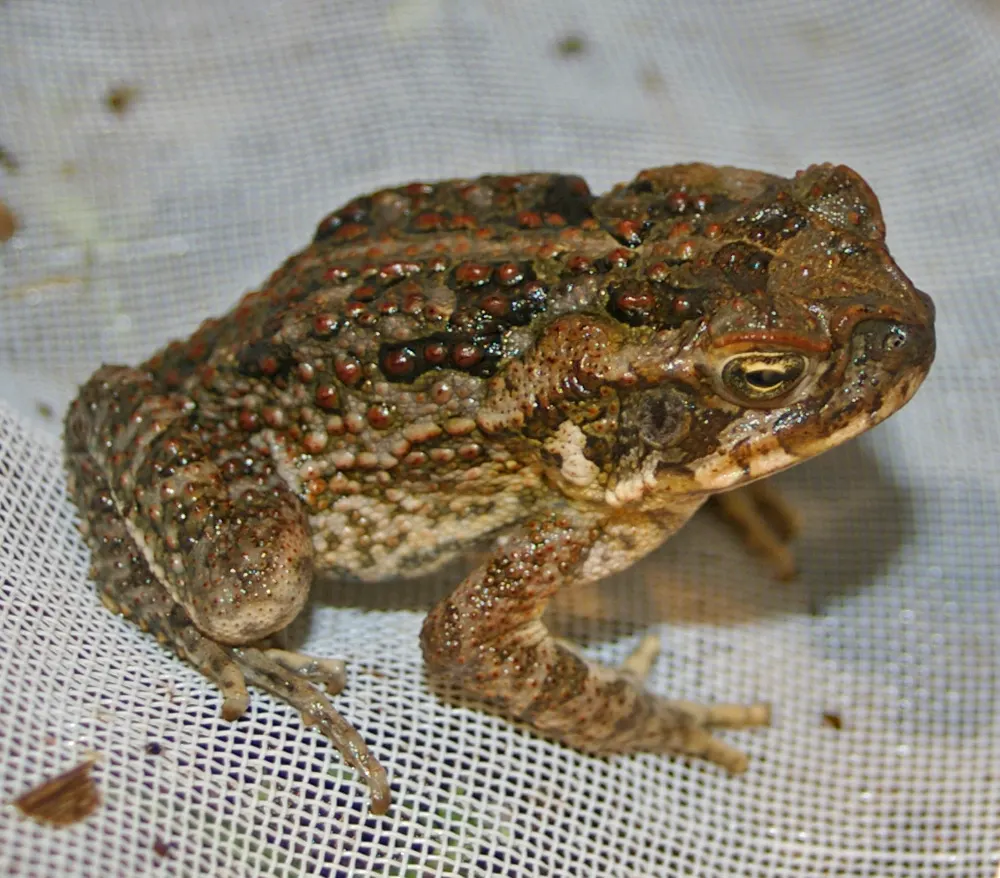
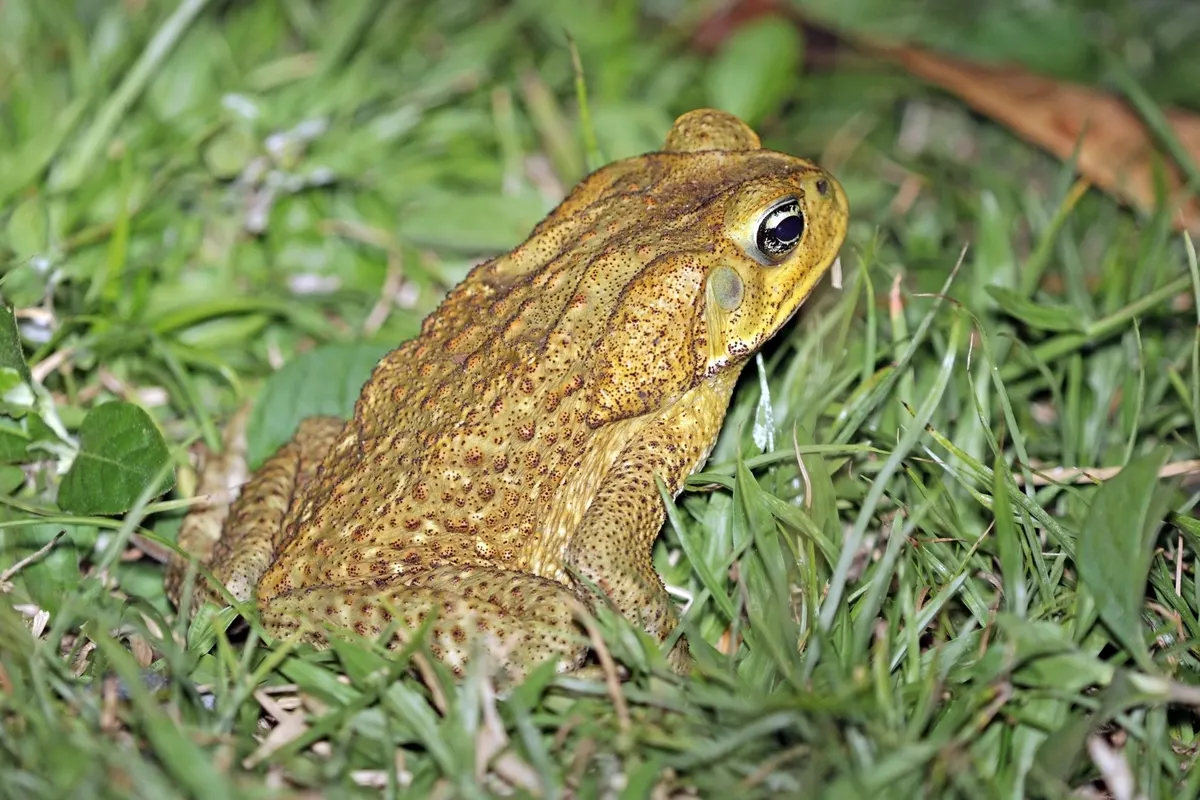
Adult cane toads typically measure 4 to 6 inches (10 to 15 cm) in length, with the largest recorded individuals reaching roughly 9 inches and weighing up to 2.6 pounds (1.2 kg). Females are generally larger than males. Skin is thick, dry, and warty, ranging from olive-brown to gray-brown with darker mottling.

Behind each eye sits a pair of prominent parotoid glands, which secrete a milky toxin called bufotoxin when the toad is squeezed, bitten, or otherwise threatened. The toxin affects the heart and nervous system of animals that ingest it and is present at every life stage, including eggs and tadpoles. Cane toads lack teeth and swallow prey whole.

Habitat and Distribution

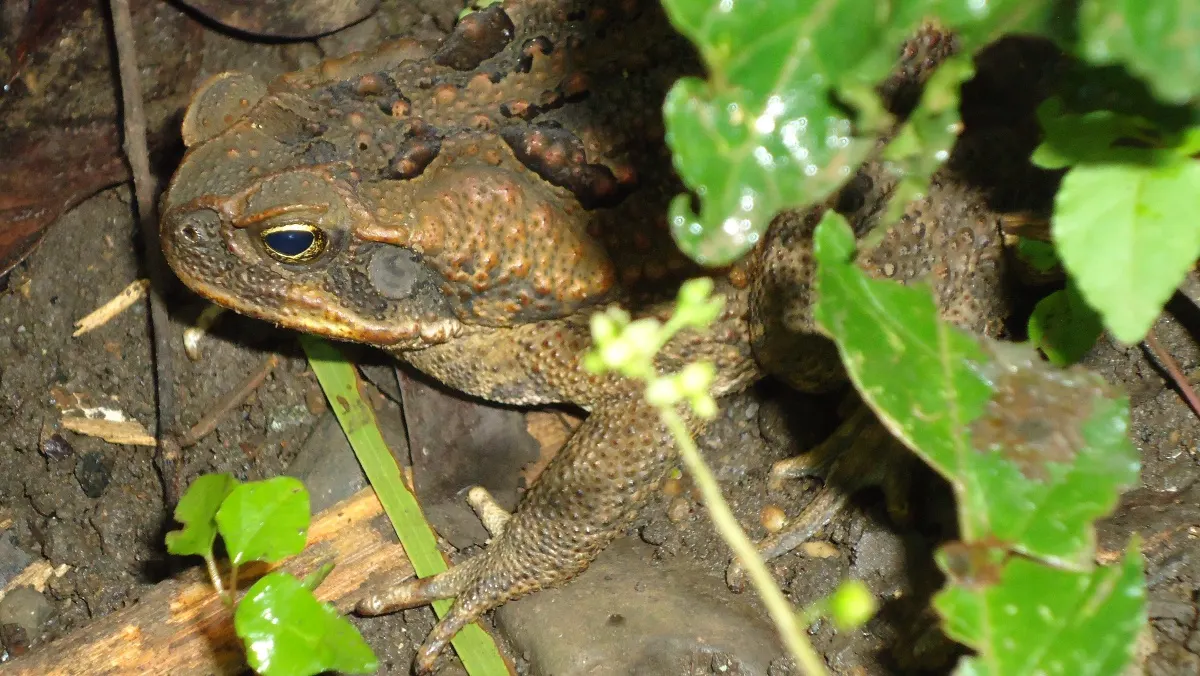
Cane toad on damp ground in a Panamanian forest
Native cane toads live in tropical lowlands, forest edges, and disturbed wet places.

In its native range, the cane toad occupies forest edges, savanna, and riparian zones from the southern United States border region through Mexico, Central America, and into South America. It also readily colonizes disturbed and urban habitat, including gardens, farmland, and roadside ditches, wherever moisture and shelter are available.

The more arboreal red-eyed tree frog occurs in part of the same tropical American region but depends more closely on humid vegetation near breeding water.

Introduced populations now occupy large parts of northern and eastern Australia, several Pacific islands, the Caribbean, and southern Florida in the United States. These introductions occurred largely through deliberate releases intended for agricultural pest control or accidental transport in cargo.

Diet and Feeding Strategies

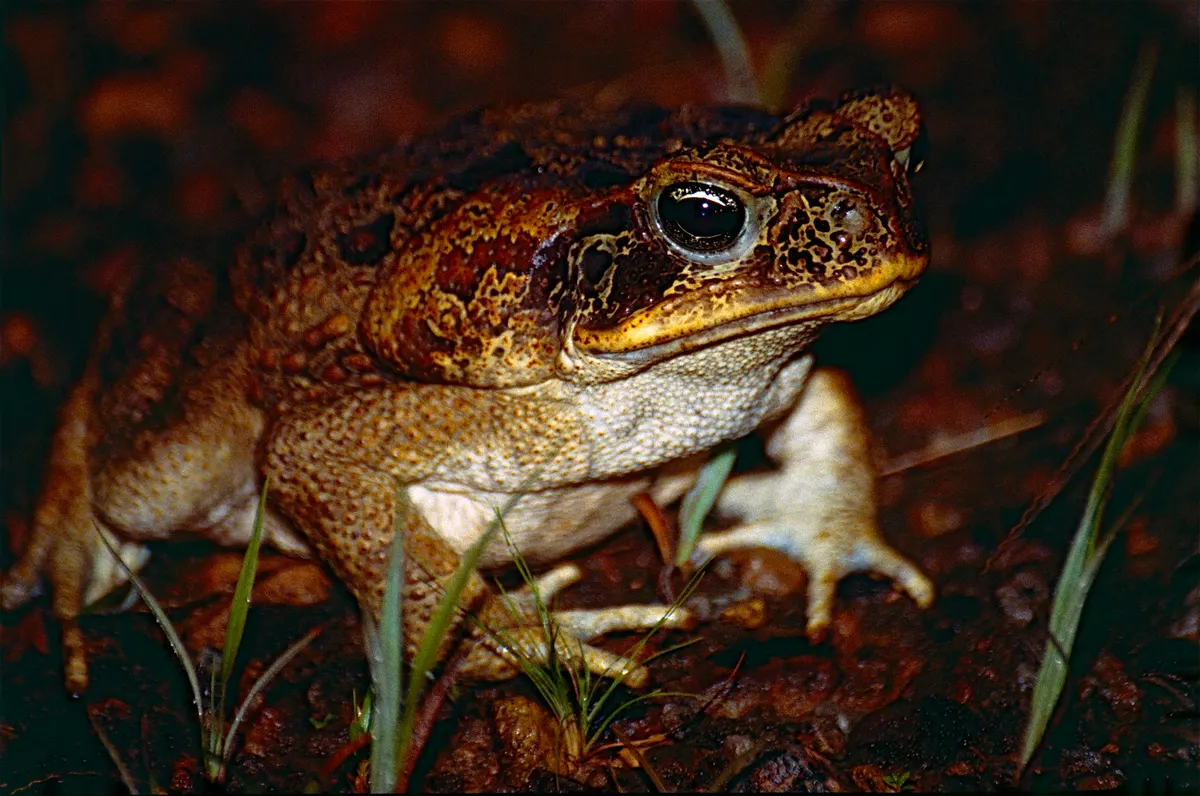
Cane toad crouched at night in introduced island habitat
This opportunistic predator eats insects, small vertebrates, carrion, and food scraps near people.

Cane toads are opportunistic carnivores that will eat almost anything small enough to swallow. Typical prey includes insects, small rodents, small reptiles, other amphibians, and carrion. Around human settlements, they readily eat pet food left outdoors and insects drawn to artificial lighting.

Toads forage mainly at night, sitting near light sources or open ground and lunging at passing prey with a wide mouth. Their generalist appetite and tolerance for a broad range of conditions are major reasons they establish so easily in new environments.

Social Structure and Behavior

Adult female cane toad from French Guiana
Large females can release thousands of toxic eggs in long strings after rain.

Cane toads are largely solitary outside of breeding events, when large numbers gather at still or slow-moving water after rain. They shelter during the day in burrows, leaf litter, or under debris, emerging at dusk to forage.

When threatened, a cane toad inflates its body, tilts its head down, and presents its parotoid glands toward the attacker. Handling or biting the toad triggers toxin release. In Australia, this defense has caused widespread deaths of dogs, cats, and native predators that lack any tolerance for bufotoxin.

Life Cycle and Reproduction

Young cane toad on bare ground in northern Australia
Juvenile cane toads already carry toxins, helping them survive after leaving the water.

Breeding is tied to warm, wet conditions, often following seasonal rains. A female can lay an enormous single clutch of 8,000 to 25,000 eggs in strings attached to submerged vegetation or debris. Eggs typically hatch into tiny black tadpoles within 48 to 72 hours.

Tadpoles develop over several weeks before metamorphosing into juvenile toads. Both eggs and tadpoles carry bufotoxin, which limits predation by fish and other aquatic species that would otherwise consume large numbers of them. Cane toads reach sexual maturity within about a year and live roughly 5 years in the wild, though captive individuals have survived 10 to 15 years or more.

Conservation Status and Threats

Cane toad from French Guiana representing its tropical range
The species' native range spans warm lowlands from Mexico through much of tropical South America.

(Population and conservation trend data sourced from the IUCN Red List of Threatened Species)

The cane toad is classified as Least Concern with an increasing population trend. This assessment reflects both stable numbers in its native range and its continued expansion as an invasive species elsewhere.

In its native Central and South American range, the cane toad faces no major threats and remains common. The larger conservation concern runs in the opposite direction: in Australia and other introduced regions, cane toads threaten native wildlife through predation, competition, and toxin exposure, prompting ongoing control and research efforts to slow their spread rather than protect the species itself.

References and Authoritative Sources

Cane Toad: classification and fun facts

Classification

Scientific Taxonomy
  1. Kingdom

    Animalia

  2. Phylum

    Chordata

  3. Class

    Amphibia

  4. Order

    Anura

  5. Family

    Bufonidae

  6. Genus

    Rhinella

  7. Species

    R. marina

Did You Know?

Fun Facts

1

Cane toads secrete bufotoxin from parotoid glands behind the eyes, a defense potent enough to kill many pets and native predators that try to eat them.

2

Australia introduced 101 cane toads in 1935 to control sugarcane beetles; the toads did not effectively control the pest and instead spread across the country, becoming a major invasive species.

3

A single female can lay 8,000 to 25,000 eggs in one clutch, one of the largest outputs of any amphibian.

4

Cane toad toxin is dangerous to dogs and cats, and pet deaths from mouthing or biting toads are common in affected regions.

5

Cane toads have expanded across northern Australia at a rate of tens of kilometers per year, and populations there now show longer legs suited for faster dispersal.

6

Even the eggs and tadpoles contain bufotoxin, making the species toxic at every life stage.

Common Questions

FAQ about Cane Toad

Select a question to reveal the answer.

What is a cane toad?

A cane toad is a large, terrestrial true toad native to Central and South America. *Rhinella marina* is a member of the true toad family Bufonidae and is one of the largest toads in the world.

Where do cane toads live?

Cane toads naturally occur in forest and disturbed lowland habitats from Mexico through Central America into South America. They have also been introduced to Australia, several Pacific and Caribbean islands, and parts of the southern United States.

Are cane toads poisonous or toxic?

Yes. Cane toads have parotoid glands behind the eyes that secrete bufotoxin, a defensive substance toxic to most animals that bite or swallow them. The toxin is present in the eggs and tadpoles as well as adults.

What do cane toads eat?

Cane toads are opportunistic carnivores that eat insects, small rodents, small reptiles, other amphibians, carrion, and even pet food left outdoors.

Why are cane toads invasive in Australia?

Australia released 101 cane toads in 1935 to control sugarcane beetles. The toads failed to control the target pest, bred rapidly, and spread across the continent, preying on native species and poisoning predators unaccustomed to their toxin.

Are cane toads dangerous to pets?

Yes. Dogs and cats that bite or mouth a cane toad can absorb bufotoxin through their gums, which may cause drooling, vomiting, seizures, or death without prompt veterinary treatment.

Show 2 more questionsExpand
How big do cane toads get?

Adults typically measure 4 to 6 inches long, though the largest recorded individuals have reached about 9 inches and weighed up to 2.6 pounds (1.2 kg).

Are cane toads endangered?

No. Cane toads are listed as Least Concern with an increasing population, driven largely by their continued spread as an invasive species outside their native range.