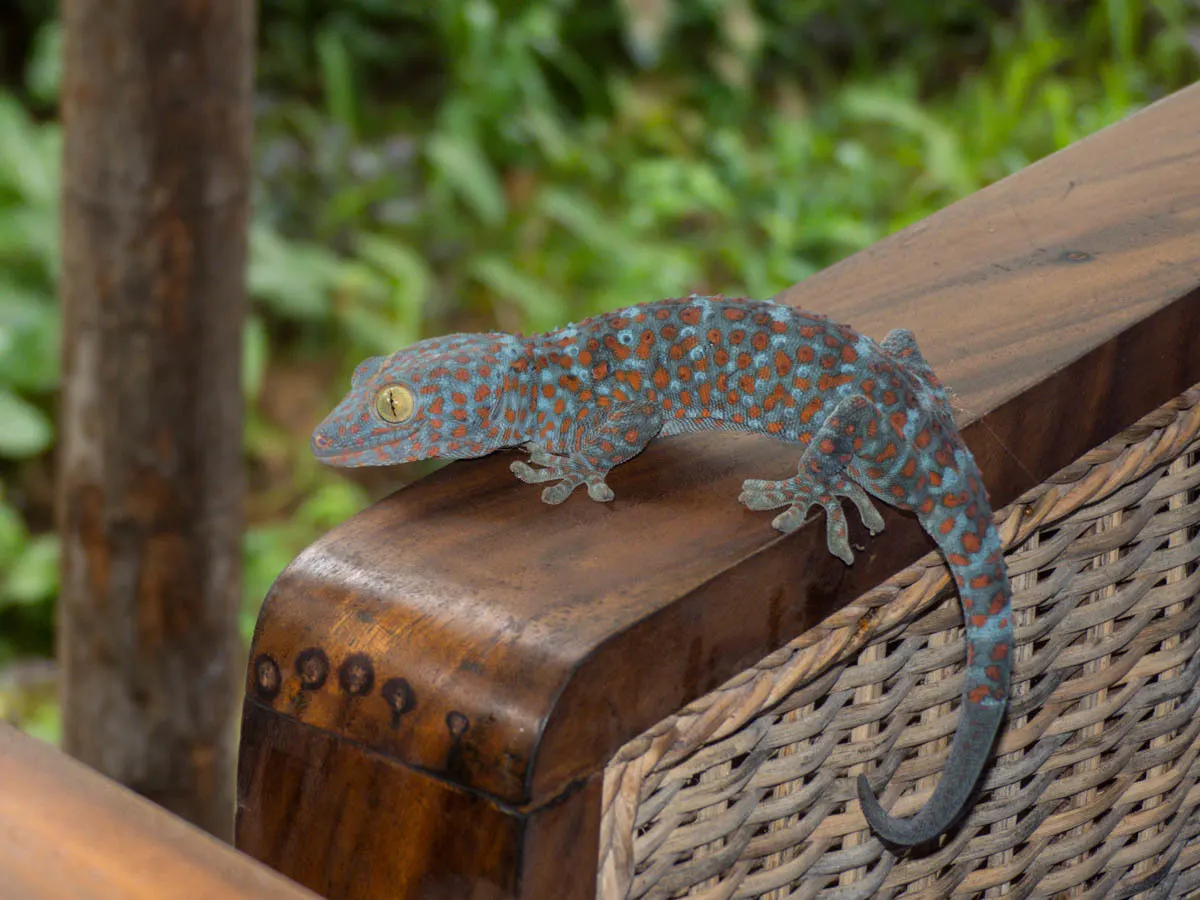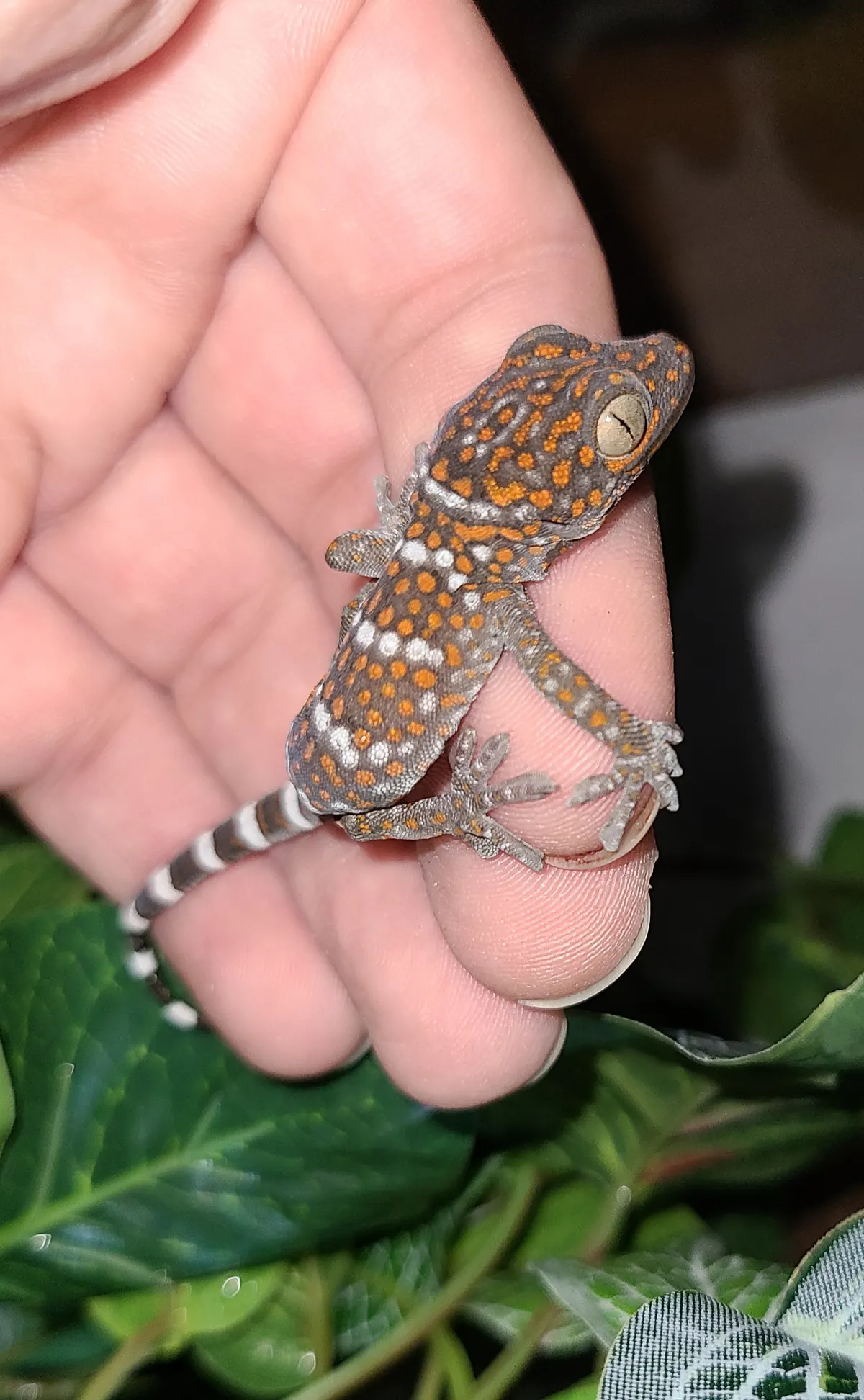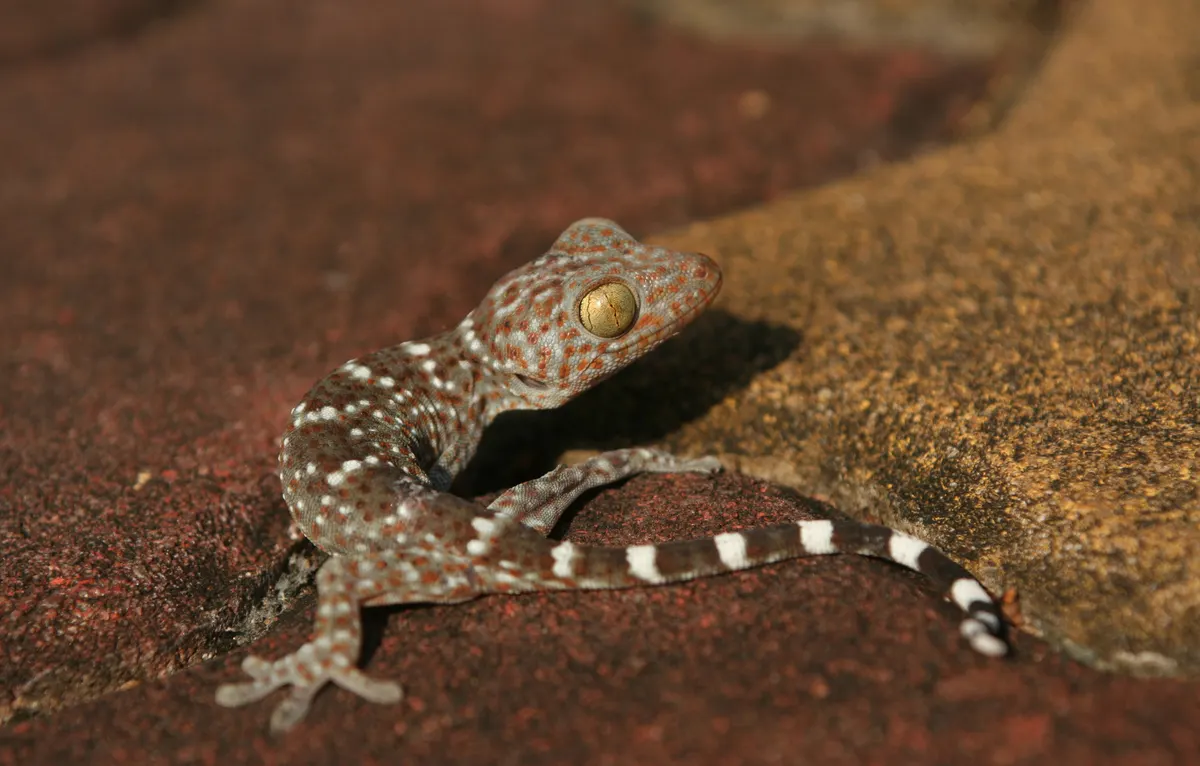
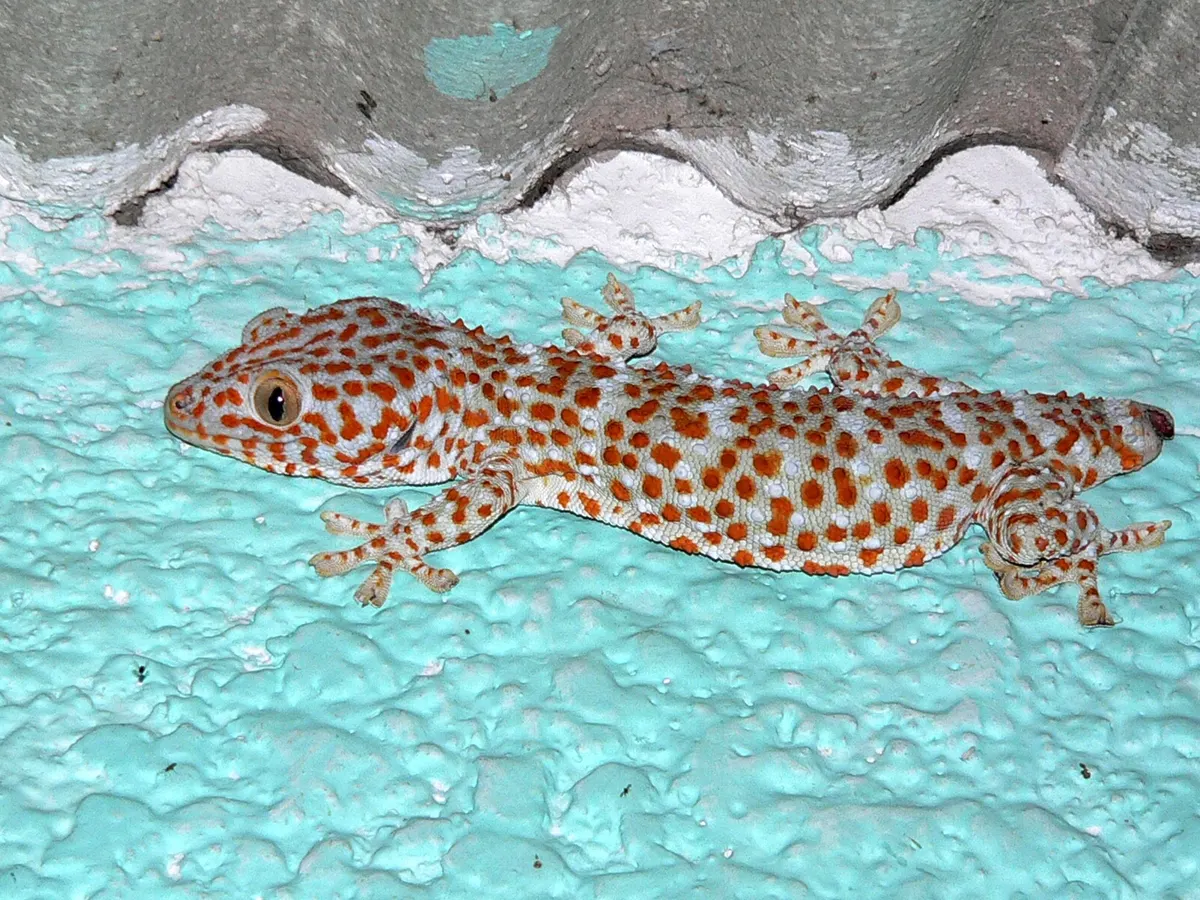
The tokay gecko is a robust and formidable lizard. Adults are significantly larger than most common household geckos, reaching lengths of 11 to 15 inches (including the tail) and weighing between 5 and 10 ounces. Their skin is soft and granular, featuring a mesmerizing base coloration of slate-grey or pale blue, heavily heavily mottled with bright rust-red to vivid orange spots.
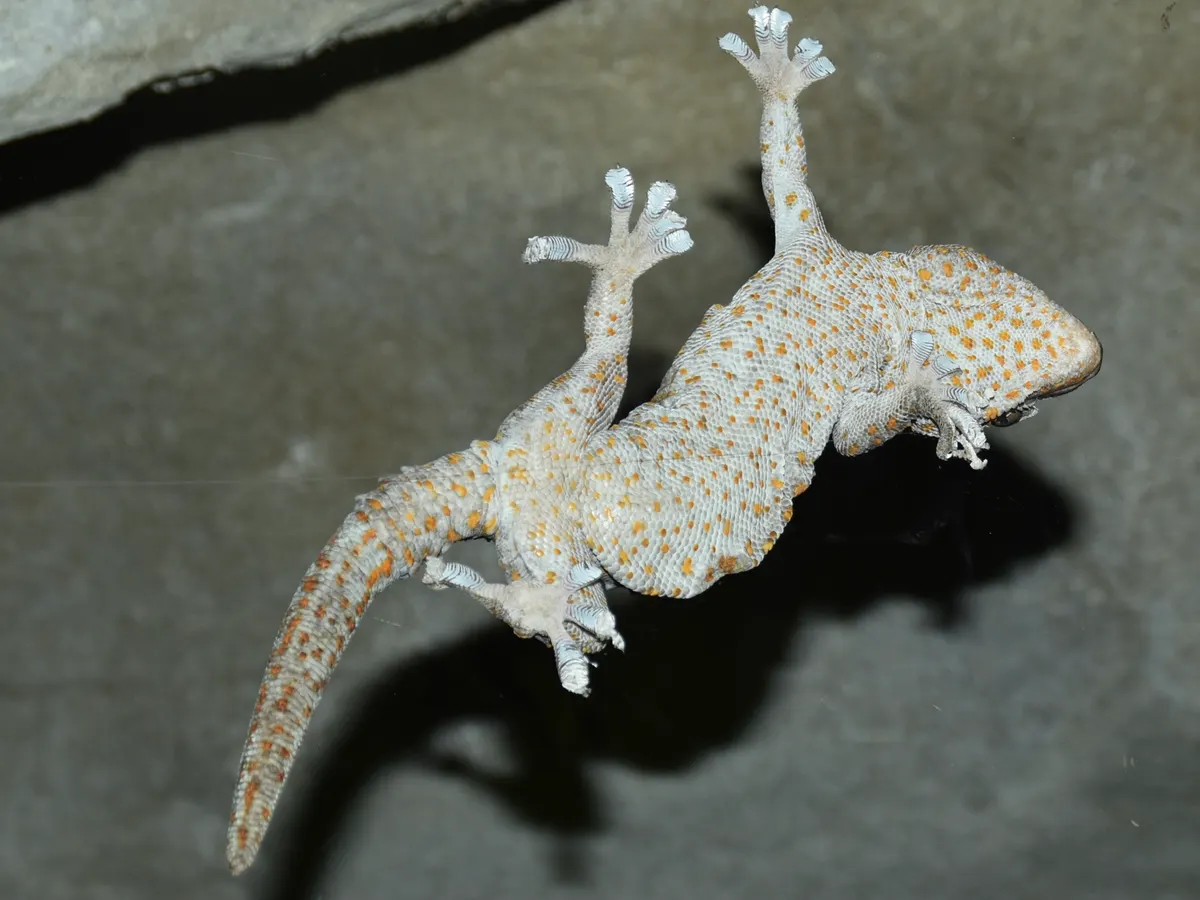
Their most famous anatomical feature is the design of their feet. Unlike animals that use claws or suction, the tokay gecko climbs using dry adhesion. The pads of their wide toes are covered in millions of microscopic, hair-like structures called setae. Each individual seta further branches off into hundreds of even smaller pads called spatulae. These structures are so infinitesimally small that they interact directly with the molecules of the climbing surface via Van der Waals forces, creating an incredibly strong, temporary bond that allows the gecko to scurry up perfectly smooth glass or hang inverted from a ceiling by a single toe.
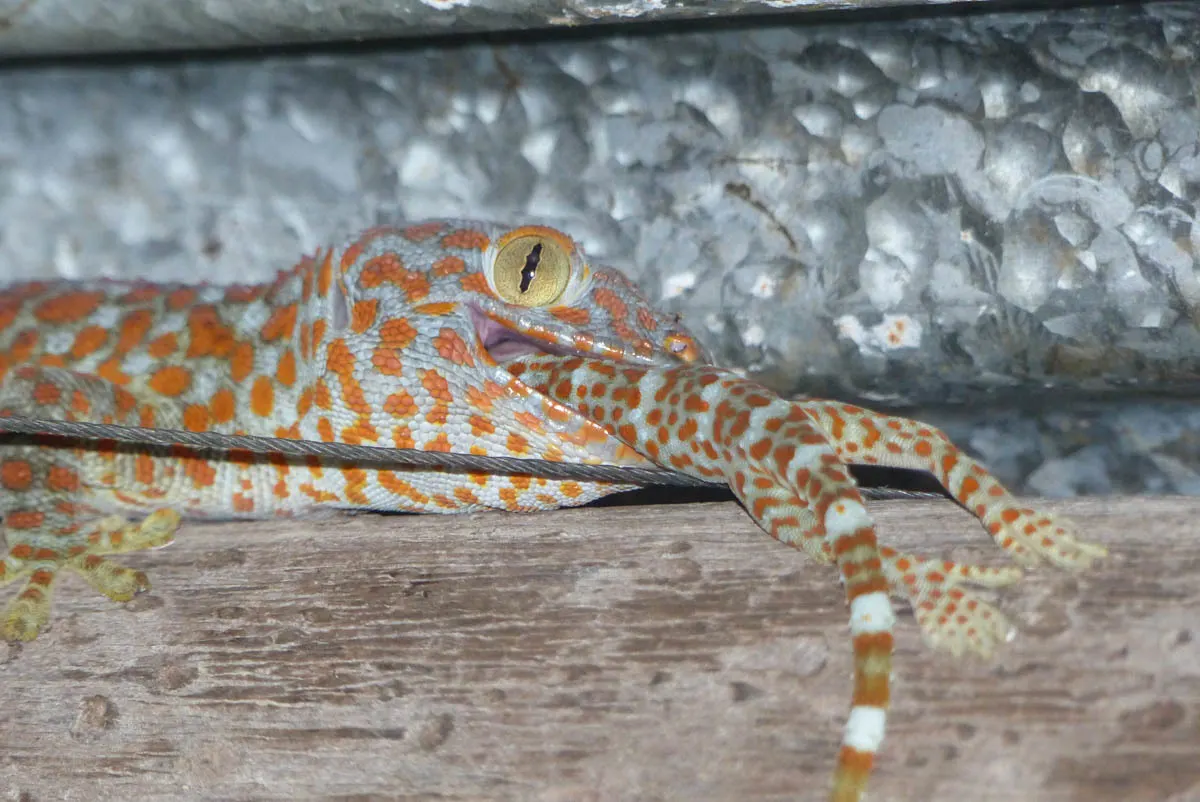
The eyes of the tokay gecko are massive, bulging, and feature vertical, slit-shaped pupils. Because they hunt at night, their vision is highly specialized; their retinas lack rod cells but possess highly sensitive cone cells that allow them to see vibrant color in darkness—rendering their night vision roughly 350 times more sensitive than that of a human. Notably, they lack eyelids. Instead, their eyes are protected by a transparent, immovable scale called a spectacle. To keep this scale clean of dust and debris, the gecko uses its long, muscular tongue to frequently lick its own eyeballs.