Chameleon Facts
"Chameleons are reptiles, not amphibians."
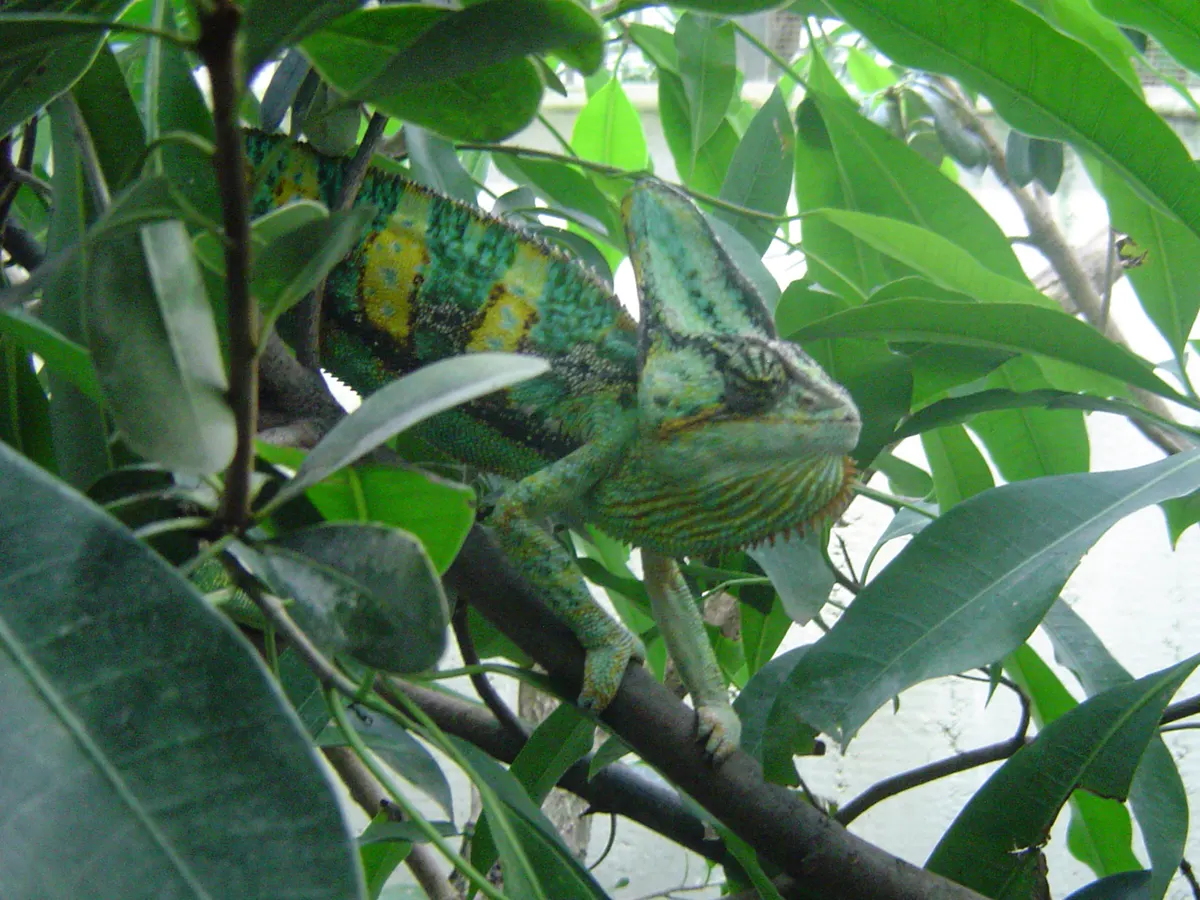
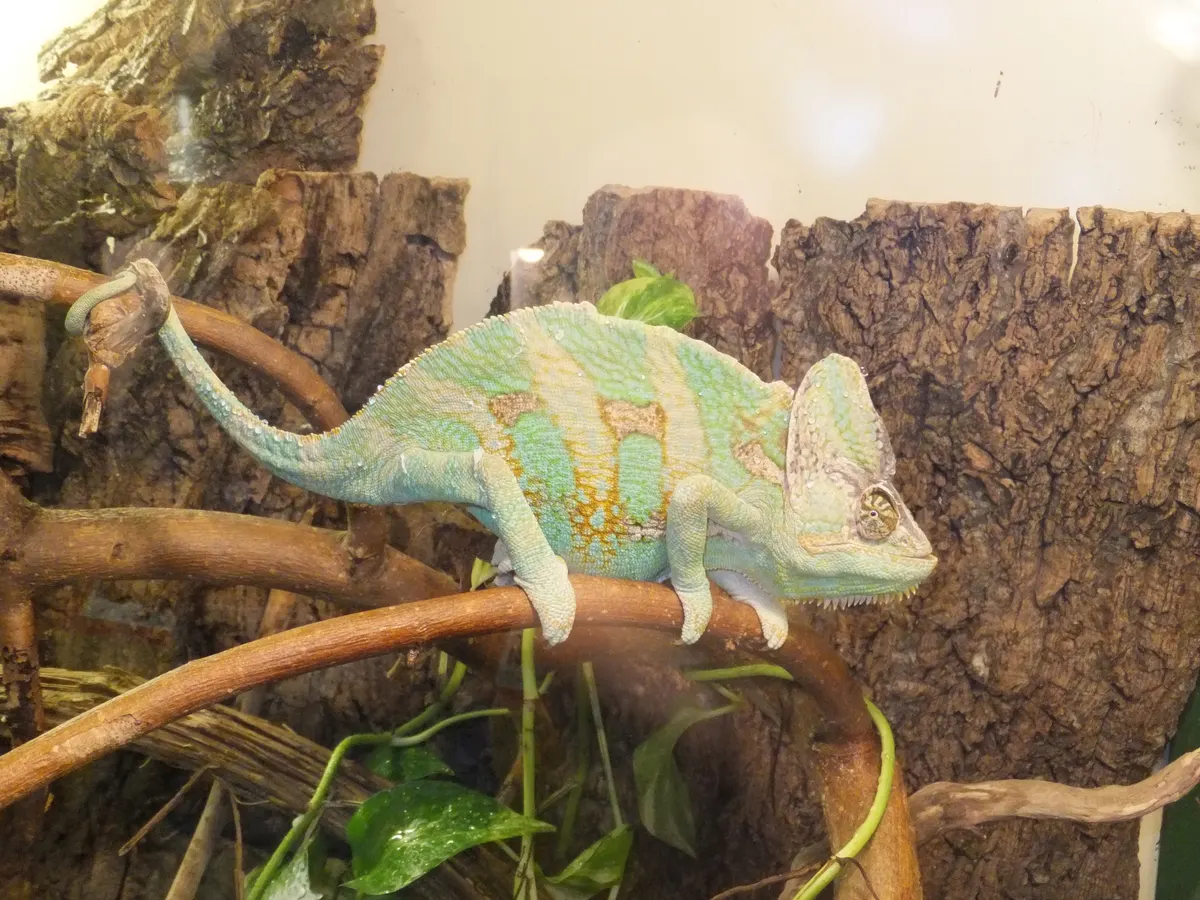
Veiled chameleons are tree-dwelling lizards with gripping feet, swiveling eyes, and a lightning-fast tongue for catching insects.
Loading page content

"Chameleons are reptiles, not amphibians."
Veiled chameleons are tree-dwelling lizards with gripping feet, swiveling eyes, and a lightning-fast tongue for catching insects.
Chamaeleo calyptratusSquamataChamaeleonidae
Explore veiled chameleon photos organized for learning and classroom observation.
Click any photo to view it larger. 8 images available.
Core article
Habitat, diet, behavior, and more — everything on one page.
The veiled chameleon (Chamaeleo calyptratus) is one of the most highly specialized and visually striking reptiles on the planet. Famed for its swiveling, independent eyes, a prehensile tail, and a lightning-fast tongue, this tree-dwelling lizard is an apex insectivore of its domain. Unlike popular myths that suggest chameleons change color merely to blend into their background, these vibrant transformations are deeply tied to physiological thermoregulation, emotional state, and complex social signaling. Measuring between 10 and 18 inches in length and weighing a scant 3 to 6 ounces, this fascinating squamate is perfectly evolved for a cryptic, arboreal lifestyle.
Scientifically classified as Chamaeleo calyptratus, the veiled chameleon (sometimes referred to as the Yemen chameleon) belongs to the kingdom Animalia, phylum Chordata, and class Reptilia. Within the reptilian lineage, it falls under the order Squamata, which encompasses all scaled reptiles, and specifically the family Chamaeleonidae.
Evolutionary biologists note that the Chamaeleonidae family boasts an incredibly deep phylogenetic history, with ancestors adapting to an arboreal lifestyle millions of years ago. Their unique morphological traits—such as zygodactylous feet (where toes are fused into a pincer-like arrangement) and laterally compressed bodies—arose as highly specialized evolutionary responses to the demands of navigating thin branches in dense canopies.
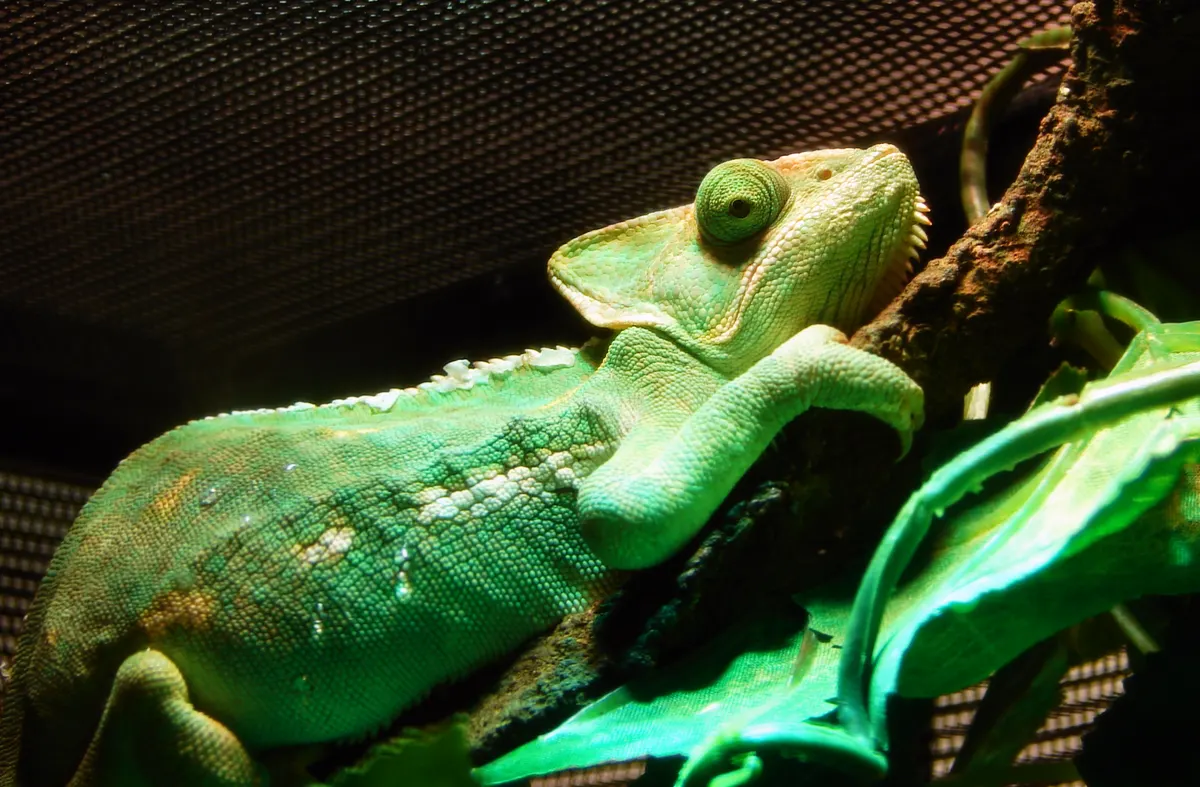
The anatomy of a chameleon is a fascinating example of biological engineering. Their most immediately recognizable feature is the prominent "casque" or helmet-like structure atop their heads, which grows larger in males and is thought to channel water droplets directly into their mouths in arid environments.
Their visual system is unparalleled among vertebrates. A chameleon's eyes are conical and protrude laterally from the skull, allowing for independent movement. This grants them a near 360-degree arc of vision. When a prey item is spotted, both eyes converge forward to provide stereoscopic vision and acute depth perception, a critical necessity for a predator relying on ballistic tongue strikes.
Beneath the skin, specialized cells called chromatophores contain pigments that enable the chameleon's legendary color-changing abilities. By expanding or contracting these cells, chameleons can shift their skin tones to regulate temperature—absorbing heat with darker shades or reflecting it with lighter hues—and display dominance, submission, or mating readiness.

Endemic to the Arabian Peninsula, specifically Yemen and Saudi Arabia, the veiled chameleon is well-adapted to a range of challenging environments. They are primarily found in tropical dry forests, mountain scrublands, and coastal plains. Unlike tropical chameleons that require constant high humidity, Chamaeleo calyptratus has evolved to tolerate more arid conditions, relying on morning dew and high-altitude moisture for hydration.
Their preference for verticality dictates their habitat selection; they spend nearly their entire lives elevated off the ground, clinging to the branches of trees and shrubs. This arboreal existence provides a vantage point for hunting and a sanctuary from terrestrial predators.

As an obligate carnivore, the veiled chameleon primarily targets insects, spiders, and worms, though larger adults are known to opportunistically consume small lizards or even nestling birds.
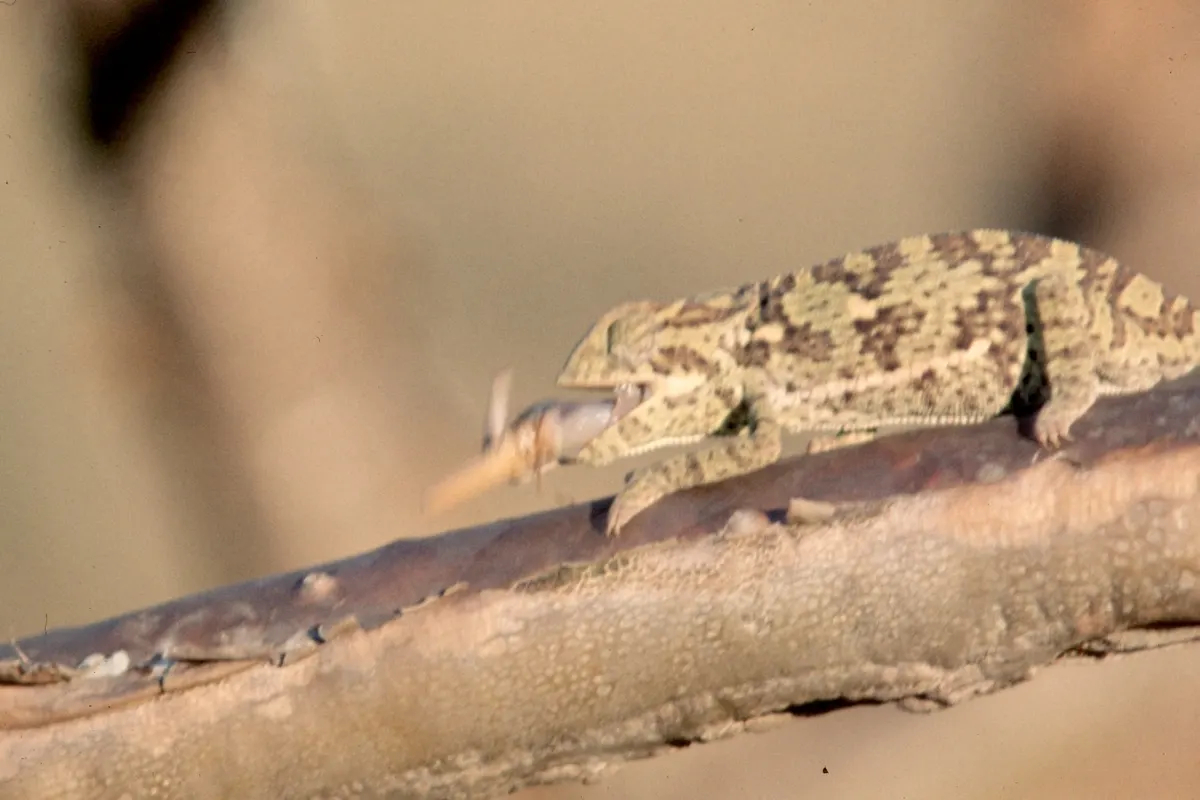
The chameleon's hunting strategy is purely ambush-based, characterized by agonizingly slow, leaf-like swaying movements that camouflage them against the windblown canopy. Once within striking distance, the chameleon deploys its tongue—a biological catapult. The tongue can extend up to 1.5 times the lizard's body length in a fraction of a second, moving faster than the human eye can track. The tip of the tongue functions as a highly specialized, sticky suction cup that ensnares the prey, dragging it back into the chameleon's crushing jaws before the victim can react.

Chameleons are notoriously solitary and fiercely territorial. Social interactions are almost entirely limited to aggressive disputes or mating encounters. When two males cross paths, the resulting confrontation is a vivid display of biological defense. They will flatten their laterally compressed bodies to appear larger, violently inflate their throats, and rapidly shift their chromatophores to flash brilliant, aggressive warning colors.
If visual intimidation fails, these encounters can escalate into physical violence, involving biting and head-butting, often leading to severe injury for the subordinate male. Outside of the mating season, females are equally intolerant of males, frequently displaying a dark, mottled "rejection pattern" to ward off unwanted advances.

The reproductive cycle of the veiled chameleon is demanding and rapid. After a successful mating, the female undergoes a gestation period of approximately 20 to 30 days. During this time, her nutritional requirements skyrocket as she develops a massive clutch of eggs—usually ranging from 20 to 70 eggs.
To lay her clutch, the female descends to the forest floor, an inherently dangerous journey that exposes her to ground-dwelling predators. She excavates a shallow burrow in the soil, deposits the eggs, and carefully buries them to ensure proper incubation. The eggs incubate in the soil for roughly six months. Once they hatch, the neonate chameleons are fully independent and must immediately climb into the canopy to avoid predation. The typical lifespan of a wild veiled chameleon ranges from 5 to 8 years, though they can live up to 8 years in captivity under optimal care.
(Population and conservation trend data sourced from the IUCN Red List of Threatened Species)
Currently, the International Union for Conservation of Nature (IUCN) classifies the veiled chameleon as a species of "Least Concern," indicating that their wild populations in Yemen and Saudi Arabia are relatively stable. However, this designation belies the growing pressures they face.
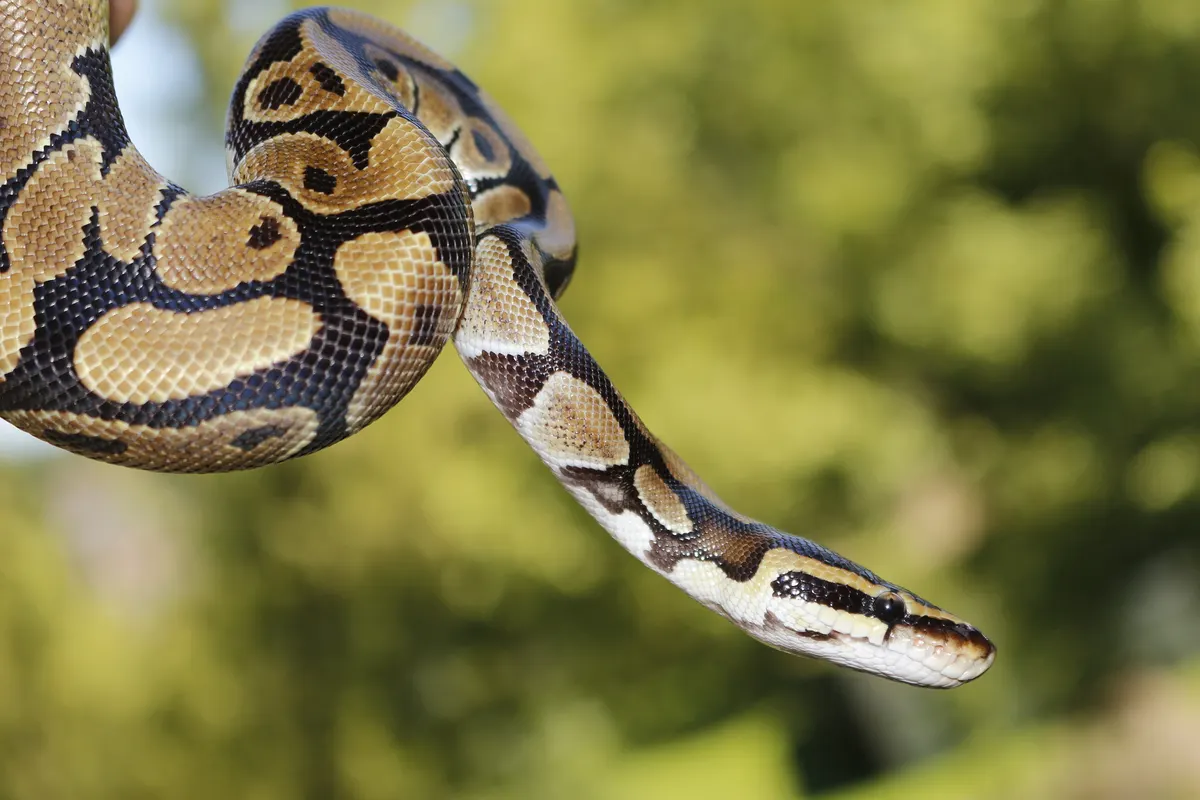
Habitat degradation due to agricultural expansion and human settlement poses a persistent threat to their native mountain scrub and dry forest biomes. Furthermore, the global pet trade exerts localized pressure on wild populations. Natural predators, including birds of prey, snakes, and larger arboreal lizards, also continuously cull the population, maintaining a harsh natural balance.
Chameleons are reptiles, not amphibians.
Each eye can move separately to look in two directions at once.
A chameleon's tongue can shoot out faster than you can blink.
They change color because of mood, temperature, and light.
Veiled chameleons have a tall helmet-like casque on the head.
Their feet grip branches like mittens with two toes pointing each way.
Select a question to reveal the answer.
A chameleon is a lizard with a curled tail, gripping feet, and eyes that can move independently.
Veiled chameleons live in trees and bushes in Yemen and Saudi Arabia on the Arabian Peninsula.
Chameleons are carnivores that eat insects, spiders, and other small animals.
Chameleons change color because of mood, temperature, stress, and light—not only to match the background.
A chameleon shoots out a long sticky tongue to grab insects before pulling prey back into the mouth.
Yes. Chameleons are reptiles with dry scaly skin and eggs laid on land.
Veiled chameleons are listed as Least Concern, but habitat loss and the pet trade affect wild populations.