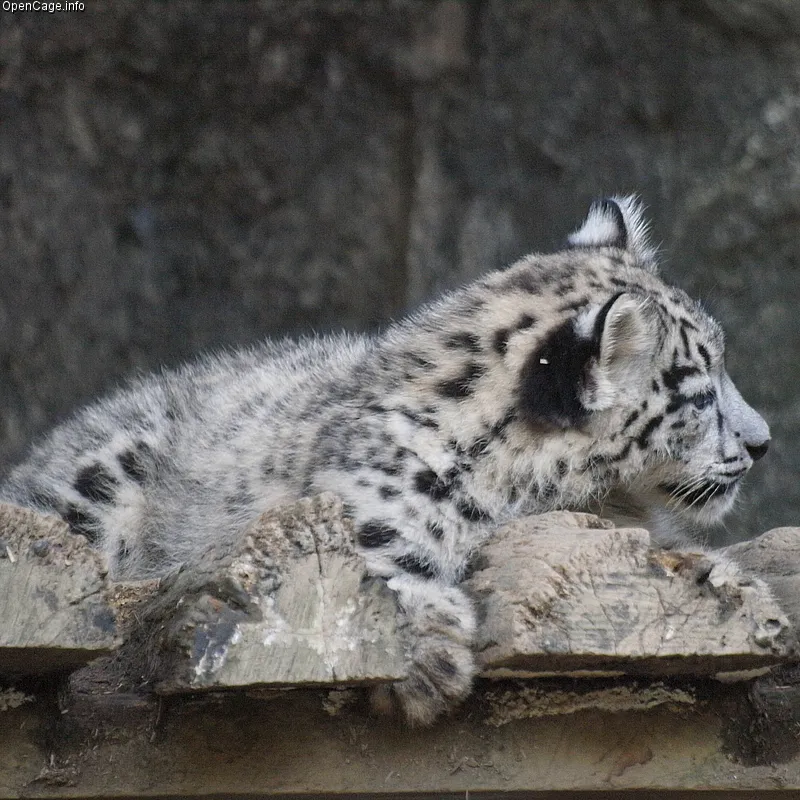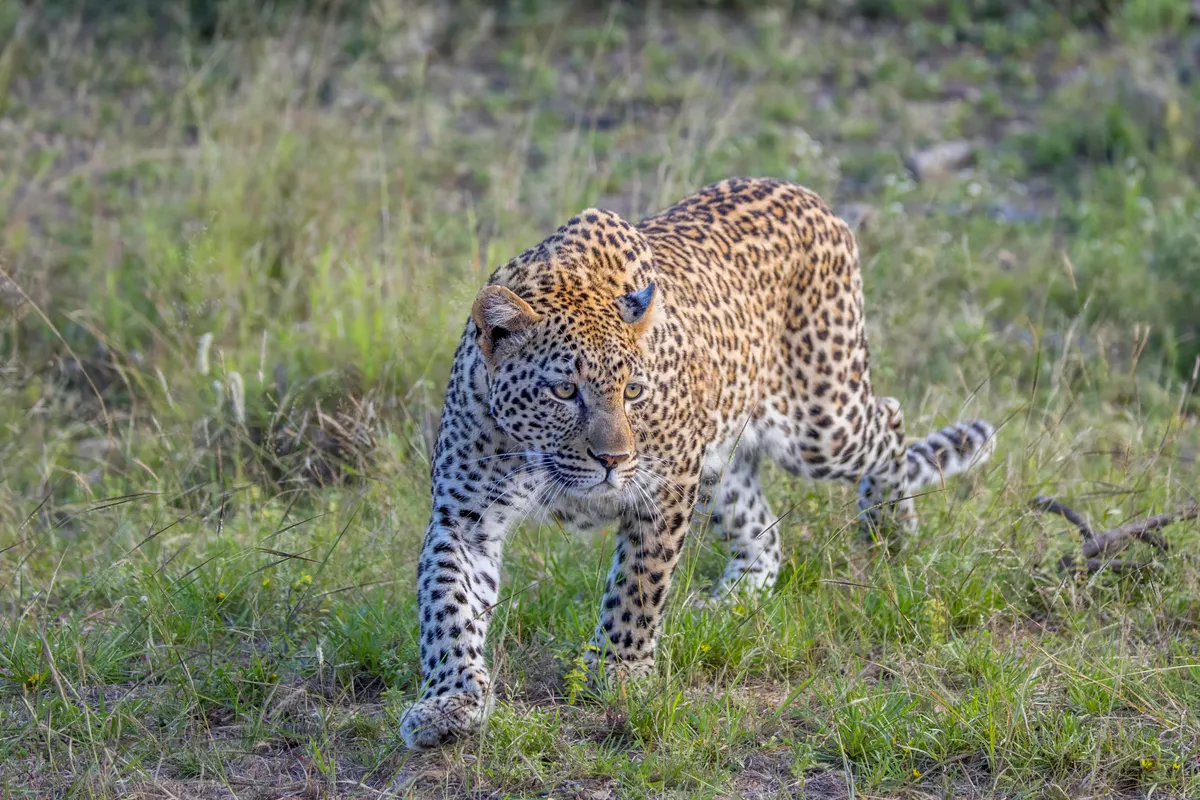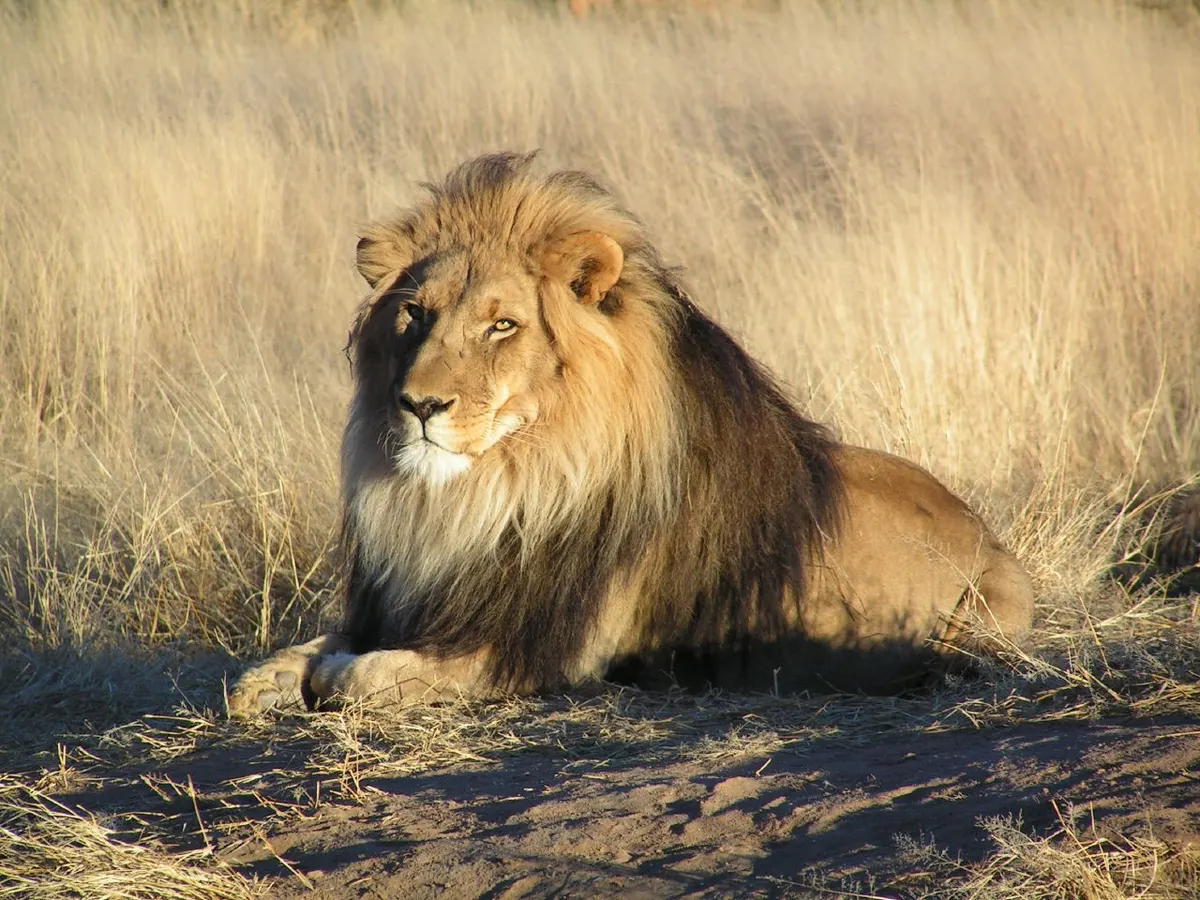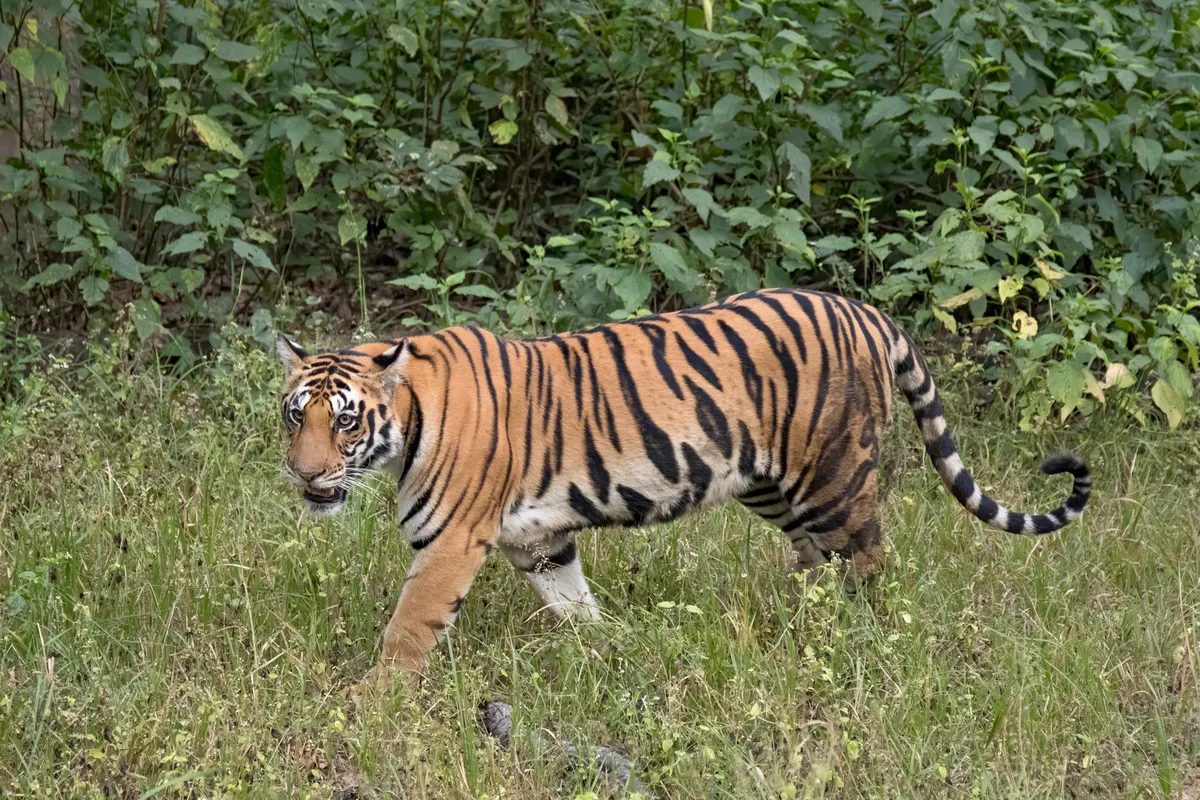
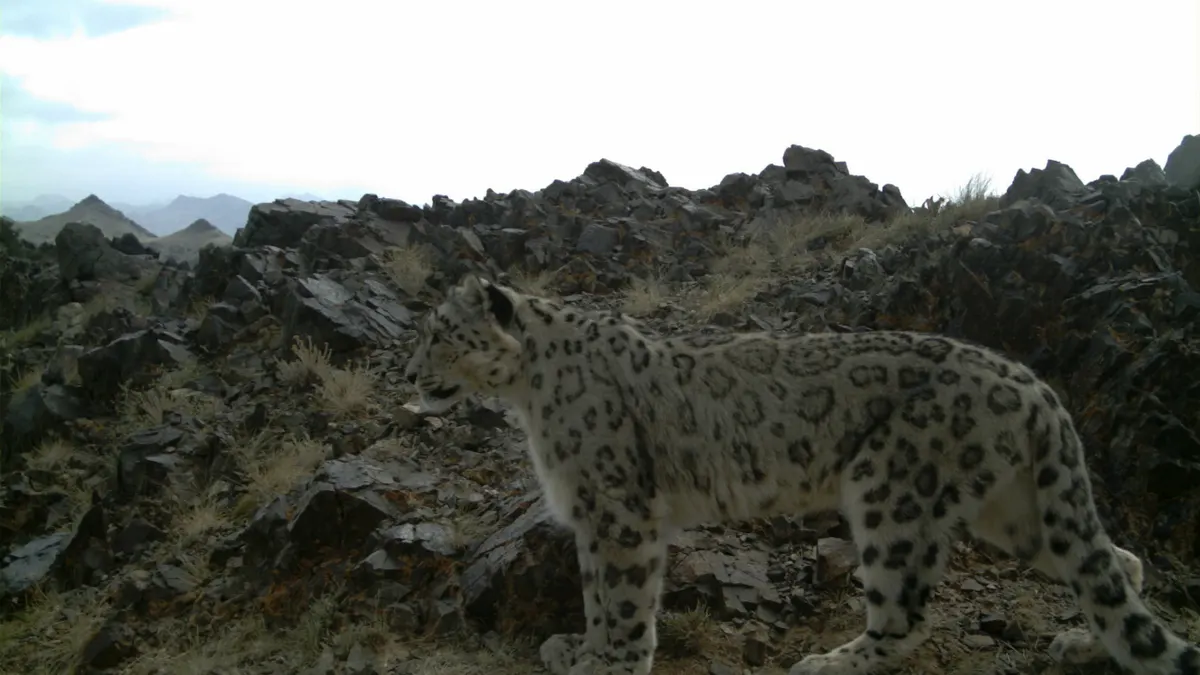
A snow leopard is powerfully built for scaling steep, jagged cliffs. It is relatively compact compared to other Panthera species, measuring 3 to 4.5 feet in head-to-body length, standing roughly 2 feet at the shoulder, and weighing between 55 and 120 pounds.
Every aspect of its anatomy is engineered for thermal regulation and alpine agility. Its pelage is astonishingly thick, ranging from pale gray to smoky white, patterned with large, dark gray rosettes and spots. This disruptive coloration provides flawless camouflage against rocky, snowy slopes. The belly fur is exceptionally dense, measuring up to nearly 5 inches thick, insulating the cat's vital organs when crawling over glacial ice.
Unlike the other members of the Panthera genus, the snow leopard possesses a modified hyoid bone that restricts it from roaring; instead, it communicates via a non-threatening, high-pitched vocalization known as a "chuff" or "prusten," alongside hisses and wails.
Its physiological adaptations to altitude are remarkable. It possesses a wide, domed nasal cavity that acts as a biological radiator, warming and humidifying the thin, freezing mountain air before it reaches the lungs. Its paws are exceptionally large and heavily furred, functioning as natural snowshoes that distribute its weight evenly to prevent sinking in deep snow drifts, while also muffling the sound of its approach.
Perhaps its most vital appendage is its tail. Measuring up to 3.5 feet in length—nearly as long as its entire body—the thick, highly flexible tail serves as an essential counterbalance when leaping across treacherous chasms. When resting, the snow leopard wraps this incredibly bushy tail around its body and face, utilizing it as a thermal scarf to protect its lungs and nose from the biting alpine wind.