Orca Facts
"Orcas are actually the largest dolphins on Earth."
Orcas are the largest members of the dolphin family. They are smart marine mammals that live in pods, use sound to communicate, and hunt fish or marine...
Loading page content

"Orcas are actually the largest dolphins on Earth."
Orcas are the largest members of the dolphin family. They are smart marine mammals that live in pods, use sound to communicate, and hunt fish or marine...
Explore orca photos for learning and classroom observation, from pod life and calves to open-ocean swimming.
Click any photo to view it larger. 8 images available.
Core article
Habitat, diet, behavior, and more — everything on one page.
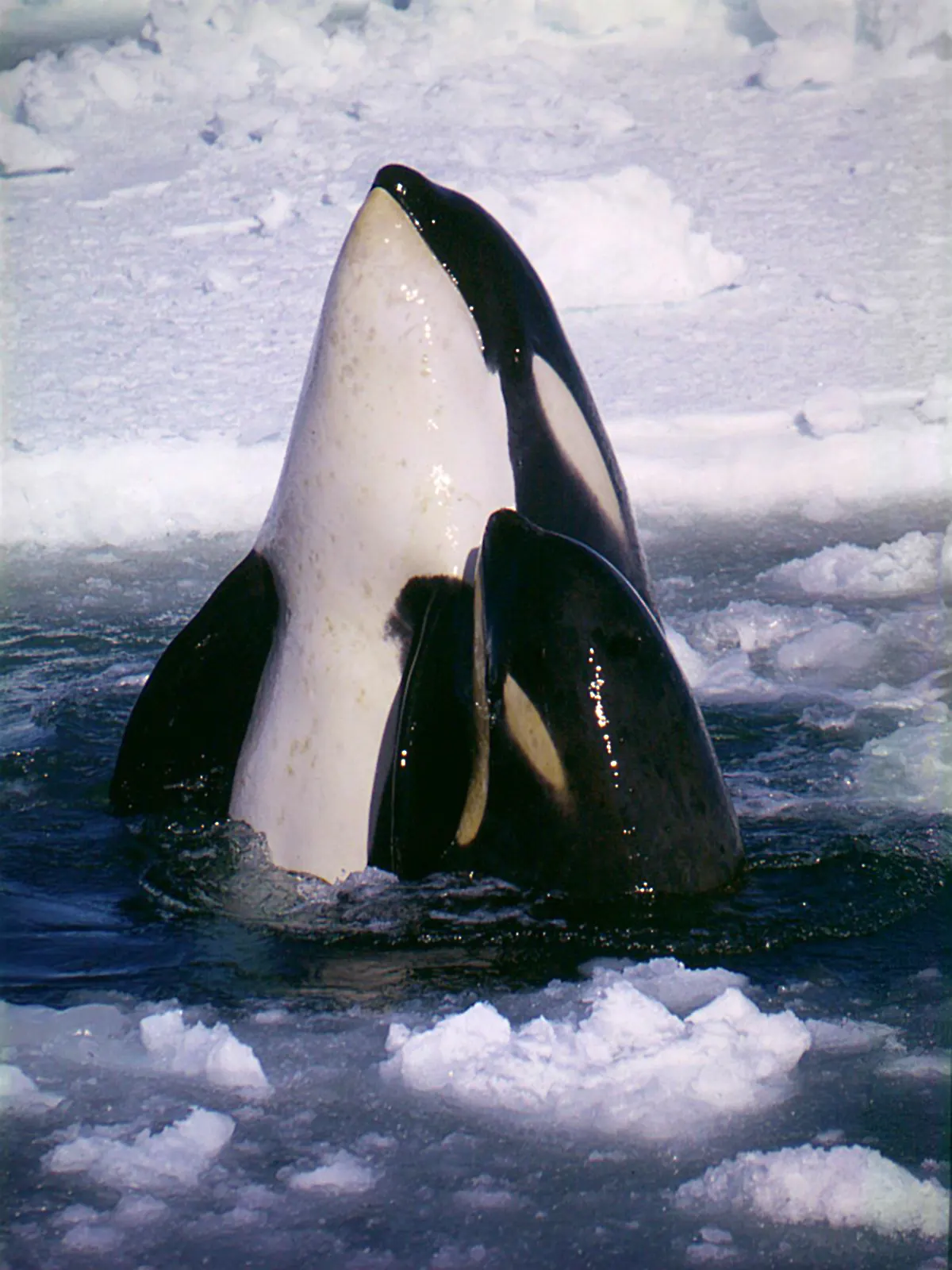
The orca (Orcinus orca), universally recognized by its striking black-and-white pigmentation and towering dorsal fin, is arguably the most formidable apex predator in the global marine ecosystem. Despite the colloquial moniker "killer whale," the orca is actually the largest extant member of the dolphin family (Delphinidae). Possessing profound intelligence, complex acoustic communication, and highly sophisticated, cooperative hunting strategies, orcas dominate every ocean on Earth, from the freezing pack ice of Antarctica to the warm, tropical waters of the equator. Their highly structured, matrilineal societies rival human cultures in their complexity, making the orca one of the most intellectually advanced and ecologically significant mammals on the planet.
Classified within the kingdom Animalia, phylum Chordata, class Mammalia, and the order Artiodactyla (specifically the infraorder Cetacea), the orca belongs to the family Delphinidae. It is the sole species within the genus Orcinus.
The evolutionary lineage of the orca diverged from other oceanic dolphins roughly 5 to 10 million years ago during the Miocene epoch. Currently, taxonomists classify all orcas globally as a single species, Orcinus orca. However, extensive genomic sequencing and behavioral studies have identified distinct "ecotypes" worldwide (e.g., Residents, Transients/Bigg's, and Offshores in the North Pacific). These ecotypes exhibit profound differences in morphology, acoustics, diet, and social structure, and they maintain strict reproductive isolation despite overlapping ranges. Many marine biologists advocate that several of these distinct ecotypes should be reclassified as entirely separate subspecies or even distinct species.
Orcas are massive, heavily muscled odontocetes (toothed whales). They exhibit significant sexual dimorphism. Adult males can reach lengths of up to 32 feet and weigh a staggering 12,000 pounds, while females are slightly smaller, reaching around 23 to 26 feet and weighing up to 8,000 pounds.
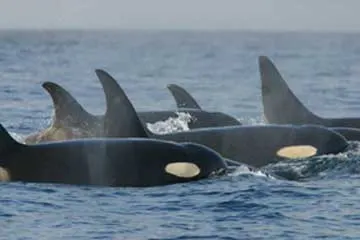
Their hydrodynamically streamlined bodies are designed for explosive power and speed; an orca can reach swimming speeds of up to 34 miles per hour when attacking prey. They are propelled by a massively powerful, horizontal tail fluke. The most striking sexually dimorphic feature is the dorsal fin; in adult males, this fin can stand over 6 feet tall and is distinctly triangular, whereas females possess a shorter, more curved (falcate) dorsal fin.
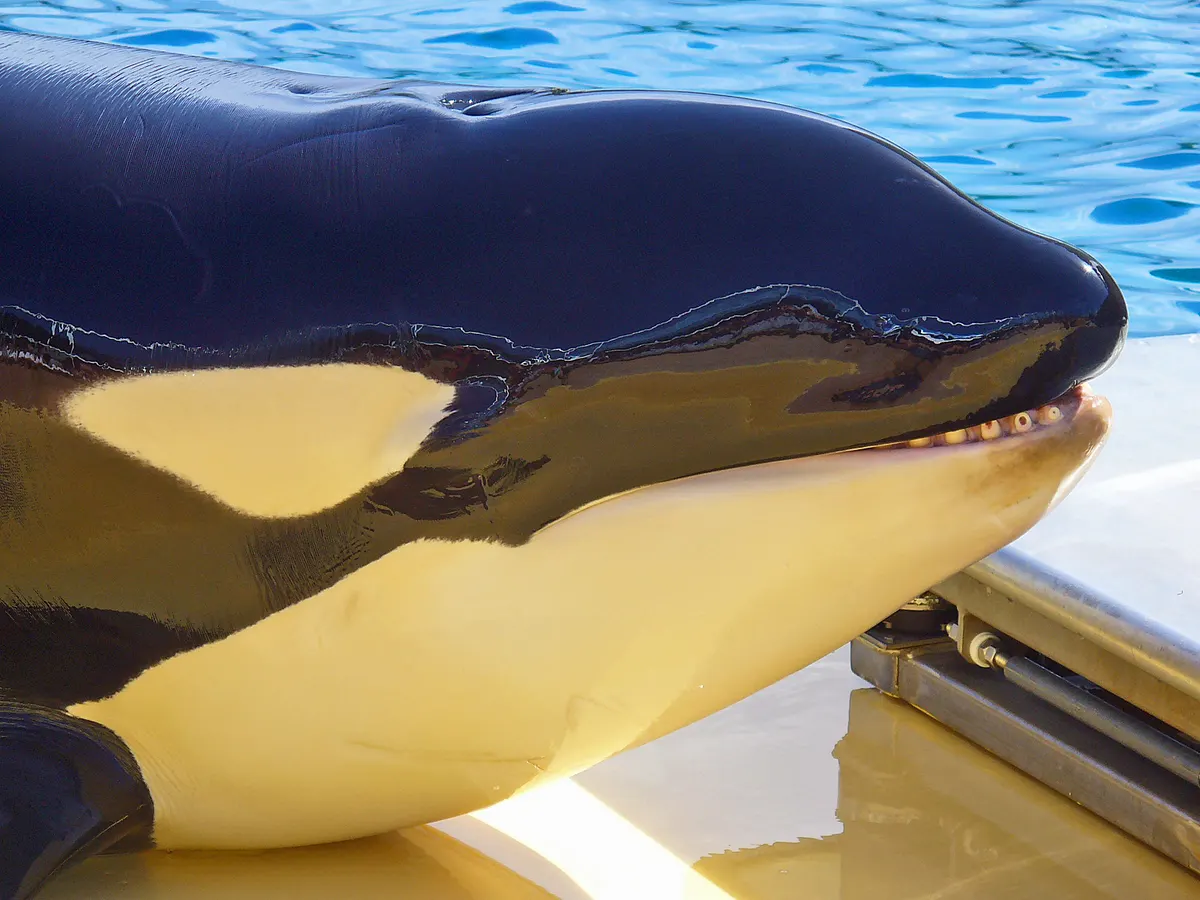
Their sensory adaptations are highly refined for a marine environment. Like all dolphins, orcas possess a highly sophisticated biological sonar system known as echolocation. By forcing air through pneumatic structures in their nasal passages (phonic lips), they produce high-frequency clicks that are focused into a directional beam by a fatty organ in their forehead called the melon. These clicks bounce off objects in the water, returning complex acoustic data that allows the orca to construct a high-resolution, three-dimensional acoustic map of their surroundings, enabling them to hunt in complete darkness or highly turbid water. Their jaws are lined with up to 56 large, sharp, conical teeth that interlock tightly, designed not for chewing, but for grasping and ripping heavy prey.

The orca is the most widely distributed mammal on Earth after humans. They possess a truly cosmopolitan distribution, inhabiting every ocean basin and most seas worldwide, including the Arctic, Atlantic, Indian, Pacific, and Southern Oceans.
While they can be found in open, pelagic waters and warm tropical regions, they are most heavily concentrated in highly productive, cold-water upwelling zones at high latitudes, particularly near coastal areas of the Pacific Northwest, Norway, Iceland, Antarctica, and New Zealand. Their habitat preference is not dictated by temperature or depth, but rather by the specific dietary specialization of the local ecotype.

As apex carnivores, orcas have no natural predators, and their global diet encompasses an astonishing array of marine life, including over 140 different species. However, individual populations (ecotypes) are characterized by extreme, rigid dietary specialization.
For example, the "Resident" orcas of the North Pacific are obligate piscivores, feeding almost exclusively on specific species of salmon (primarily Chinook), ignoring marine mammals entirely. Conversely, "Transient" or Bigg's orcas in the same region hunt exclusively marine mammals, preying on harbor seals, sea lions, porpoises, and even massive baleen whales. In the Southern Ocean, specific Antarctic ecotypes specialize in hunting penguins or Minke whales.
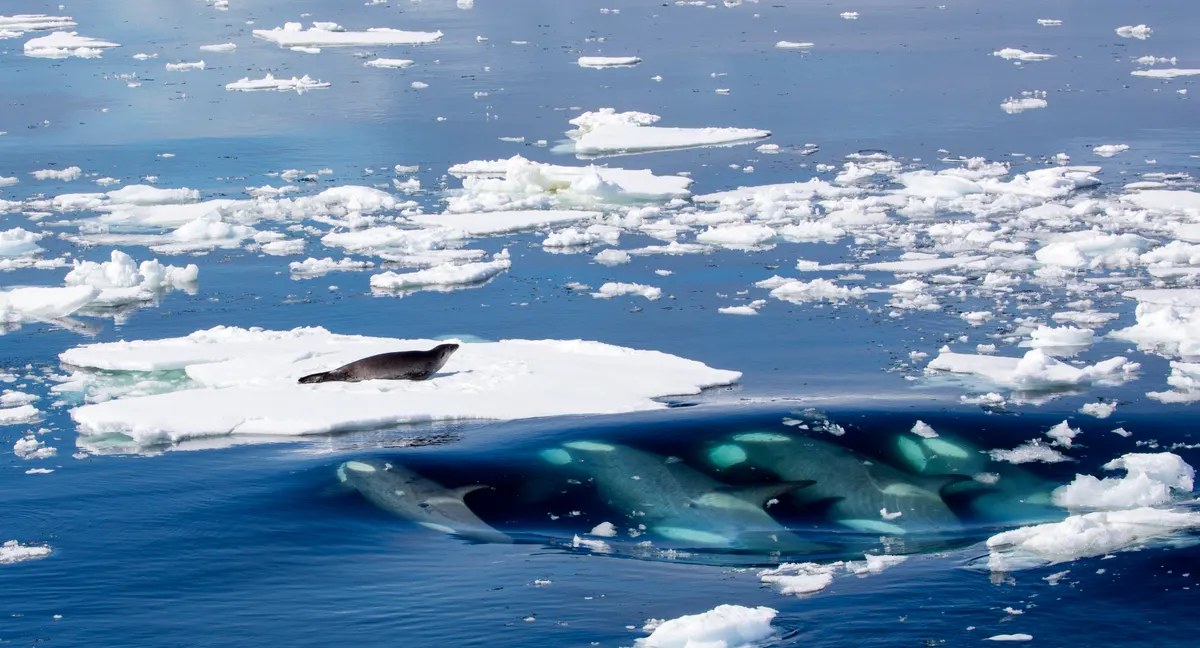
Their hunting strategies are a testament to their profound intelligence and cooperative nature. Pods coordinate complex, tactical assaults. When hunting schooling fish, they use "carousel feeding," blowing bubbles and flashing their white bellies to herd fish into a tight bait ball before stunning them with powerful tail slaps. Antarctic orcas utilize "wave washing," a highly coordinated technique where multiple individuals charge a floating ice floe in unison, generating a powerful, targeted wave that washes resting seals into the waiting jaws of the pod.

Orca society is arguably the most stable and complex of any non-human animal. Their social structure is strictly matrilineal, centered around an older, experienced matriarch. A typical pod consists of the matriarch, her sons, her daughters, and the offspring of her daughters. In some ecotypes, like the North Pacific Residents, offspring never permanently leave their mother, remaining within the exact same pod for their entire lives.
Multiple closely related pods that share a common maternal ancestor form a "clan," and clans that share a similar acoustic repertoire and geographic range form a "community."
Acoustic communication is the bedrock of orca society. Each pod possesses a highly distinct, culturally transmitted acoustic dialect of whistles, pulsed calls, and squawks. This unique dialect serves as a vocal family badge, allowing individuals to recognize pod members over vast distances in the murky ocean and ensuring they only mate with individuals from different pods (to prevent inbreeding). This transmission of specific hunting techniques, migratory routes, and vocal dialects from generation to generation constitutes true animal culture.

The reproductive strategy of the orca is characterized by high maternal investment and extended social learning. Following a massive gestation period of approximately 17 months—one of the longest of any mammal—a female gives birth to a single calf, usually tail-first to prevent drowning.
The newborn calf is highly precocial but absolutely dependent on the mother's lipid-rich milk for up to two years. Allonursing and alloparenting are common; older siblings and "aunts" within the pod frequently babysit and protect the calf while the mother hunts.
Female orcas reach sexual maturity around 15 years of age. Remarkably, orcas are one of the very few non-human species (alongside short-finned pilot whales and belugas) that undergo menopause. Females typically cease reproducing around age 40 but can live well into their 80s or 90s. These post-reproductive matriarchs play a crucial evolutionary role, leading their pods to traditional foraging grounds during years of low prey abundance and sharing their catch with younger, related individuals. Males typically have a shorter lifespan, averaging around 30 to 50 years.
(Population and conservation trend data sourced from the IUCN Red List of Threatened Species)
The IUCN Red List currently classifies the orca globally as "Data Deficient" due to the taxonomic uncertainty regarding whether multiple distinct species exist. However, many specific, localized populations are deeply imperiled and listed as Endangered.
The Southern Resident killer whales of the Pacific Northwest are critically endangered, facing an existential threat from the severe depletion of their obligate prey, the Chinook salmon, due to dam construction and overfishing.
Furthermore, as apex predators, orcas are highly susceptible to the bioaccumulation of persistent organic pollutants (POPs) like PCBs and heavy metals. These toxic chemicals accumulate in their thick blubber, causing severe immunosuppression and reproductive failure; heavily contaminated females frequently pass these lethal toxins directly to their calves through their milk. Anthropogenic acoustic pollution from commercial shipping, naval sonar, and seismic testing severely disrupts their echolocation, causing chronic stress and interfering with their ability to hunt and communicate. Long-term conservation requires stringent ecosystem-based management, massive reductions in marine pollution, and targeted restoration of critical prey species.
Orcas are actually the largest dolphins on Earth.
Each pod can have its own calls and hunting habits.
Orcas breathe air and must surface through a blowhole.
A tall dorsal fin can help identify an adult male orca.
Some orca populations specialize in fish while others hunt mammals.
Orca calves stay close to their mother for years.
Select a question to reveal the answer.
An orca is a large marine mammal also called a killer whale. It is actually the biggest member of the dolphin family.
Orcas are dolphins. They belong to the dolphin family even though they are often called killer whales.
Orcas live in oceans around the world, from cold polar seas to temperate coasts and open ocean waters.
Orcas are carnivores that eat fish, squid, seals, and other marine animals depending on the pod.
A pod is a family group of orcas that travels, hunts, rests, and communicates together.
A baby orca is called a calf. Calves stay close to their mother and learn pod calls and hunting habits.
Orcas can grow from about 16 to 32 feet long, and large males can weigh many thousands of pounds.
Orca conservation depends on the population. Some groups face serious threats from pollution, noise, and low food supply.