Bottlenose Dolphin Facts
"Dolphins sleep with one half of the brain at a time."
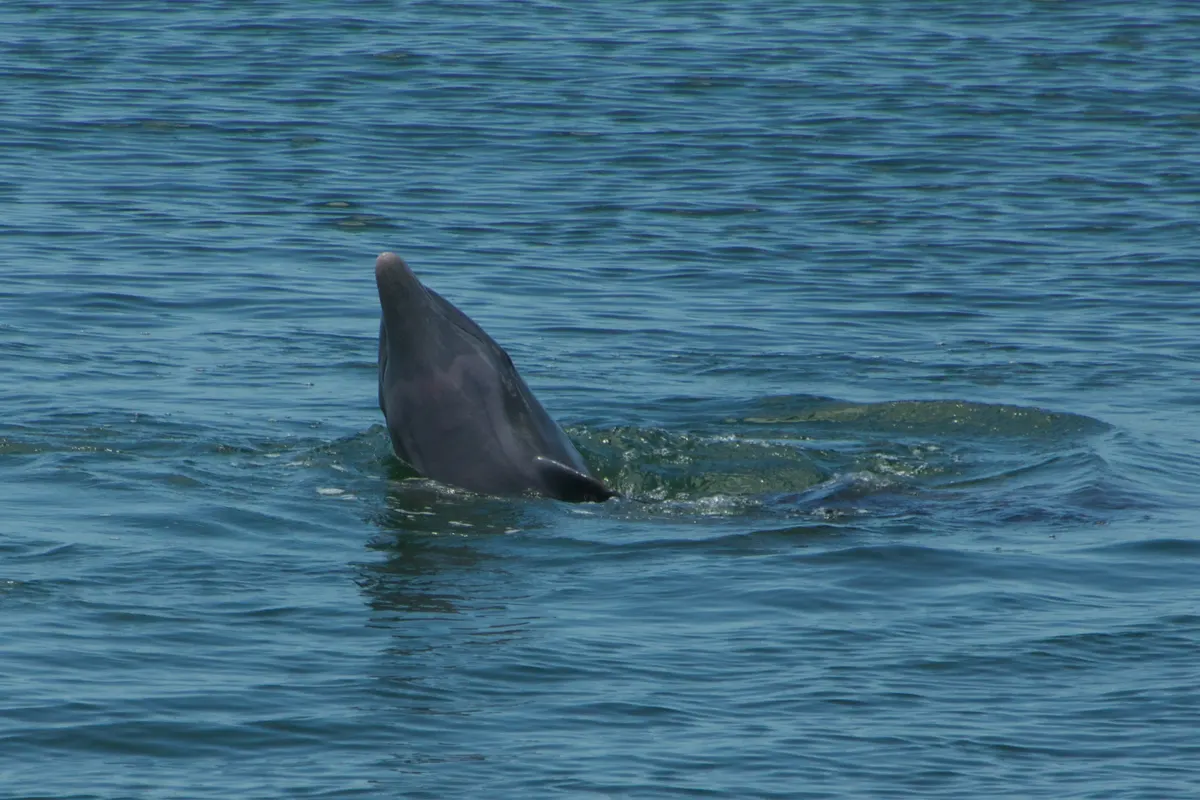
Bottlenose dolphins are intelligent marine mammals that use sound to explore the ocean, find food, and communicate with their pod.
Loading page content

"Dolphins sleep with one half of the brain at a time."
Bottlenose dolphins are intelligent marine mammals that use sound to explore the ocean, find food, and communicate with their pod.
This gallery supports marine-animal search intent and educational observation.
Click any photo to view it larger. 8 images available.
Core article
Habitat, diet, behavior, and more — everything on one page.
The common bottlenose dolphin (Tursiops truncatus) is arguably the most recognized and universally beloved marine mammal on the planet. Famed for its perpetual, seemingly joyful "smile" and astonishing acrobatic displays, this species is a fixture in human culture and literature. However, beneath this friendly façade lies a highly derived, apex marine predator possessing an intellect that rivals that of the great apes. Operating in complex, fluid social networks and utilizing a highly sophisticated biological sonar system to navigate and hunt in a visually limited environment, the bottlenose dolphin represents a pinnacle of cetacean evolution and cognitive complexity.
The scientific classification of the bottlenose dolphin places it within the kingdom Animalia, phylum Chordata, class Mammalia, and order Artiodactyla (even-toed ungulates). It belongs to the suborder Odontoceti (the toothed whales) and is the most prominent member of the family Delphinidae, which includes oceanic dolphins and killer whales. The genus Tursiops contains the common bottlenose dolphin (Tursiops truncatus) and the closely related Indo-Pacific bottlenose dolphin (Tursiops aduncus).
Evolutionarily, all cetaceans share a terrestrial, hoofed ancestor that returned to the sea approximately 50 million years ago. The Odontoceti diverged from the baleen whales roughly 34 million years ago, driven by the evolutionary advantage of active predation on highly mobile prey like fish and squid. This required the retention of homodont dentition (teeth of uniform shape) and the evolutionary invention of echolocation. The modern bottlenose dolphin is a highly derived species that emerged during the Miocene epoch, perfectly adapting its morphological and neurological architecture to dominate the shallow coastal shelves and open pelagic zones of the global ocean.
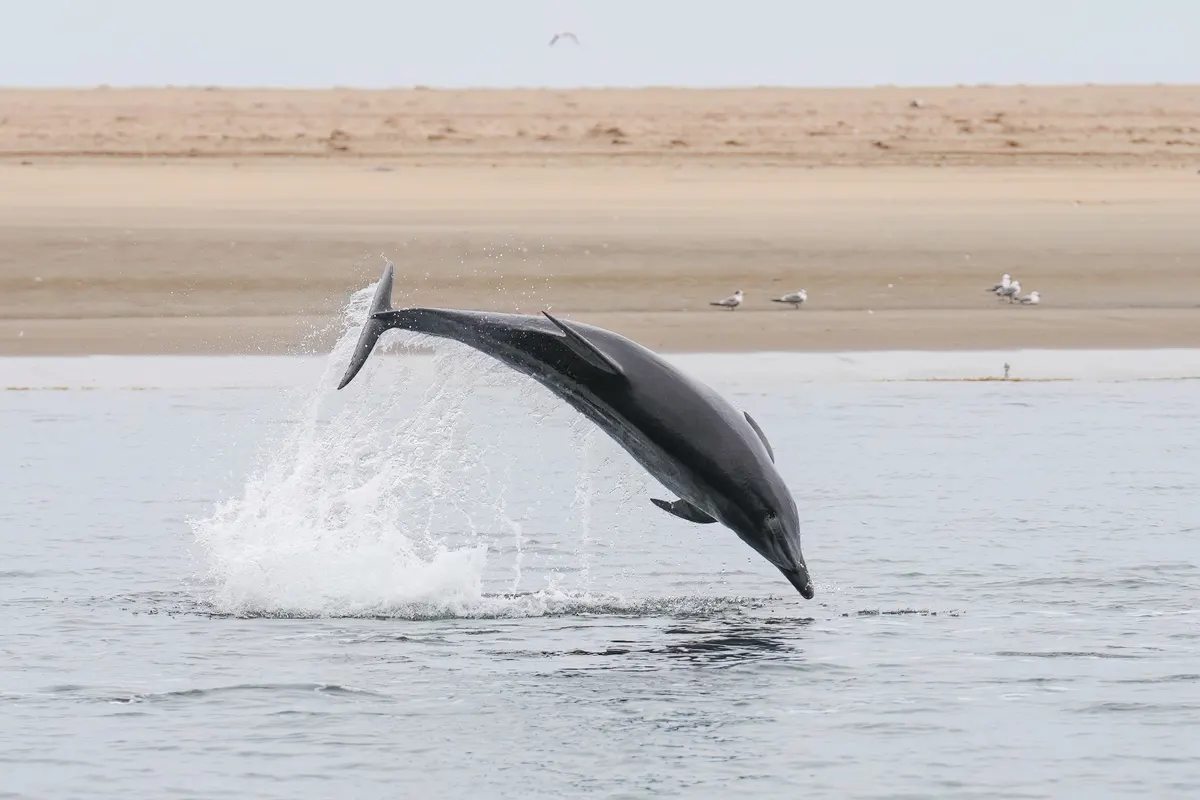
The morphology of Tursiops truncatus is a masterpiece of hydrodynamics, engineered for rapid acceleration, high-speed cruising, and extreme agility. Adults exhibit significant regional variation in size, typically ranging from 6 to 13 feet in length and weighing between 300 and 1,400 pounds. Offshore ecotypes, inhabiting colder, deeper waters, are generally larger and more robust than their coastal counterparts.
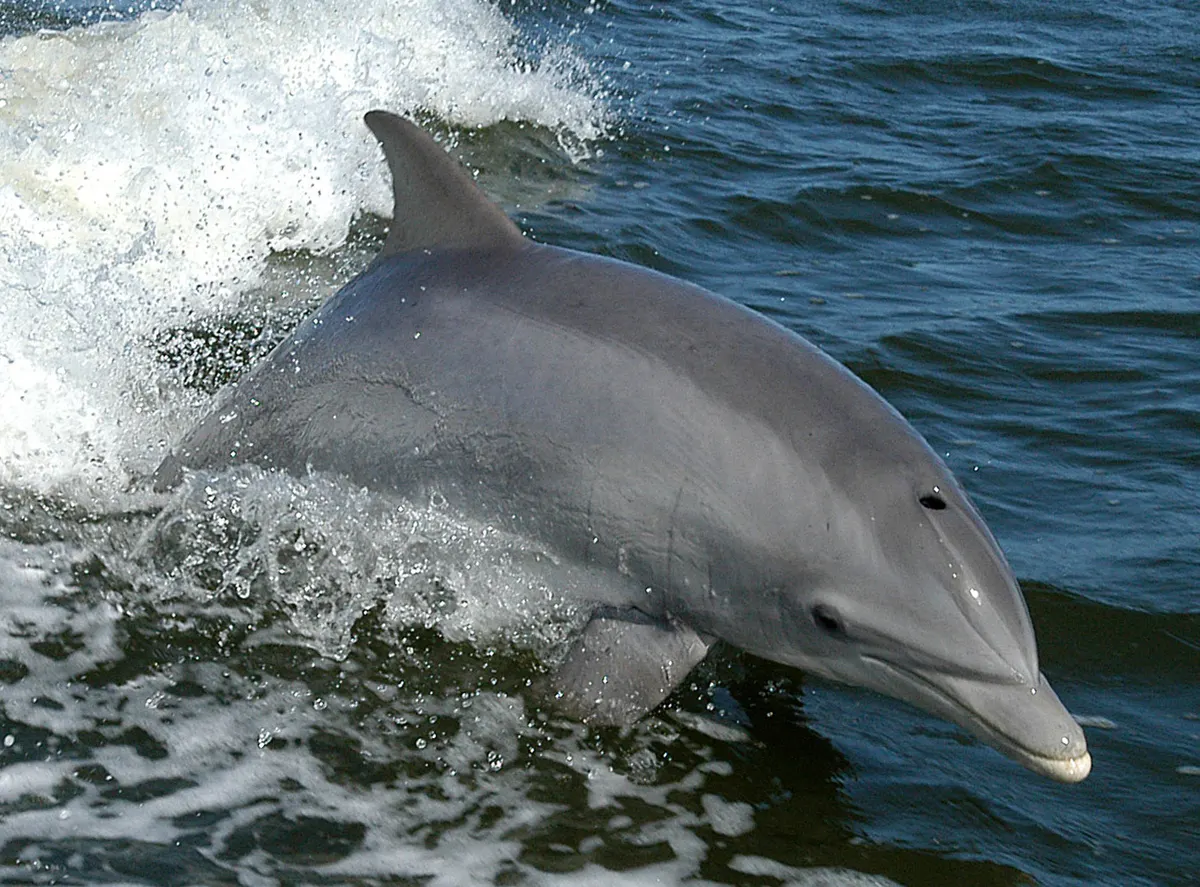
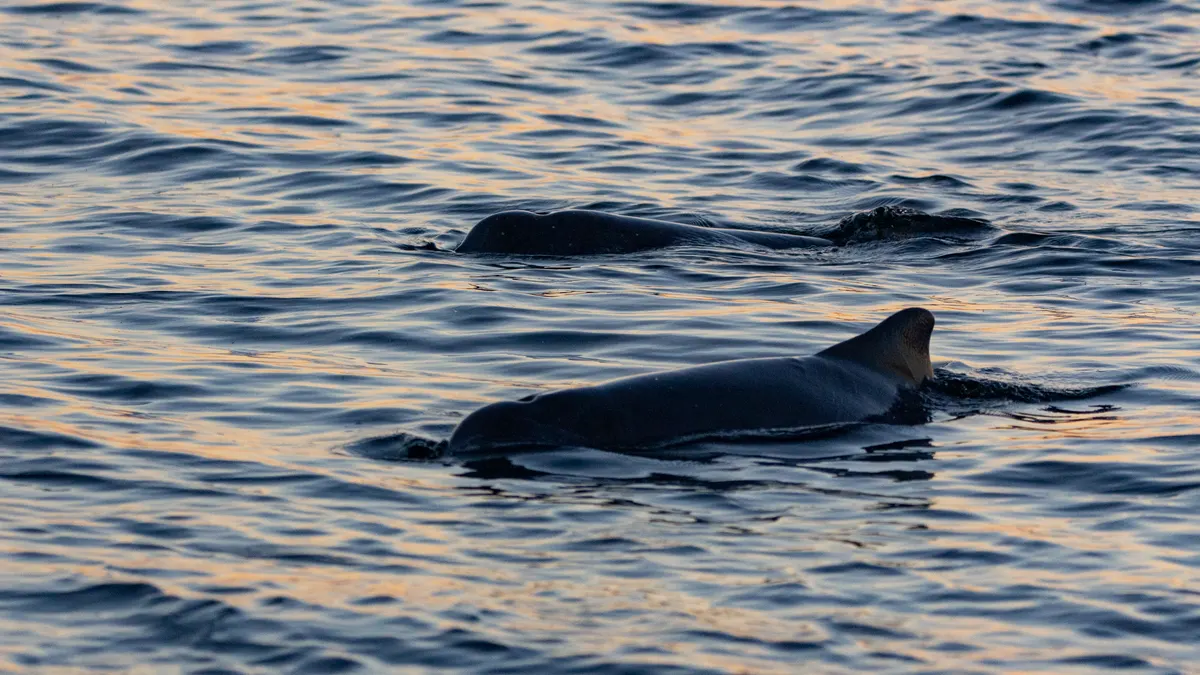
The body is highly streamlined, completely devoid of hair, and covered in smooth, rubbery skin that constantly sheds epidermal cells to reduce drag. Their coloration provides effective countershading camouflage: dark gray on the dorsal (upper) surface to blend with the dark depths when viewed from above, and pale white to pinkish on the ventral (belly) surface to blend with the sunlit surface when viewed from below.
Their anatomy features several critical adaptations for a fully aquatic mammalian lifestyle. The nasal opening has migrated to the apex of the skull, forming a single muscular blowhole that allows for rapid, explosive exhalation and inhalation when breaking the surface. The pectoral flippers, containing the exact homologous skeletal structure of a human hand, are used for precise steering, while the horizontal tail flukes, composed entirely of dense connective tissue devoid of bone, provide massive propulsive thrust, enabling speeds up to 20 mph. The characteristic short, stubby "bottlenose" rostrum houses 80 to 100 sharp, conical teeth designed for gripping slippery, struggling prey rather than chewing.

The bottlenose dolphin is one of the most widely distributed marine mammals on Earth. They are cosmopolitan, inhabiting temperate and tropical oceans across the globe. They are found from the coastal waters of the United States and the Caribbean to the Mediterranean Sea, the shores of South Africa, and the coastlines of Australia and Japan.
Biologically, the species is divided into two distinct ecotypes based on habitat preference. The coastal (inshore) ecotype favors warm, shallow waters, frequently inhabiting bays, estuaries, muddy coastal sounds, and mangrove swamps. They often remain within a localized home range for their entire lives. Conversely, the pelagic (offshore) ecotype occupies the deep, open ocean, forming much larger pods and undertaking extensive migrations in pursuit of shifting pelagic fish stocks.

As an apex marine carnivore, the bottlenose dolphin requires a substantial caloric intake, consuming between 15 to 30 pounds of food daily. Their diet consists primarily of small schooling fish, bottom-dwelling invertebrates, and cephalopods like squid.
Their hunting strategies are extraordinarily diverse, culturally transmitted, and highly cooperative. In the open ocean, pods will strategically encircle schools of baitfish, blowing walls of bubbles to corral the fish into a tight "bait ball" before taking turns lunging through the density to feed. In coastal estuaries, they employ localized, specialized techniques. In the salt marshes of South Carolina, dolphins practice "strand feeding," cooperatively generating a wave that washes a school of mullet onto a mudbank, where the dolphins temporarily beach themselves to snatch the stranded fish. In Shark Bay, Australia, certain lineages of dolphins use marine sponges as protective "gloves" on their rostrums while foraging in abrasive coral rubble—one of the few documented instances of tool use in marine mammals.
Underpinning all their hunting is their remarkable echolocation. By forcing air through tissue complexes in the nasal passage (phonic lips), the dolphin produces a rapid sequence of high-frequency clicks. These sound waves are focused into a directional beam by the "melon," a fatty, acoustic lens in the forehead. The echoes returning from objects in the water are received through the dolphin's fat-filled lower jawbone, which conducts the sound directly to the inner ear. This biological sonar is so precise that a dolphin can determine the size, shape, speed, direction, and even the internal density of a fish in total darkness.

The social architecture of Tursiops truncatus is incredibly complex, characterized by a "fission-fusion" society. Unlike the rigid pods of orcas, bottlenose dolphin groups are highly fluid, with individuals frequently joining and leaving different associations on a daily or hourly basis.
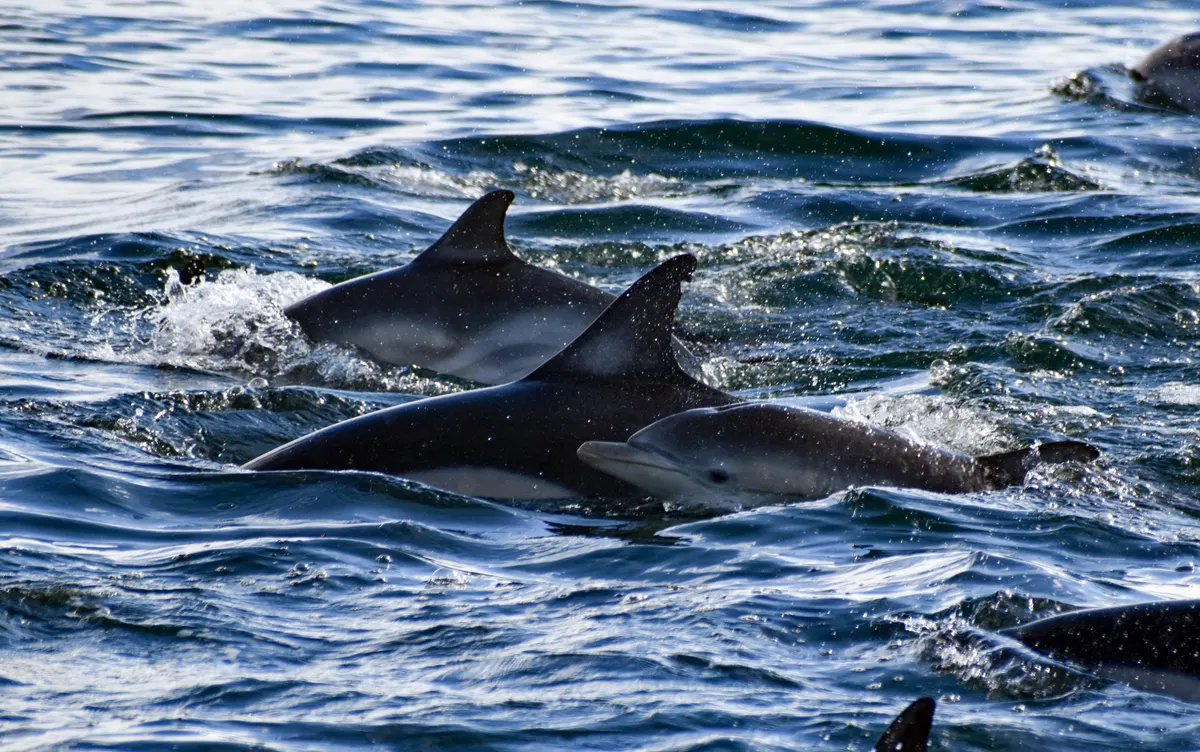
Coastal populations typically form smaller pods of 2 to 15 individuals, while offshore populations may congregate in super-pods numbering in the hundreds. The strongest, most stable social bond is between a mother and her calf. Males, upon reaching sexual maturity, form intensely bonded alliances—pairs or trios of males that cooperate for decades to aggressively defend territory and forcefully sequester females for mating.
Communication is constant and multi-modal. They utilize a vast repertoire of acoustic signals, including burst-pulses, squawks, and frequency-modulated whistles. Remarkably, each individual develops a unique "signature whistle" within its first year of life. This whistle acts as an acoustic name, allowing individuals to identify themselves, locate specific pod members, and maintain social cohesion in the murky coastal waters. They also communicate via tactile contact—rubbing flippers in a display of affection—and visual displays such as jaw-popping, tail-slapping, and full-body breaching to signal aggression or excitement.

The reproductive biology of the bottlenose dolphin is characterized by significant maternal investment. Following a gestation period of approximately 12 months, the female gives birth to a single calf, usually tail-first to prevent the newborn from drowning during delivery.
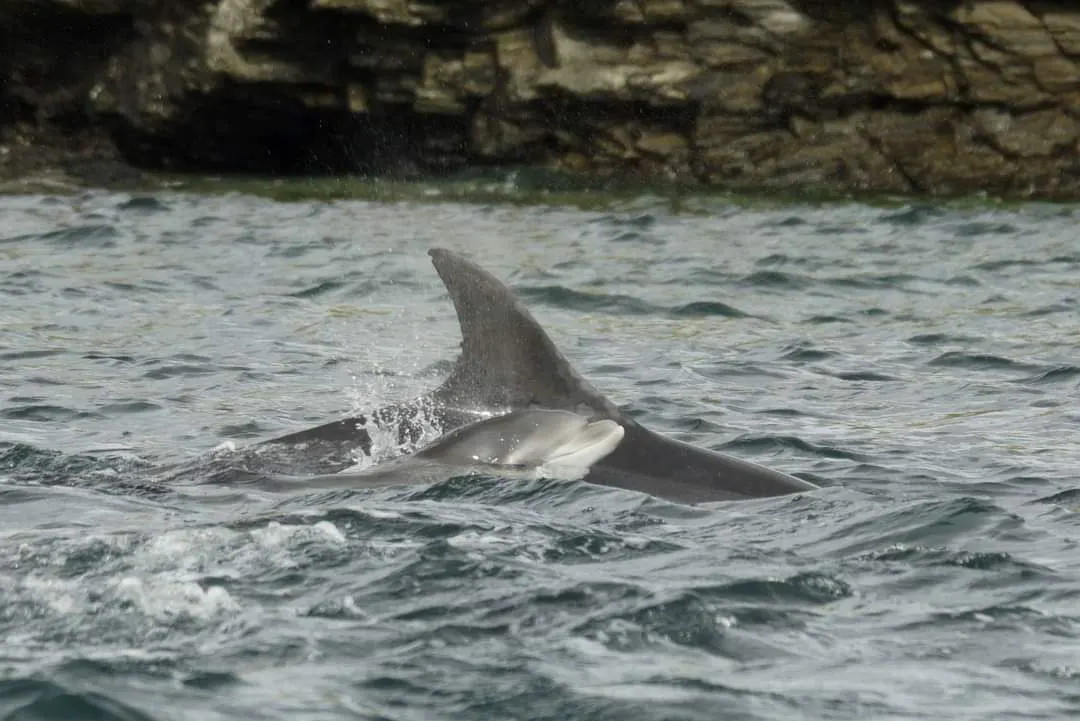
The calf is immediately guided to the surface by the mother or an assisting female ("auntie") for its first vital breath. Calves nurse heavily on fat-rich milk for 12 to 18 months but may remain intimately bonded with their mothers for up to six years, learning the complex hunting techniques, social rules, and navigational maps required for survival. Because of this extended rearing period, females only reproduce every 3 to 6 years.
To survive in the ocean while maintaining necessary vigilance and respiratory control, dolphins utilize unihemispheric slow-wave sleep. They literally sleep with one half of their brain at a time, closing the opposite eye, allowing them to rest while remaining continuously mobile and consciously surfacing to breathe. Bottlenose dolphins reach sexual maturity between 5 and 14 years of age and can live 40 to 60 years in the wild.
(Population and conservation trend data sourced from the IUCN Red List of Threatened Species)
Globally, the IUCN assesses the common bottlenose dolphin as a species of Least Concern due to its vast geographic distribution and estimated global population of roughly 600,000 individuals.
However, localized populations face intense, localized threats from anthropogenic activity. Coastal ecotypes are particularly vulnerable to chemical pollution, heavy metals, and agricultural runoff that bioaccumulate in their blubber, severely depressing their immune and reproductive systems. Entanglement in commercial fishing gear, particularly gillnets and trawls, results in significant bycatch mortality.
Furthermore, noise pollution from coastal construction, high-speed boat traffic, and military sonar severely disrupts their echolocation, leading to strandings and preventing effective hunting and communication. While they are not globally endangered, the health of coastal bottlenose dolphin populations serves as a critical indicator species—a biological canary in the coal mine—for the overall ecological integrity of the world's coastal marine environments.
Dolphins sleep with one half of the brain at a time.
They use echolocation underwater.
A group of dolphins is called a pod.
Dolphins breathe air through a blowhole.
Select a question to reveal the answer.
No. Dolphins are mammals because they breathe air and feed milk to their young.
They eat fish, squid, and other small sea animals.