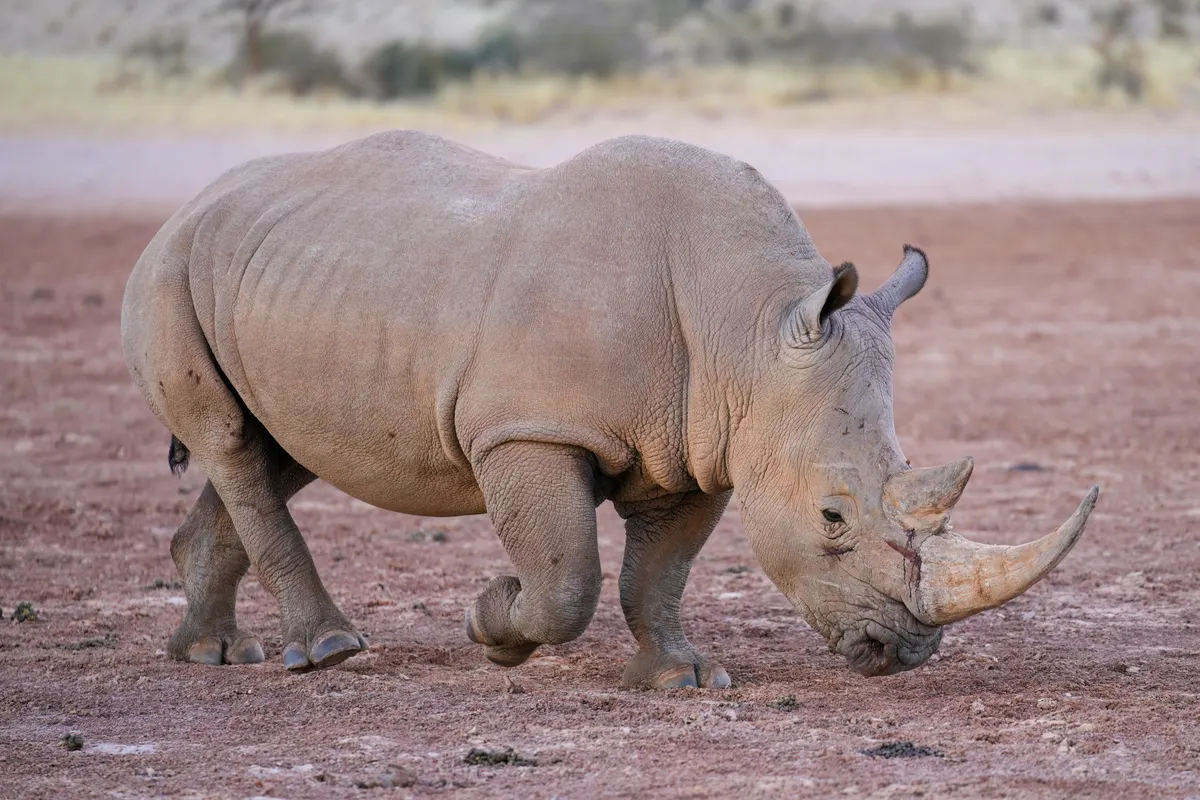
The social dynamics of the white rhinoceros are more complex and gregarious than those of other rhino species. While adult males are generally solitary and highly territorial, females and subadults frequently form cohesive groups known as "crashes." A typical crash consists of a dominant female, her most recent calf, and occasionally older offspring or unrelated females, numbering up to a dozen individuals.
Territorial males mark and defend their home ranges aggressively. They utilize olfactory communication extensively, demarcating territory boundaries through the strategic placement of dung middens—large communal latrine sites that convey information about the resident's reproductive status, age, and identity. Males also spray urine and drag their feet through dung to spread their scent as they patrol. When territorial disputes arise, they engage in ritualized posturing, horn clashing, and occasionally severe physical combat, which can result in deep lacerations or death.
In contrast, subordinate males are permitted to reside within a dominant male's territory, provided they exhibit submissive behavior and do not attempt to mate with resident females. Acoustic communication is surprisingly diverse in white rhinos, involving a repertoire of pants, grunts, squeaks, and bellows used to maintain group cohesion or signal distress.