Sloth Facts
"Sloths move slowly because their leafy diet gives them very little energy."
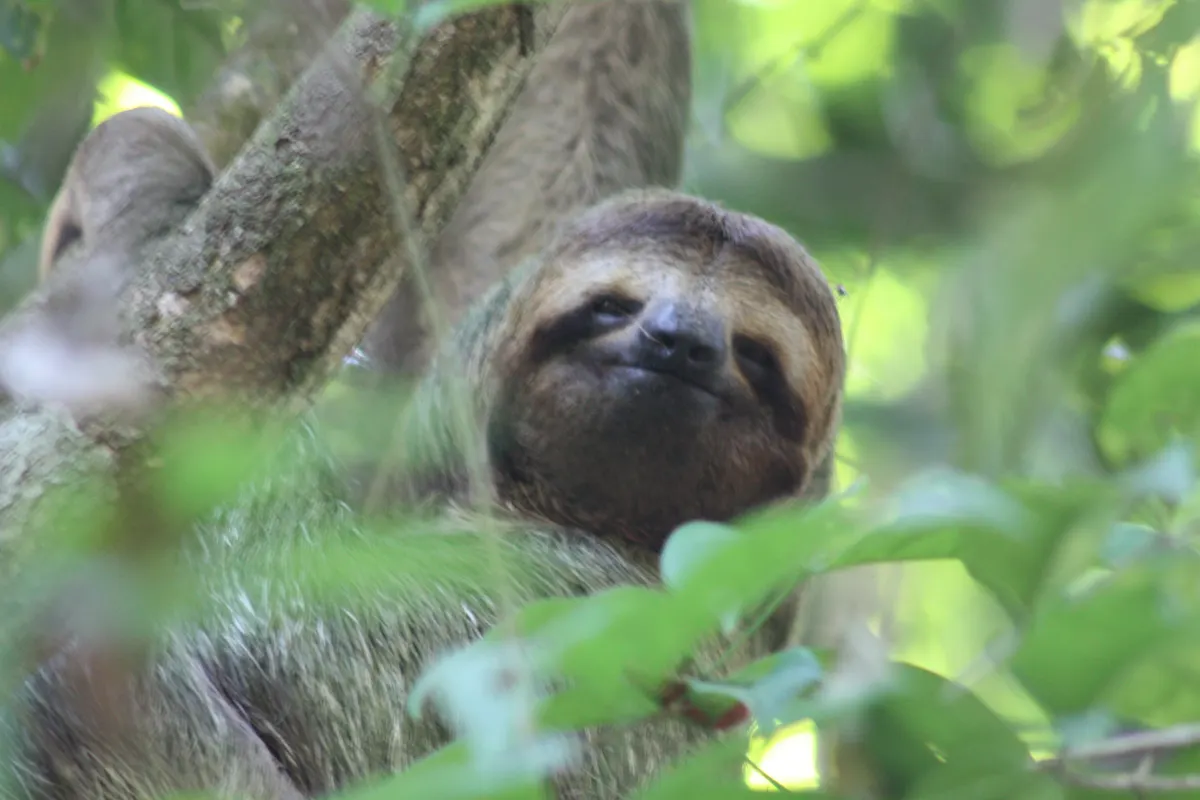
Brown-throated sloths are slow-moving tree mammals from Central American rainforests. They hang from branches, eat leaves, and spend most of their lives in...
Loading page content

"Sloths move slowly because their leafy diet gives them very little energy."
Brown-throated sloths are slow-moving tree mammals from Central American rainforests. They hang from branches, eat leaves, and spend most of their lives in...
Bradypus variegatusPilosaBradypodidae
Explore brown-throated sloth photos organized for learning and classroom observation.
Click any photo to view it larger. 8 images available.
Core article
Habitat, diet, behavior, and more — everything on one page.
Suspended high in the sweltering canopy of the Neotropical rainforest, the brown-throated three-toed sloth (Bradypus variegatus) lives life at a uniquely glacial pace. Often unfairly characterized as lazy, this highly specialized arboreal mammal has actually mastered the evolutionary art of energy conservation. By dramatically lowering its metabolic rate and adopting a strictly suspensory lifestyle, the sloth successfully navigates a low-calorie diet of toxic leaves that would starve most other mammals, making it one of the most successful canopy dwellers in the Americas.
The brown-throated sloth is classified within the kingdom Animalia, phylum Chordata, and class Mammalia. It belongs to the superorder Xenarthra, an ancient lineage of placental mammals endemic to the Americas, which also includes anteaters and armadillos. Within the order Pilosa, it is placed in the family Bradypodidae (the three-toed sloths) and the genus Bradypus. The specific epithet variegatus refers to the varied, mottled pattern of its pelage.
Evolutionarily, modern tree sloths are the diminutive descendants of a diverse group that once included massive, elephant-sized terrestrial ground sloths like Megatherium, which roamed the Americas during the Pleistocene epoch. When the ground sloths went extinct roughly 10,000 years ago, only the small, highly specialized arboreal lineages (the two-toed and three-toed sloths) survived by exploiting the high-canopy folivore niche. Interestingly, two-toed and three-toed sloths are a classic example of convergent evolution; they evolved their suspensory, slow-moving lifestyles independently from different ground sloth ancestors.
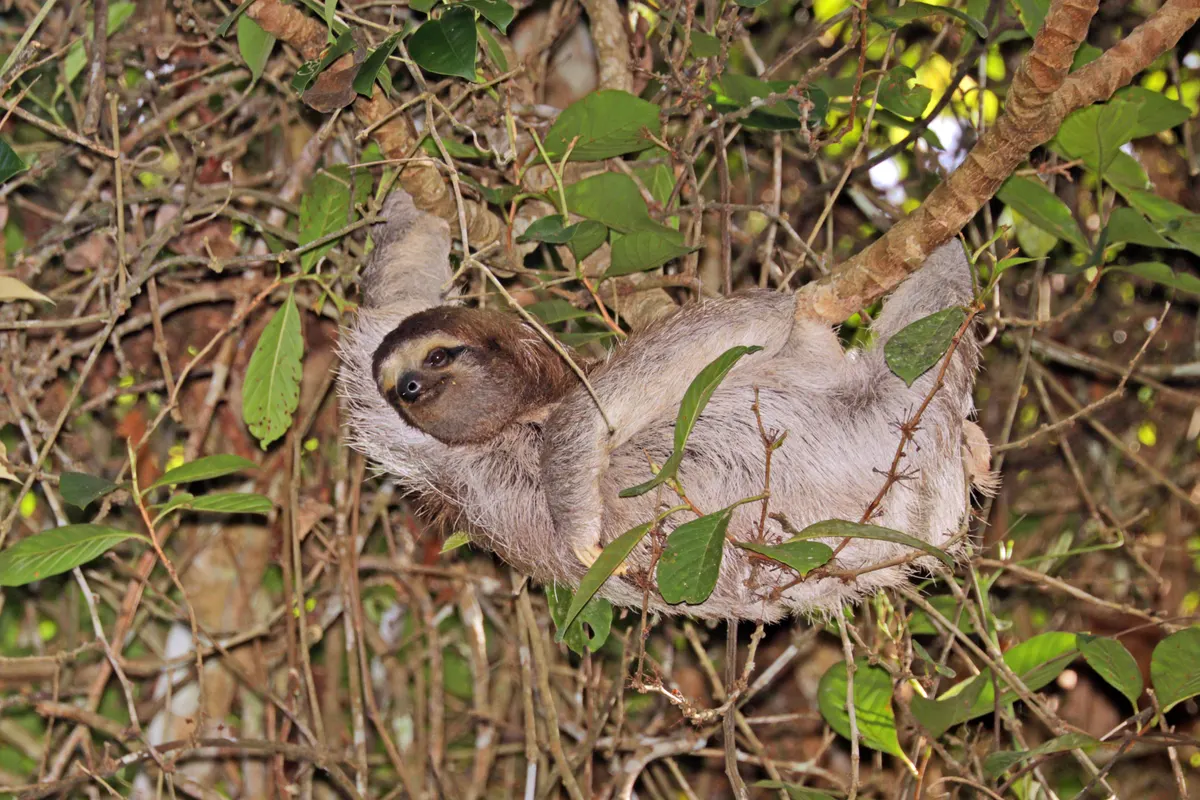
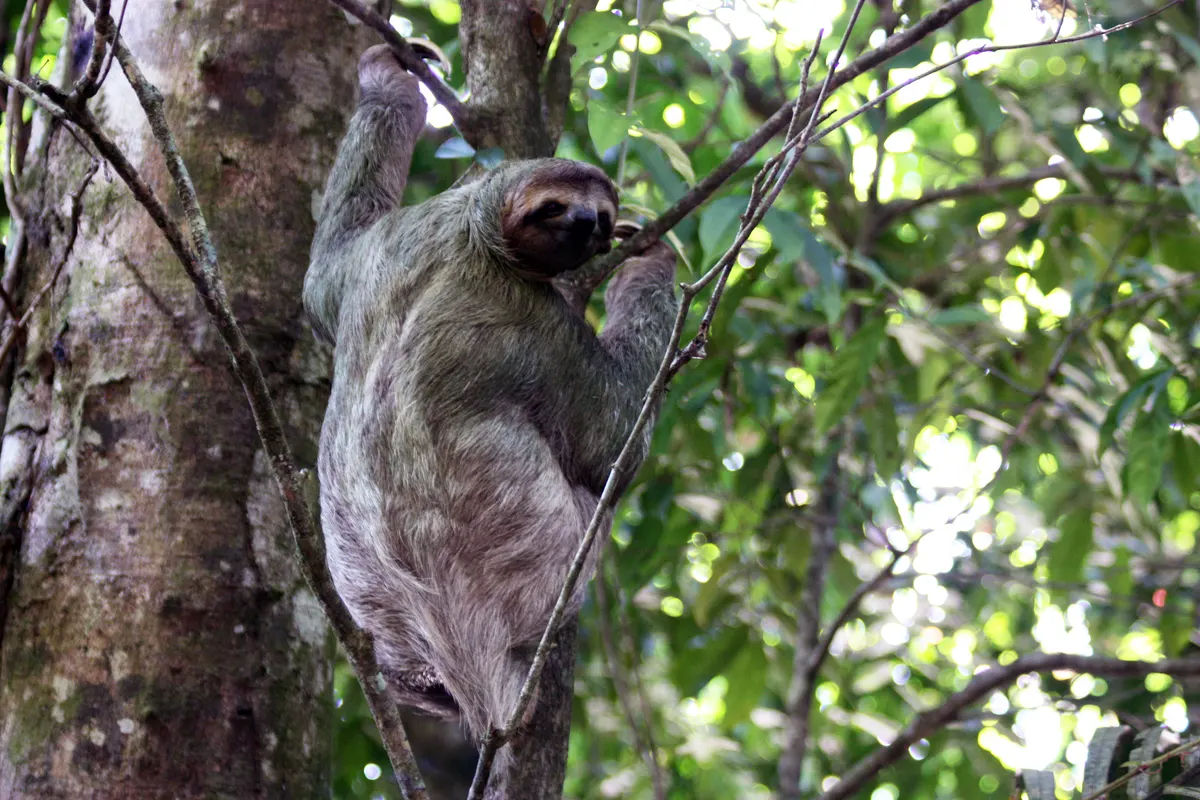
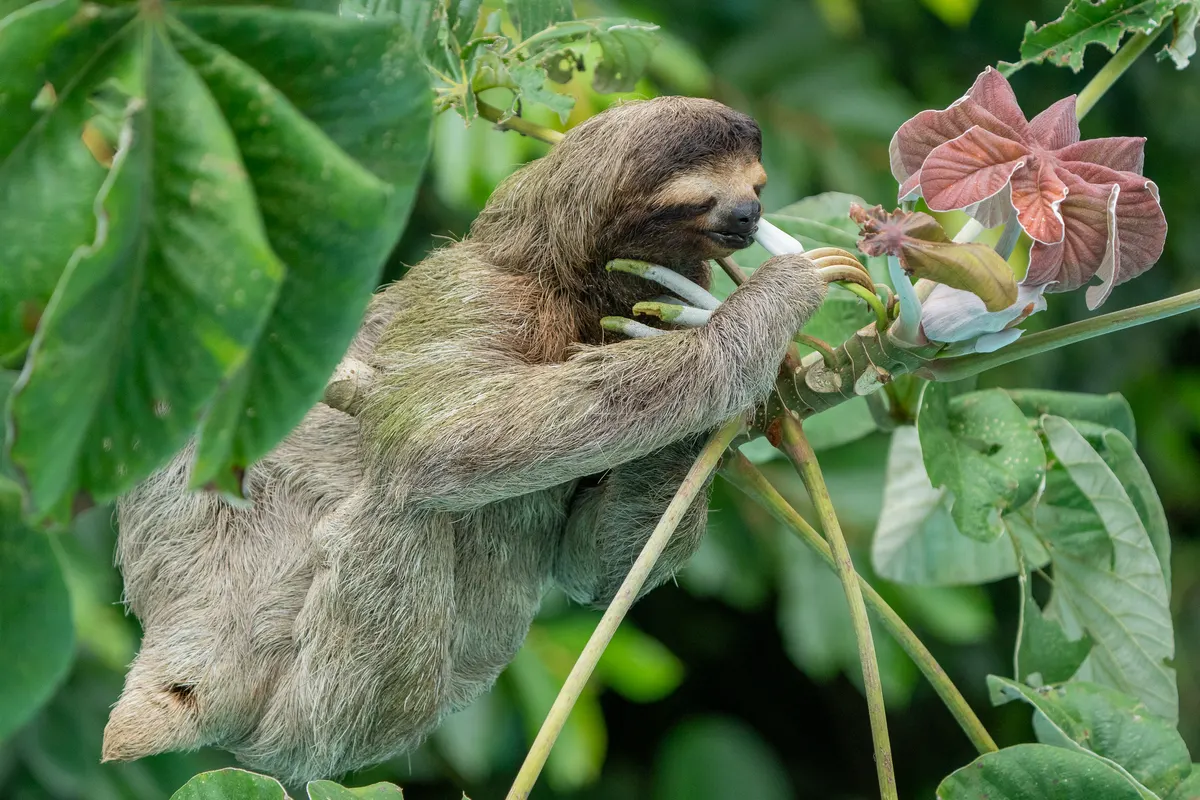
A mature brown-throated sloth is a relatively small mammal, measuring 18 to 27 inches in length and weighing between 6 and 10 pounds. Its morphology is entirely dedicated to a suspensory (hanging) lifestyle. Unlike most mammals, its forelimbs are significantly longer than its hindlimbs. Both the front and hind feet terminate in three elongated, sickle-shaped claws that measure up to 4 inches long. These claws function like biological meat hooks, hooking effortlessly over branches and allowing the sloth to hang for hours without exerting any muscle energy.
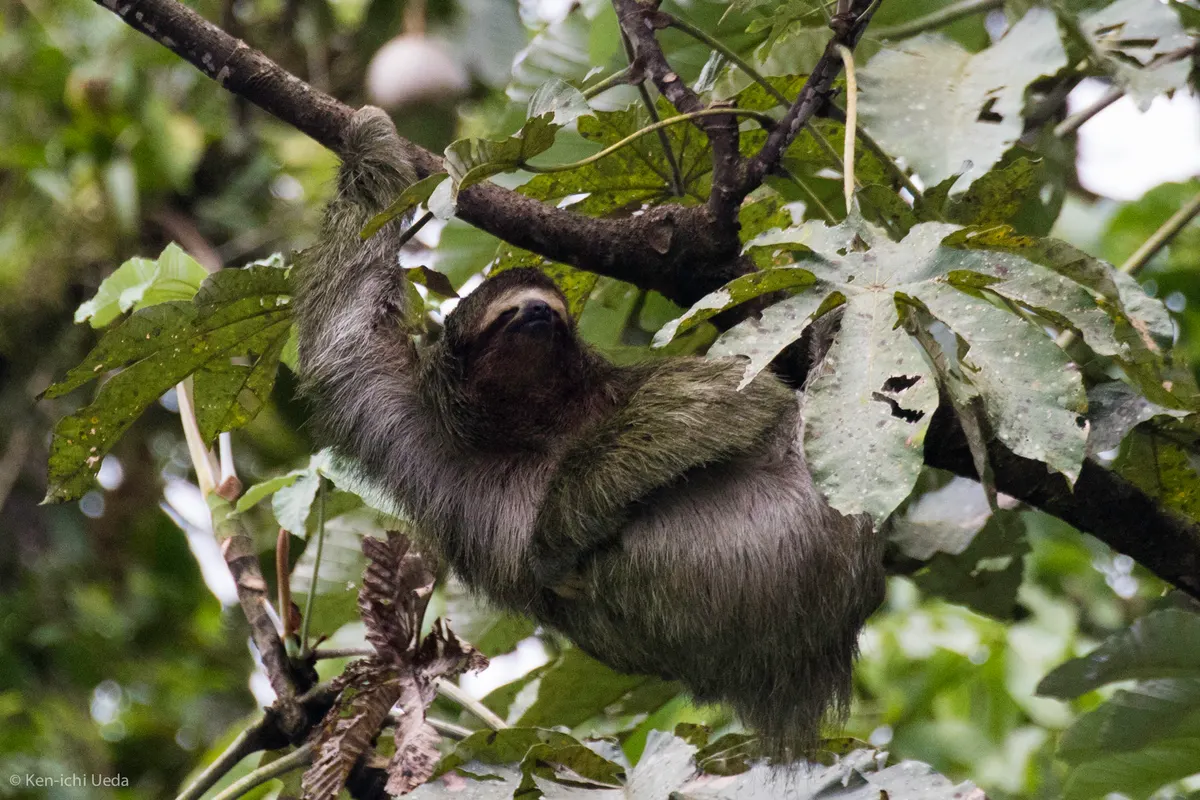
Their pelage is uniquely adapted to their upside-down life. Unlike most mammals, where hair grows from the back toward the belly, a sloth's hair grows from the belly toward the back, allowing torrential rainforest downpours to roll off easily. The hair shafts themselves are specially grooved to harbor symbiotic green algae (Trichophilus species). This algae not only provides excellent green camouflage against aerial predators but is also absorbed through the skin or licked off to provide supplementary lipid nutrients.
Internally, the sloth possesses a radically altered physiology. They have an exceptionally low basal metabolic rate—less than half of what is expected for a mammal their size. Their body temperature is highly variable, dropping drastically at night to conserve energy. Furthermore, three-toed sloths possess two extra cervical vertebrae (nine instead of the standard mammalian seven), granting them the unique ability to rotate their heads an astonishing 270 degrees to scan the canopy.

The brown-throated sloth boasts the most widespread geographic distribution of any sloth species. Their range extends continuously from Honduras and Nicaragua in Central America, down through Panama, Colombia, Venezuela, and Ecuador, covering vast expanses of the Amazon basin in Brazil and stretching as far south as northern Argentina.
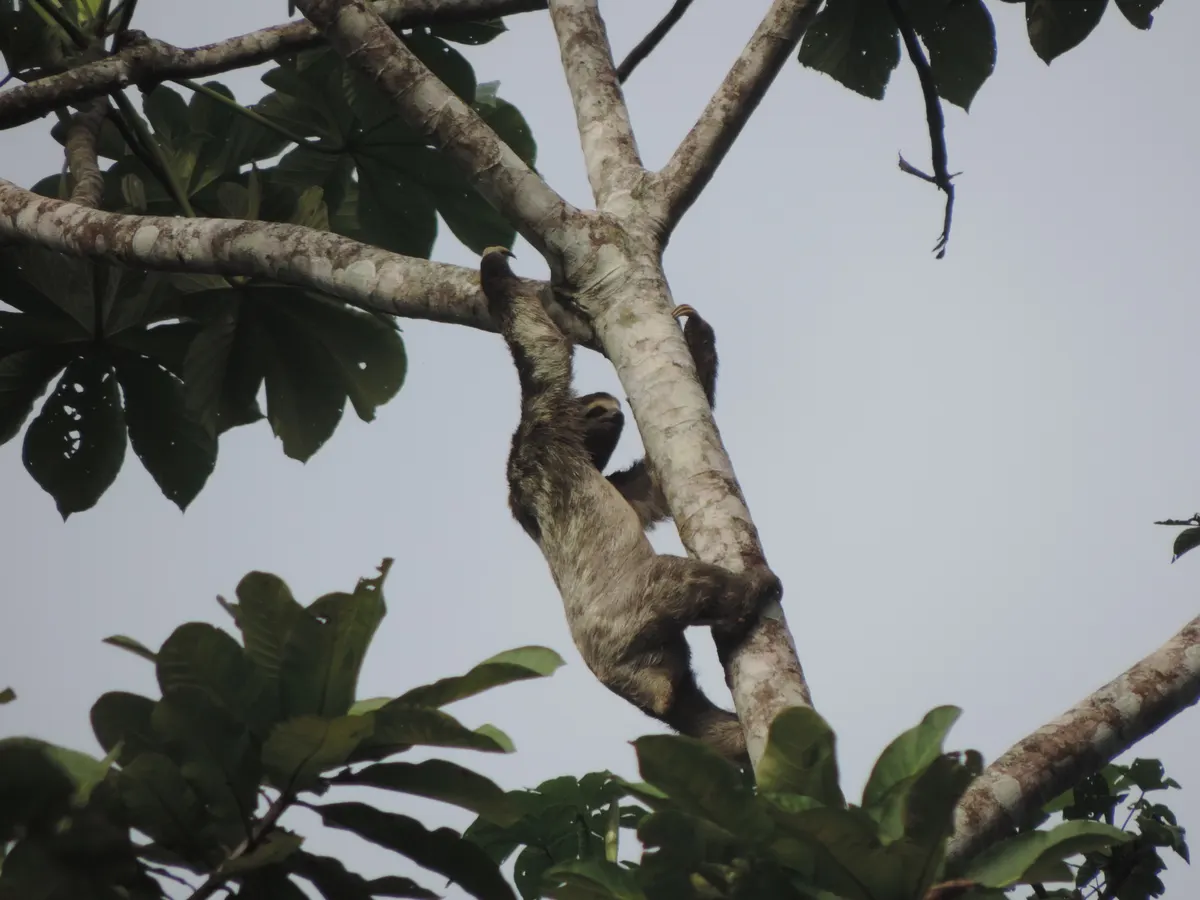
They are strict arboreal specialists. Their primary biomes are dense, lowland tropical rainforests, gallery forests along riverbanks, and mature secondary forests. They require high canopy connectivity; because their terrestrial locomotion is so labored and vulnerable, a break in the canopy forces them to the ground, placing them in immediate danger. They strongly favor the sprawling branches of Cecropia trees, which offer both dietary staples and direct sunlight for thermoregulation.

Bradypus variegatus is an obligate folivore, a diet that presents massive physiological challenges. Rainforest leaves are tough, highly fibrous, packed with toxic secondary compounds (like tannins), and notoriously low in caloric value.
To process this challenging diet, the sloth has evolved a massive, multi-chambered stomach reminiscent of a ruminant's. This enormous organ, which can account for up to 30% of the animal's total body weight when full, houses specialized symbiotic bacteria that slowly ferment and break down cellulose. Digestion is incredibly slow; it can take anywhere from 16 to 30 days for a single meal to pass entirely through the sloth's digestive tract.
Because their diet provides so little energy, their primary feeding strategy is energy conservation. They move deliberately and slowly to avoid raising their metabolic rate. They selectively feed on younger, more tender leaves and buds, which are easier to digest and contain fewer toxins than mature leaves.

Brown-throated sloths are strictly solitary animals, coming together only for brief mating encounters. They maintain individual home ranges, though the territories of males and females often overlap. They are generally silent, though they can emit high-pitched, whistle-like calls when distressed or seeking a mate.
Their most bizarre behavior involves their bathroom habits. Despite living their entire lives in the high canopy, a sloth descends to the forest floor roughly once a week to defecate and urinate. Using its stubby tail, it digs a small hole at the base of its host tree, deposits its waste, covers it with leaves, and slowly climbs back up.
Biologists theorize this dangerous, energy-intensive behavior is tied to a complex mutualism with the sloth moth (Cryptoses choloepi). Moths living in the sloth's fur lay their eggs in the fresh dung. The larvae feed on the dung, metamorphose into adult moths, and fly up into the canopy to colonize the sloth's fur. In return, the moths decompose and release nitrogen into the sloth's fur, which fertilizes the camouflaging green algae that the sloth depends upon.

Reproduction in sloths is a slow, methodical process. Females signal their estrus cycle by emitting loud, high-pitched vocalizations that echo through the canopy. Males slowly navigate the branches to locate the receptive female.
Following a gestation period of approximately six months, the female gives birth to a single infant while hanging upside down. The newborn is surprisingly precocial, fully furred, eyes open, and instinctively equipped to immediately grasp its mother's ventral fur.
The infant clings to its mother's belly for the first 4 to 6 months of its life. During this period, it begins to sample the specific leaves its mother eats, a crucial step in acquiring the specialized gut flora necessary to digest those specific plant species. Weaning occurs at around five months, but the juvenile may remain in the mother's territory for up to a year before dispersing. Wild brown-throated sloths generally live between 20 and 30 years.
(Population and conservation trend data sourced from the IUCN Red List of Threatened Species)
Currently, the IUCN Red List classifies the brown-throated three-toed sloth as Least Concern. Because of their incredibly broad geographic range across the Amazon and Central America, their global population remains stable, and they are common in many protected areas.
However, they face severe localized threats. Widespread deforestation for agriculture, cattle ranching, and logging fragments their habitat. When the canopy is broken, sloths are forced to crawl across the ground to reach new feeding sites. On the ground, they are virtually defenseless and frequently fall victim to feral dogs, collisions with vehicles on newly cut logging roads, and predation by jaguars.
Additionally, they are victims of the illegal wildlife trade. Poachers frequently target mothers, tearing the infant away to be sold into the pet trade or exploited in illegal "sloth selfie" tourist traps.
Sloths move slowly because their leafy diet gives them very little energy.
Three-toed sloths have three claws on each front and hind foot.
Sloths spend most of their lives hanging upside down in trees.
Green algae sometimes grows in sloth fur and helps them blend in.
Sloths descend to the ground only about once a week.
Baby sloths cling to their mothers for months while learning to climb.
Select a question to reveal the answer.
A sloth is a slow-moving mammal that lives in trees and spends most of its time hanging from branches.
Brown-throated sloths live in tropical rainforests from Honduras through northern South America.
Sloths are herbivores that eat leaves, buds, and tender shoots from rainforest trees.
Leaves are low in calories, so sloths move slowly and rest often to save energy.
Long curved claws hook over branches so sloths can hang without using much muscle strength.
A baby sloth is called an infant. Young sloths cling to their mothers while learning to climb and feed.
Brown-throated sloths are listed as Least Concern, but habitat loss can harm local populations.