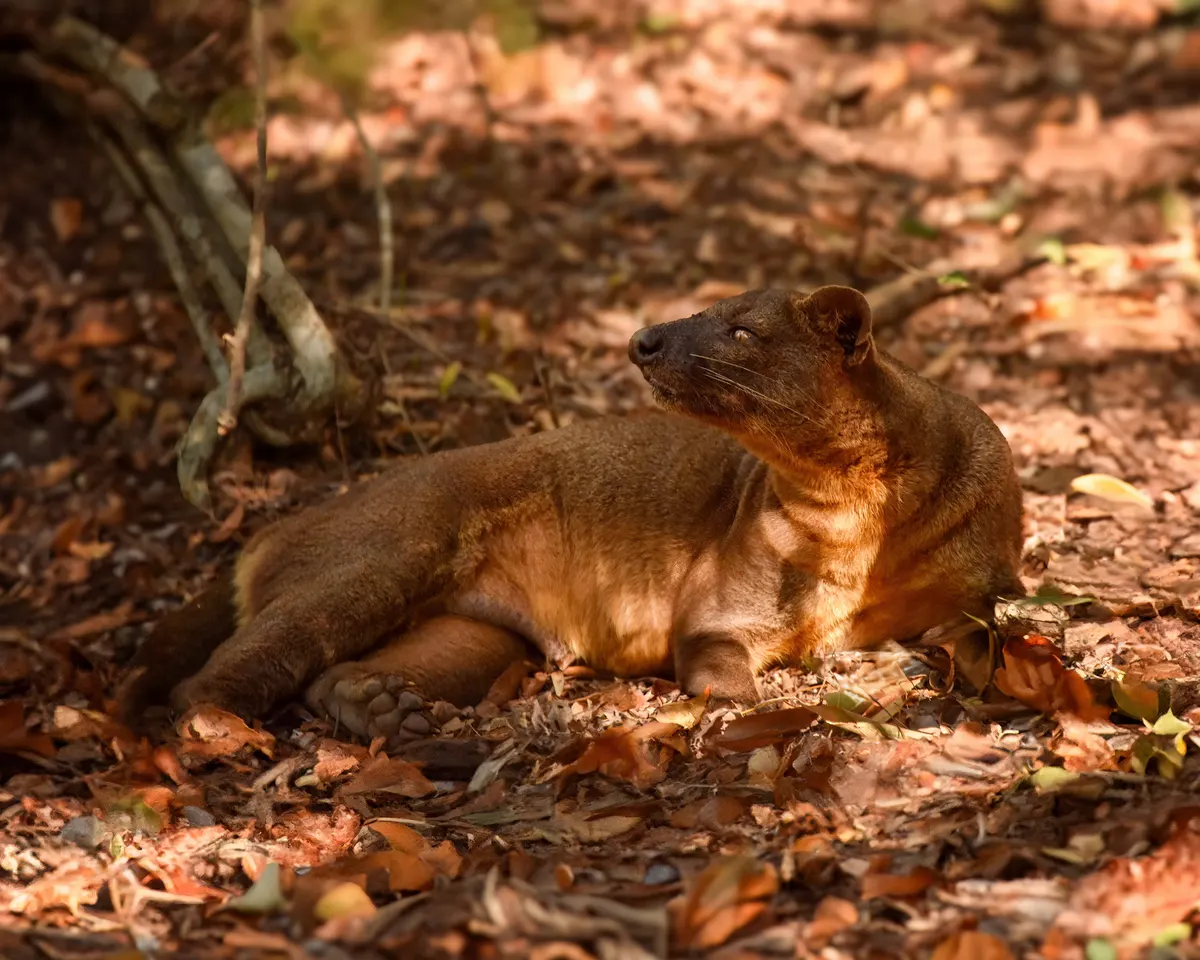
Fossa resting on the ground in a Madagascar forest
The fossa is Madagascar's largest native carnivore, a cat-like relative of the mongooses.
MammaliaVulnerable

Fossa

Despite its cat-like body, the fossa is not a cat; it belongs to the family Eupleridae and is most closely related to Madagascar's mongoose-like carnivores.

The fossa is Madagascar's largest native carnivore, a slender, long-tailed euplerid that resembles a small cat but is more closely related to mongooses. It is an agile climber and the island's main predator of lemurs.

By · Updated

Quick Facts

Fossa at a glance

Cryptoprocta feroxCarnivoraEupleridae

About their home

Kind of animal

Mammalia

Where they live

What they eat

How safe?

Vulnerable

Size and speed

How heavy

5.5 kg – 8.6 kg

How long

70 cm – 80 cm

How fast

Fast, agile climber and runner

Lifespan

Not well documented in the wild

Core article

Fossa: ecology and life history

A closer look at habitat, diet, behavior, reproduction, and conservation.

Start here

Fossa

The fossa is Madagascar's largest native carnivore. At first glance it looks like a small cougar or an oversized cat: a lithe, muscular body, a rounded head with forward-facing eyes, and short reddish-brown fur. That impression is misleading. The fossa is not a cat, and it is not closely related to one. It belongs to the family Eupleridae, a group of carnivores found only on Madagascar, and its nearest relatives sit among the mongoose-like animals of the same island. The cat-like body is a case of convergent evolution, where an unrelated animal arrives at a similar shape because it lives a similar life as an active predator.

Anatomy and Adaptations

An adult fossa has a head-and-body length of roughly 70 to 80 cm, with a tail almost as long again, so total length can approach 1.5 metres. Most individuals weigh between about 5.5 and 8.6 kg, and males are generally larger and heavier than females. The build is slender and low-slung, with relatively long limbs and a plantigrade stance in which much of the foot contacts the ground.

Several features suit the fossa to a life that moves between the forest floor and the canopy. Its claws are semi-retractable, giving grip on bark while remaining useful on the ground. Its ankle joints are unusually flexible and can rotate, allowing the animal to climb down tree trunks headfirst rather than backing down as many climbers must. The long tail works as a counterbalance during fast movement along branches. Together these traits make the fossa an agile climber as well as a capable ground hunter, and they are central to how it catches prey in the trees.

Habitat and Distribution

Fossa resting on a log
Forest cover supplies both the lemurs the fossa hunts and the trees it climbs to reach them.

The fossa is endemic to Madagascar, meaning it occurs naturally nowhere else. It ranges across most of the island's remaining forest, and is recorded in habitats as varied as eastern rainforest, western dry deciduous forest, and the spiny forest of the south. It tolerates a range of elevations, from near sea level into montane forest.

What the fossa cannot do without is space. Individual home ranges are large relative to the animal's size, so the species depends on extensive, connected tracts of forest. Where forest is cleared or broken into small fragments, fossa populations thin out or disappear. Because so much of its range now lies outside protected areas, the condition of Madagascar's wider forest landscape matters as much to the fossa as the reserves themselves.

Diet and Hunting

Fossa alert on rocky ground
Lemurs can make up about half the diet, making the fossa central to Madagascar's food web.

The fossa is a strict carnivore and the top predator across most of Madagascar. Lemurs make up a large share of its diet, in some studies close to half, which makes the fossa the island's main lemur predator. It also takes tenrecs, rodents, birds, reptiles, and insects, adjusting to whatever prey a given forest offers.

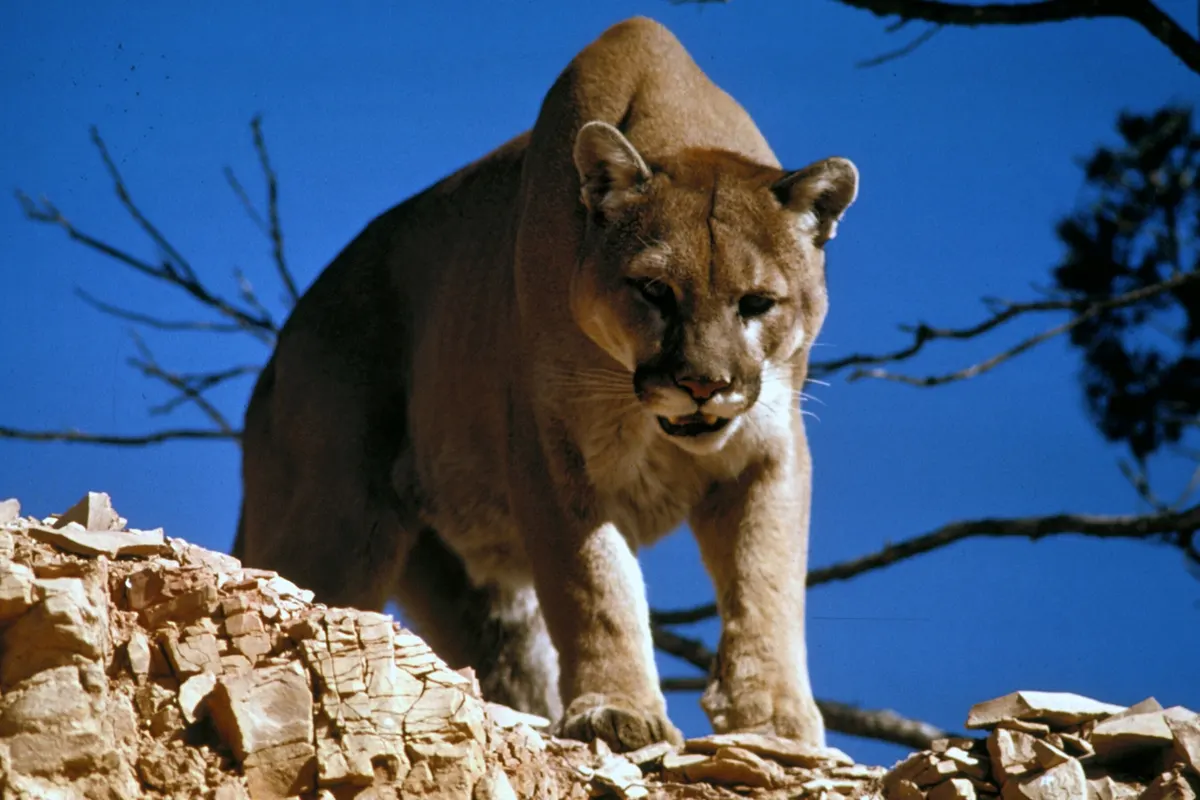
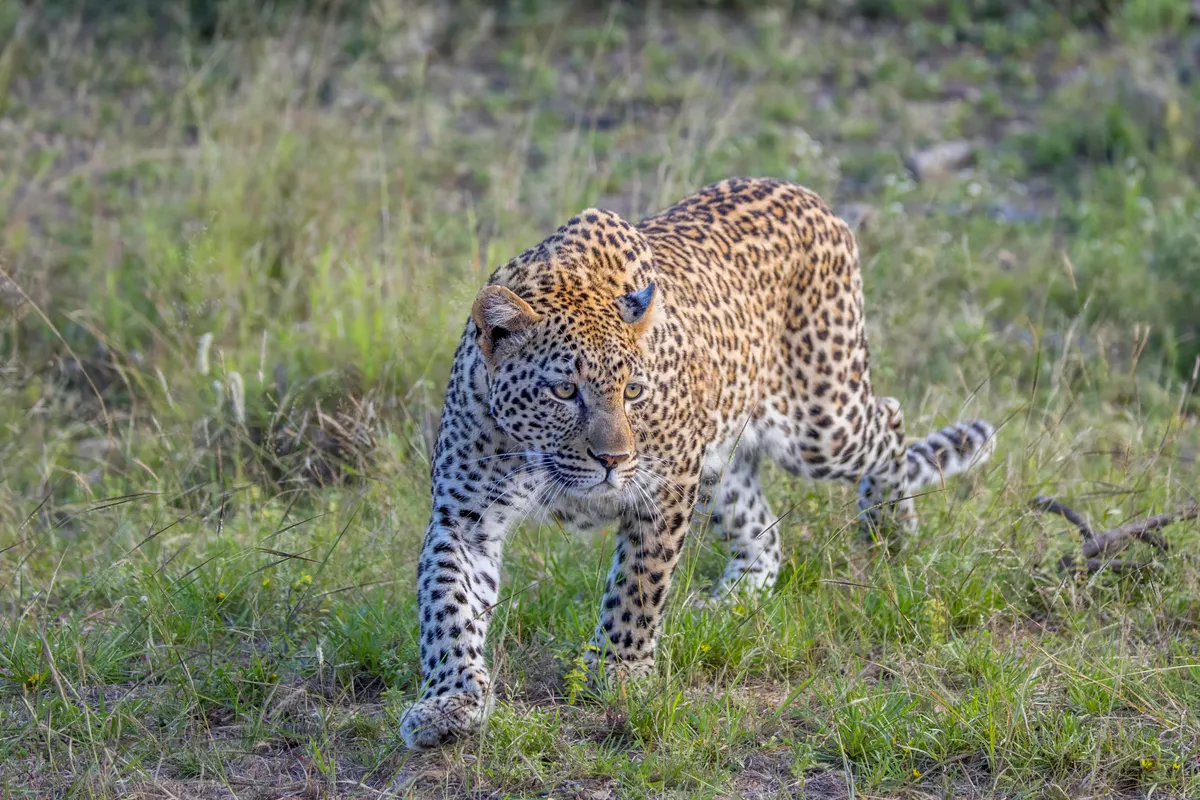
Hunting is largely solitary. The fossa pursues prey both on the ground and through the canopy, using its climbing ability to follow lemurs such as the ring-tailed lemur into the trees where few other predators can reach them. Its senses of sight, smell, and hearing are all well developed, and it hunts by day or night depending on the prey and season. As Madagascar's apex mammalian predator, an adult fossa has little to fear from other animals; its role is closer to that of a big cat elsewhere, such as the leopard or the cougar, even though it is not related to either.

Behavior and Communication

Fossa resting in an enclosure
Outside a brief mating season, adults defend large individual ranges marked with scent.

Fossas are mostly solitary outside the breeding season. Each animal ranges over a large territory that it marks with scent from well-developed glands, a common method of communication among carnivores that rarely meet face to face. During the day or night they rest in sheltered spots such as tree hollows, rock crevices, or old burrows.

Vocalizations and scent-marking carry much of the animal's communication. During the mating season fossas become more vocal and more visible to one another, gathering at traditional sites where the usual solitary pattern briefly breaks down. Outside that period, encounters between adults are limited, which reduces direct competition over the wide areas each individual needs to find enough prey.

Reproduction and Young

Fossa mating behavior is unusual among carnivores. Breeding is seasonal, typically in the southern-hemisphere spring, and often centers on a mating tree. A female occupies a site high in a tree, and several males gather below and compete over the days that follow for the chance to mate. Copulation frequently takes place up in the branches and can last a long time by mammalian standards.

Gestation lasts about 90 days. Females usually give birth to two to four young, called pups, in a den such as a tree hollow, rock cavity, or burrow. Pups are born small and helpless, weighing around 100 grams, and their eyes are closed at first. They are weaned at roughly four to four and a half months but develop slowly, staying with the mother and not becoming fully independent until somewhere between 15 and 20 months of age. Wild lifespan is poorly documented, while captive fossas have lived up to about 20 years.

Taxonomy and Relatives

The fossa (Cryptoprocta ferox) is the only living species in the genus Cryptoprocta. It sits within the family Eupleridae, the Malagasy carnivores, a group unique to Madagascar that also includes the smaller falanoucs and the Malagasy mongoose-like civets. Genetic and anatomical evidence places Eupleridae close to the true mongooses (family Herpestidae) within the cat-side branch of the carnivore order.

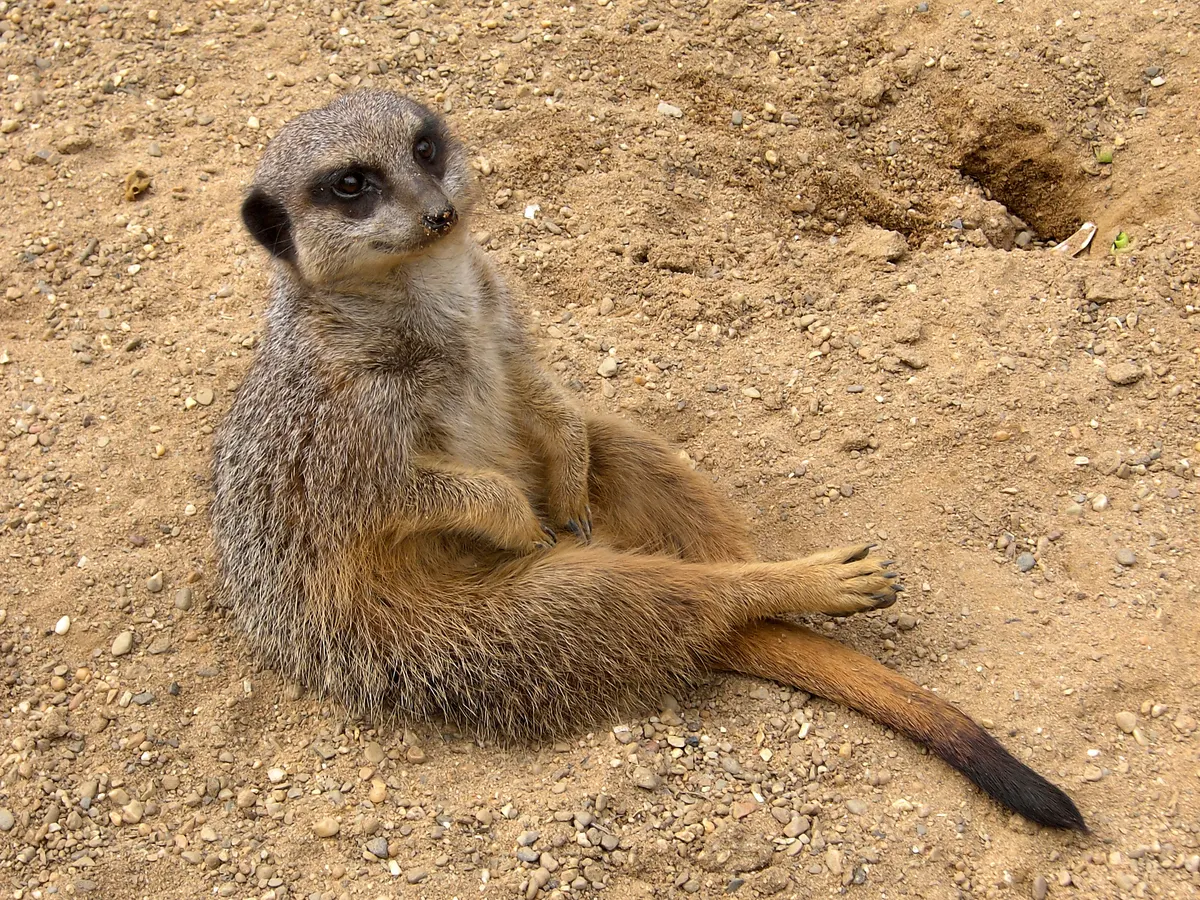
This is why the fossa's appearance is best understood as convergent evolution rather than kinship with cats. The carnivores that colonized Madagascar radiated into a range of forms to fill roles that elsewhere belong to cats, civets, and mongooses. The fossa took on the shape and habits of a mid-sized cat-like hunter, but its ancestry runs through the same Malagasy lineage as its smaller mongoose-like relatives. An animal such as the African meerkat, a member of the mongoose family, is a closer evolutionary cousin to the fossa than any cat is.

Conservation and Threats

Fossa standing in an enclosure
Forest loss and hunting have left the fossa Vulnerable, with only a few thousand mature adults.

The IUCN Red List classifies the fossa as Vulnerable, with a population that is decreasing. Estimates place the number of mature individuals in the low thousands, and much of that total lives outside protected areas where pressures are greater. The species has been assessed as declining because of an inferred loss of at least 30 percent over roughly three generations.

The central threat is habitat loss. Madagascar has lost a large majority of its original forest cover to clearing, logging, and burning, and continued deforestation fragments the fossa's range into pieces too small to support it. Because the animal needs extensive connected forest, this fragmentation is especially damaging. Fossas are also killed by people, sometimes in retaliation for taking poultry and sometimes out of fear, and they face competition and disease pressure from introduced dogs and cats. Conserving the fossa depends heavily on protecting and reconnecting Madagascar's remaining forests, which in turn protects the lemurs and other native species that share them.

References and Authoritative Sources

Fossa: classification and fun facts

Classification

Scientific Taxonomy
  1. Kingdom

    Animalia

  2. Phylum

    Chordata

  3. Class

    Mammalia

  4. Order

    Carnivora

  5. Family

    Eupleridae

  6. Genus

    Cryptoprocta

  7. Species

    C. ferox

Did You Know?

Fun Facts

1

Despite its cat-like body, the fossa is not a cat; it belongs to the family Eupleridae and is most closely related to Madagascar's mongoose-like carnivores.

2

The fossa is the largest native carnivore on Madagascar, an island with no big cats.

3

Its tail is roughly as long as its head and body combined, nearly doubling its total length.

4

Flexible ankle joints let the fossa climb down tree trunks headfirst, like a squirrel.

5

Mating often takes place high in a tree, where a female holds a site and several males compete below over several days.

6

Lemurs can make up around half of a fossa's diet, making it the main predator of Madagascar's lemurs.

Common Questions

FAQ about Fossa

Select a question to reveal the answer.

What is a fossa?

The fossa (*Cryptoprocta ferox*) is a slender, long-tailed carnivorous mammal endemic to Madagascar. It is the island's largest native carnivore and belongs to the family Eupleridae, the Malagasy carnivores.

Is a fossa a cat?

No. The fossa looks and moves like a small cougar or large cat, but that resemblance is convergent evolution. Its closest relatives are the other euplerids of Madagascar, which are related to mongooses rather than to cats.

Where do fossas live?

Fossas live only on Madagascar, ranging across most of the island's remaining forests, including rainforest, dry deciduous forest, and spiny forest. They need large tracts of connected forest to support their wide home ranges.

What do fossas eat?

Fossas are pure carnivores. Lemurs form a large part of the diet, alongside tenrecs, rodents, birds, reptiles, and insects. As the top predator on Madagascar, the fossa is the main hunter of lemurs.

How do fossas hunt in trees?

Semi-retractable claws and unusually flexible ankle joints let the fossa climb up and descend tree trunks headfirst, while its long tail acts as a counterbalance. This lets it pursue lemurs through the canopy as well as hunt on the ground.

Are fossas endangered?

The IUCN Red List lists the fossa as Vulnerable with a decreasing population. The main threats are loss and fragmentation of Madagascar's forests, along with persecution and competition with introduced predators such as dogs and cats.