Octopus Facts
"Octopuses have three hearts and blue blood."
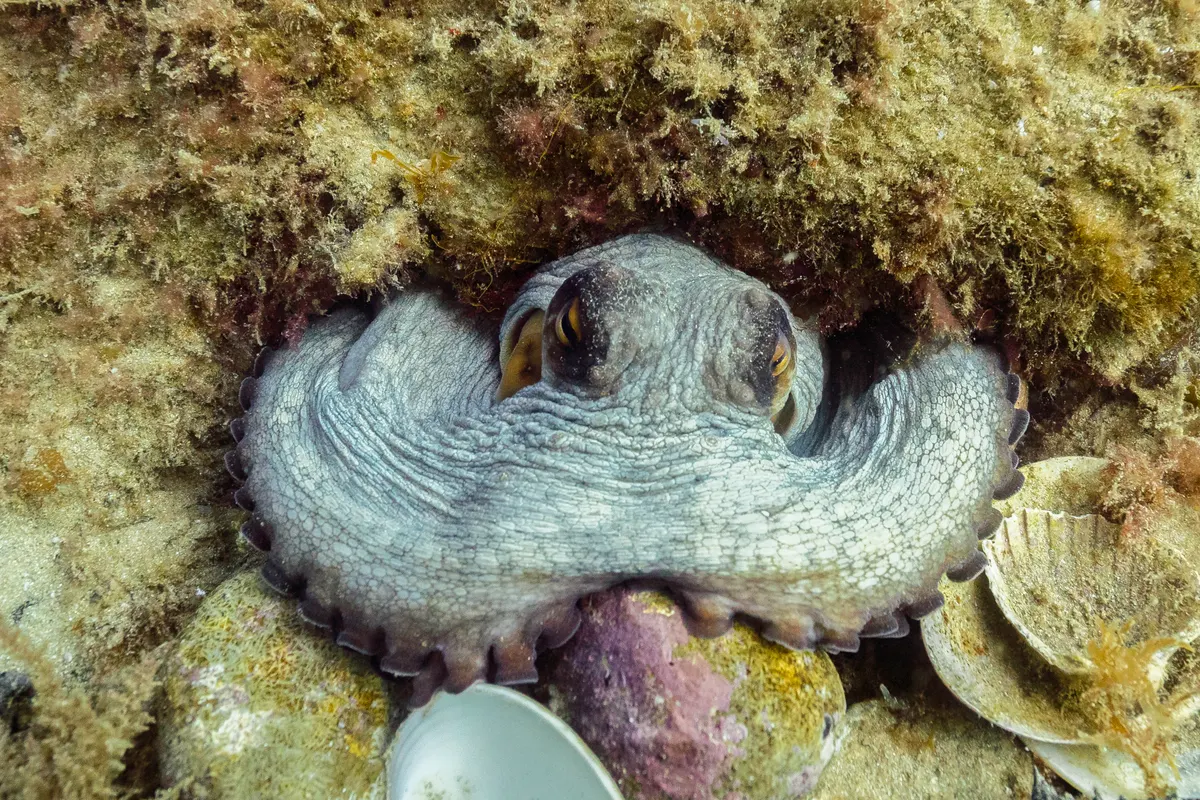
The common octopus is a clever ocean animal with eight flexible arms, excellent camouflage, and surprising intelligence. It lives in coastal seas and is one...
Loading page content

"Octopuses have three hearts and blue blood."
The common octopus is a clever ocean animal with eight flexible arms, excellent camouflage, and surprising intelligence. It lives in coastal seas and is one...
Octopus vulgarisOctopodaOctopodidae
Explore common octopus photos organized for learning and classroom observation.
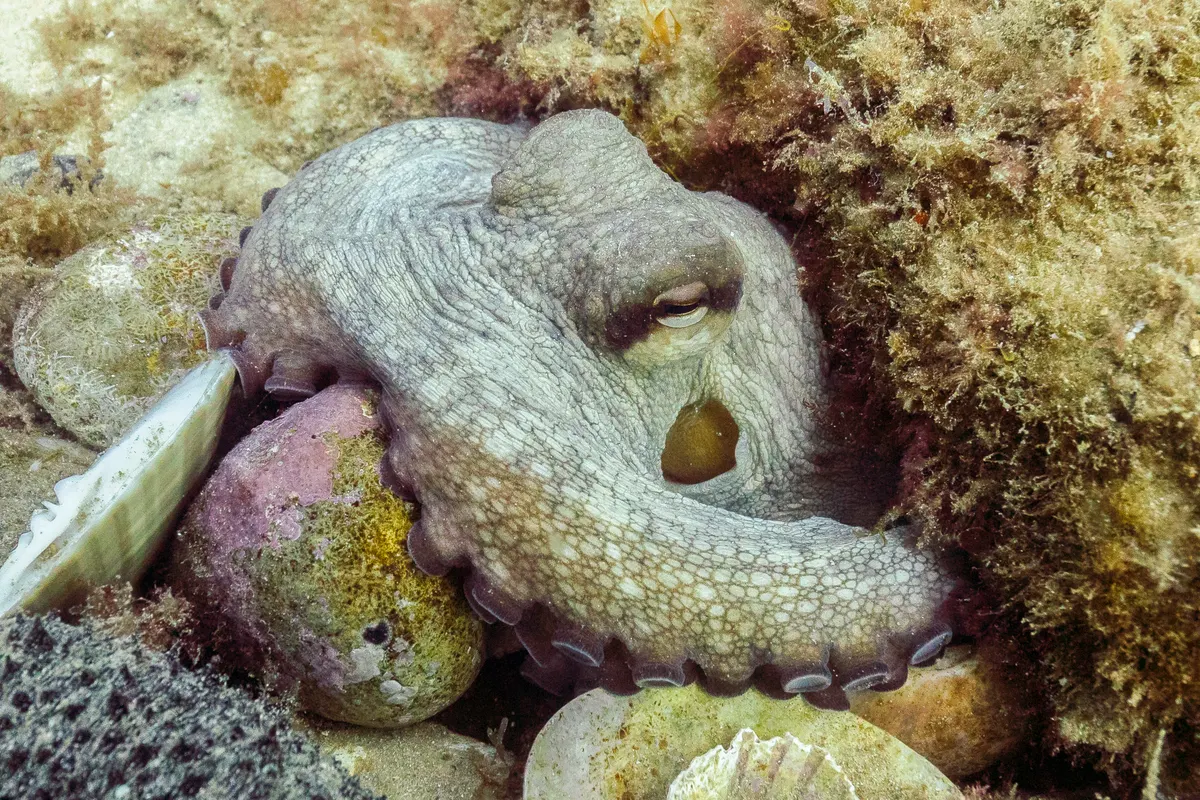
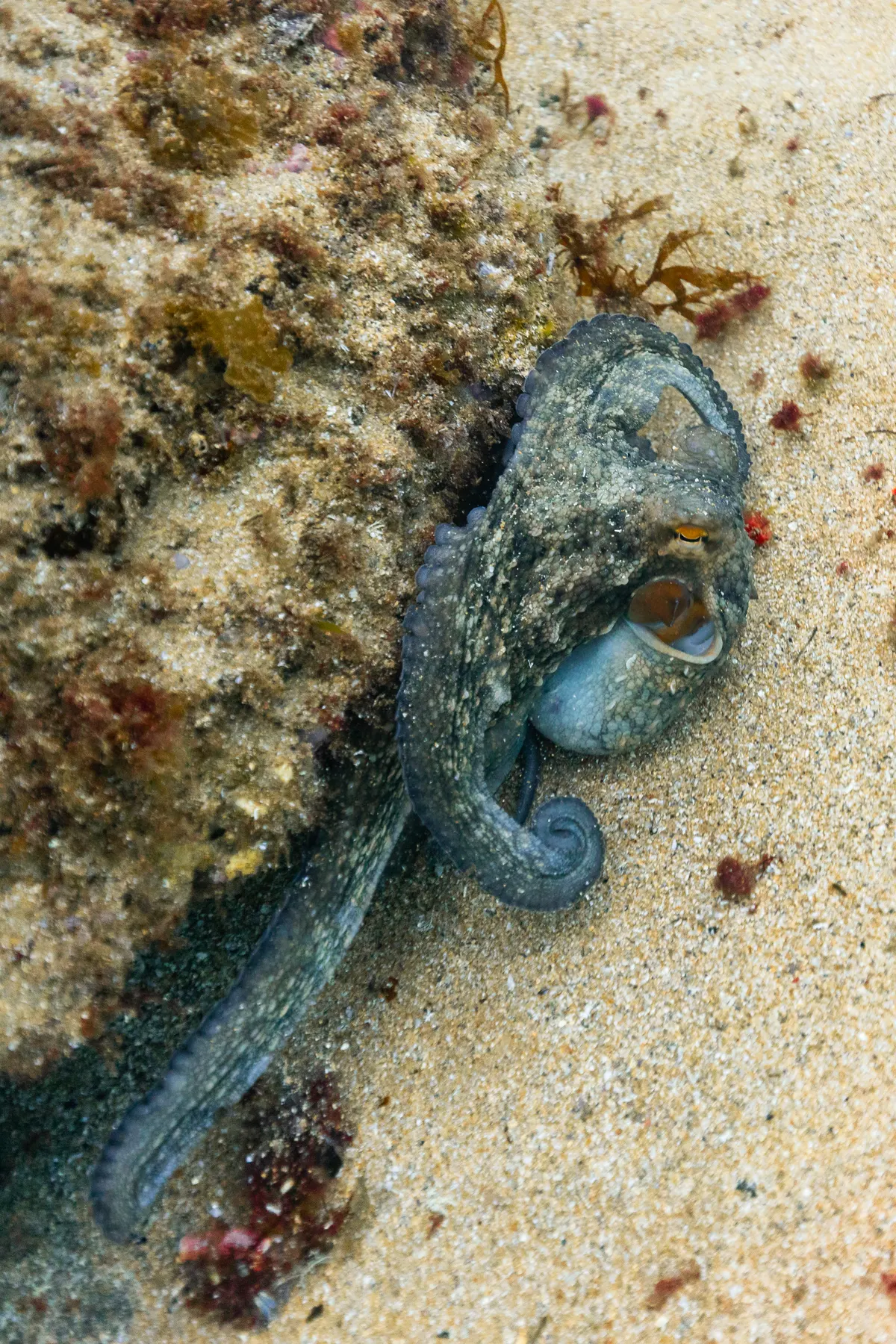
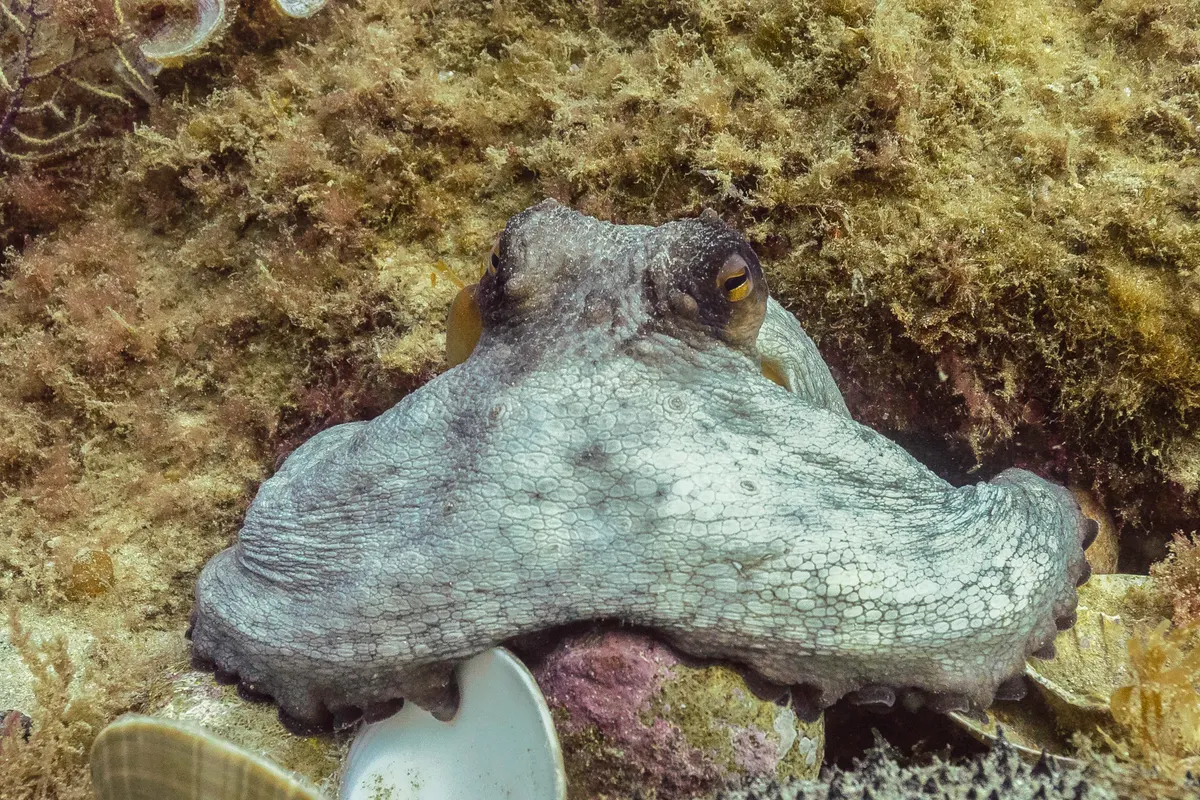
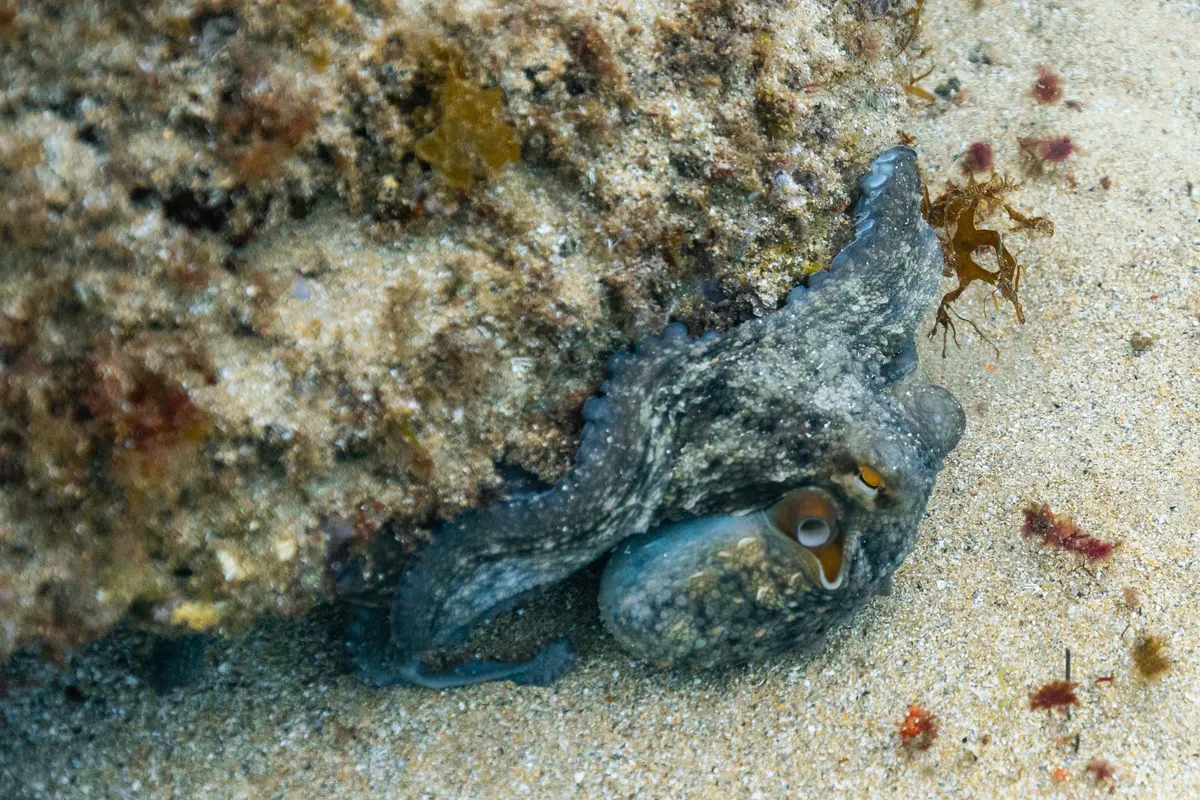
Click any photo to view it larger. 8 images available.
Core article
Habitat, diet, behavior, and more — everything on one page.
The common octopus (Octopus vulgaris) is an evolutionary masterpiece of the marine world, fundamentally redefining our understanding of non-vertebrate cognition and physiology. Possessing eight highly prehensile arms, an entirely soft, boneless body, and a nervous system uniquely distributed throughout its limbs, the octopus is a formidable benthic predator of the coastal seas. Armed with unparalleled camouflage capabilities and a startling capacity for complex problem-solving, this cephalopod dominates rocky reefs across the Atlantic and Mediterranean. Despite a fleeting lifespan, the octopus stands as one of the most intellectually advanced and intensely studied invertebrate species on the planet.
The common octopus belongs to the kingdom Animalia, phylum Mollusca, and class Cephalopoda (which translates to "head-foot"). Within the order Octopoda and family Octopodidae, its scientific classification is Octopus vulgaris.
The evolutionary lineage of cephalopods is ancient, diverging from primitive, shelled mollusks over 500 million years ago during the Cambrian period. The ancestors of modern octopuses gradually internalized and completely lost their heavy, calcified external shells. This radical evolutionary divergence prioritized extreme mobility, spatial flexibility, and advanced neurological development over passive physical armor. The resultant loss of skeletal constraints catalyzed the evolution of their unique hydrostatic skeleton (muscles working against fluid-filled cavities) and hyper-complex neural architecture.
The anatomy of the common octopus is fundamentally alien compared to vertebrate biology. A medium-sized species, they typically possess a mantle (body) length of up to 12 inches, with an impressive arm span that can stretch up to 36 inches. They generally weigh between 2 to 20 pounds.
The circulatory system is highly specialized, featuring three functional hearts: two branchial hearts pump unoxygenated blood through the gills, while a central systemic heart pumps oxygenated blood through the rest of the body. Their blood utilizes hemocyanin, a copper-rich protein rather than iron-based hemoglobin, rendering their blood a distinct pale blue and highly efficient for oxygen transport in cold, low-oxygen benthic environments.
The physical hallmark of the octopus is its eight, incredibly flexible arms, which are entirely devoid of skeletal support. Each arm is lined with hundreds of independently functioning, muscular suckers. These suckers are highly specialized sensory organs equipped with chemoreceptors, effectively allowing the octopus to "taste" and "smell" the exact composition of whatever it touches.
Perhaps their most spectacular anatomical feature is their dynamic skin. The skin contains millions of specialized pigment-bearing cells called chromatophores, underlaid by reflective iridophores and light-scattering leucophores. By directly controlling these cells through neural impulses, an octopus can instantly alter its skin color, opacity, and pattern. Furthermore, they manipulate intricate muscular structures called papillae to change the physical texture of their skin, allowing them to perfectly mimic the jagged topography of rocks, coral, or algae.

Octopus vulgaris is a strictly marine, benthic species primarily inhabiting the coastal, shallow waters of the eastern Atlantic Ocean, the Mediterranean Sea, and extending to the coastal waters of Europe and Africa (including Spain, Portugal, France, Italy, Morocco, and Senegal).
They are heavily concentrated in coastal benthic zones, specifically favoring complex rocky reefs, coral formations, seagrass beds, and kelp forests. These highly structured environments are essential, as octopuses require a high density of small caves, crevices, and submerged debris to construct their protective "dens." They are entirely dependent on high-salinity marine environments and cannot tolerate significant fluctuations in water chemistry.

As an apex invertebrate carnivore, the common octopus employs a highly active and versatile foraging strategy. Their diet is heavily benthic, consisting primarily of crustaceans (crabs, lobsters, shrimp), bivalve mollusks (clams, mussels), and various small teleost fish.
Hunting typically occurs at night or during crepuscular hours. An octopus utilizes a combination of visual stealth and tactile exploration. They frequently employ a "speculative hunting" technique, plunging their flexible arms deep into dark crevices to flush out hiding prey. Once prey is detected, the octopus leaps and entirely envelops the victim with the webbing between its arms, forming a trap known as a "web canopy."
To consume heavily armored prey like crabs and clams, the octopus utilizes a sharp, chitinous beak located at the center of its arms, visually resembling a parrot's beak. They possess a specialized organ called a radula (a toothed, tongue-like ribbon) which they use in conjunction with acidic salivary secretions to precisely drill through the hard shells of mollusks. Their saliva also contains a powerful neurotoxin (cephalotoxin) that paralyzes prey instantly upon injection, allowing for easy consumption.

The common octopus is an aggressively solitary and territorial animal. They fiercely defend their dens and will readily cannibalize smaller conspecifics if they cross paths. They lack complex social structures entirely.
Their intelligence is a subject of massive scientific interest. The octopus nervous system is highly decentralized; while they possess a centralized brain in the mantle, over two-thirds of their neurons are distributed throughout the nerve cords in their eight arms. This allows the arms to operate with remarkable semi-autonomy, capable of executing complex motor tasks even if severed from the main brain. In laboratory settings, Octopus vulgaris consistently demonstrates profound problem-solving abilities, associative learning, spatial memory navigation (maze solving), and the physical dexterity to unscrew jars or dismantle aquarium filtration systems.
For defense, they rely primarily on their astonishing, instantaneous camouflage to avoid detection. If discovered by a predator, they rely on rapid jet propulsion—forcibly expelling water from their muscular mantle cavity through a funnel (siphon)—to execute explosive, multi-directional escapes. Simultaneously, they deploy a dense cloud of dark melanin-based ink that not only visually obscures their escape but also contains compounds that temporarily dull a predator's olfactory senses.

The life cycle of the common octopus is dramatically truncated and deeply tragic, dictated by a biological imperative known as semelparity—they reproduce only once before dying.
Following a brief mating period where a male uses a specialized arm (the hectocotylus) to deposit packets of sperm (spermatophores) directly into the female's mantle cavity, the male enters a phase of rapid senescence and dies shortly after. The female retreats to a secure den to lay tens of thousands of tiny, teardrop-shaped eggs, weaving them into long, hanging braids attached to the rock ceiling.
The subsequent incubation period is a grueling display of maternal dedication. For several weeks to months, the mother continuously guards the eggs, gently blowing water over them with her siphon to keep them oxygenated and meticulously grooming them to prevent fungal growth. During this entire incubation period, the mother completely ceases feeding. As the hatchlings finally emerge as fully independent paralarvae, the mother's body undergoes rapid, programmed cellular degradation (senescence), and she dies of starvation and exhaustion. The tiny, planktonic hatchlings drift in the pelagic zone before eventually settling to the ocean floor. The entire lifespan of Octopus vulgaris is exceptionally brief, lasting only 1 to 2 years in the wild.
(Population and conservation trend data sourced from the IUCN Red List of Threatened Species)
The IUCN Red List evaluates the common octopus as a species of "Least Concern." Their extremely rapid growth rates, high fecundity, and short generation times grant their populations a high degree of resilience against environmental fluctuations.
However, they face intense natural predation from moray eels, conger eels, dolphins, large predatory teleost fish, and benthic sharks. Anthropogenically, they are heavily targeted by commercial and artisanal fisheries across the Mediterranean and coastal Africa, primarily caught using traps, pots, and bottom trawls to supply high demand for human consumption. While populations remain generally stable globally, localized overfishing in specific regional basins requires ongoing fishery management. Furthermore, their strict reliance on marine parameters makes them potentially susceptible to the long-term impacts of ocean acidification and warming sea surface temperatures, which can negatively impact larval survival and development.
Octopuses have three hearts and blue blood.
They can squeeze through very small gaps because they have no bones.
Each arm has suckers that can taste what they touch.
Octopuses can change color and skin texture in seconds.
A mother octopus stops eating while guarding her eggs.
Common octopuses are considered very intelligent invertebrates.
Select a question to reveal the answer.
An octopus is a soft-bodied sea animal with eight arms and a large head. The common octopus is a widely studied coastal species.
Common octopuses live in the eastern Atlantic Ocean, Mediterranean Sea, and nearby coastal waters of Europe and Africa.
Octopuses eat crabs, shrimp, clams, and fish. They hunt by sneaking up on prey or pouncing from a hiding place.
An octopus has eight arms lined with suckers. It has no tentacles.
Yes. Octopuses can change color and skin texture quickly to hide from predators or communicate.
Octopuses are among the most intelligent invertebrates. They can solve puzzles, open jars, and remember solutions.
Most common octopuses live only one to two years. Females often die soon after their eggs hatch.