Bright orange red-eft eastern newt on moss
The eastern newt is best known as the bright orange "red eft," its land-living juvenile stage.
AmphibiaLeast Concern

Eastern Newt

The eastern newt passes through three distinct life stages: an aquatic larva, a terrestrial red eft, and an aquatic adult.

The eastern newt is a small salamander of eastern North America known for a three-stage life cycle: an aquatic larva, a bright orange land-dwelling juvenile called a red eft, and a greenish aquatic adult. Its skin carries tetrodotoxin, and the eft's colour serves as a warning to predators.

By · Updated

Quick Facts

Eastern Newt at a glance

Notophthalmus viridescensCaudataSalamandridae

About their home

Kind of animal

Amphibia

Where they live

What they eat

How safe?

Least Concern

Size and speed

How heavy

3 g – 10 g

How long

7 cm – 12 cm

How fast

Quick in water, slow on land

Lifespan

Up to about 12 to 15 years

Core article

Eastern Newt: ecology and life history

A closer look at habitat, diet, behavior, reproduction, and conservation.

Start here

Eastern Newt

The eastern newt is a small salamander of eastern North America, rarely more than 12 cm long, yet it lives one of the more unusual lives among amphibians. A single individual moves through three separate body forms: an aquatic larva, a bright orange land-dwelling juvenile known as a red eft, and a greenish aquatic adult. The same animal that hatches with gills in a pond may spend several years walking through the forest before returning to water to breed. That shifting life history, together with toxic skin and a capacity to regrow lost body parts, has made the species a familiar subject of both field guides and laboratory research.

Anatomy and the Red Eft

Adult eastern newts measure roughly 7 to 12 cm in total length and weigh only a few grams. Adults are usually olive to yellowish-green above with a paler yellow belly, and most populations carry a row of red spots, often ringed in black, along the back. The skin is rougher and less slimy than that of many other salamanders.

The stage that draws the most attention is the red eft. After the aquatic larva loses its gills and leaves the water, it becomes a terrestrial juvenile colored bright orange to reddish, marked with the same dark-edged red spots it will keep as an adult. This is not camouflage but the opposite: the vivid colour is aposematic, a visual warning that the animal is toxic. Efts may live on land for two to three years before maturing.

The three life stages are worth separating clearly. The larva is aquatic, has external gills and a finned tail, and feeds and grows in the pond where it hatched. After two to five months it transforms into the red eft, which is fully terrestrial and moves into the surrounding forest. After its years on land, the eft returns to water and becomes the aquatic adult, developing a broader tail fin and the duller green coloration suited to life among submerged plants. In a few coastal populations the eft stage is reduced or skipped entirely, and some individuals mature while still keeping larval features.

Habitat and Distribution

Eastern newt in its natural setting
Ponds for breeding and damp woodland for the eft stage are both essential to this newt.

Eastern newts range across eastern North America, from the Maritime provinces of Canada and the Great Lakes region south to the Gulf states and Florida, spanning much of the eastern United States. Within that range they occupy two connected environments that match their life cycle.

Aquatic larvae and adults live in freshwater wetland habitats: small lakes, ponds, vernal pools, ditches, and slow streams, typically those with soft bottoms and plenty of submerged vegetation. Red efts leave the water and spend their terrestrial years in the moist forest surrounding these wetlands, sheltering under leaf litter, logs, and damp ground cover. Because the species depends on both the pond and the woodland around it, the health of one habitat is tied to the other.

Diet and Feeding

Eastern newt foraging on the ground
Efts hunt small invertebrates on land by day, protected by their toxic skin.

Eastern newts are carnivores at every stage, though the specific prey shifts as the animal changes form and habitat. Aquatic larvae take very small prey such as water fleas, snails, and beetle larvae. Terrestrial red efts feed on the small invertebrates of the forest floor, including springtails, soil mites, and snails. Aquatic adults return to a diet of aquatic prey: insect larvae, worms, small crustaceans, snails, and amphibian eggs, including the eggs of frogs and other amphibians.

Adults are active foragers in the water and will feed regularly rather than fasting between large meals. Their willingness to eat amphibian eggs means they can influence the breeding success of other species that share the same ponds, so they act as both predator and competitor within these small wetland communities.

Behavior and Defenses

Eastern newt on moss and leaf litter
A red eft may spend two to seven years on land before maturing into an aquatic adult.

The eastern newt's central defense is chemical. Its skin contains tetrodotoxin, a potent neurotoxin of the same type found in pufferfish. The toxin makes the newts unpalatable and dangerous to predators such as fish and crayfish, and it is present across the life cycle. In the red eft stage the toxin is paired with bright warning coloration, so a predator that ignores the visual signal encounters an unpleasant and potentially harmful mouthful.

This defense shapes daily behavior. Because they are chemically protected, red efts can afford to be active and conspicuous by day, wandering openly over the forest floor rather than hiding at all times, and they are often seen out after rain. Aquatic adults are quick and maneuverable in water but slow and deliberate on land. When handled or threatened, a newt may adopt a defensive posture and release skin secretions. The toxin is a concern only if a person handles a newt and then touches the mouth or eyes; the animals are otherwise harmless to observe.

A second notable trait is regeneration. Eastern newts can regrow limbs lost to injury and can repair or replace parts of the heart, spinal cord, and other organs. This ability is one reason newts of this genus are widely studied in regenerative biology.

Reproduction and Young

Breeding takes place in water, generally from late fall through early spring depending on the region. The mating system is polygynandrous, with both sexes mating with multiple partners, and females can store sperm for months before laying. A female lays roughly 200 to 400 eggs in a season, attaching them one at a time to submerged aquatic plants rather than in a single mass. This single-egg placement helps hide them from predators.

The eggs hatch in about three to five weeks into aquatic larvae equipped with gills. Larvae grow in the pond for two to five months before transforming into red efts and moving onto land. After two to three years as terrestrial efts, the survivors return to water, mature into adults, and begin the cycle again. There is no parental care; young are independent from hatching.

Taxonomy and Relatives

The eastern newt (Notophthalmus viridescens) is an amphibian in the order Caudata, the salamanders and newts, and the family Salamandridae, the family that contains the true newts. Four subspecies are generally recognized across its range, including the red-spotted newt, the broken-striped newt, the central newt, and the peninsula newt, which differ in markings and in how strongly they express the terrestrial eft stage.

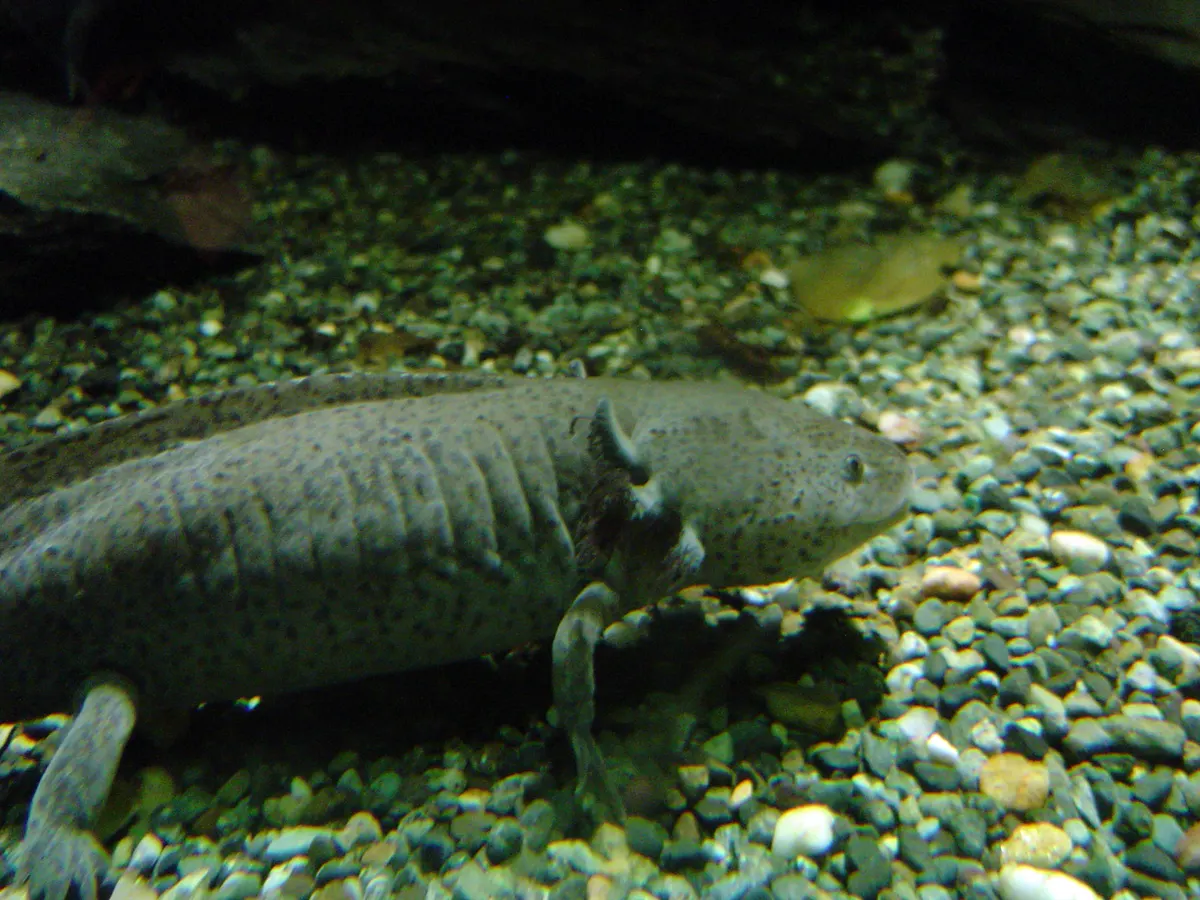
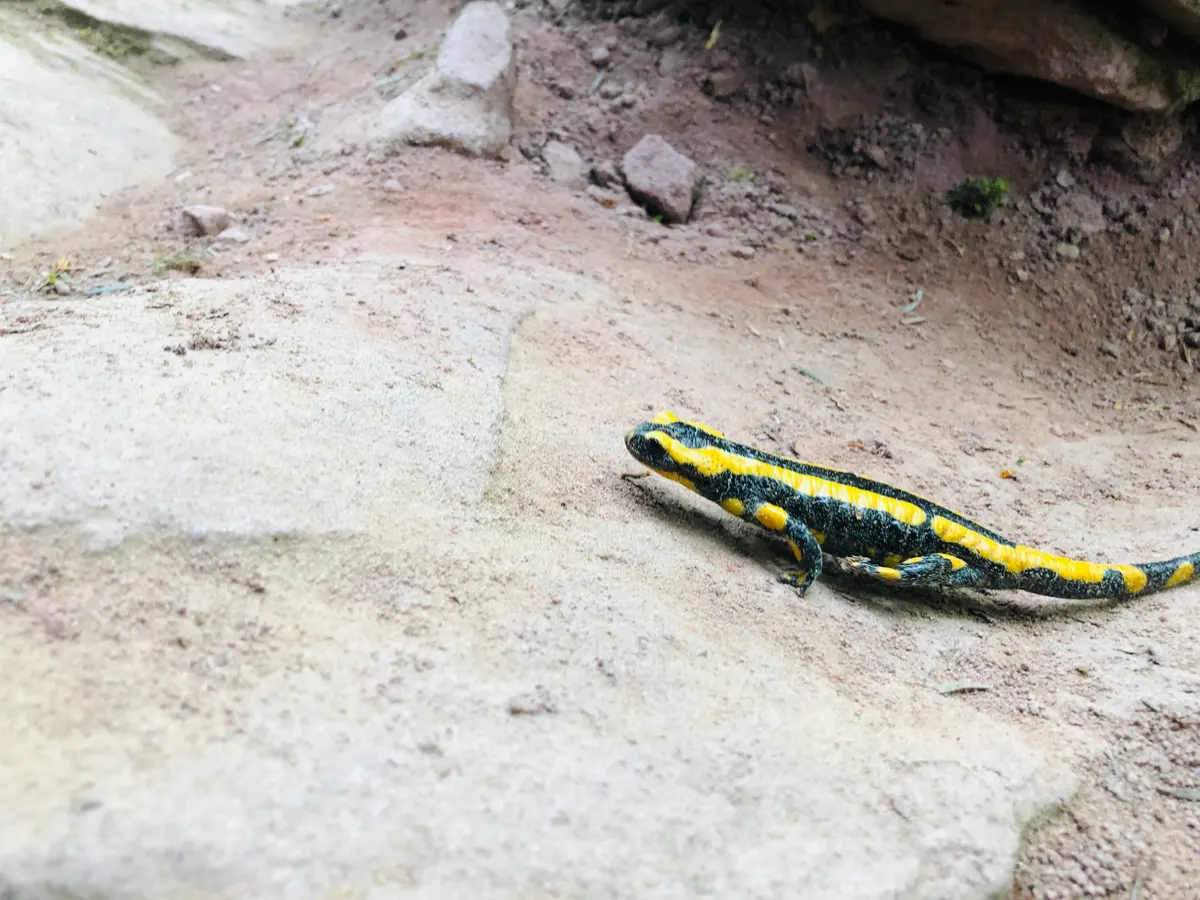
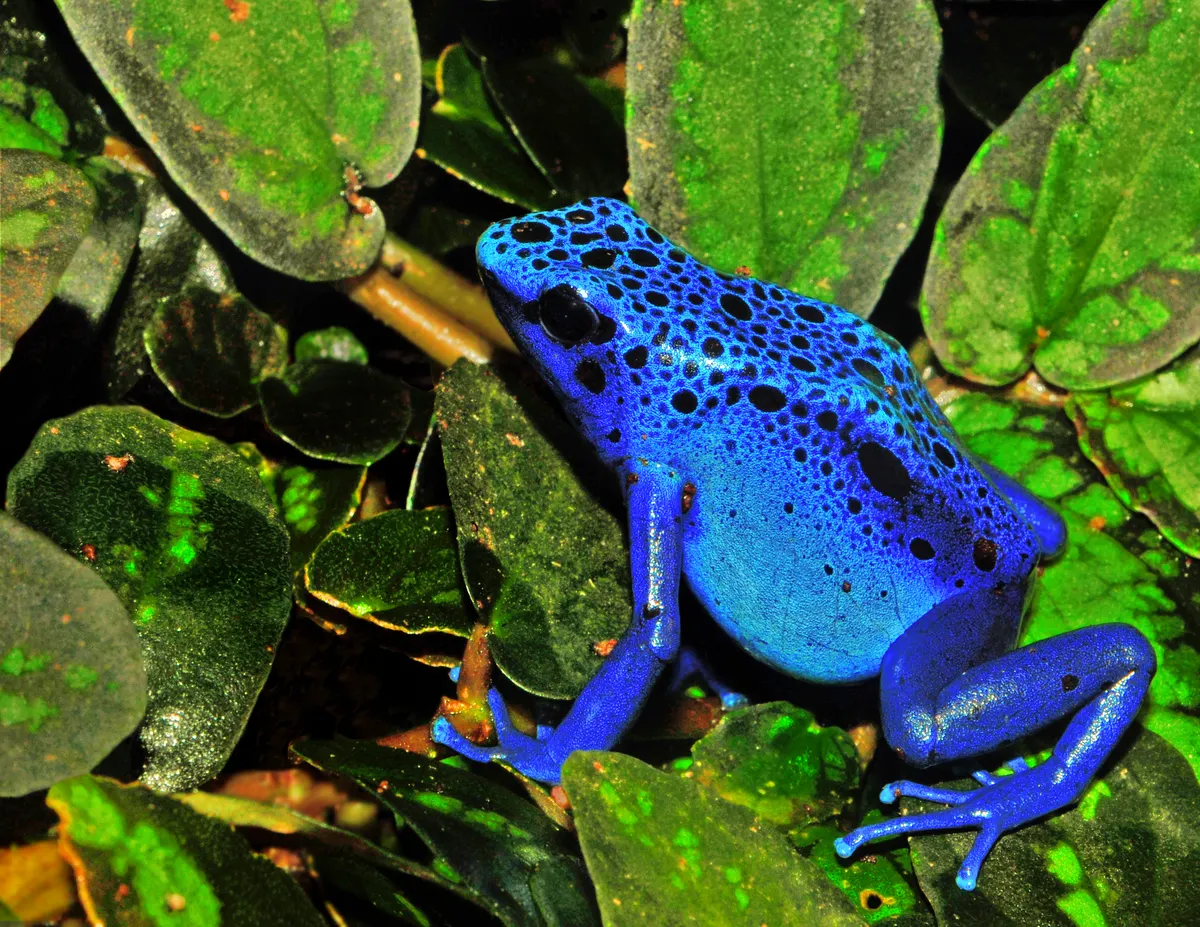
As a salamandrid, the eastern newt is related to the fire salamander of Europe, another member of the same family that also relies on toxic skin secretions. It contrasts sharply with the axolotl, a salamander that famously stays aquatic and larval for life rather than passing through a terrestrial stage. Its warning coloration invites comparison with unrelated amphibians that use the same strategy, such as the poison dart frog, whose bright colours also advertise toxicity, and the red-eyed tree frog, which uses sudden colour instead as a startle display.

Conservation and Threats

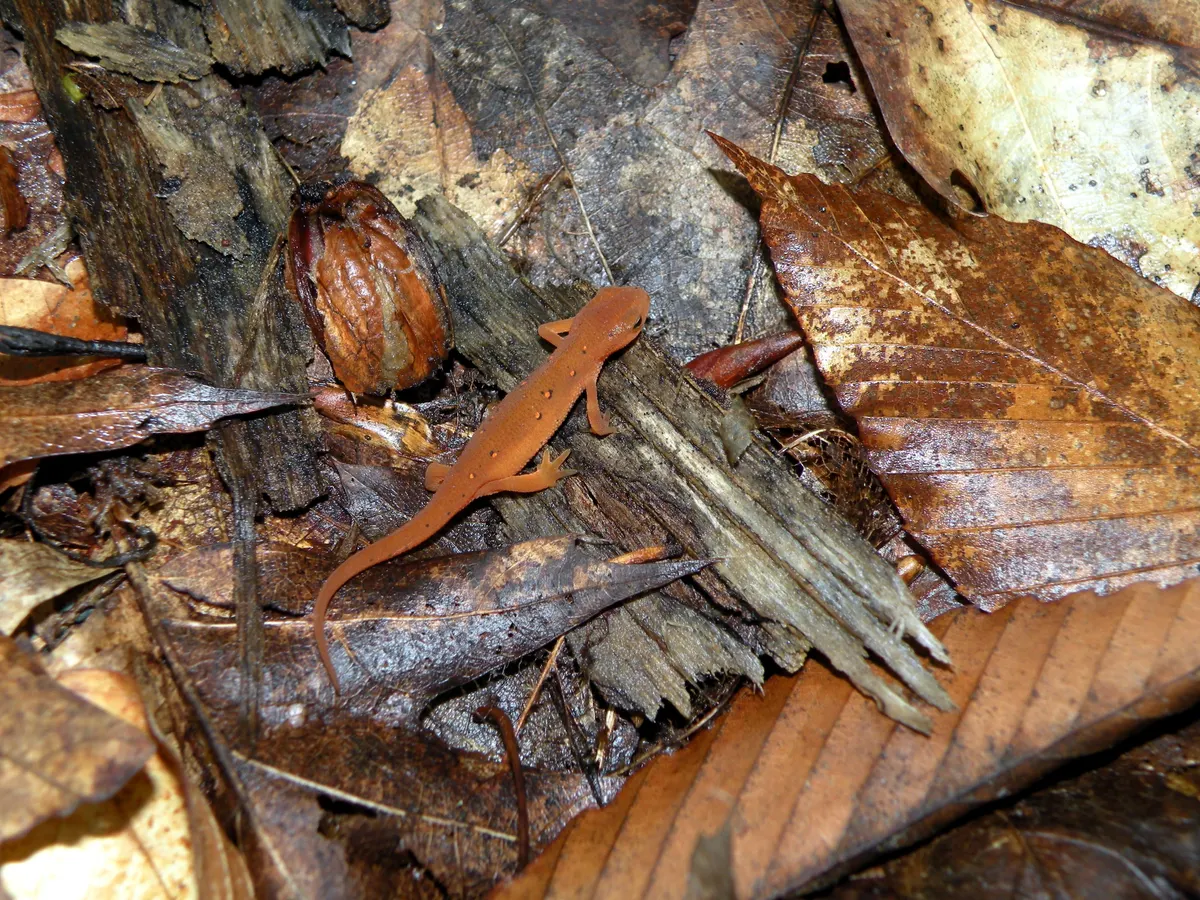
Red eft eastern newt on the forest floor
Listed as Least Concern, the eastern newt remains common though sensitive to habitat and water quality.

The IUCN Red List classifies the eastern newt as Least Concern, and the species is regarded as secure across most of its wide range, with a population trend assessed as stable. It remains common in suitable habitat throughout eastern North America.

That broad status does not remove local pressures. Because the newt relies on both ponds and the surrounding forest, the loss or draining of wetlands, the clearing of adjacent woodland, and pollution of small water bodies can all reduce local populations. Road mortality during eft and adult movements, and diseases affecting amphibians more broadly, are additional concerns in some areas. As with many wetland amphibians, protecting the connection between breeding ponds and the forests around them matters more than protecting either habitat alone.

References and Authoritative Sources

Eastern Newt: classification and fun facts

Classification

Scientific Taxonomy
  1. Kingdom

    Animalia

  2. Phylum

    Chordata

  3. Class

    Amphibia

  4. Order

    Caudata

  5. Family

    Salamandridae

  6. Genus

    Notophthalmus

  7. Species

    N. viridescens

Did You Know?

Fun Facts

1

The eastern newt passes through three distinct life stages: an aquatic larva, a terrestrial red eft, and an aquatic adult.

2

The bright orange red eft is a walking warning sign; its colour signals that the skin is toxic.

3

The skin contains tetrodotoxin, the same class of neurotoxin found in pufferfish, which makes the newt unpalatable to fish and crayfish.

4

Eastern newts can regenerate lost limbs and even parts of the heart, spinal cord, and other organs.

5

Red efts may wander on land for two to three years before returning to water as breeding adults.

6

A single female can lay 200 to 400 eggs in a season, attaching them one at a time to underwater plants.

Common Questions

FAQ about Eastern Newt

Select a question to reveal the answer.

What is an eastern newt?

The eastern newt (*Notophthalmus viridescens*) is a small salamander native to eastern North America. It belongs to the family Salamandridae and is best known for its three-stage life cycle and its bright orange juvenile phase, the red eft.

What is a red eft?

A red eft is the juvenile land stage of the eastern newt. After leaving the water, larvae transform into bright orange efts that live in forests for two to three years before returning to ponds and maturing into greenish aquatic adults.

Where do eastern newts live?

They occur across eastern North America, from the Canadian Maritime provinces and the Great Lakes south to the Gulf states and Florida. Adults live in ponds, lakes, and slow streams with plenty of vegetation, while efts live in the surrounding moist forest.

What do eastern newts eat?

Eastern newts are carnivores. They eat insects and insect larvae, worms, small crustaceans, snails, and amphibian eggs. The diet shifts between stages, with efts taking small forest invertebrates and adults feeding on aquatic prey.

Are eastern newts poisonous?

Their skin contains tetrodotoxin, a potent neurotoxin that deters predators such as fish and crayfish. The newts are not aggressive and pose no danger from a distance, but the toxin is why handling any wild newt and then touching the face or mouth should be avoided.

How long do eastern newts live?

Eastern newts can live up to about 12 to 15 years, with similar lifespans recorded in captivity. Their long life is helped by chemical defenses that reduce predation across their aquatic and terrestrial stages.