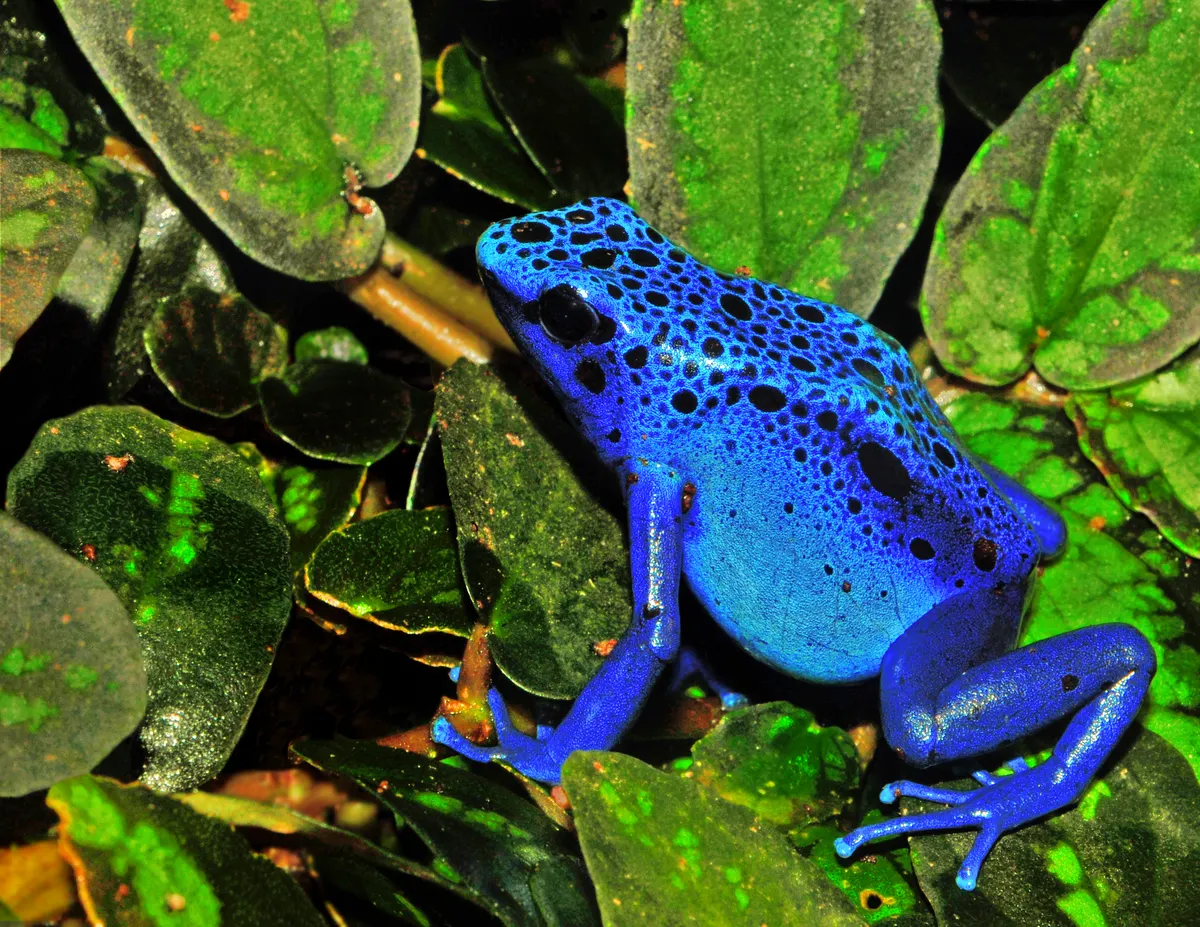
Blue poison dart frog with bright blue skin and black spots on a leaf
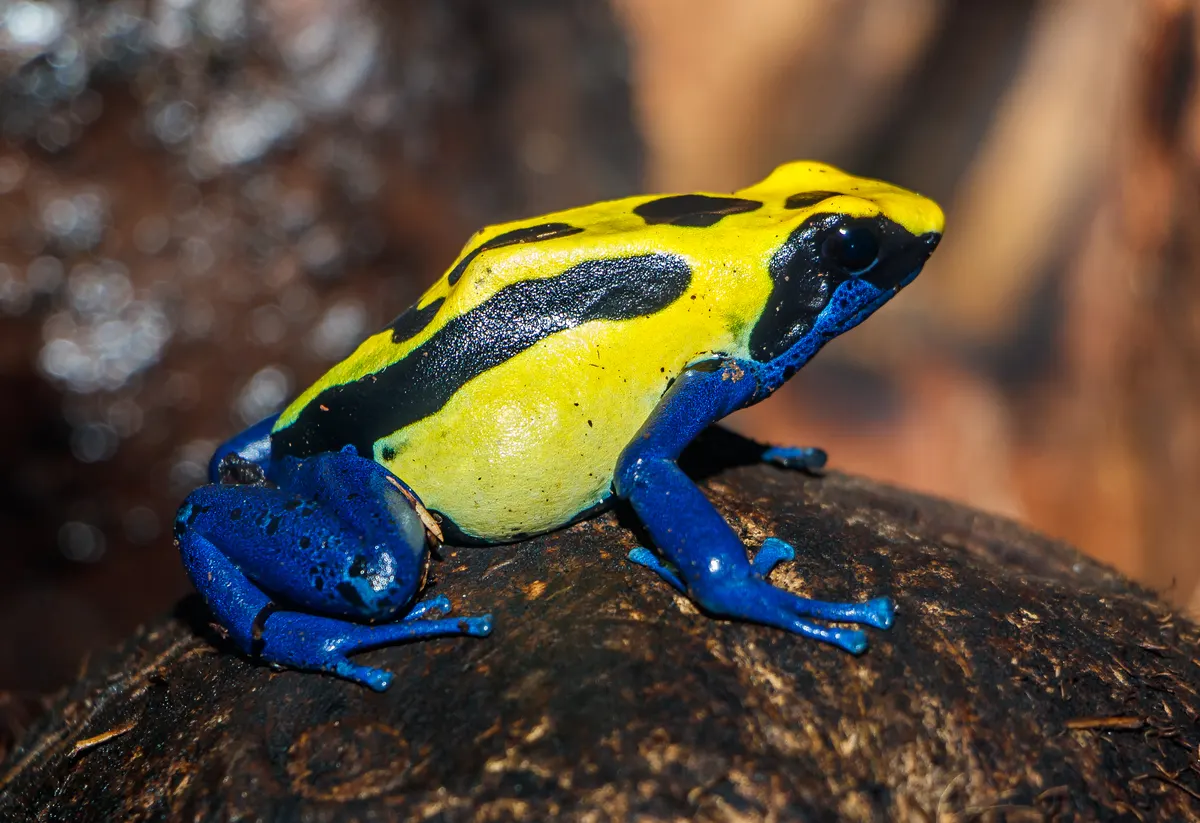
The dyeing poison dart frog includes the famous blue azureus morph.
AmphibiaLeast Concern

Poison Dart Frog Facts

Their toxins come from the ants and mites they eat — captive frogs fed other diets are far less toxic.

The poison dart frog is a brightly colored amphibian of Guiana Shield rainforests. Its bold skin warns predators of toxins that come from a diet of ants and mites.
By · Updated

Quick Facts

Poison Dart Frog at a glance

Dendrobates tinctoriusAnuraDendrobatidae

About their home

Kind of animal

Amphibia

Where they live

What they eat

How safe?

Least Concern

Size and speed

How heavy

0.1 ounces – 0.3 ounces

How long

1.5 inches – 2 inches

How fast

Quick hops across leaves, logs, and forest litter

Lifespan

About 4 to 6 years

Core article

Poison Dart Frog: ecology and life history

A closer look at habitat, diet, behavior, reproduction, and conservation.

Start here

Poison Dart Frog

Bright colors are a warning here, not decoration. The dyeing poison dart frog (Dendrobates tinctorius) lives on the humid floor and low vegetation of Guiana Shield forest, advertising the toxins stored in its skin. This small carnivore hunts ants and mites by day — the very prey that help build those defenses.

A Tiny Frog That Advertises Its Toxins

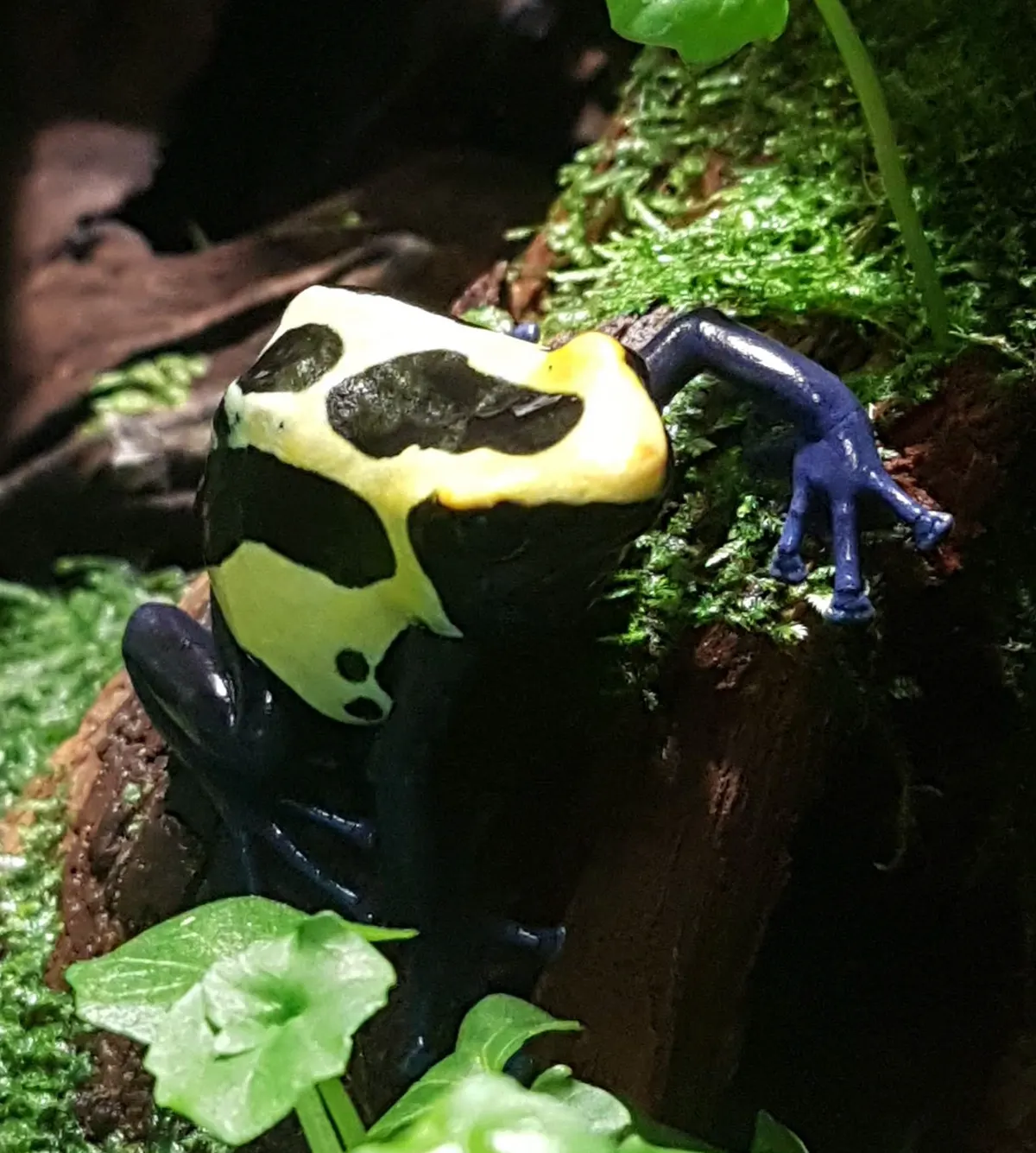
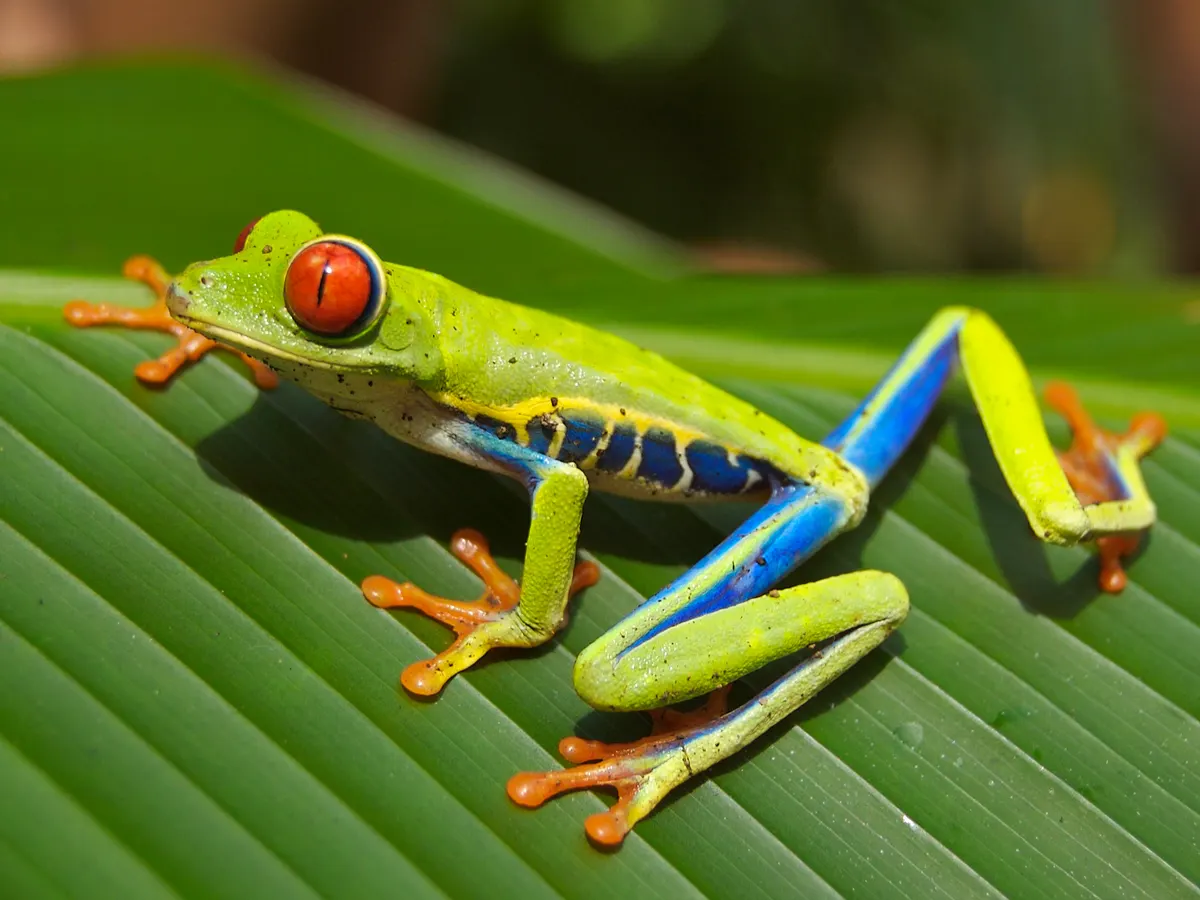
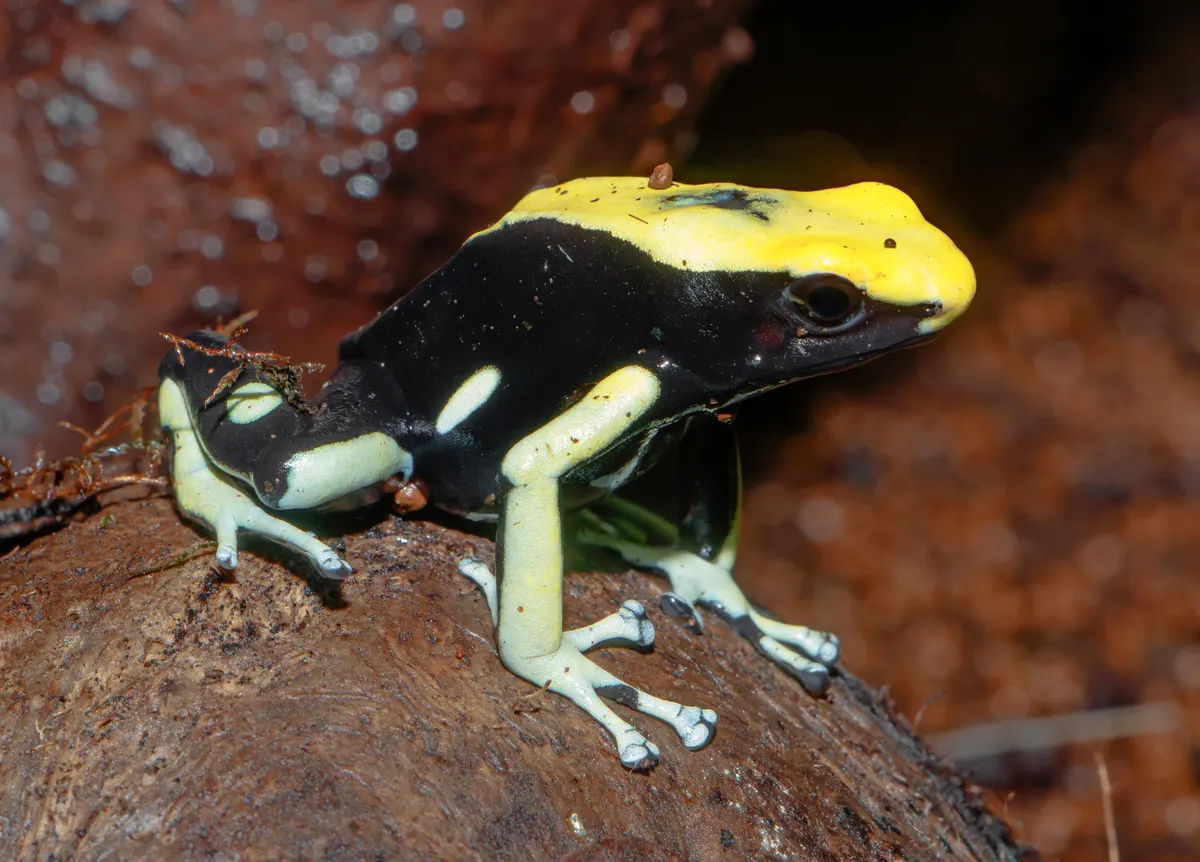
Adults are only 1.5 to 2 inches long and a few grams, streamlined for short hops across leaves and litter, with sticky toe pads for wet bark and smooth, moist skin that both breathes and demands constant humidity. The vivid pattern — yellow-backed with black legs in some populations, deep blue with black spots in others — is not camouflage but aposematism, a billboard advertising chemical defense. Crucially, the poison is diet-derived: alkaloids taken from prey are stored in skin glands, and captive frogs fed ordinary insects become far less toxic. It belongs to the family Dendrobatidae; brilliant "azureus" blue frogs once thought separate are now treated as geographic variants of this species.

Where Poison Dart Frogs Live

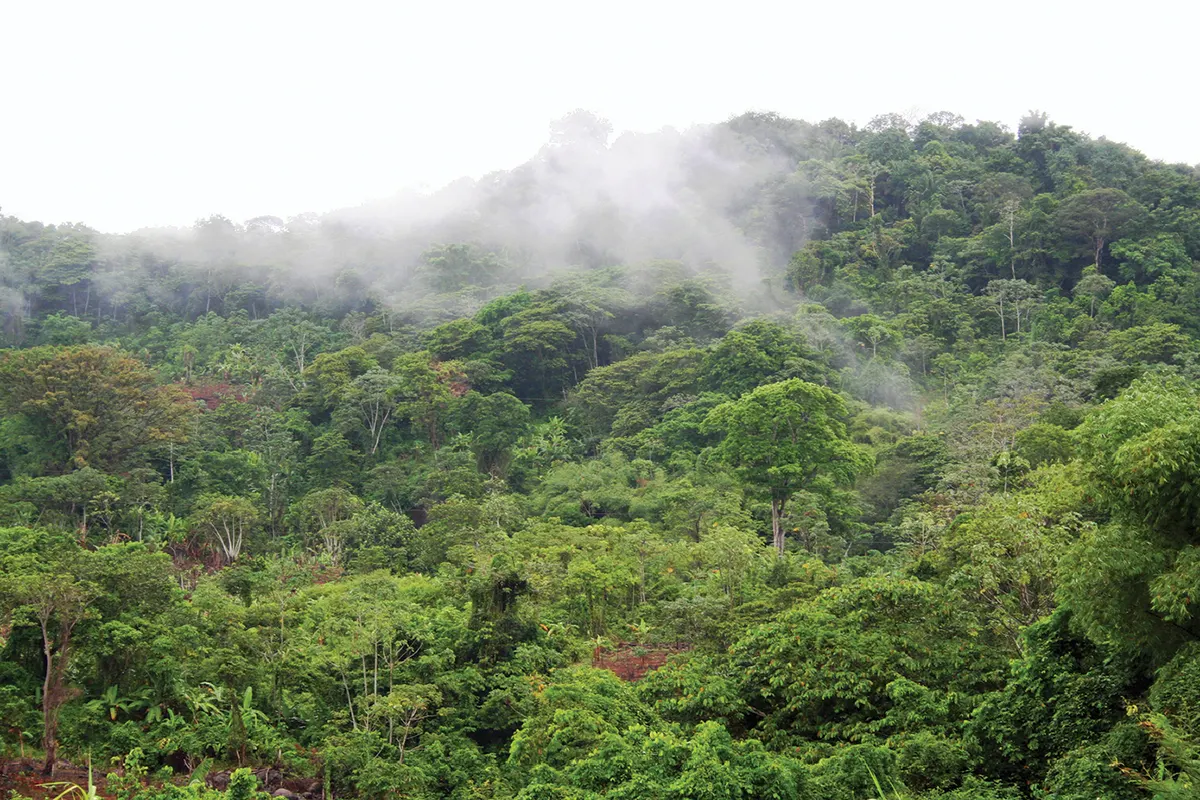
Altitude tropical rainforest habitat near Saül in French Guiana
Humid rainforest litter and plant axils create microhabitats for dart frogs.

Dyeing poison dart frogs inhabit tropical rainforest across the Guiana Shield — Suriname, French Guiana, Guyana, and northern Brazil — favouring humid lowland and foothill forest with deep leaf litter, fallen logs, and plants that hold small water pockets. Unlike frogs tied to ponds, they raise tadpoles in tiny pools in bromeliads, tree holes, and palm axils. As day-active animals of the understory they depend on a moist microclimate: too open a canopy dries the litter, while intact primary forest keeps humidity high.

What Poison Dart Frogs Eat

Yellow-backed poison dart frog on moss suitable for hunting small arthropods
Leaf-litter ants and mites supply both food and toxin precursors.

They are opportunistic hunters of the smallest litter arthropods, with ants and mites dominating most diets, plus termites, tiny spiders, and other invertebrates, taken by quick tongue strikes on moss, bark, and soil. The diet's chemistry matters as much as its calories: the alkaloids sequestered from that prey are what make the frog toxic, so wild foraging links the rainforest's insect community directly to the frog's defense.

Behavior: Territorial, With Devoted Parents

Patricia morph dyeing poison dart frog showing parental-care species form
Males stay with the clutch and later ferry tadpoles one by one to water.

Most dyeing poison dart frogs live as territorial adults rather than in groups; males call softly and defend core areas around eggs and good tadpole nurseries, settling boundaries with wrestling or display rather than injury. The standout behavior is parental care: after the eggs are laid on litter or low vegetation and guarded, the hatchling tadpoles climb onto a parent's back — usually the male's — and are ferried one by one to safe water, solving the problem that permanent streams are scarce but plant cups are scattered everywhere.

Life Cycle: Tadpoles Carried to Water

Compact dyeing dart frog representing post-metamorphosis froglet stage
Froglets leave bromeliad pools only after legs and lungs are ready.

Breeding can happen whenever humidity and rainfall keep the microhabitats wet. Clutches are small, often only a few eggs, and the embryos develop for about 10 to 14 days before hatching into tadpoles that a parent carries to a nursery pool, where they feed on detritus, algae, and sometimes provided food until metamorphosis. The froglet that emerges already wears warning colors, then takes months of dense arthropod hunting to reach adult size. Wild frogs typically live several years, longer in good captivity.

Conservation: Least Concern but Tied to Rainforest

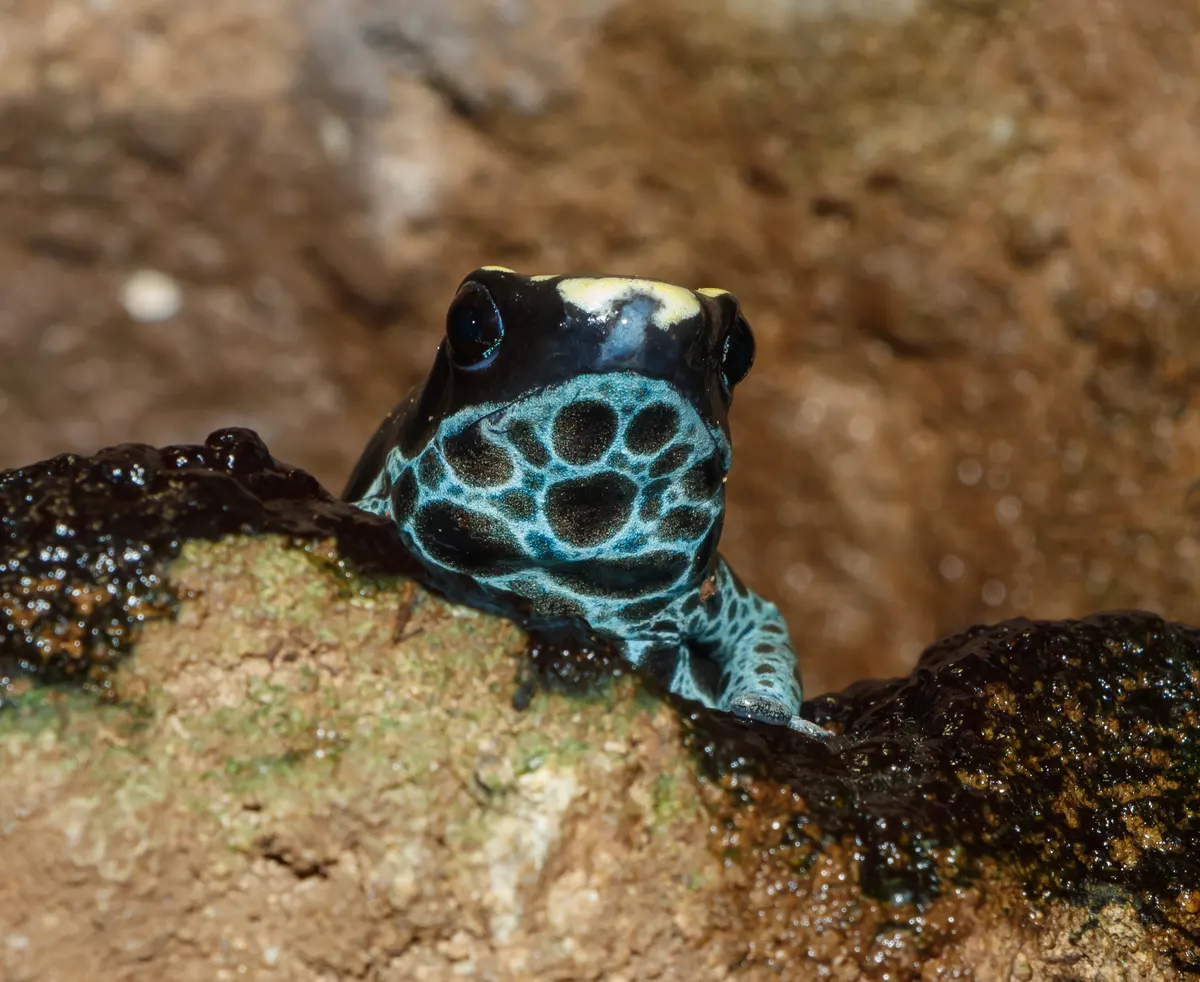
Dyeing poison dart frog representing the Guiana Shield species complex
The species is endemic to humid forests of Suriname, French Guiana, Guyana, and Brazil.

Dendrobates tinctorius is Least Concern, though many assessments list the trend as decreasing. Intact Guiana Shield forest still holds widespread populations, but logging, mining, roads, and collection for the pet trade cause local losses. Because the toxins depend on wild prey and breeding depends on tiny water nurseries, even subtle drying can cut successful reproduction — so wild populations stay bound to large blocks of humid rainforest.

References and Authoritative Sources

Poison Dart Frog: classification and fun facts

Classification

Scientific Taxonomy
  1. Kingdom

    Animalia

  2. Phylum

    Chordata

  3. Class

    Amphibia

  4. Order

    Anura

  5. Family

    Dendrobatidae

  6. Genus

    Dendrobates

  7. Species

    D. tinctorius

Did You Know?

Fun Facts

1

Their toxins come from the ants and mites they eat — captive frogs fed other diets are far less toxic.

2

Males carry tadpoles on their backs to tiny pools in plants or tree holes.

3

Bright blue, yellow, and black morphs all belong to the same species complex.

4

Indigenous peoples once used secretions from related dart frogs on hunting darts.

5

Unlike many frogs, dyeing poison dart frogs are active in daylight.

6

Sticky toe pads help them climb wet leaves and bark in the rainforest.

Common Questions

FAQ about Poison Dart Frog

Select a question to reveal the answer.

What is a poison dart frog?

A poison dart frog is a small, brightly colored amphibian from tropical rainforests. The dyeing poison dart frog (*Dendrobates tinctorius*) is one of the best-known species on the Guiana Shield.

Where do poison dart frogs live?

Dyeing poison dart frogs live in humid forest habitats of Suriname, French Guiana, Guyana, and northern Brazil.

Are poison dart frogs poisonous?

Yes. Wild frogs store alkaloids in their skin that taste bad or are toxic to predators. Captive frogs usually lose most of this toxicity because of their diet.

What do poison dart frogs eat?

They are carnivores that hunt tiny ants, mites, termites, and other leaf-litter arthropods.

How do poison dart frogs care for tadpoles?

After eggs hatch, the male often carries each tadpole on his back to a small water pocket, such as a bromeliad pool, where it finishes developing.

Why are poison dart frogs so colorful?

Their colors are a warning signal called aposematism. Bright patterns tell predators the frog may be toxic and not worth eating.

Show 1 more questionsExpand
Are poison dart frogs endangered?

Dendrobates tinctorius is listed as Least Concern, but local populations can decline from habitat loss, collection for the pet trade, and rainforest disturbance.