Blue Whale Facts
"The blue whale is the largest animal ever known to have lived."
Blue whales are the largest animals on Earth—longer than a school bus and heavier than dozens of elephants. They live in oceans worldwide and filter tiny...
Loading page content

"The blue whale is the largest animal ever known to have lived."
Blue whales are the largest animals on Earth—longer than a school bus and heavier than dozens of elephants. They live in oceans worldwide and filter tiny...
Balaenoptera musculusCetaceaBalaenopteridae
Explore blue whale photos organized for learning and classroom observation.
Click any photo to view it larger. 8 images available.
Core article
Habitat, diet, behavior, and more — everything on one page.
The blue whale (Balaenoptera musculus) represents the absolute zenith of biological gigantism. It is not merely the largest living animal; it is definitively the most massive creature to have ever existed on Earth, dwarfing even the most massive sauropod dinosaurs of the Mesozoic era. Gliding silently through the global pelagic zones, this marine mammal is a staggering paradox: a predator of incomprehensible scale whose survival is entirely dependent on microscopic, shrimp-like crustaceans. The biology, ecology, and haunting acoustic communication of the blue whale represent some of the most extreme adaptations in evolutionary history, while its dark history with commercial whaling serves as a chilling testament to humanity's capacity for ecological destruction.
The scientific classification of the blue whale places it within the kingdom Animalia, phylum Chordata, class Mammalia, and order Cetacea. It belongs to the suborder Mysticeti (the baleen whales) and the family Balaenopteridae (the rorquals). The genus Balaenoptera encompasses other large filter-feeders, including the fin whale and the humpback whale. Taxonomists currently recognize several subspecies of the blue whale based on geographic distribution, including the Northern blue whale (B. m. musculus), the Antarctic blue whale (B. m. intermedia), and the slightly smaller Pygmy blue whale (B. m. brevicauda) found in the Indian and South Pacific Oceans.
The evolutionary journey of cetaceans is a remarkable transition from land to sea. The ancestors of the blue whale were small, terrestrial artiodactyls (even-toed ungulates, closely related to modern hippopotamuses) that waded into the Tethys Sea approximately 50 million years ago. Over millions of years, selective pressures for aquatic survival led to the loss of hind limbs, the transformation of forelimbs into flippers, and the migration of the nasal opening to the top of the skull to form the blowhole. The extreme gigantism of the blue whale is a relatively recent evolutionary development, occurring within the last 3 million years, driven by the Pleistocene glaciation which concentrated krill into massive, localized patches, rewarding animals large enough to travel vast oceanic distances to exploit them.
The physical dimensions of Balaenoptera musculus defy standard biological comprehension. Adult Antarctic blue whales—the largest of the subspecies—can reach lengths of 100 feet (30 meters) and achieve weights exceeding 200 tons (400,000 pounds). To contextualize this mass, a blue whale's tongue alone weighs as much as an adult African elephant, and its heart is the size of a small automobile, pumping 220 gallons of blood with every massive, slow beat.
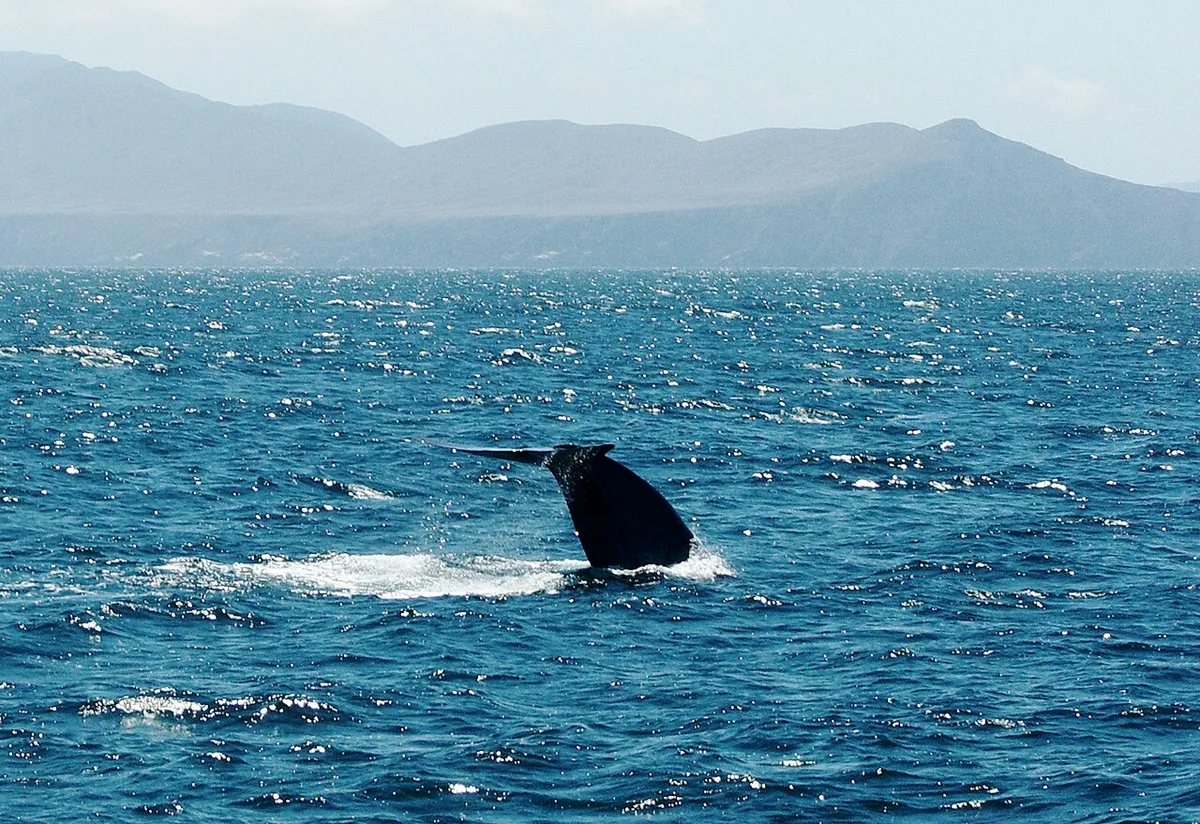
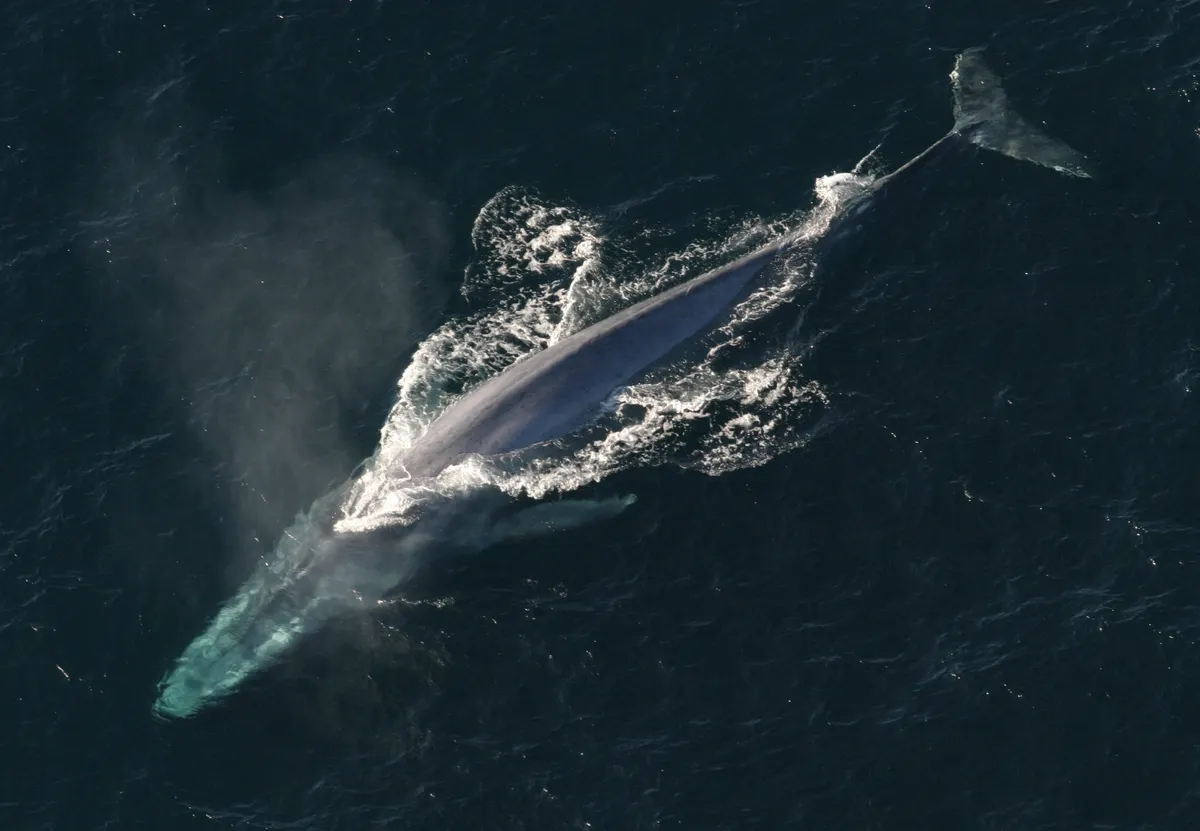
The body is highly streamlined, a tapered cylinder designed for absolute hydrodynamic efficiency. Their skin is smooth, largely free of the barnacle encrustations seen on humpback whales, and exhibits a mottled, slate blue-gray coloration. Underwater, the refraction of light renders them a luminous, pale blue, granting them their common name.
Perhaps their most vital anatomical adaptation is their feeding apparatus. Blue whales completely lack teeth. Instead, their upper jaw is lined with 300 to 400 fringed plates of baleen, a keratinous material similar to human fingernails. Furthermore, their ventral surface features 50 to 90 deep, longitudinal pleats extending from the chin to the navel. These throat grooves are highly elastic, allowing the mouth to expand to a cavernous volume, taking in a volume of water equal to the whale's entire body mass in a single gulp. When surfacing to breathe, the blue whale exhales forcefully through twin blowholes, projecting a vertical column of highly pressurized, condensing mist up to 30 feet into the air.

The blue whale is a cosmopolitan species, boasting a global distribution that spans all major oceanic basins, from the icy extremes of the Southern Ocean and the Arctic to the temperate and tropical waters of the equator.
Their preferred biome is the open, pelagic ocean, particularly deep offshore waters where cold, nutrient-rich upwellings occur. They are highly migratory creatures, following a rigid seasonal schedule dictated by food availability and reproductive necessities. During the summer months, they migrate to the high latitudes of the polar and sub-polar regions to gorge on the massive, seasonal blooms of krill fueled by continuous daylight. As the polar ice advances and winter approaches, they undertake monumental migrations—sometimes traveling over 3,000 miles—to the warm, oligotrophic (nutrient-poor) waters of the tropics to mate and calve, relying entirely on their massive blubber reserves for energy.

Despite its gargantuan size, the blue whale is a specialized carnivore that feeds almost exclusively on krill (euphausiids)—tiny, shrimp-like crustaceans measuring barely an inch in length. An adult blue whale requires a staggering caloric intake, consuming up to 4 tons (8,000 pounds) of krill in a single day during the summer feeding season.
To harvest this prey, the blue whale utilizes a strategy known as lunge feeding, a biomechanical feat requiring massive energy expenditure. Spotting a dense swarm of krill using vision and potentially mechanoreception, the whale accelerates rapidly toward the swarm. At the last second, it drops its lower jaw to an angle of nearly 90 degrees. The ventral throat grooves balloon outward, engulfing thousands of gallons of krill-laden seawater. The whale then closes its mouth and uses its massive, muscular tongue to force the water back out through the baleen plates, trapping the krill inside the fringes to be swallowed. This high-drag maneuver slows the whale almost to a halt, demanding immense cardiovascular power.

Blue whales are largely solitary creatures, occasionally forming loose, transient pairs or small, temporary aggregations in areas of exceptionally high krill density. They lack the complex, multi-generational pod structures seen in toothed whales like orcas or sperm whales.
However, their lack of physical grouping is compensated by their unique acoustic connectivity. The blue whale produces the loudest sustained biological sounds on the planet. Their vocalizations consist of deep, rhythmic, low-frequency pulses and moans ranging from 10 to 40 Hertz—much of which is infrasonic, falling below the threshold of human hearing. Emitted at a staggering 188 decibels, these acoustic waves can travel uninterrupted through the deep ocean sound channel for thousands of miles. This allows solitary blue whales to communicate, coordinate migrations, and locate potential mates across entire ocean basins.

The reproductive cycle of the blue whale is marked by an immense biological investment from the mother. The gestation period lasts approximately 10 to 12 months. Calving occurs in the warm, predator-free waters of the tropics during the winter, where the lack of icy water prevents the newborn from freezing before it can develop a sufficient blubber layer.
A newborn blue whale calf is the largest baby on Earth, emerging at 25 feet in length and weighing up to 3 tons. The calf nurses on its mother's milk, which is extraordinarily rich—composed of nearly 40% to 50% fat. This high-octane nutrition fuels an astonishing growth rate; the calf gains roughly 200 pounds every single day for the first six to eight months of its life.
The calf is weaned when it reaches approximately 50 feet in length, typically corresponding with the mother's migration back to the polar feeding grounds. Blue whales reach sexual maturity between 5 and 10 years of age. Unencumbered by predation in adulthood (save for coordinated attacks on calves by large pods of orcas), the blue whale possesses an immense lifespan, with individuals estimated to live 80 to 90 years.
(Population and conservation trend data sourced from the IUCN Red List of Threatened Species)
The current conservation status of the blue whale is Endangered, a direct consequence of historical commercial whaling. Prior to the 20th century, their massive size and speed protected them from traditional whaling ships. However, the invention of the explosive harpoon and the steam-powered factory ship in the late 1800s inaugurated a localized genocide. In the Antarctic alone, over 340,000 blue whales were slaughtered in the first half of the 20th century, driving the global population to the absolute brink of biological extinction, reducing their numbers by over 99%.
Given absolute international protection by the International Whaling Commission in 1966, the global population is slowly recovering, currently estimated at 10,000 to 25,000 individuals. Yet, they face a gauntlet of modern anthropogenic threats. Global maritime shipping lanes heavily intersect with blue whale feeding grounds and migratory routes, leading to fatal ship strikes. Furthermore, the pervasive increase in anthropogenic ocean noise—from military sonar, seismic surveys for oil, and commercial shipping—creates acoustic smog that masks their low-frequency communication, disrupting their ability to find mates and navigate. Finally, climate change threatens to alter the distribution and abundance of krill in the polar regions, directly threatening the sole food source that sustains the largest animal on Earth.
The blue whale is the largest animal ever known to have lived.
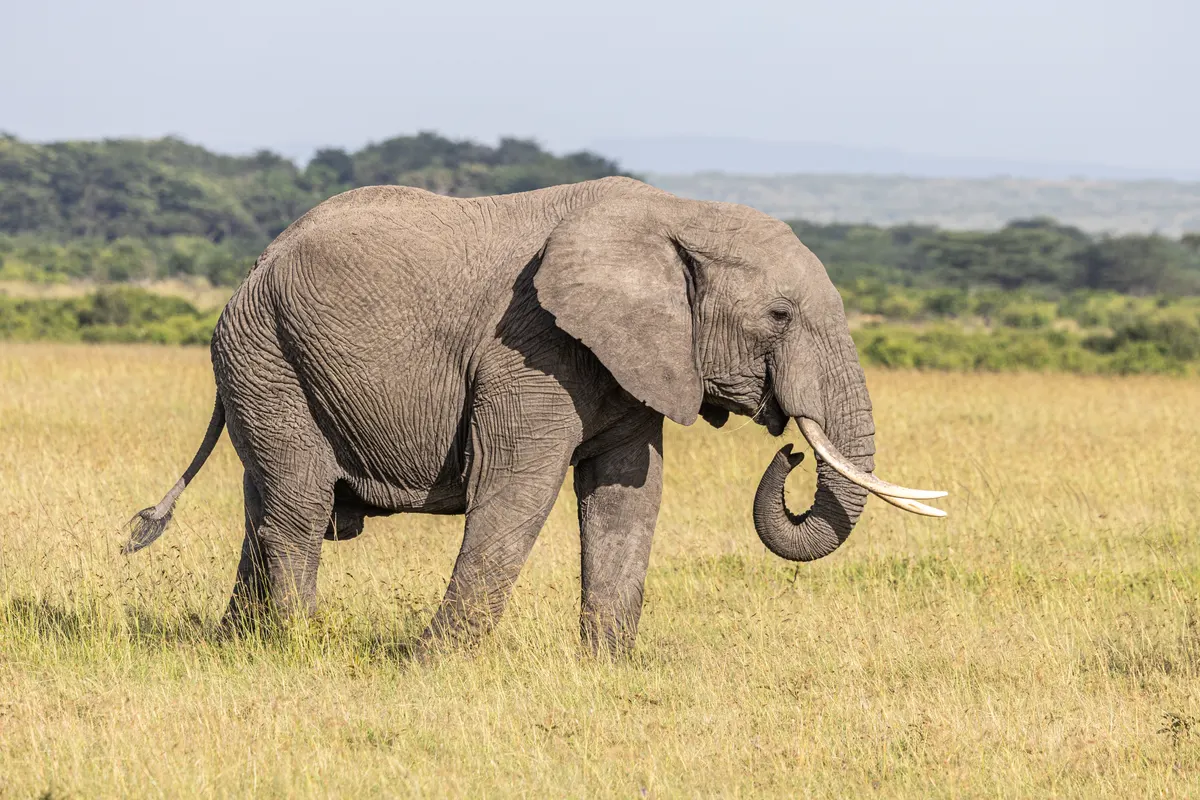
A blue whale's tongue can weigh as much as an elephant.
Blue whales eat mostly tiny krill, not large fish or seals.
A blue whale's blow can shoot 30 feet into the air.
Blue whale calls can travel hundreds of miles underwater.
A newborn blue whale calf can gain about 200 pounds per day.
Select a question to reveal the answer.
A blue whale is a huge marine mammal and the largest animal on Earth. It has baleen plates instead of teeth and filters krill from seawater.
Many adults reach about 80 to 100 feet long and can weigh up to 200 tons. That is longer than a school bus and heavier than many elephants combined.
Blue whales eat mostly krill, which are tiny shrimp-like animals. They also swallow small fish and copepods when feeding.
Blue whales live in oceans around the world. They migrate between cold feeding areas near the poles and warmer waters where they breed.
Like all mammals, blue whales must breathe air. They come to the surface, open two blowholes on top of the head, and exhale a tall spout of mist.
No. A blue whale's throat is too narrow to swallow a person. Its baleen is built to strain tiny prey, not large animals.
A baby blue whale is called a calf. Calves are born in warm waters and stay with their mother for months while nursing.
Blue whales usually swim at a steady, slow pace. They can sprint faster for short distances, sometimes reaching around 30 miles per hour.
Yes. Blue whales are listed as Endangered after centuries of whaling. Protecting oceans from ship strikes, noise, and pollution helps them recover.
They look blue-gray underwater because of their skin color and the way light scatters in the ocean. On dry land, their skin looks more gray than bright blue.