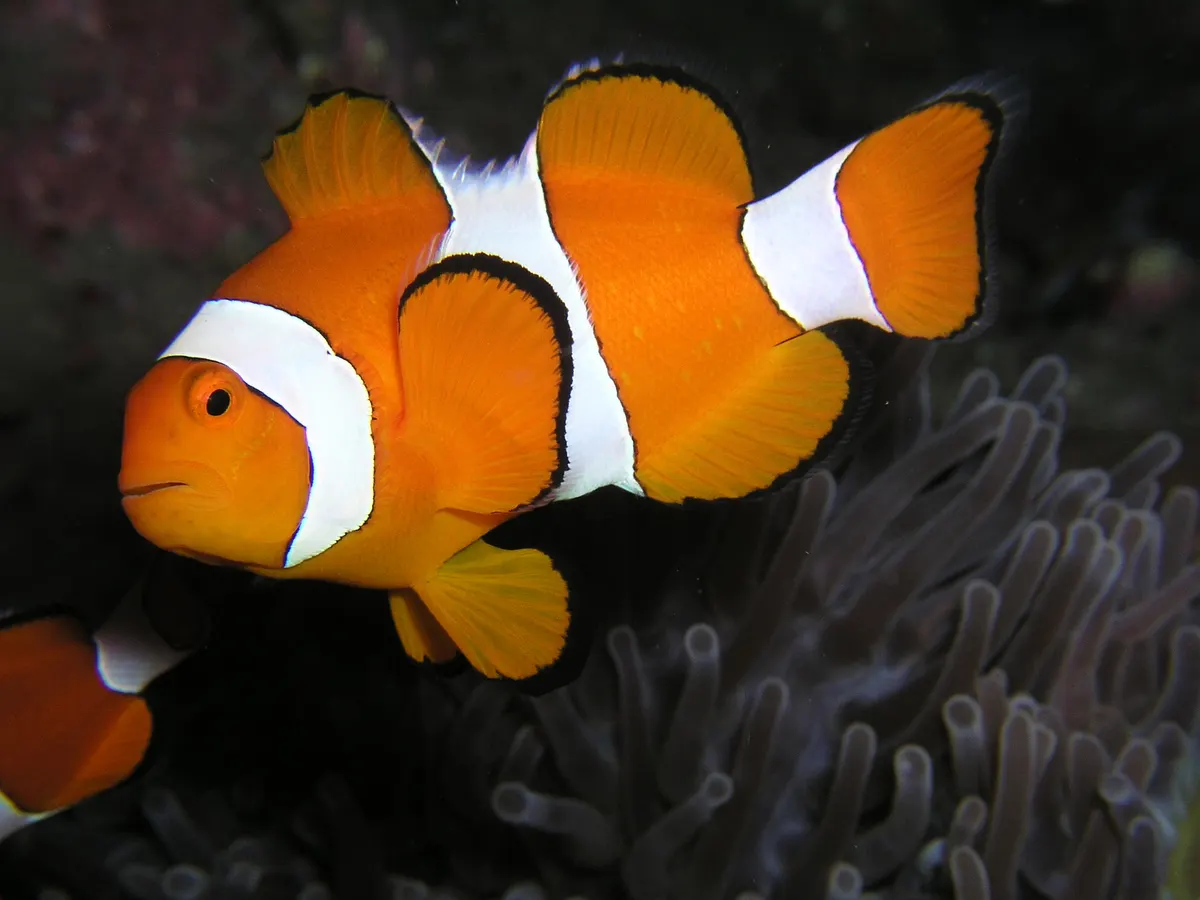
Ocellaris clownfish are small, colorful reef fish famous for living with sea anemones.
ActinopterygiiLeast Concern
Clownfish Facts
“Clownfish are immune to their host anemone's sting because of a special mucus coating.”
Ocellaris clownfish live among the stinging tentacles of sea anemones on Indo-Pacific reefs. A protective mucus lets them use the anemone as shelter, while a strict social hierarchy determines which fish breeds and which male guards the eggs.