Whale Shark Facts
"The whale shark is the largest fish species on Earth."
Whale sharks are enormous spotted sharks that cruise warm oceans and feed by filtering tiny prey from the water. They are gentle giants and the largest fish...
Loading page content

"The whale shark is the largest fish species on Earth."
Whale sharks are enormous spotted sharks that cruise warm oceans and feed by filtering tiny prey from the water. They are gentle giants and the largest fish...
Rhincodon typusOrectolobiformesRhincodontidae
Explore whale shark photos organized for learning and classroom observation.
Click any photo to view it larger. 8 images available.
Core article
Habitat, diet, behavior, and more — everything on one page.
Gliding silently through the sun-drenched waters of the tropical ocean, the whale shark (Rhincodon typus) is an animal that defies expectation. Despite being a true shark and the absolute largest fish on the planet, it bears no resemblance to the fearsome, apex predators of popular imagination. Instead, this massive creature is a slow-moving, gentle filter feeder, relying on the ocean's tiniest organisms to sustain its massive bulk.
Adorned in a breathtaking, starry pattern of pale yellow spots and stripes across a dark blue-grey canvas, the whale shark is highly sought after by ecotourists and marine biologists alike. Yet, despite their massive size—frequently exceeding the length of a school bus—much of their life remains shrouded in mystery. From their enigmatic deep-sea dives into the freezing abyss to the unknown locations where they give birth to their pups, the whale shark remains a fascinating enigma, heavily dependent on the health of the fragile pelagic ecosystems they cruise.
The whale shark is not a whale; it is a true cartilaginous fish, representing a unique evolutionary departure from its predatory cousins.
The whale shark belongs to the order Orectolobiformes, commonly known as carpet sharks, a group that includes much smaller benthic species like wobbegongs and nurse sharks. It is the sole living species within the family Rhincodontidae. Its common name is a direct reference to its size—rivalling that of many large baleen whales—and its filter-feeding habits. Evolutionarily, the whale shark split from other sharks millions of years ago, drastically modifying its jaw structure and gill slits to exploit the abundant, untapped resource of oceanic plankton, rather than hunting large prey.
The sheer scale of a whale shark is difficult to comprehend until it is seen up close. The average adult measures between 18 and 40 feet in length, though unverified reports suggest they can grow even larger. They are incredibly heavy, weighing anywhere from 15,000 to an astounding 40,000 pounds.
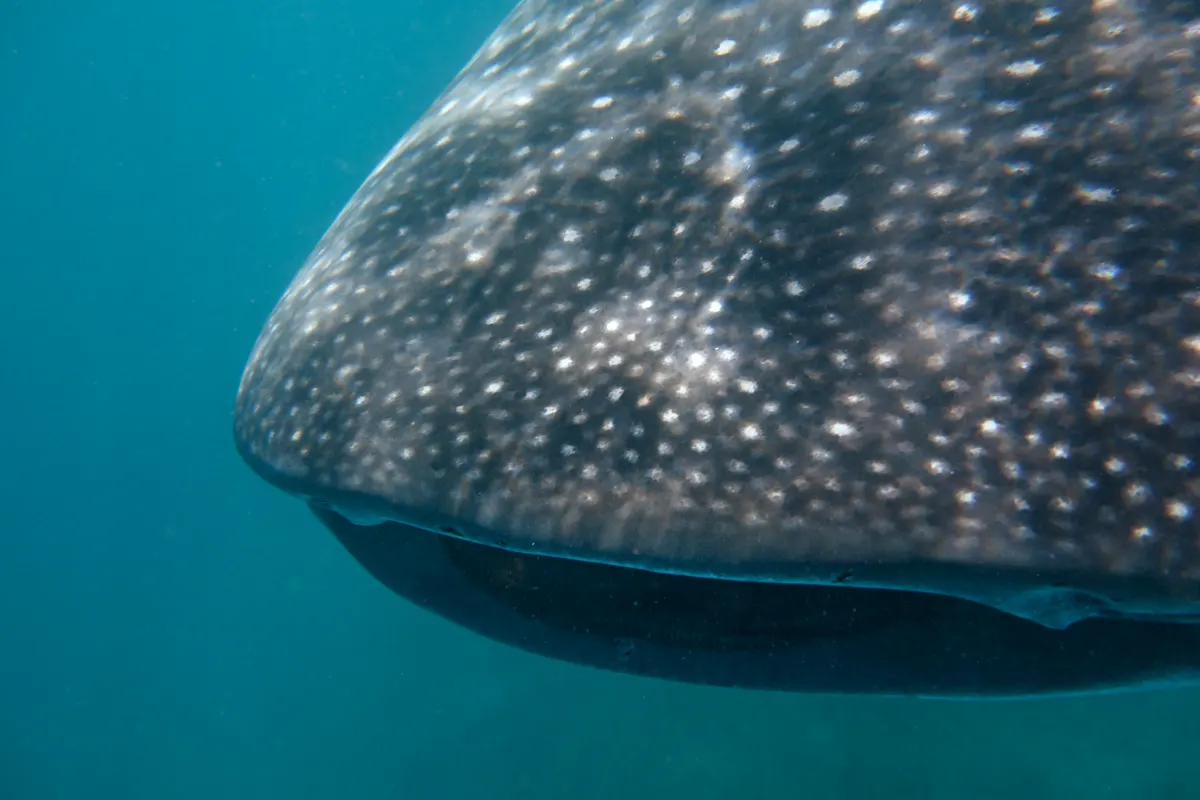
Unlike most predatory sharks whose mouths are located on the underside of their snout, the whale shark's mouth is located at the very front of its broad, flattened head. This cavernous mouth can open nearly 5 feet wide. Inside, they possess over 300 rows of tiny, vestigial teeth that play no role in feeding. Instead, their throat is lined with 20 specialized filter pads—highly modified gill rakers—that function like biological sieves.
Their skin is incredibly thick, reaching up to 4 inches thick on their back to protect against predators. The skin is colored a deep grey to bluish-brown, covered in a checkerboard pattern of pale yellow spots and vertical stripes. Much like a human fingerprint, the exact arrangement of these spots is entirely unique to each individual shark, allowing researchers to track them globally using photo-identification software originally designed to map star constellations. Their massive, crescent-shaped tail provides propulsion, allowing them to cruise the oceans efficiently.

Whale sharks have a circumglobal distribution, inhabiting all tropical and warm-temperate seas worldwide. They are highly migratory, constantly on the move to follow seasonal blooms of plankton and fish spawning events.
They are primarily a pelagic (open-ocean) species, generally remaining in water temperatures between 70°F and 86°F (21°C to 30°C). However, they frequently aggregate in coastal areas, coral reefs, and shallow bays during specific times of the year when food is abundant. Famous aggregation sites include Ningaloo Reef in Australia, the Yucatan Peninsula in Mexico, Donsol in the Philippines, and the coast of Tanzania. While they spend much of their time feeding near the sunlit surface, tagging studies have revealed that they frequently plunge into the dark bathypelagic zone, diving well past 6,000 feet deep to forage or regulate their body temperature.

Despite its immense size, the whale shark is a filter-feeding carnivore that subsists almost entirely on the smallest organisms in the ocean. Their primary diet consists of zooplankton, krill, copepods, and massive quantities of fish eggs. They will also readily consume small schooling fish, squid, and shrimp.
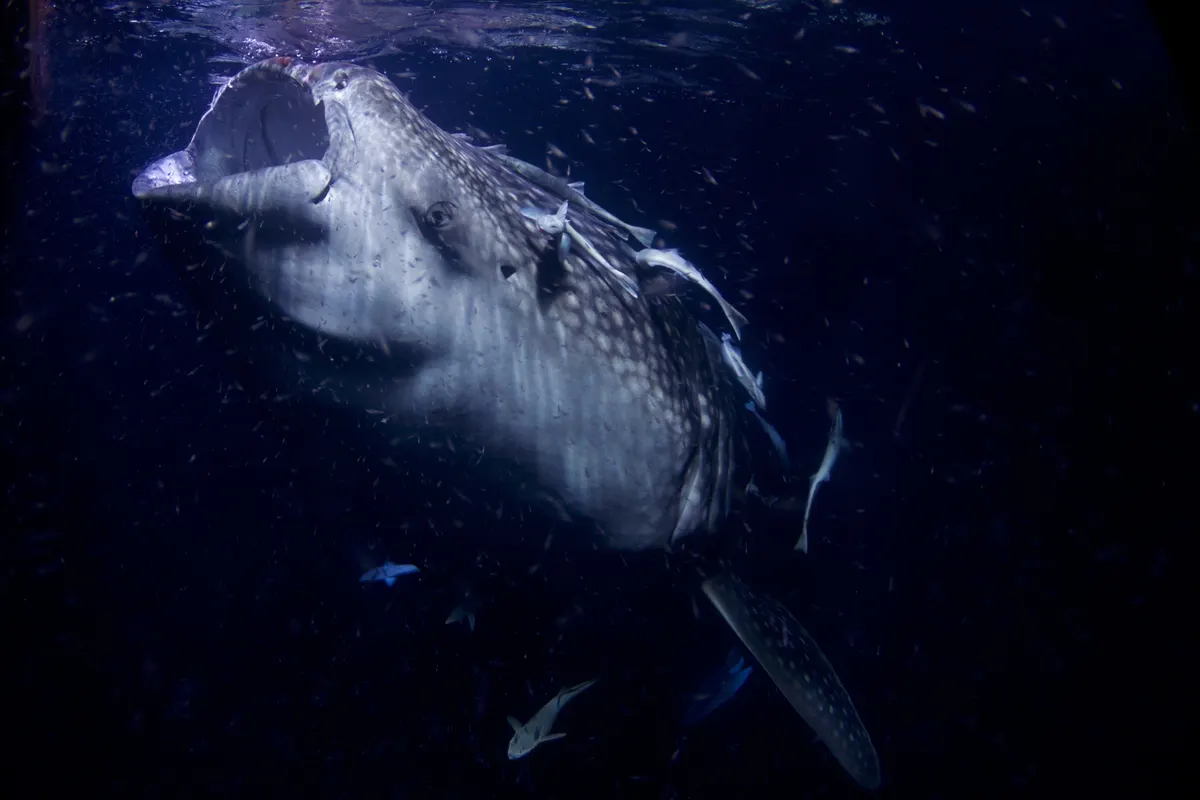
The whale shark employs two distinct feeding methods. The first is "ram filter feeding," where the shark swims slowly forward with its massive mouth wide open, continuously forcing prey-laden water over its gill filters. The water exits through the gill slits, while the plankton is trapped in the throat and periodically swallowed in a massive gulp.
The second method is "active suction feeding." Often observed when food is densely concentrated, the shark will hang vertically in the water column and aggressively pump its gills, sucking water into its mouth like a massive vacuum cleaner. During events like the annual snapper spawning, a whale shark can consume tens of thousands of calories in a matter of hours.

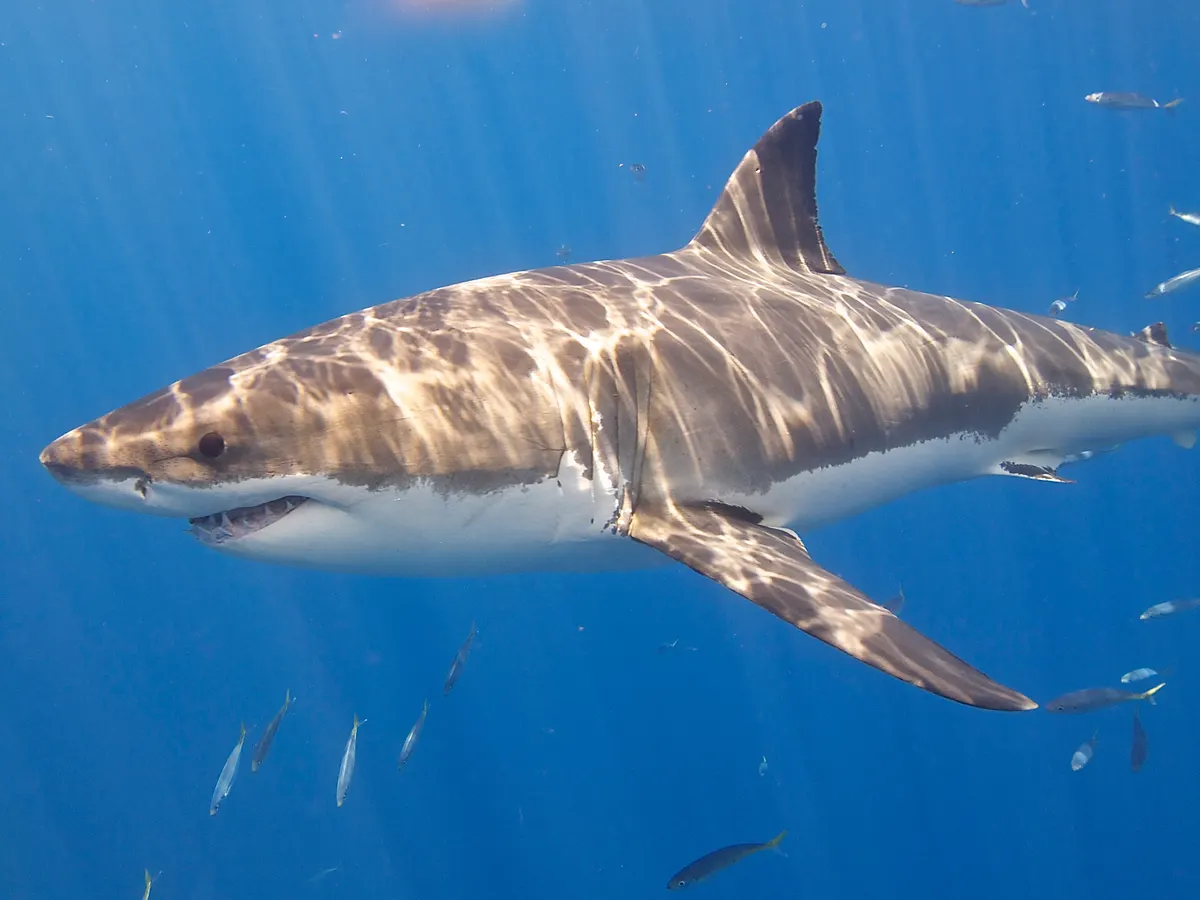
Whale sharks are primarily solitary wanderers, embarking on massive, transoceanic migrations alone. They cruise at a leisurely pace of about 3 mph, propelled by the slow, sweeping motion of their entire posterior body, rather than just their tail fin like a great white shark.
Despite their solitary nature, they are highly tolerant of each other and will gather by the hundreds in specific coastal locations to take advantage of dense food blooms. These aggregations are peaceful; there is no aggressive competition or territoriality over the food source.
They are notoriously docile and exhibit little to no fear of humans, frequently allowing divers to swim alongside them. However, they are highly sensitive to physical touch, which can disrupt their protective mucous layer.

The reproductive biology of the whale shark was completely unknown until a single, pregnant female was caught off the coast of Taiwan in 1995. This discovery proved that whale sharks are ovoviviparous.
Instead of laying eggs on the seafloor, the female produces hundreds of egg cases that hatch internally. She then gives birth to live pups. The female caught in 1995 was carrying over 300 pups in various stages of development, the largest litter of any shark species. The pups are born measuring roughly 16 to 24 inches long and are entirely independent.
The juvenile years of a whale shark are one of the ocean's greatest mysteries; pups are almost never seen by researchers, likely because they dive deep to avoid predators like orcas and large predatory sharks until they gain sufficient size. They grow incredibly slowly, taking up to 30 years to reach sexual maturity. If they survive to adulthood, they have an extraordinarily long lifespan, estimated to live between 70 to 100 years.
(Population and conservation trend data sourced from the IUCN Red List of Threatened Species)
The whale shark is classified as Endangered by the International Union for Conservation of Nature (IUCN), with a globally decreasing population trend.
The most significant threat to their survival is human activity. Because they swim slowly near the surface, they are highly vulnerable to fatal ship strikes from massive commercial freighters. Historically, they were heavily targeted by commercial fisheries in Asia for their meat, fins (used in shark fin soup), and oil. While they are now protected in many countries, illegal targeted fishing and accidental entanglement (bycatch) in commercial fishing nets remain major issues. Furthermore, their reliance on filter-feeding makes them highly susceptible to marine pollution, particularly the ingestion of microplastics and toxic oil spills that clog their delicate gill rakers.
To learn more about the whale shark and global marine conservation efforts, consult the following authoritative resources:
The whale shark is the largest fish species on Earth.
Each whale shark has a unique pattern of white spots, like a fingerprint.
Despite their size, whale sharks eat tiny prey such as plankton and fish eggs.
They can dive very deep even though they are often seen near the surface.
Whale sharks are sharks, not whales, because they breathe with gills.
Young whale sharks are still mysterious because scientists rarely see where they grow up.
Select a question to reveal the answer.
A whale shark is a giant shark and the biggest fish alive today. It has a broad mouth and pale spots on dark skin.
Whale sharks live in warm tropical and subtropical oceans around the world.
They eat plankton, fish eggs, shrimp, and other tiny prey by filtering seawater through their gills.
No. Whale sharks are gentle filter feeders and are not known for attacking people.
Large adults can grow far longer than a car and weigh many tons.
Yes. Whale sharks are listed as Endangered because of fishing, bycatch, ship strikes, and ocean pollution.