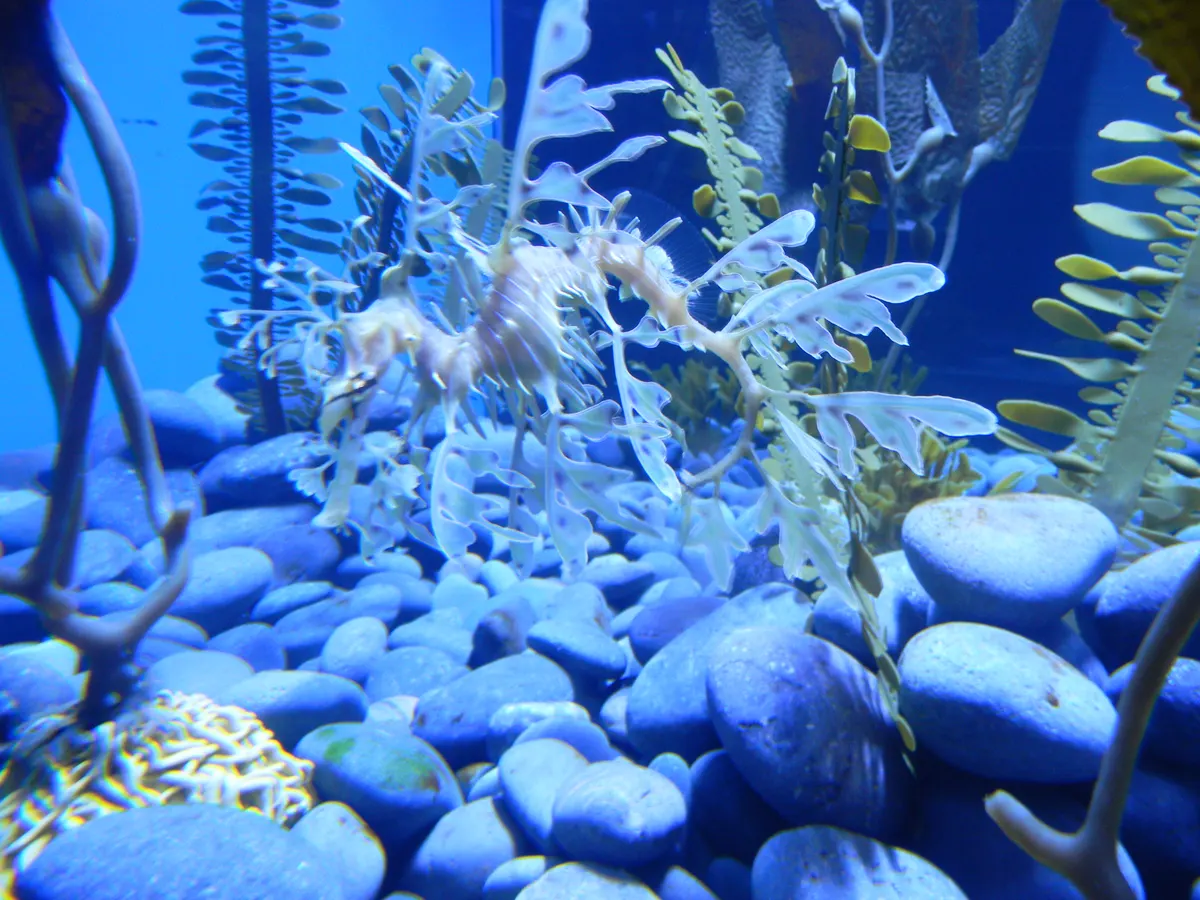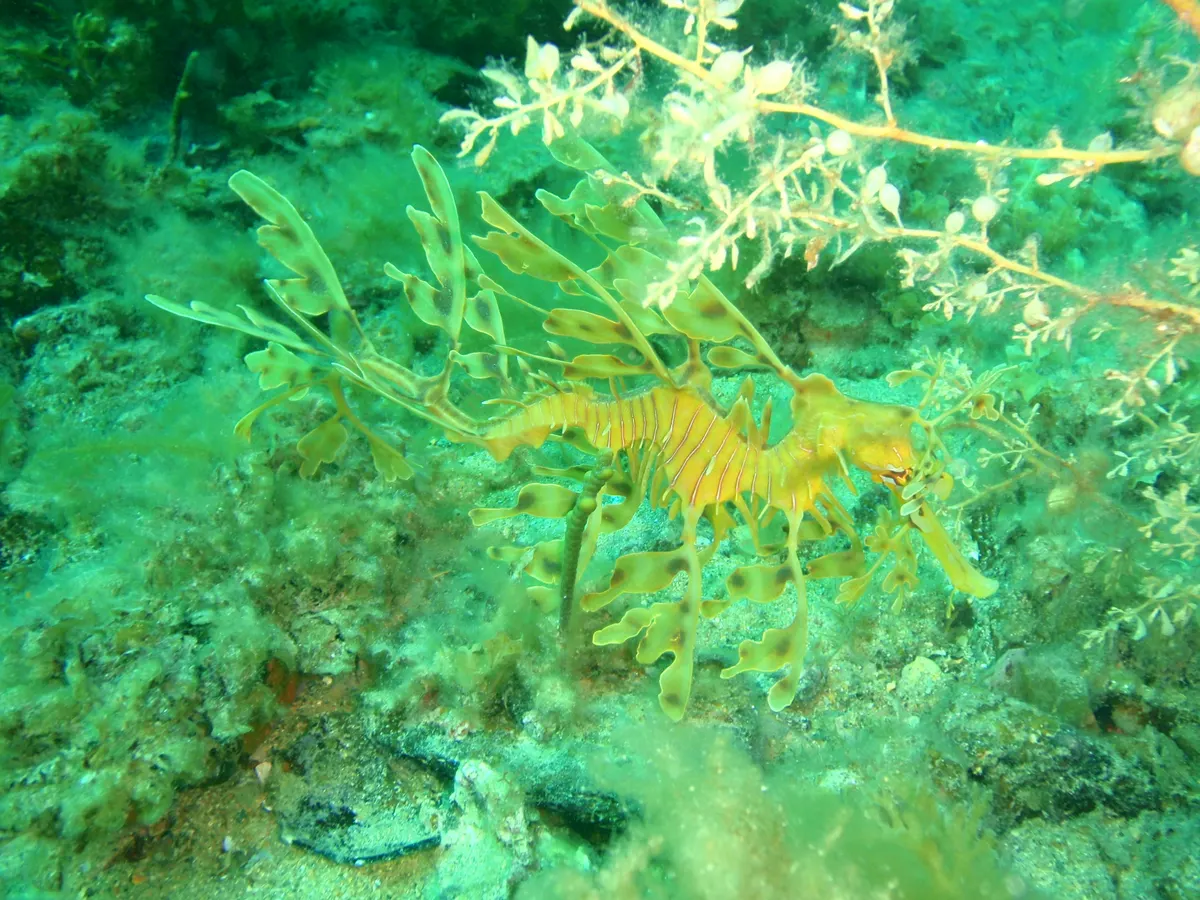
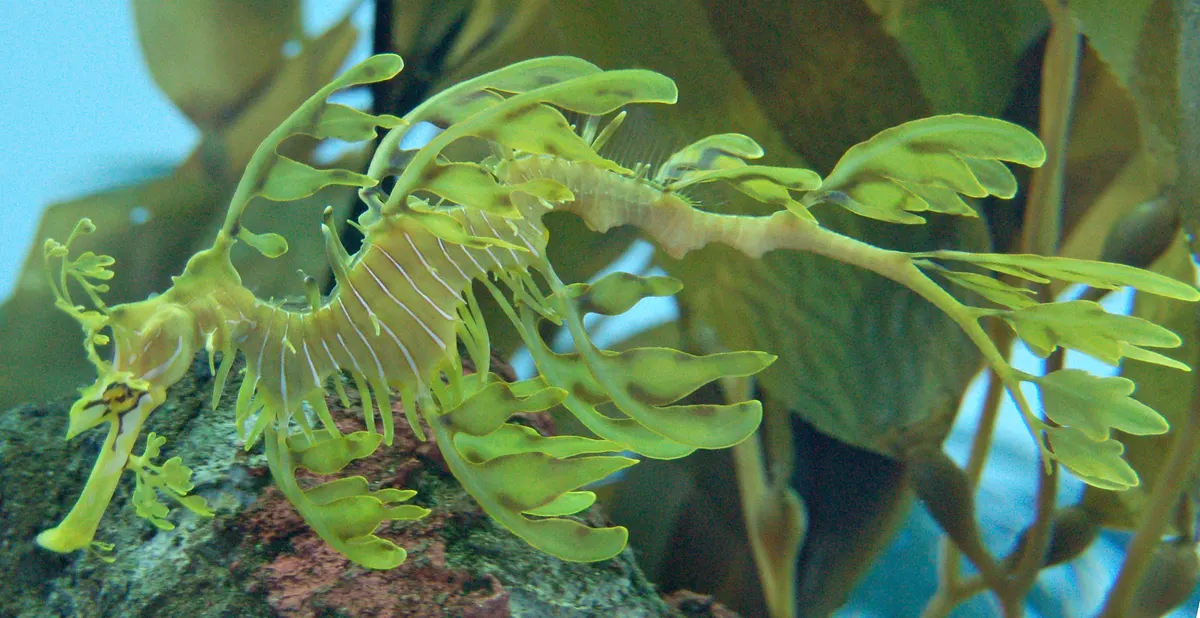
Stunning adult leafy seadragon displaying its spectacular leaf-like camouflage appendages in crystal clear water
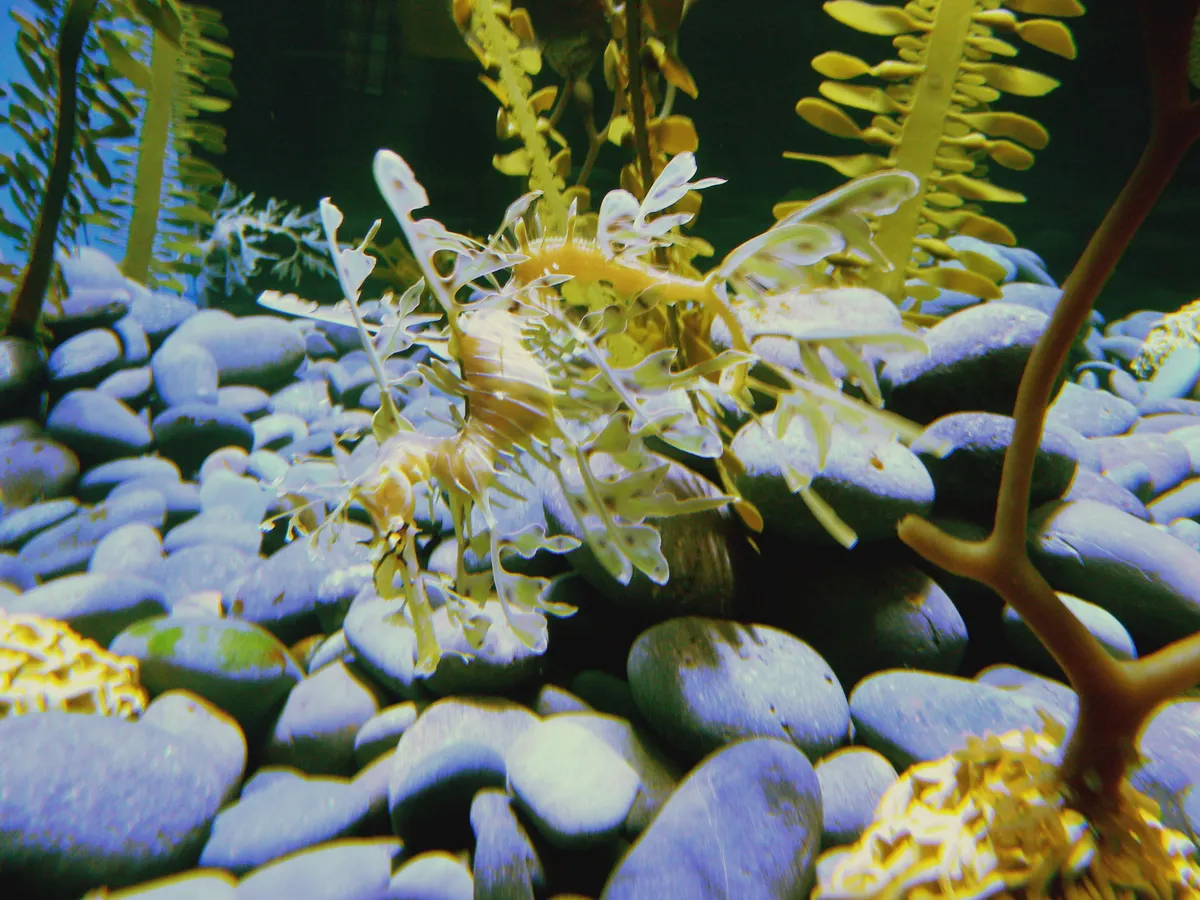
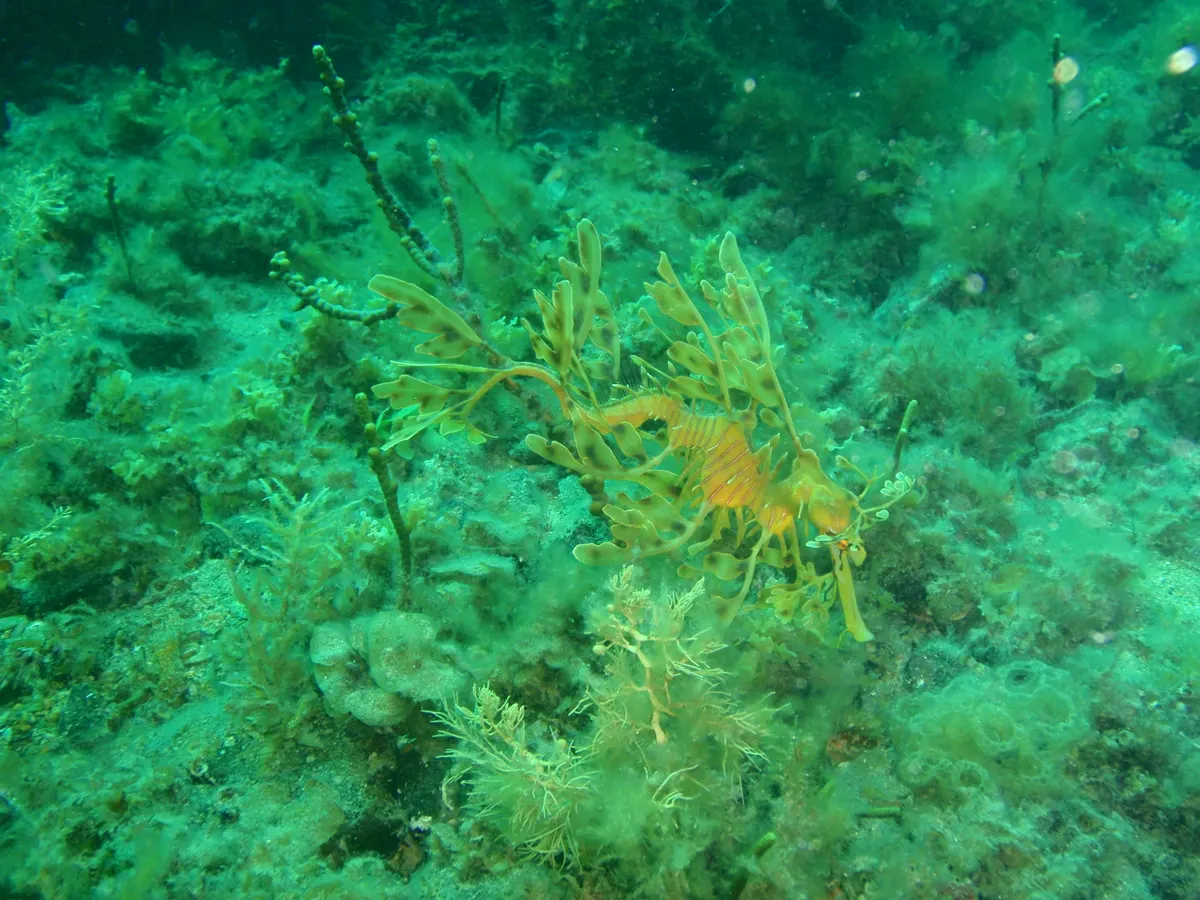
The leafy seadragon is a master of camouflage, adorned with flowing leaf-like appendages that make it look exactly like floating seaweed.
ActinopterygiiLeast Concern

Leafy Seadragon Facts

Their spectacular leaf-like appendages are used entirely for camouflage, not swimming. They steer using tiny, transparent fins that beat rapidly to move them along.

Leafy seadragons drift through temperate reefs and seagrass beds along southern Australia. Leaf-like skin lobes break up their outline among kelp, while a narrow snout quietly draws in tiny crustaceans and the male carries developing eggs beneath his tail.
By · Updated

Quick Facts

Leafy Seadragon at a glance

Phycodurus equesSyngnathiformesSyngnathidae

About their home

Kind of animal

Actinopterygii

Where they live

What they eat

How safe?

Least Concern

Size and speed

How heavy

4 ounces – 8 ounces

How long

10 inches – 14 inches

How fast

Very slow and gentle drift swimmer, mimicking unattached swaying seaweed

Lifespan

7 to 10 years

Core article

Leafy Seadragon: ecology and life history

A closer look at habitat, diet, behavior, reproduction, and conservation.

Start here

Leafy Seadragon Facts: The Master of Marine Illusion

The leafy seadragon (Phycodurus eques) is among the most heavily camouflaged fish in the world's oceans. Found in the cool, temperate waters off the southern and western coasts of Australia, it closely resembles the drifting seaweed it lives among. Leaf-like appendages extend across its entire body, and it is a slow swimmer that relies on this camouflage rather than speed. A close relative of the seahorse, it has an exclusively crustacean diet drawn through a toothless snout, and males carry the developing young (male pregnancy).

Taxonomy and Evolution

The leafy seadragon is a highly specialized marine teleost fish.

  • Kingdom: Animalia
  • Phylum: Chordata
  • Class: Actinopterygii
  • Order: Syngnathiformes
  • Family: Syngnathidae
  • Genus: Phycodurus
  • Species: P. eques

The family Syngnathidae encompasses seahorses, pipefishes, and seadragons. The leafy seadragon is the sole recognized species within the genus Phycodurus. It evolved in the highly specific and stable kelp forests of the Great Southern Reef. Over millions of years, selective pressure from visual predators drove the extreme morphological development of its skin into the elaborate fronds that perfectly mimic native Sargassum and kelp species.

Anatomy and Physical Characteristics

A fully grown leafy seadragon is a small, fragile creature, measuring between 10 and 14 inches in length and weighing merely 4 to 8 ounces. Its anatomy is a masterclass in deception.

  • Leaf-Like Appendages: The most defining feature of the leafy seadragon is its profusion of dermal appendages. These structures are not fins; they contain no bones or muscles and are completely useless for propulsion. They serve solely to break up the fish's outline, creating flawless crypsis.
  • Locomotion: To move, the seadragon relies on tiny, almost entirely transparent pectoral fins near its neck for steering, and a delicate dorsal fin on its back for propulsion. These fins beat rapidly, but the fish moves incredibly slowly, intentionally mimicking the gentle, aimless swaying of unattached seaweed caught in the ocean swell.
  • Tubular Snout: Like all syngnathids, it has a fused jaw that forms a long, rigid, pipe-like snout. It lacks teeth and a true stomach.
  • Ocular Independence: Their eyes are capable of independent movement. This allows a stationary seadragon to keep one eye focused on the kelp canopy above for predatory fish, while the other eye scans the immediate water column for microscopic prey.

Habitat and Distribution

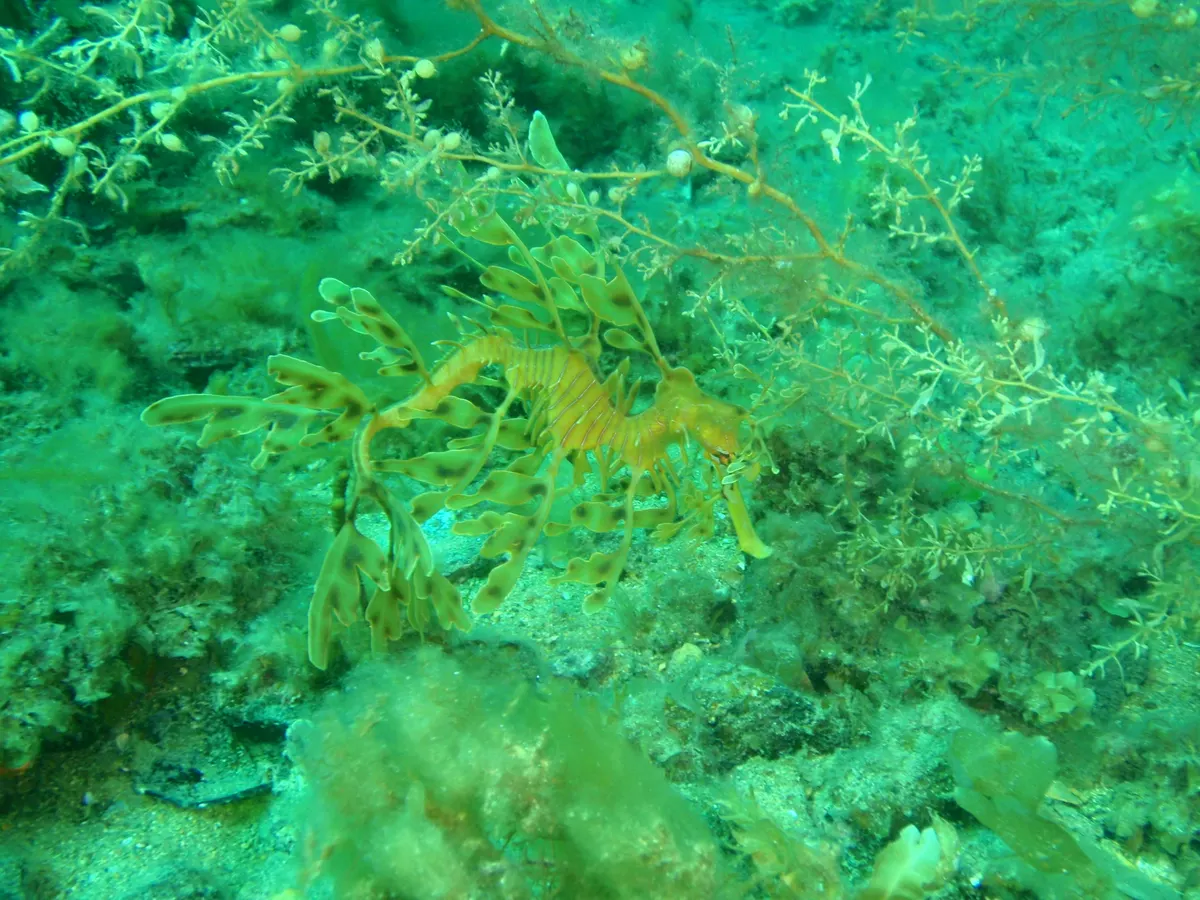
Leafy seadragon perfectly concealed within a dense kelp forest display
Kelp forests offer pristine shelter where seadragons blend perfectly into the gentle swaying currents.

The leafy seadragon is strictly endemic to the southern and western coasts of Australia, ranging from the Geraldton region in Western Australia across the Great Australian Bight to the waters of Victoria.

Their habitat requirements are highly specific:

  • Kelp Forests: They rely entirely on dense rocky reefs covered in macroalgae (kelp), which provide the physical structure they need to blend in.
  • Seagrass Meadows: They are also found in dense Posidonia seagrass beds where their prey is abundant.
  • Depth and Temperature: They prefer relatively shallow coastal waters, typically between 10 and 100 feet deep, where the temperate water remains cool year-round.

Diet and Feeding Strategies

Leafy seadragon hovering attentively in search of floating mysid shrimp
A single adult leafy seadragon can consume upwards of several thousand tiny mysid shrimp every day.

Because it lacks a stomach, the leafy seadragon has a very rapid digestive system and must feed almost continuously to survive. It is a strict carnivore.

Its primary diet consists of:

  • Mysid shrimp (often referred to locally as "sea lice")
  • Zooplankton
  • Small amphipods
  • Larval fish

The seadragon employs a highly specialized ambush hunting technique known as pivot feeding. Relying on its perfect camouflage, it drifts effortlessly toward a swarm of mysid shrimp. Once within striking distance (a matter of millimeters), it rapidly expands the buccal cavity in its lower jaw. This creates a sudden, powerful localized vacuum, sucking the prey whole into its tubular snout with a distinct "clicking" sound.

Social Structure and Behavior

Adult leafy seadragon floating peacefully in a sheltered bay habitat
Seadragons are gentle, slow-moving creatures that rely entirely on their flawless camouflage to evade large predatory fish.

Leafy seadragons are generally solitary, highly cryptic animals. They are slow-moving and tend to establish very small home ranges—sometimes remaining in the exact same patch of kelp for days or weeks at a time. They have no defenses other than their camouflage; if spotted by a predator, they are completely vulnerable.

During the breeding season, however, they engage in complex and highly stylized courtship rituals. Males and females will seek each other out and perform a "mirroring" dance, where they mimic each other's movements, swimming side-by-side in synchronized patterns for hours. During this period, their skin may take on brighter, more vibrant hues of yellow and orange to signal readiness to mate.

Life Cycle and Reproduction

Juvenile leafy seadragon navigating a seagrass meadow
Young seadragons are highly vulnerable to rough sea currents and depend heavily on dense seagrass cover for survival.

The reproductive cycle of the leafy seadragon is one of the most remarkable in the animal kingdom, characterized by exclusive male incubation.

  • Egg Transfer: Following a successful courtship dance, the female produces between 250 and 300 bright pink, heavily yolked eggs. In a delicate maneuver, she deposits these eggs directly onto the male's tail.
  • The Brood Patch: Unlike seahorses, which have an enclosed pouch, the male leafy seadragon possesses an exposed brood patch on the underside of his tail. During the breeding season, this patch becomes highly vascularized (rich in blood vessels). The eggs become firmly embedded in the tissue, and the male fertilizes them. He provides the developing embryos with oxygen via this capillary network.
  • Incubation: The male carries and protects the eggs for approximately 4 to 9 weeks, depending heavily on the ambient water temperature.
  • Birth: When the eggs are ready to hatch, the male vigorously pumps his tail, rubbing against rocks and kelp to assist the fry in breaking free. The newly hatched seadragons are miniature, perfect replicas of the adults, measuring less than an inch long.
  • Independence: There is zero parental care following hatching. The fry are immediately independent and must rely on their innate camouflage and a remnant yolk sac before they begin hunting micro-plankton. Out of a clutch of 300, only a tiny fraction (often less than 5%) will survive to adulthood.

Conservation Status and Threats

Leafy seadragon drifting in the clear southern Australian coastal waters
Stricter legal protections and habitat conservation measures have successfully curbed the illegal collection of wild seadragons.

(Population and conservation trend data sourced from the IUCN Red List of Threatened Species)

The leafy seadragon is currently assessed as Least Concern by the IUCN, largely due to extremely strict, proactive environmental legislation enacted by the Australian government in the 1990s.

Prior to these protections, leafy seadragons were severely threatened by:

  1. The Aquarium Trade: Their stunning appearance made them highly prized by unscrupulous collectors, who decimated local populations. It is now strictly illegal to take or export them without highly restricted permits.
  2. Bycatch: They are occasionally caught and killed in commercial fishing trawls.
  3. Habitat Degradation: This remains the most significant ongoing threat. Coastal development, agricultural runoff, and dredging can permanently destroy the delicate seagrass meadows and kelp forests that are absolutely essential for their survival.

References and Authoritative Sources

Leafy Seadragon: classification and fun facts

Classification

Scientific Taxonomy
  1. Kingdom

    Animalia

  2. Phylum

    Chordata

  3. Class

    Actinopterygii

  4. Order

    Syngnathiformes

  5. Family

    Syngnathidae

  6. Genus

    Phycodurus

  7. Species

    P. eques

Did You Know?

Fun Facts

1

Their spectacular leaf-like appendages are used entirely for camouflage, not swimming. They steer using tiny, transparent fins that beat rapidly to move them along.

2

Like their close seahorse relatives, it is the male leafy seadragon that gets pregnant, carrying and incubating the eggs on a specialized brood patch on the underside of his tail.

3

They lack teeth and a stomach, meaning they must feed near-continuously by using their long tubular snout to vacuum up thousands of tiny mysid shrimp every day.

4

The leafy seadragon is the official marine emblem of South Australia.

5

Their eyes can move independently of one another, allowing them to scan for potential predators and floating shrimp at the exact same time.

6

Leafy seadragons can change color slightly depending on their diet, age, location, and stress level.

Common Questions

FAQ about Leafy Seadragon

Select a question to reveal the answer.

What is a leafy seadragon?

A leafy seadragon is a spectacular marine fish belonging to the same family as seahorses and pipefish, famous for its elaborate leaf-like camouflage.

Where do leafy seadragons live?

They are endemic to the cool coastal waters, seagrass meadows, and rocky kelp reefs of southern Australia, from Western Australia across to Victoria.

Is a leafy seadragon a seahorse?

While they belong to the same family (Syngnathidae), leafy seadragons are in a distinct genus. Unlike seahorses, seadragons cannot curl their tails around seagrass stems to anchor themselves.

What do leafy seadragons eat?

They are strict carnivores that feed almost exclusively on swarms of tiny mysid shrimp, as well as zooplankton and small amphipods.

How do leafy seadragons reproduce?

The female deposits up to 300 bright pink eggs onto a specialized vascularized brood patch located on the underside of the male's tail. The male fertilizes and incubates the eggs until they hatch as independent miniature fry.

Are leafy seadragons endangered?

They are currently listed as Least Concern thanks to strict Australian legal protections that stopped illegal collection for the aquarium trade, though they remain sensitive to coastal pollution and seagrass habitat loss.