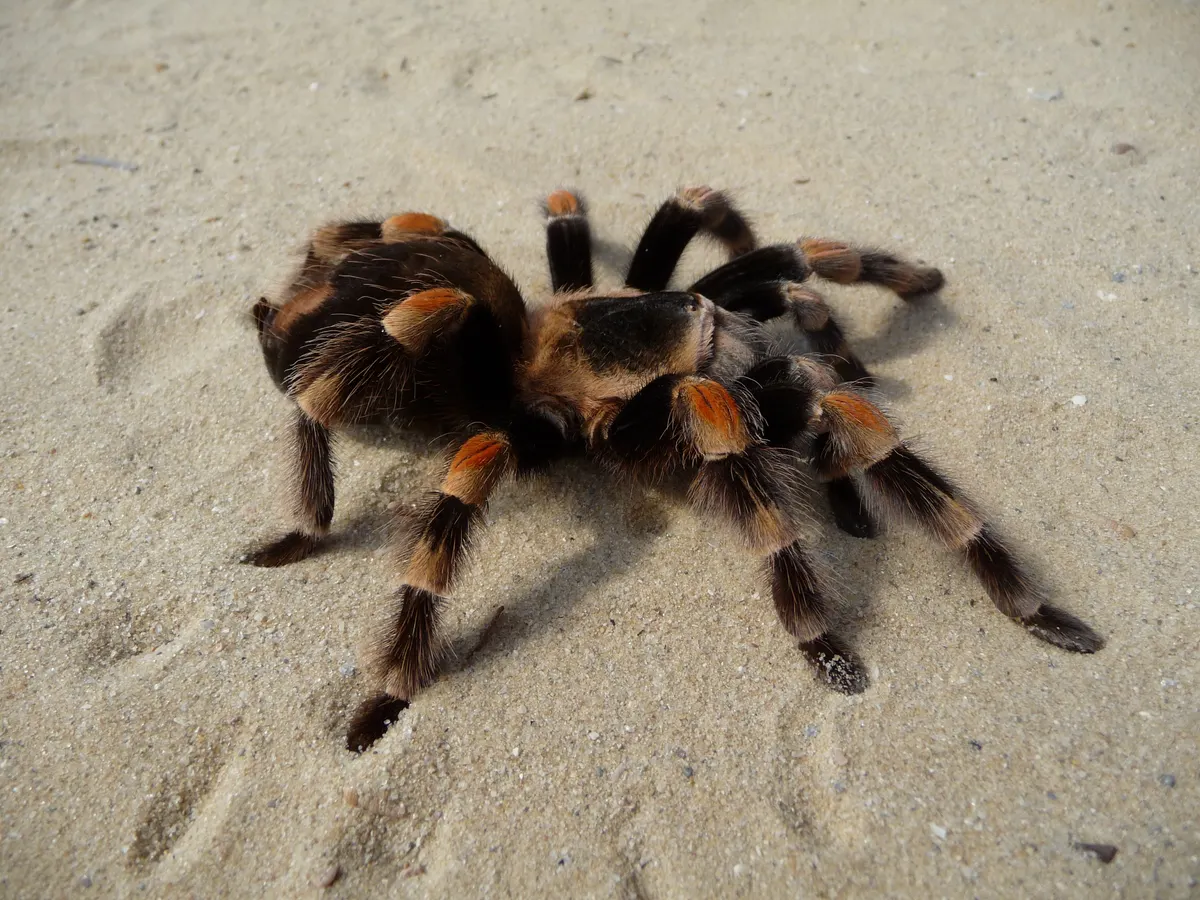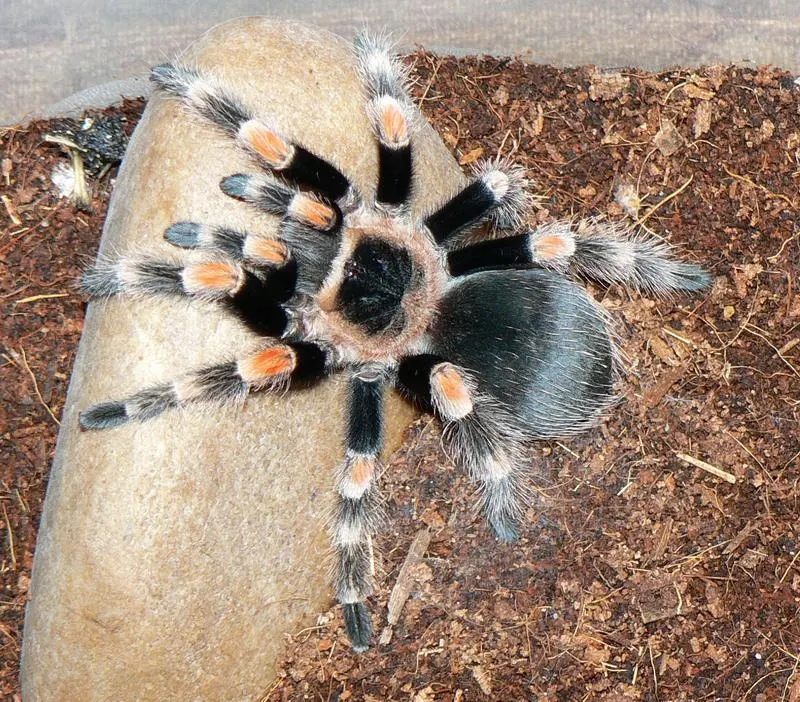
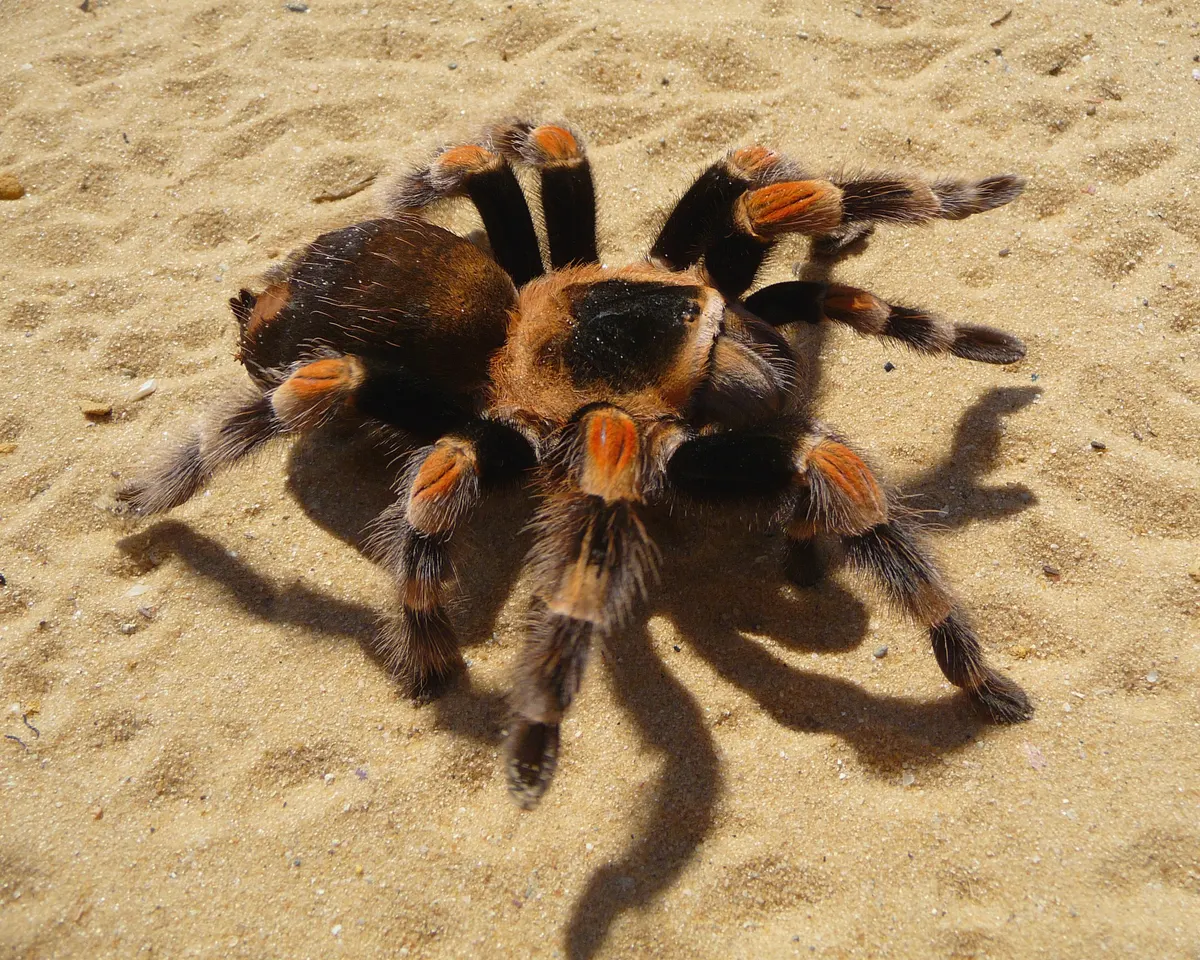
Mexican redknee tarantula showing bright orange-red knee bands on dark legs
The Mexican redknee tarantula is famous for bold orange-red bands on its joints.
ArachnidaVulnerable

Mexican Redknee Tarantula Facts

Mexican redknee tarantulas are famous for orange-red bands that look painted onto their dark knee joints.

The Mexican redknee tarantula is a long-lived burrowing spider of Mexico's Pacific dry forests. It hunts insects at night, relies on urticating hairs for defense, and is Vulnerable to habitat loss and illegal collection.
By · Updated

Quick Facts

Mexican Redknee Tarantula at a glance

Brachypelma hamoriiAraneaeTheraphosidae

About their home

Kind of animal

Arachnida

Where they live

What they eat

How safe?

Vulnerable

Size and speed

How heavy

0.5 ounces – 1.5 ounces

How long

1.5 inches – 2.5 inches (body)

How fast

Slow walking with quick short dashes when startled

Lifespan

Females often 15 to 30 years; males much shorter as adults

Core article

Mexican Redknee Tarantula: ecology and life history

A closer look at habitat, diet, behavior, reproduction, and conservation.

Start here

Mexican Redknee Tarantula

Among the leaf litter and rocky slopes of Mexico's Pacific dry forests lives one of the world's most recognizable spiders: the Mexican redknee tarantula (Brachypelma hamorii). Dark legs banded with bold orange-red "knees," a velvet abdomen, and a patient sit-and-wait style make it easy to identify and an important wild predator of insects. Despite the fierce looks it is shy — spending daylight in a silk-lined burrow and preferring to flick itchy defense hairs or simply walk away rather than confront a human.

A Shy Ambush Hunter With Itchy Defense Hairs

An adult redknee has a stocky body about 1.5 to 2.5 inches long, with a much wider leg span that makes it look bigger, carrying the classic spider kit of eight walking legs, two pedipalps, and fanged chelicerae. The signature orange-red bands sit at the leg joints ("knees") against dark femurs and a hairy abdomen, and dense body hairs pick up faint vibrations through soil and silk to sense prey and danger in the dark. Females are heavier-bodied; mature males become leggier and grow specialized palpal bulbs for mating. Having no hard wings or shell to expand, a tarantula grows only by molting, leaving a whole shed exoskeleton behind. It belongs to the true-tarantula family Theraphosidae and the New World genus Brachypelma; long sold in the pet trade as Brachypelma smithi, the familiar orange-kneed animal is now usually recognized as B. hamorii, with true smithi a separate, more restricted Pacific species.

Where Mexican Redknee Tarantulas Live

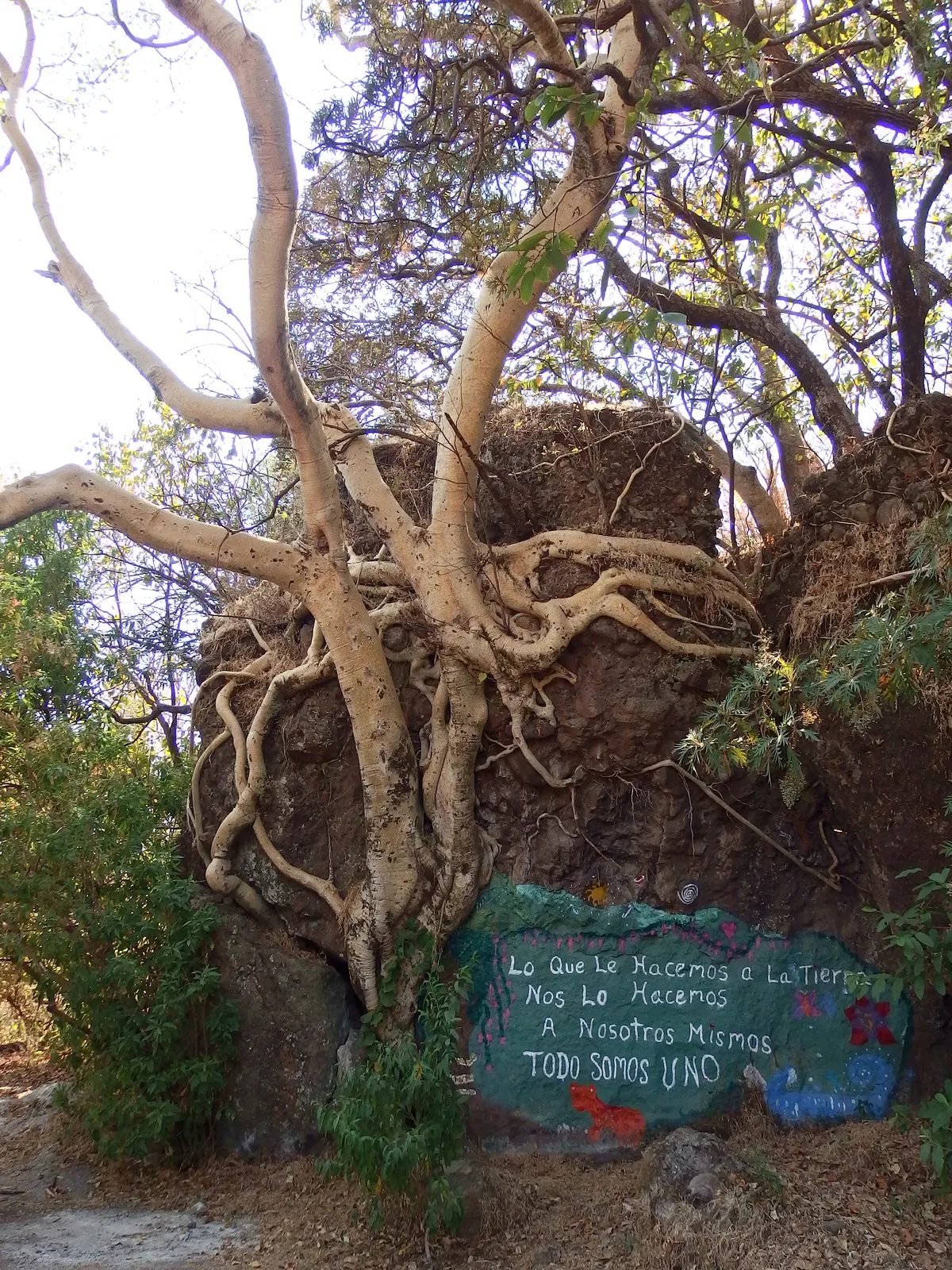
Old amate tree standing in Mexican tropical dry deciduous forest near Tepoztlán
Seasonal dry forest floors offer burrows, shade, and insect-rich leaf litter.

In the wild Brachypelma hamorii occupies tropical dry forest and scrub along Mexico's central Pacific slope — Colima, Jalisco, Michoacán, Guerrero — landscapes that swing from rainy green months to long dry spells when the trees drop their leaves. The spider digs or claims a burrow under rocks, roots, and litter, lining it with silk for grip and humidity control, and hunts from ambush on the ground rather than building canopy webs. It is common in legal captive care, but wild populations stay tied to intact dry-forest patches increasingly fragmented by farming, roads, and coastal development.

What Mexican Redknee Tarantulas Eat

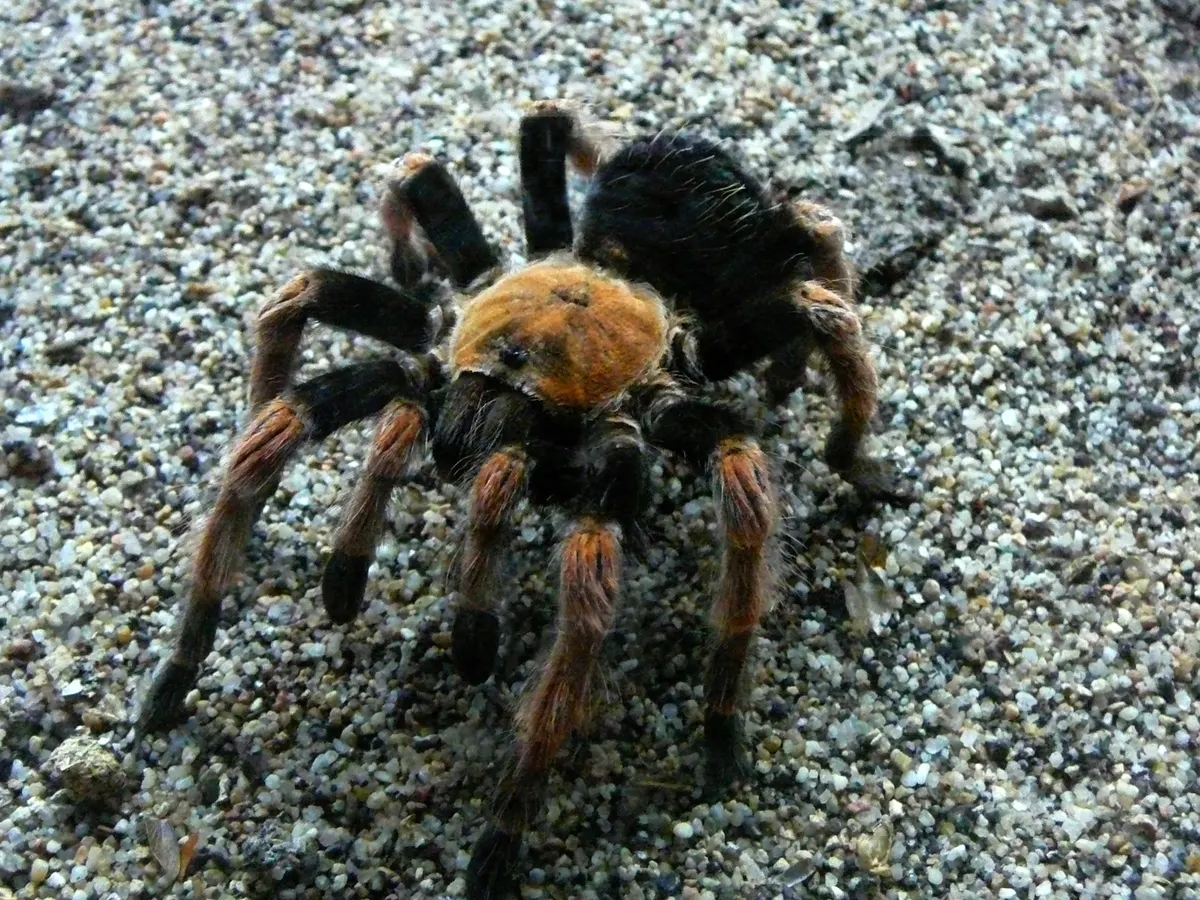
Mexican redknee tarantula walking across a rocky surface while hunting
Carnivorous adults wait near burrow mouths for crickets, beetles, and similar prey.

Mexican redknees are carnivores that wait near the burrow mouth at night for crickets, beetles, grasshoppers, and other small arthropods. When prey steps within range the spider lunges, seizes it in its fangs, and injects venom that quickly subdues a small invertebrate, then digestive fluids liquefy the soft tissues so it can drink the meal. No dramatic chase or sticky web is needed — patience plus vibration sensing is enough — and in healthy dry forest this hunting keeps insect numbers down and returns nutrients to the soil web.

Behavior: Solitary, With a Hair-Flicking Defense

Adult Mexican redknee tarantula facing forward on a rock ledge
Outside mating season, each spider usually keeps its own burrow territory.

These tarantulas are solitary, each keeping its own burrow and hunting space outside brief mating encounters — hiding by day, waiting and wandering short distances by night. Threatened, a redknee may rear up, raise its front legs, or flick urticating hairs from its abdomen — tiny barbed hairs that itch skin and eyes — and it rarely bites, preferring retreat. Molting is a high-stakes, quiet event: appetite drops beforehand and the spider goes still, then emerges pale and soft until the new exoskeleton hardens, which is why calm observation works far better than forcing contact.

Life Cycle: Egg Sacs and a Long-Lived Female

Young Mexican redknee tarantula after a molt showing developing color bands
Juveniles keep molting for years before their red knee bands look fully adult.

After mating, a female spins a silk egg sac that may hold a few hundred eggs; the spiderlings hatch inside and later disperse to solitary lives. Growth is measured in molts, each shed increasing size and gradually brightening the knee bands. Females can live many years — often into their teens or beyond — while an adult male usually has only one breeding season after his final molt. Because females mature slowly and invest heavily in each brood, populations can't rebound quickly when too many adults are taken from the wild.

Conservation: Vulnerable to Collecting and Habitat Loss

Brachypelma hamorii is listed as Vulnerable, pressured by conversion of dry forest to farmland and settlement and by illegal collection for the international pet trade; the genus is regulated under CITES Appendix II to control cross-border trade. Responsible captive breeding eases demand for wild-caught animals, but only habitat protection — leaving burrow-rich forest and scrub intact — keeps free-living redknees in place, and clear public information about their shy nature helps reduce needless killing out of fear.

References and Authoritative Sources

Mexican Redknee Tarantula: classification and fun facts

Classification

Scientific Taxonomy
  1. Kingdom

    Animalia

  2. Phylum

    Arthropoda

  3. Class

    Arachnida

  4. Order

    Araneae

  5. Family

    Theraphosidae

  6. Genus

    Brachypelma

  7. Species

    B. hamorii

Did You Know?

Fun Facts

1

Mexican redknee tarantulas are famous for orange-red bands that look painted onto their dark knee joints.

2

When worried, they can flick tiny itchy hairs from the abdomen instead of biting first.

3

Females can live for decades, while adult males usually live only one mating season.

4

Scientists now call the common pet-trade Mexican redknee Brachypelma hamorii; older books often said B. smithi.

5

They spend daylight hours in silk-lined burrows and come out mostly at night.

6

A tarantula must molt—shed its old exoskeleton—to grow bigger and repair damage.

Common Questions

FAQ about Mexican Redknee Tarantula

Select a question to reveal the answer.

What is a Mexican redknee tarantula?

It is a colorful ground-dwelling spider from Mexico's Pacific dry forests. Its scientific name is Brachypelma hamorii, and it is known for bright orange-red bands on its legs.

Where do Mexican redknee tarantulas live?

They live in tropical dry forest and scrub along Mexico's central Pacific slope, especially in states such as Colima, Jalisco, Michoacán, and Guerrero.

What do Mexican redknee tarantulas eat?

They are carnivores that hunt insects and other small arthropods, including crickets, beetles, and grasshoppers.

Are Mexican redknee tarantulas dangerous to people?

No. They are shy. Their mild venom is used for small prey, and they usually prefer to flee or flick itchy hairs rather than bite people.

Why did the scientific name change?

For many years the popular Mexican redknee was called Brachypelma smithi. Taxonomists later showed the widespread redknee is usually Brachypelma hamorii, while true B. smithi is a separate species.

How long do they live?

Females can live 15 to 30 years. Males mature later and usually live only a short time after becoming adults.

Show 3 more questionsExpand
What is a baby tarantula called?

Young tarantulas are called spiderlings. They hatch from a silk egg sac and molt many times as they grow.

Are Mexican redknee tarantulas endangered?

They are listed as Vulnerable. Habitat loss and illegal collecting for the pet trade are major threats, so legal captive breeding is important.

Do they live in webs like garden spiders?

No. They use silk to line burrows and wrap egg sacs, but they do not build large sticky hunting webs. They sit-and-wait for prey near the burrow.