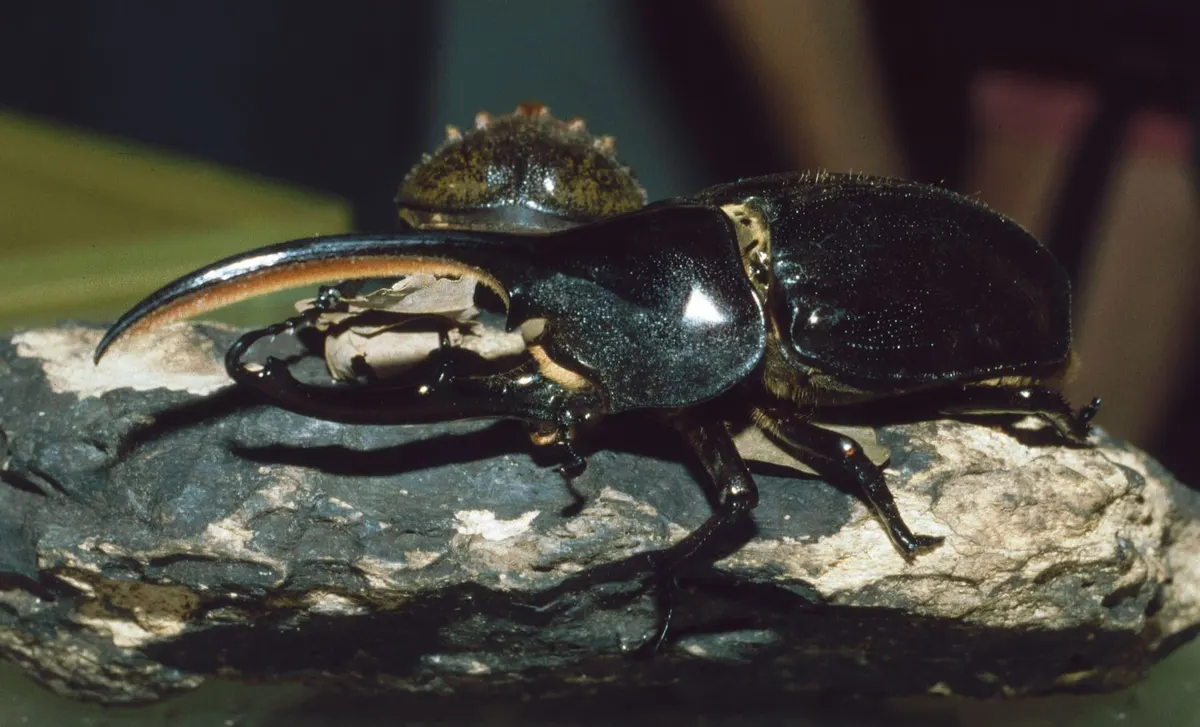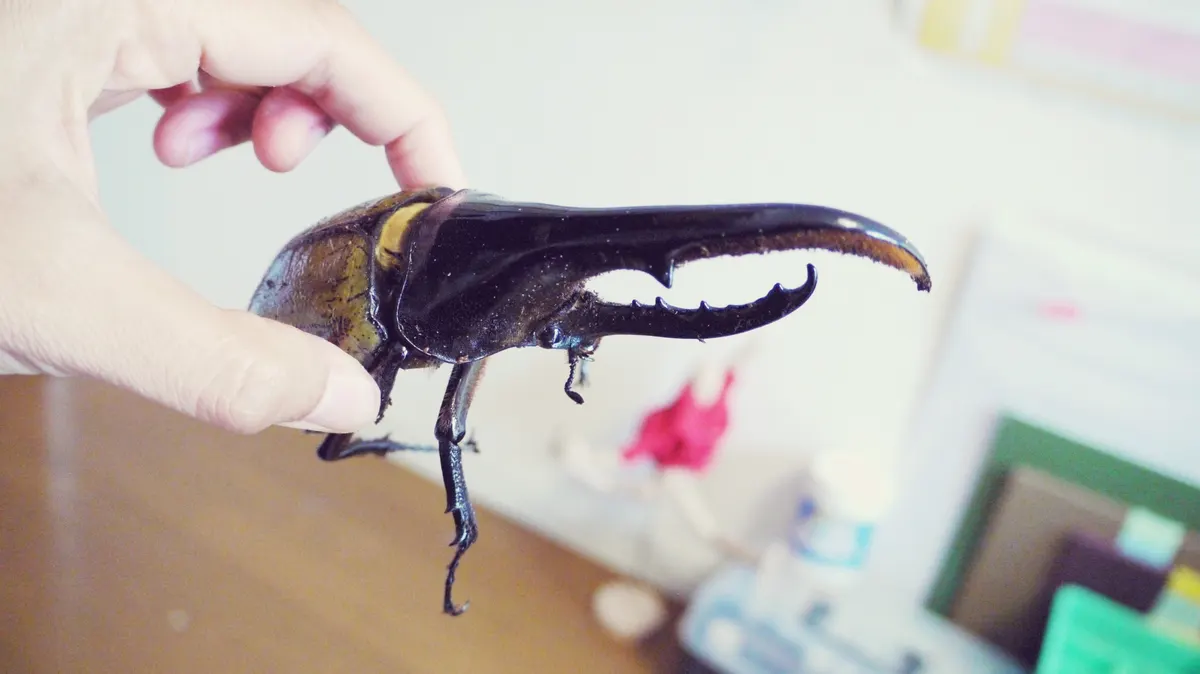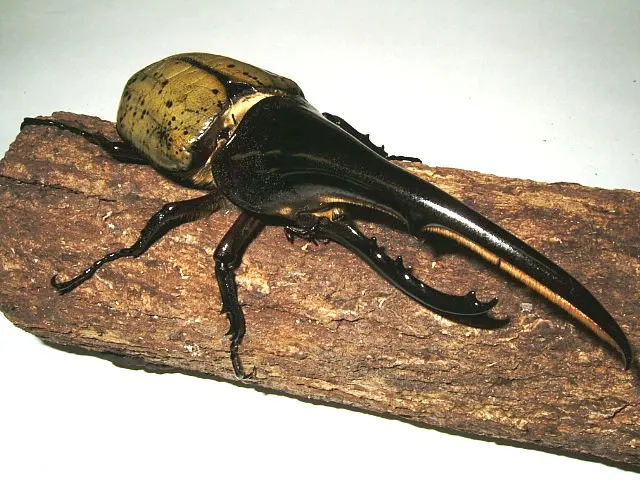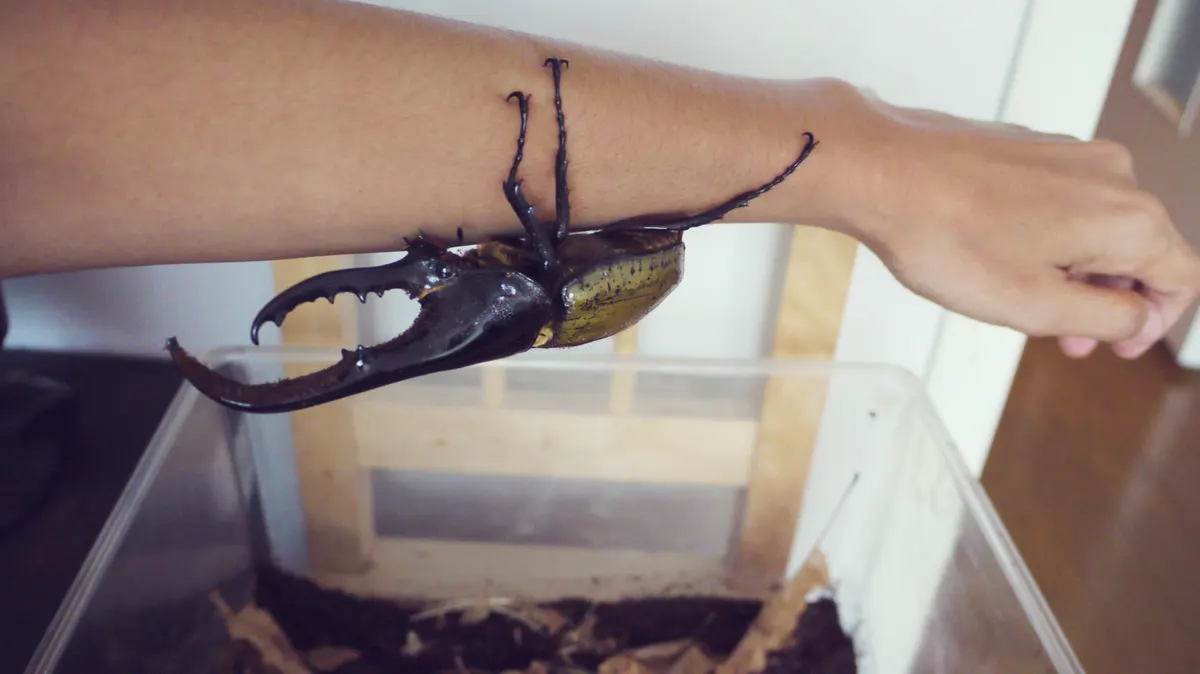
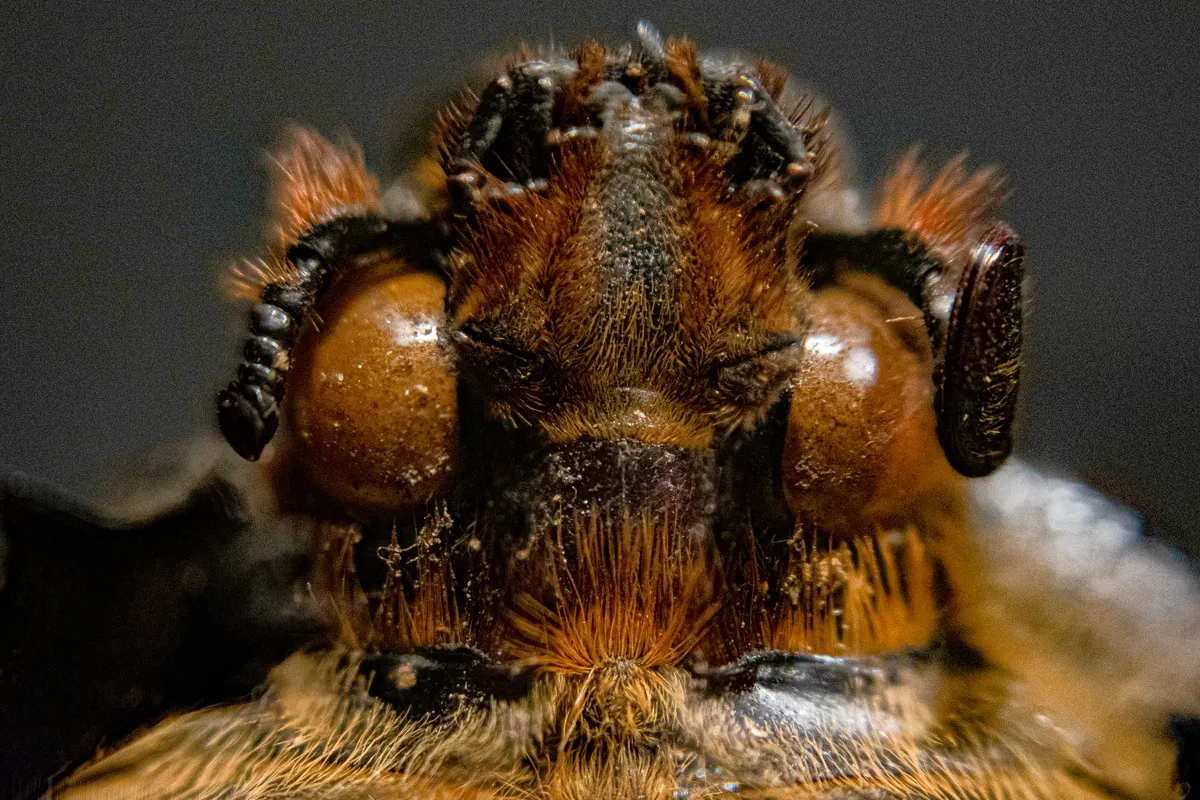
The life cycle of the Hercules beetle represents an astonishing biological metamorphosis, defined by a massive larval stage and a relatively fleeting adult existence. Following successful mating, the female seeks out a massive, decaying, fallen tree deep within the humid forest understory. She burrows into the rotting wood to lay dozens of eggs, ensuring her offspring are surrounded by an unlimited food supply upon hatching.
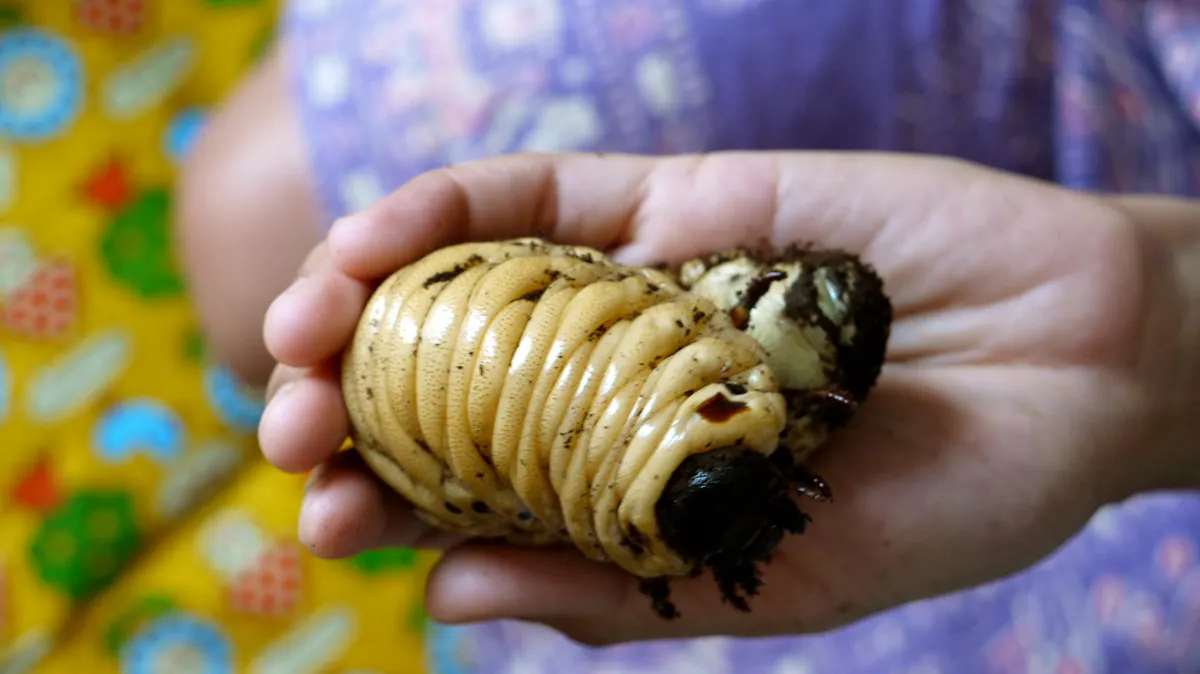
The eggs hatch in about 3 to 6 weeks, emerging as small, C-shaped grubs. This larval stage is the longest and most critical phase of their life, lasting anywhere from 1 to 2 years. The larvae do nothing but eat rotting wood, growing at an exponential rate. By the end of this stage, a Hercules beetle larva is a massive, squishy, yellowish-white grub that can weigh over 100 grams—heavier than a small bird.
Once the larva reaches maximum size, it constructs a hard, protective pupal chamber from compressed wood dust and its own feces. Inside, it undergoes complete metamorphosis, a miraculous process where its larval tissues break down and reform into the complex, armored adult. After a pupation period of several weeks, the adult beetle emerges. The sole biological imperative of the adult phase is to reproduce. In the wild, adults typically live for only about 3 to 6 months, dedicating their final days to feeding, fighting, and ensuring the continuation of their giant lineage.