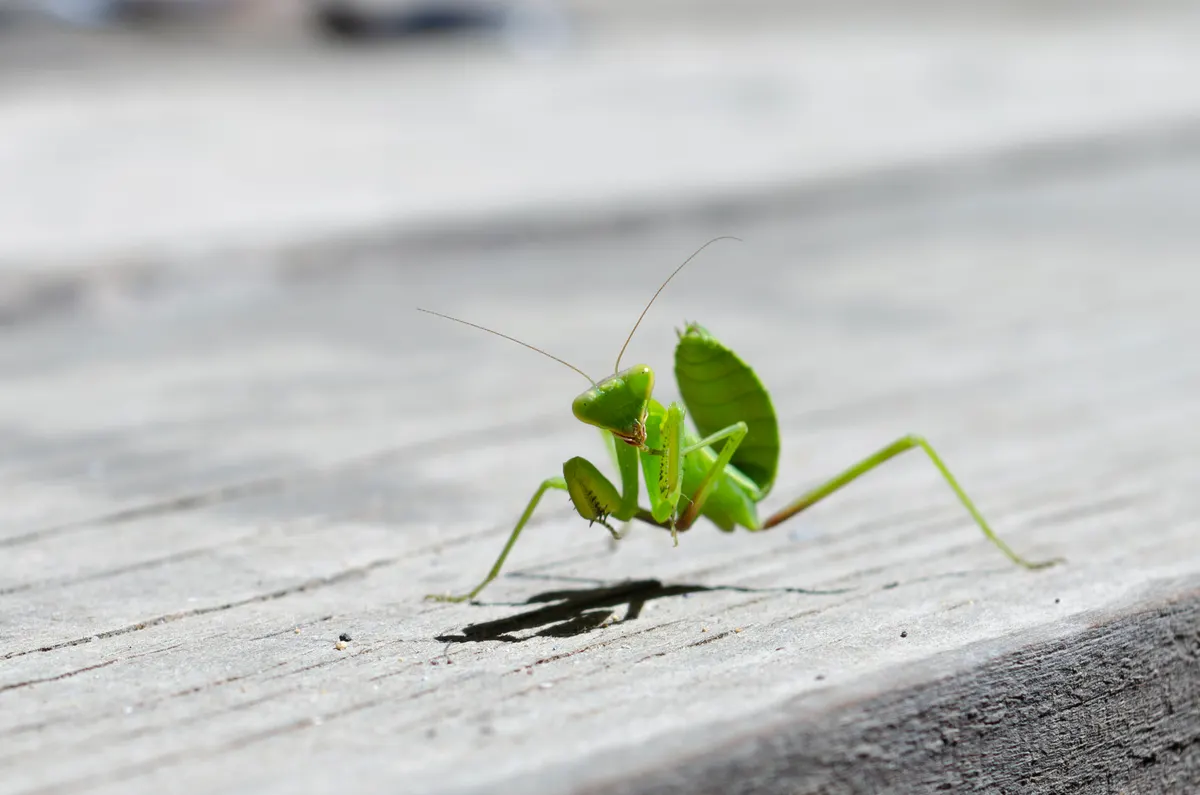
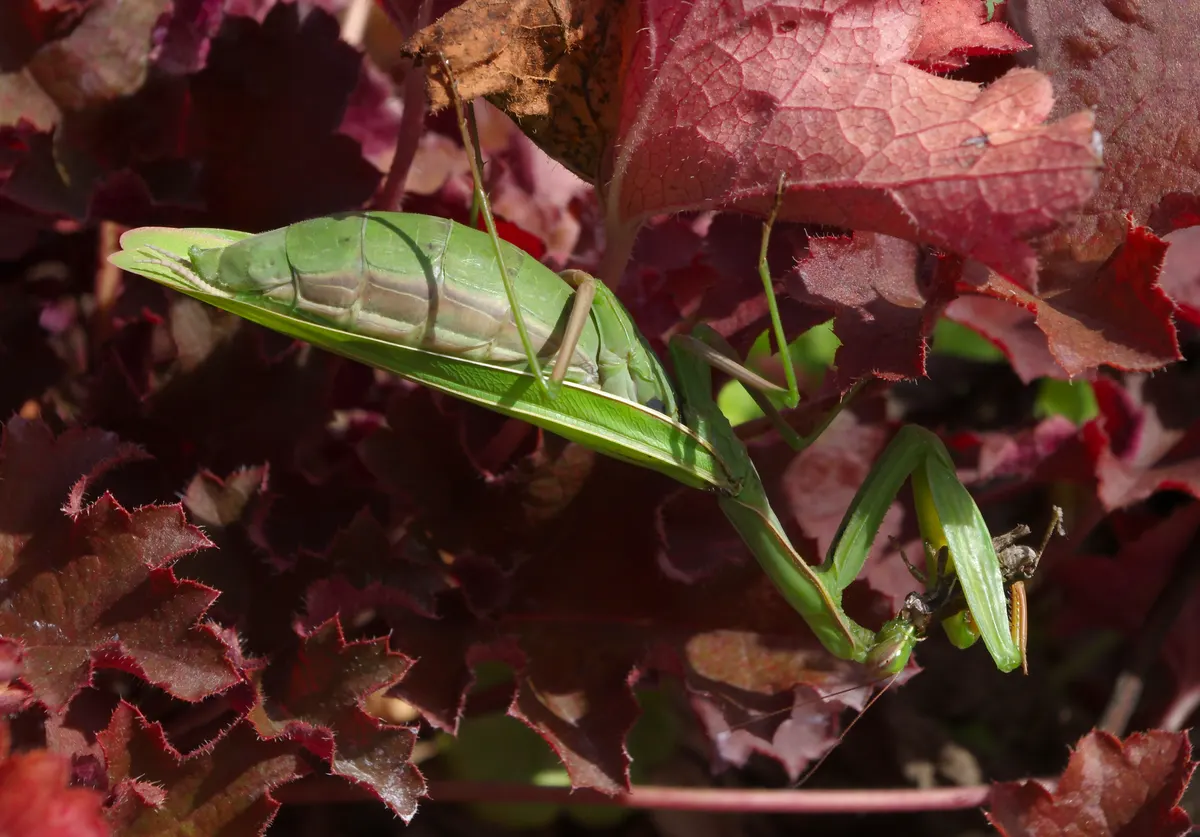
The reproductive biology of the praying mantis is infamous for the phenomenon of sexual cannibalism. During the late summer or early autumn mating season, males actively seek out females, following airborne pheromone trails. The male approaches the much larger female with extreme caution. During or immediately after copulation, the female will frequently attack and decapitate the male, consuming him entirely. From a biological perspective, this provides the female with a massive, immediate influx of vital proteins and nutrients necessary to produce a large, healthy clutch of eggs.
Following successful fertilization, the female constructs an ootheca—a specialized egg case. She extrudes a frothy, protein-rich liquid from her abdomen, depositing between 100 to 300 eggs inside it before attaching the mass to a sturdy twig or stem. The foam rapidly hardens into a tough, weather-resistant, paper-like casing that insulates the eggs through the freezing winter months.
In the spring, the eggs hatch simultaneously, releasing hundreds of miniature mantises known as nymphs. These nymphs undergo hemimetabolous development (incomplete metamorphosis). They emerge looking like tiny, wingless versions of the adults and immediately disperse to avoid eating one another. Over the course of the summer, the nymphs hunt voraciously, passing through several instars (molting stages), shedding their rigid exoskeletons to grow. After the final molt, they emerge as fully winged adults, ready to mate before the first winter frosts inevitably end their short, one-year lifespan.