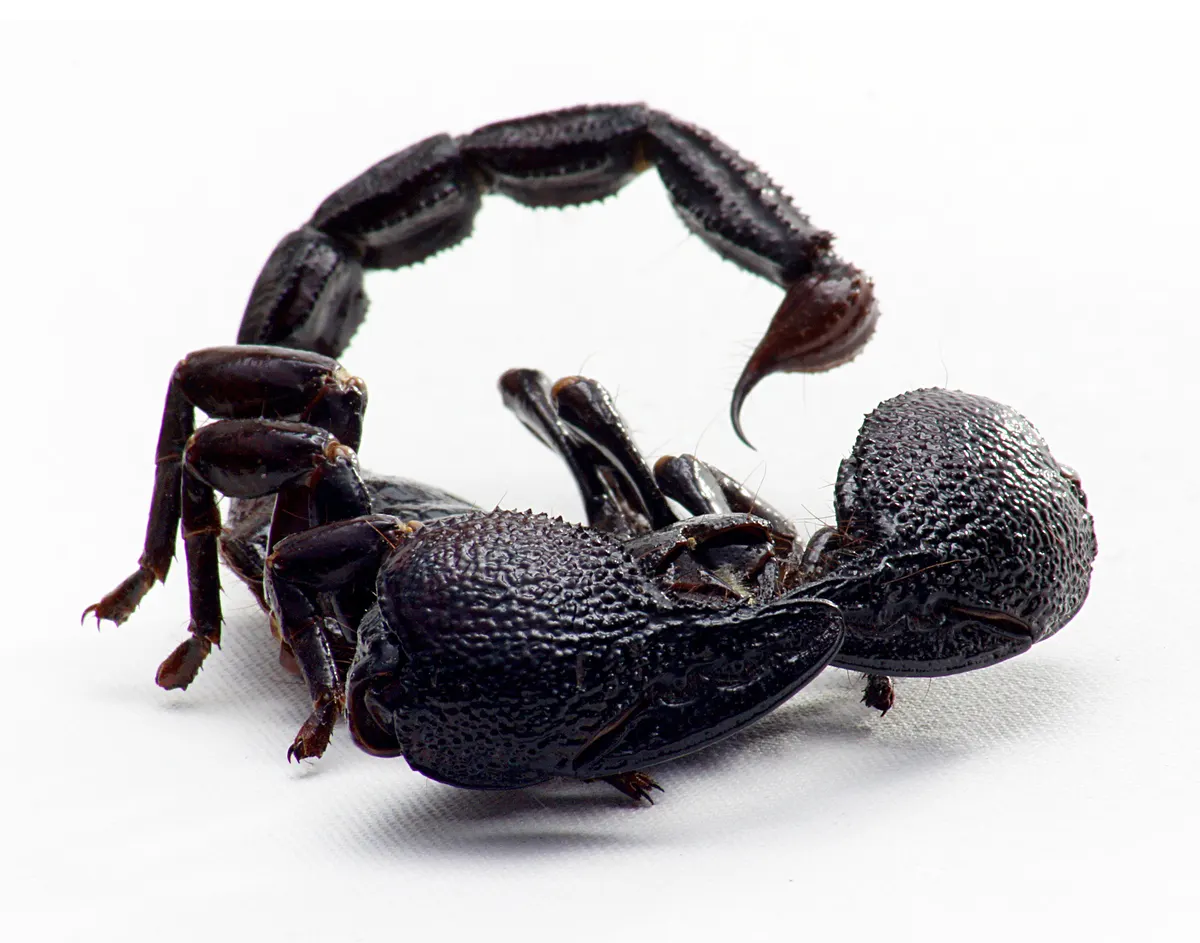
Large glossy black emperor scorpion with heavy pincers
The emperor scorpion is one of the world's largest scorpions, with massive pincers and a glossy black body.
ArachnidaNot Evaluated

Emperor Scorpion

The emperor scorpion is one of the largest scorpions in the world, reaching about 20 cm in length.

The emperor scorpion is one of the largest scorpions in the world, native to the rainforests and forest edges of West and Central Africa. It has huge pincers, mild venom, and a black body that glows blue-green under ultraviolet light.

By · Updated

Quick Facts

Emperor Scorpion at a glance

Pandinus imperatorScorpionesScorpionidae

About their home

Kind of animal

Arachnida

Where they live

What they eat

How safe?

Not Evaluated

Size and speed

How heavy

25 g – 35 g

How long

15 cm – 20 cm

How fast

Slow crawler; strikes at close range

Lifespan

Around 6 to 8 years

Core article

Emperor Scorpion: ecology and life history

A closer look at habitat, diet, behavior, reproduction, and conservation.

Start here

Emperor Scorpion

The emperor scorpion is one of the largest scorpions in the world, yet it is also one of the least aggressive. A big adult is glossy black, roughly the length of an adult hand, and armed with a pair of heavy pincers that do most of its hunting and defending. Its reputation as a dangerous animal is largely a mismatch: the venom is mild, and the scorpion prefers to grip, crush, or simply retreat rather than sting. Native to the humid forests of West and Central Africa, it has become one of the most familiar scorpions in captivity, which is both the reason many people recognize it and the main pressure on wild populations.

Anatomy and the Sting

An adult emperor scorpion measures about 15 to 20 centimeters from the front of the pincers to the tip of the tail, making it one of the largest scorpions by length and, at around 30 grams, one of the heaviest by mass. The body is divided into a broad front section carrying the legs and pincers and a segmented tail that ends in the stinger.

The most obvious features are the pedipalps, the two large pincers. In this species they are massive and granular-textured, and they handle most feeding and defense. Adults typically seize and crush prey with the pincers instead of stinging it. The tail carries venom, but the emperor scorpion's venom is mild by scorpion standards; a sting is often compared to that of a bee, though individual reactions vary and some people may be sensitive. Because it can rely on brute strength, this scorpion uses its sting mainly against larger or struggling prey and as a last line of defense.

One of the species' best-known traits is invisible in daylight. Under ultraviolet light, the cuticle fluoresces a pale blue-green. Fluorescent compounds in the outer layer of the exoskeleton absorb ultraviolet wavelengths and re-emit them as visible light. The biological function is still debated; proposed explanations include helping the animal judge light levels or find shelter, but none is firmly established.

Habitat and Distribution

Emperor scorpion in a naturalistic setting
It shelters in burrows and under logs by day, emerging at night in warm, moist forest.

The emperor scorpion lives in the tropical rainforests and forest edges of West and Central Africa. Its range covers countries such as Ghana, Togo, Benin, Nigeria, Ivory Coast, Sierra Leone, Guinea, Liberia, and parts of the Congo region. It favors hot, humid, forest environments with deep leaf litter, loose soil, and abundant cover.

Rather than roaming in the open, an emperor scorpion spends most of its time in a burrow or hidden beneath rocks, logs, and forest debris. It commonly settles in or beside termite mounds, which offer stable humidity, protection, and a reliable food source close at hand. The humid microclimate matters: like other scorpions it breathes through book lungs, paired internal structures with thin, stacked membranes that exchange gases most effectively in moist air.

Diet and Hunting

Emperor scorpion on the ground
Sensory hairs and slit organs help it detect the vibrations of nearby prey in the dark.

The emperor scorpion is a carnivore. Its wild diet is dominated by insects and other invertebrates, and termites are a major component, which fits its habit of living around termite mounds. It also takes crickets, beetles, spiders, and similar small prey. Large adults occasionally capture small vertebrates, but such prey is not a staple.

Hunting is mostly a sit-and-wait affair carried out at night. The scorpion detects a nearby animal and grabs it with the pincers, crushing or holding it while feeding. Because the pincers are powerful, adults often dispatch prey without using venom at all. The comb-like pectines on the underside of the body, described below, help the scorpion read the ground and detect prey and chemical cues as it moves.

Behavior and Family Care

Emperor scorpion resting
Young stay with the mother through their first molt before dispersing to live alone.

Emperor scorpions are nocturnal and spend the day sheltering underground or under cover. They are burrowers, using the pincers and legs to excavate and maintain retreats in soft soil and leaf litter. Compared with many scorpions they are relatively tolerant of one another, and groups are sometimes found sharing favorable sites.

A distinctive sensory adaptation is the pair of pectines, comb-like appendages on the underside of the body. These carry many tiny sensory pegs that sample the substrate, giving the scorpion information about surface texture, prey, and potential mates. Combined with sensitive hairs on the legs and pincers that pick up vibration, the pectines let the animal navigate and hunt effectively in darkness.

Maternal care sets scorpions apart from most other arachnids, and the emperor scorpion is a clear example. After giving birth, the mother gathers her young onto her back and guards them, a behavior covered in the next section.

Reproduction and Young

Emperor scorpions give live birth rather than laying eggs. Following a courtship in which the male guides the female over a deposited sperm packet, the female carries developing embryos internally for a long period, on the order of nine to twelve months. She then produces a brood of live young, commonly around 10 to 30 scorplings, though brood size varies with the size and condition of the female.

Newborn scorplings are pale, soft, and vulnerable. They immediately climb onto the mother's back, where she carries and protects them. The young remain there until their first molt, after which their exoskeletons harden and darken and they gradually begin to leave and feed on their own. This extended maternal care improves early survival but also means the species reproduces slowly, a factor relevant to how it withstands collection.

Taxonomy and Relatives

The emperor scorpion, Pandinus imperator, belongs to the class Arachnida, the order Scorpiones, and the family Scorpionidae, a group of typically large, burrowing scorpions. The genus Pandinus contains several similar African species, and emperor scorpions are sometimes confused in the trade with close relatives that look alike.

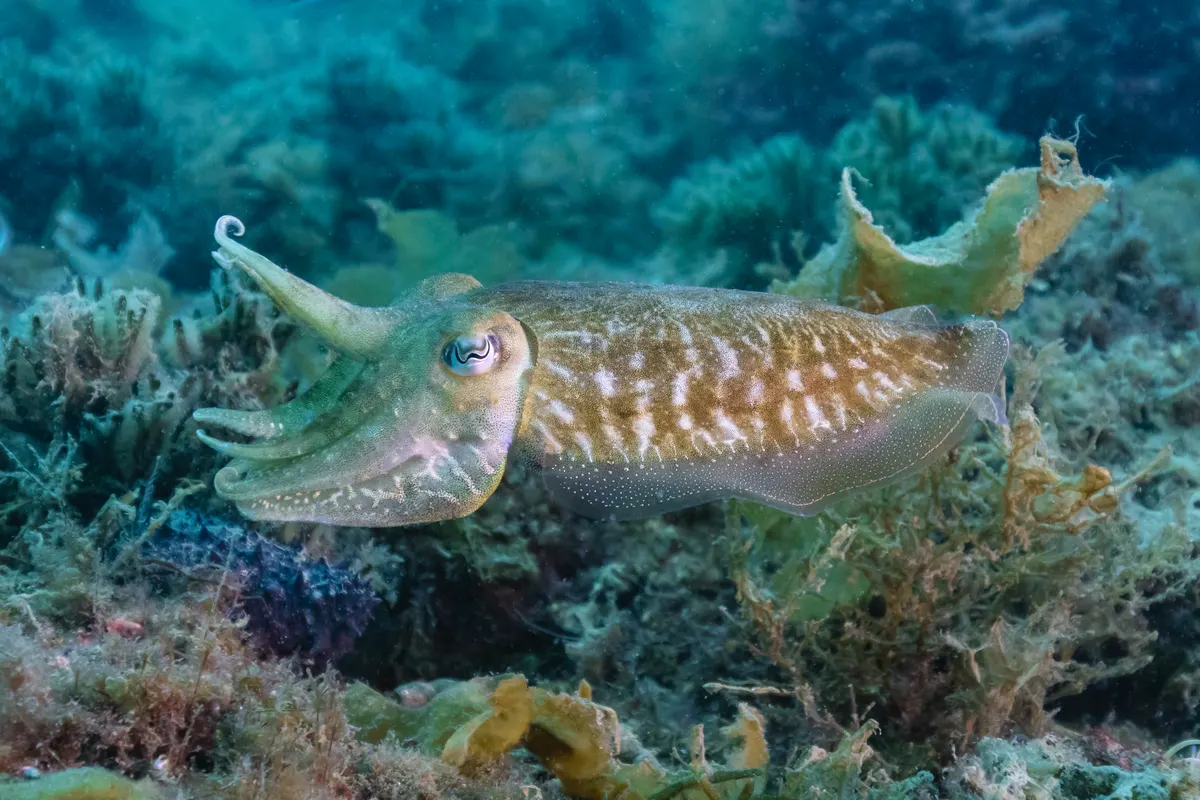
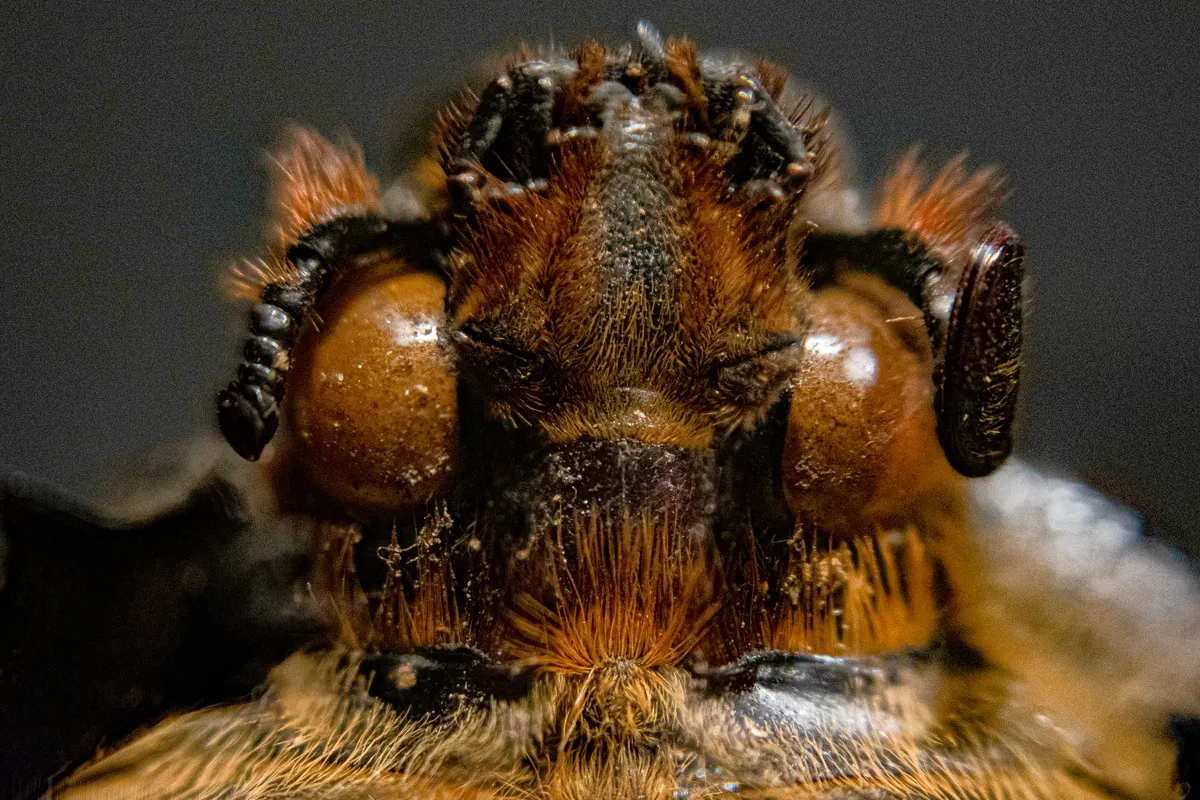
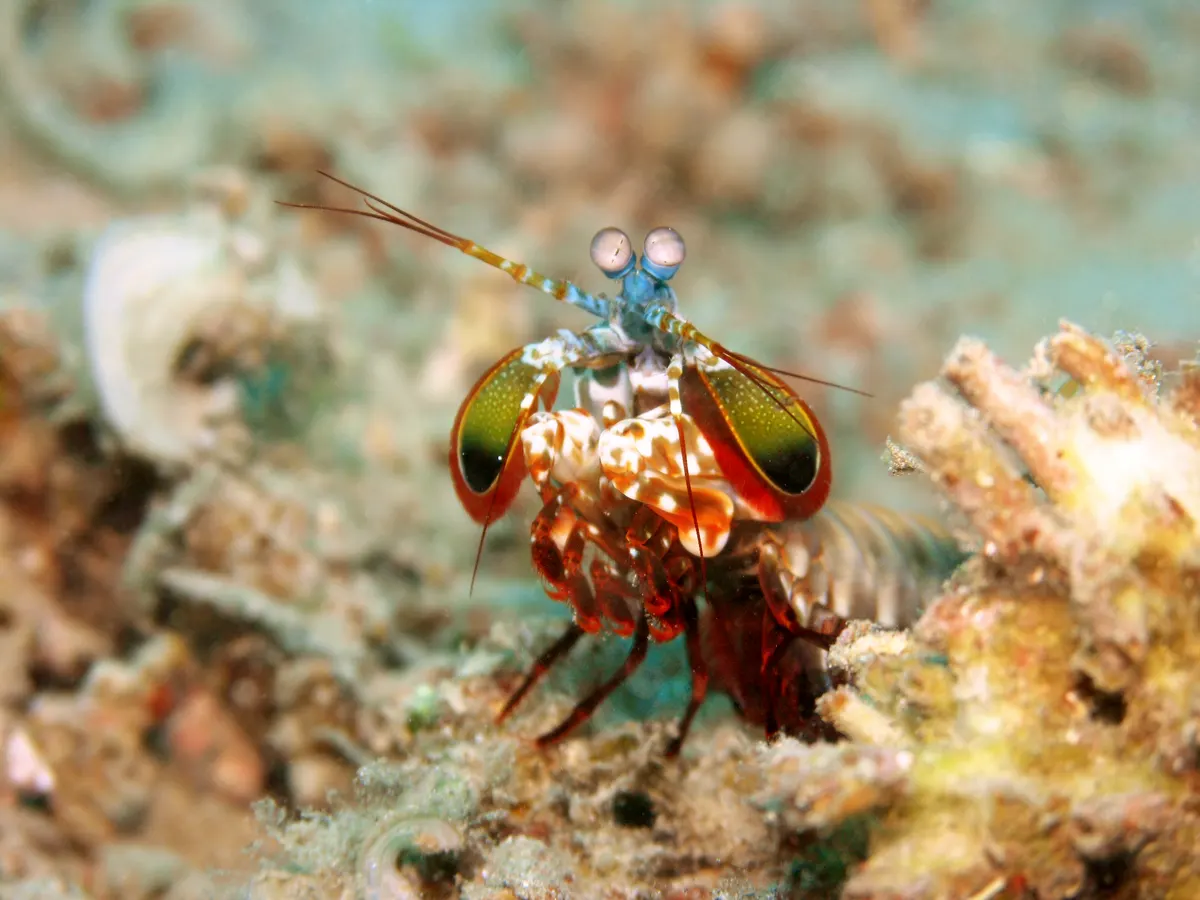
As an arachnid, it is more closely related to spiders such as the tarantula than to insects. It is worth placing alongside other invertebrates that show their own specialized hardware: the sheer bulk and horns of the Hercules beetle, the high-speed strike of the mantis shrimp, and the color-shifting skin of the cuttlefish. These animals are only distantly related but illustrate how different invertebrate lineages solve the problems of feeding, defense, and signaling in very different ways.

Conservation and Threats

Emperor scorpion on the ground
Heavy collection for the pet trade led to CITES protection of the species in trade.

The emperor scorpion has not been fully assessed by the IUCN Red List, so it currently has no global Red List category; here its status is treated as Not Evaluated, and its population trend is unknown. That absence of a formal assessment does not mean it is free of pressure.

The species is listed on Appendix II of CITES, the Convention on International Trade in Endangered Species. Appendix II covers species that are not necessarily threatened with extinction now but could become so if trade is not controlled. The emperor scorpion earned this listing because it is heavily collected for the international pet trade, where its large size and docile temperament make it popular. Wild collection, combined with slow reproduction and long maternal care, is the main documented concern for the species, alongside habitat loss as West and Central African forests are cleared. CITES Appendix II means exports are supposed to be regulated and monitored rather than banned outright.

Because there is no comprehensive IUCN assessment, reliable statements about the emperor scorpion focus on what is documented: it is widespread across West and Central African forests, it is subject to sustained collection pressure, and international trade in it is regulated under CITES.

References and Authoritative Sources

Emperor Scorpion: classification and fun facts

Classification

Scientific Taxonomy
  1. Kingdom

    Animalia

  2. Phylum

    Arthropoda

  3. Class

    Arachnida

  4. Order

    Scorpiones

  5. Family

    Scorpionidae

  6. Genus

    Pandinus

  7. Species

    P. imperator

Did You Know?

Fun Facts

1

The emperor scorpion is one of the largest scorpions in the world, reaching about 20 cm in length.

2

Like other scorpions, its cuticle glows a pastel blue-green under ultraviolet light.

3

Despite its size, its venom is mild; it relies mainly on its large pincers to subdue prey.

4

At around 30 grams, it is one of the heaviest scorpions rather than the longest.

5

Mothers give live birth and carry the pale, soft young on their backs until their first molt.

6

Wild emperor scorpions often live inside or beside active termite mounds, a steady source of prey.

Common Questions

FAQ about Emperor Scorpion

Select a question to reveal the answer.

What is an emperor scorpion?

The emperor scorpion (*Pandinus imperator*) is a large arachnid in the family Scorpionidae, native to West and Central Africa. It is one of the largest and heaviest scorpions in the world and is well known in the pet trade.

Where do emperor scorpions live?

They live in the tropical rainforests and forest margins of West and Central Africa, in countries such as Ghana, Togo, Nigeria, and the Congo region. They shelter in burrows, under debris, and often in or around termite mounds.

What do emperor scorpions eat?

They are carnivores that feed mainly on insects and other invertebrates, with termites forming a large part of the wild diet. Larger individuals occasionally take small vertebrates. Adults usually crush prey with their pincers rather than using venom.

Are emperor scorpions dangerous to humans?

Their venom is mild, and a sting is often compared to a bee sting for most people, though reactions vary and some individuals may be allergic. The species is generally docile and relies on its large pincers, but any wild scorpion should be treated with caution.

Why do emperor scorpions glow under UV light?

Compounds in the scorpion's outer cuticle absorb ultraviolet light and re-emit it as a blue-green glow. The function is still debated, with proposed roles including detecting light levels and shelter, though none is fully confirmed.

How do emperor scorpions raise their young?

Females give live birth after a long gestation, producing roughly 10 to 30 young. The pale, soft scorplings climb onto the mother's back and remain there, guarded, until their first molt, after which they gradually disperse.