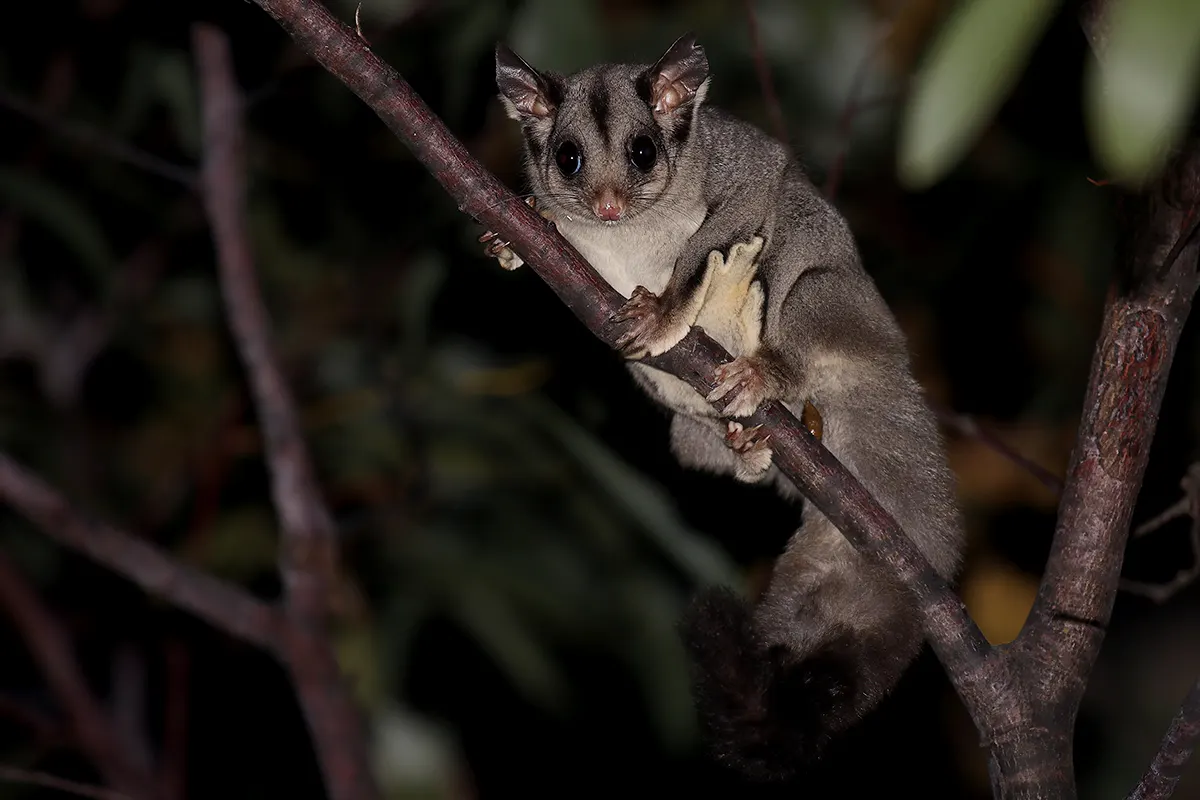
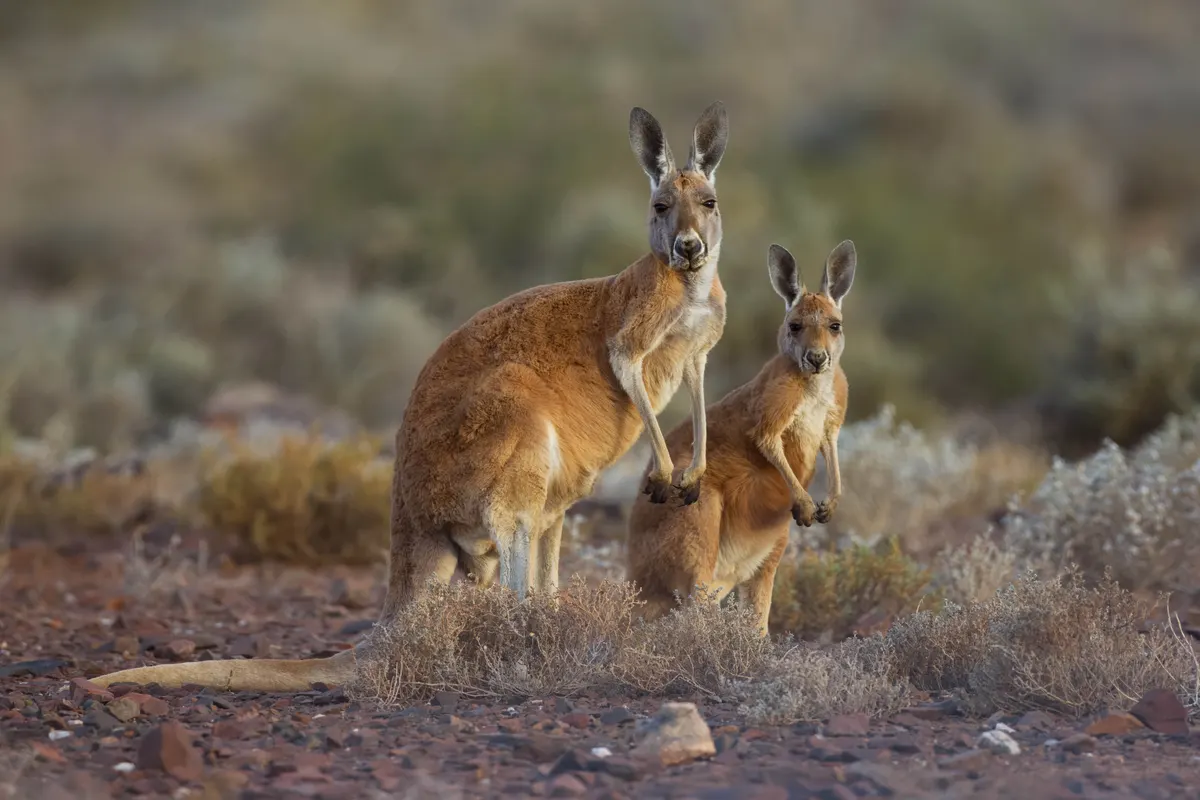
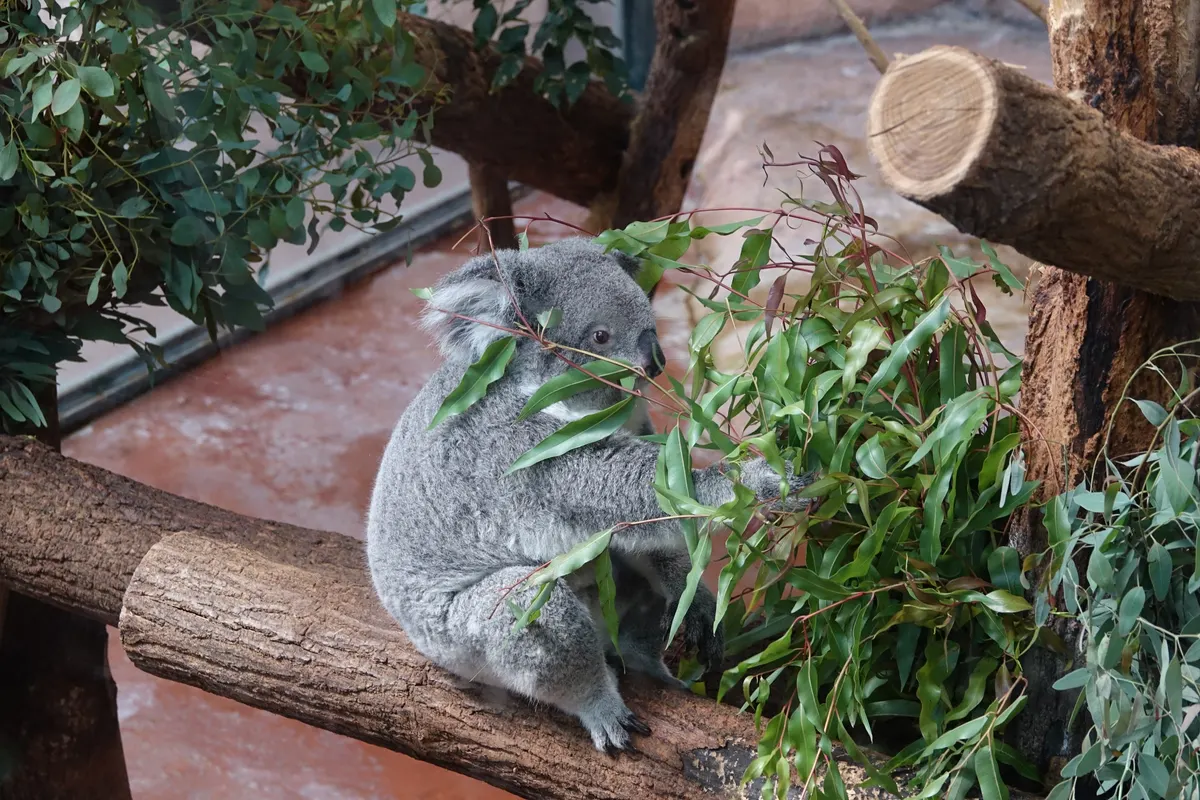
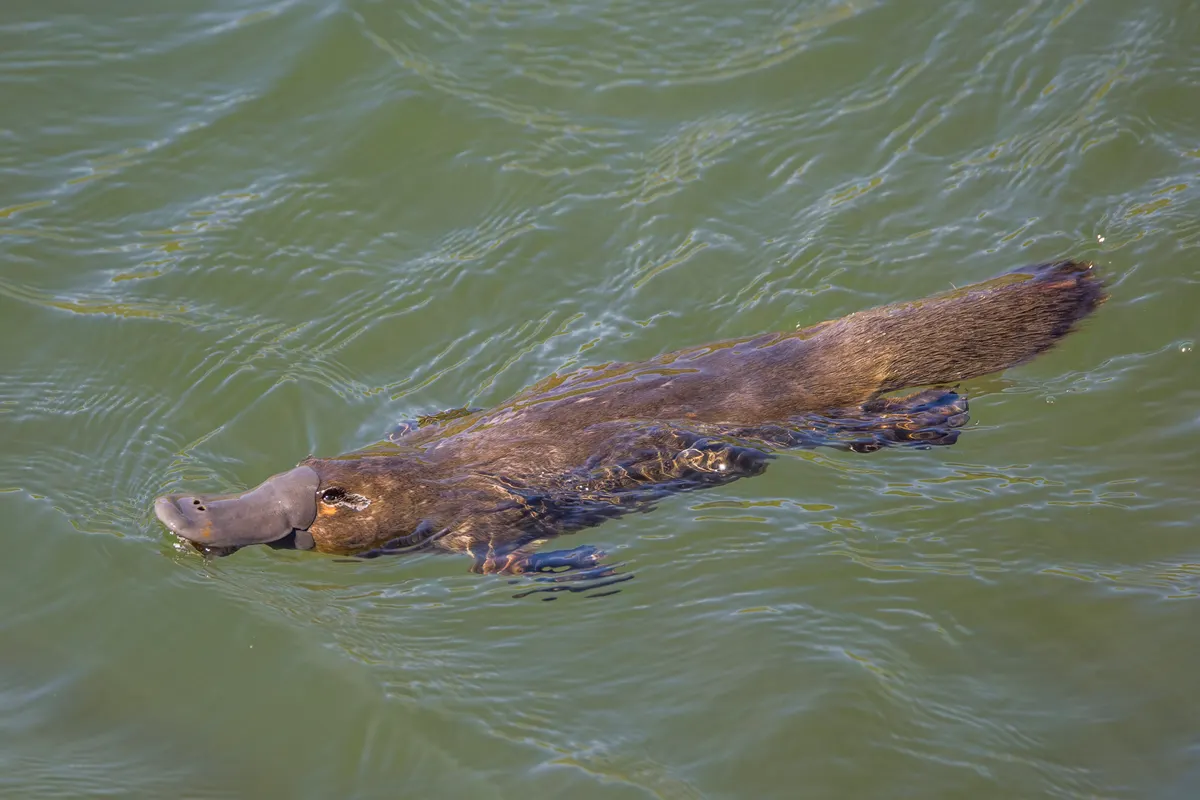
An adult is 5 to 8 inches in head and body plus a long, bushy, rudder-like tail, weighing 3 to 5.5 ounces, in soft gray fur with a dark nose-to-back stripe and a cream belly. The defining structure is the patagium, a stretchy skin membrane that fans out when the limbs spread, and powerful claws with partly opposable digits let it cling to bark, grab food, and climb headfirst down trunks; huge dark eyes gather night light while mobile ears track insect rustles and owl wingbeats. Males carry a bald scent-gland patch on the forehead, and colony members use chest and cloacal glands to label their nest hollows. Sugar gliders belong to the order Diprotodontia, alongside kangaroos, koalas, and wombats (unlike the egg-laying platypus), in the family Petauridae — their gliding a textbook case of convergent evolution with the unrelated flying squirrels.