
Ursus maritimus / Ursus arctos
Polar Bear vs Grizzly Bear
Polar bears and grizzly bears are close bear relatives, but one is a sea-ice seal hunter and the other is an omnivore of northern land ecosystems.
By An Nguyen · Updated
At a glance
Published species data from both WildlifeDB profiles, aligned trait by trait. Size metrics highlight the larger value with a relative bar.
- Scientific name
- Polar BearUrsus maritimus
- Grizzly BearUrsus arctos
- Classification
- Polar BearMammalia · Ursidae
- Grizzly BearMammalia · Ursidae
- Native range
- Polar BearNorth America, Europe
- Grizzly BearNorth America
- Primary habitat
- Polar BearPolar
- Grizzly BearForest
- Diet
- Polar BearCarnivore
- Grizzly BearOmnivore
- Typical food
- Polar BearRinged seals, Bearded seals, Harp seals, Walrus calves, Fish
- Grizzly BearBerries, Roots, Salmon, Insects, Grasses
- Body length
- Polar Bear6 feet – 9 feet
- Grizzly Bear5 feet – 8 feet
- Shoulder height
- Polar Bear3.5 feet – 5 feet
- Grizzly Bear3 feet – 4 feet
- Weight
- Polar Bear550 pounds – 1,700 pounds
- Grizzly Bear300 pounds – 800 pounds
- Top speed
- Polar BearUp to 25 mph on land in short bursts
- Grizzly BearUp to 35 mph in short bursts
- Wild lifespan
- Polar Bear20 to 25 years
- Grizzly Bear20 to 25 years
- Social pattern
- Polar BearSolitary hunting, Sea ice travel, Long-distance swimming
- Grizzly BearSolitary foraging, Hibernation, Salmon fishing
- Key adaptations
- Polar BearThick blubber, Water-repellent fur, Large paws for snow and swimming
- Grizzly BearShoulder hump for digging, Long claws, Keen sense of smell
- Conservation
- Polar BearVulnerable · Decreasing
- Grizzly BearLeast Concern · Stable
- Reproduction
- Polar BearAbout 8 months including delayed implantation; Usually 1 to 3 cubs
- Grizzly BearAbout 6 to 8 months including delayed implantation; Usually 1 to 3 cubs
Sea ice against dry land
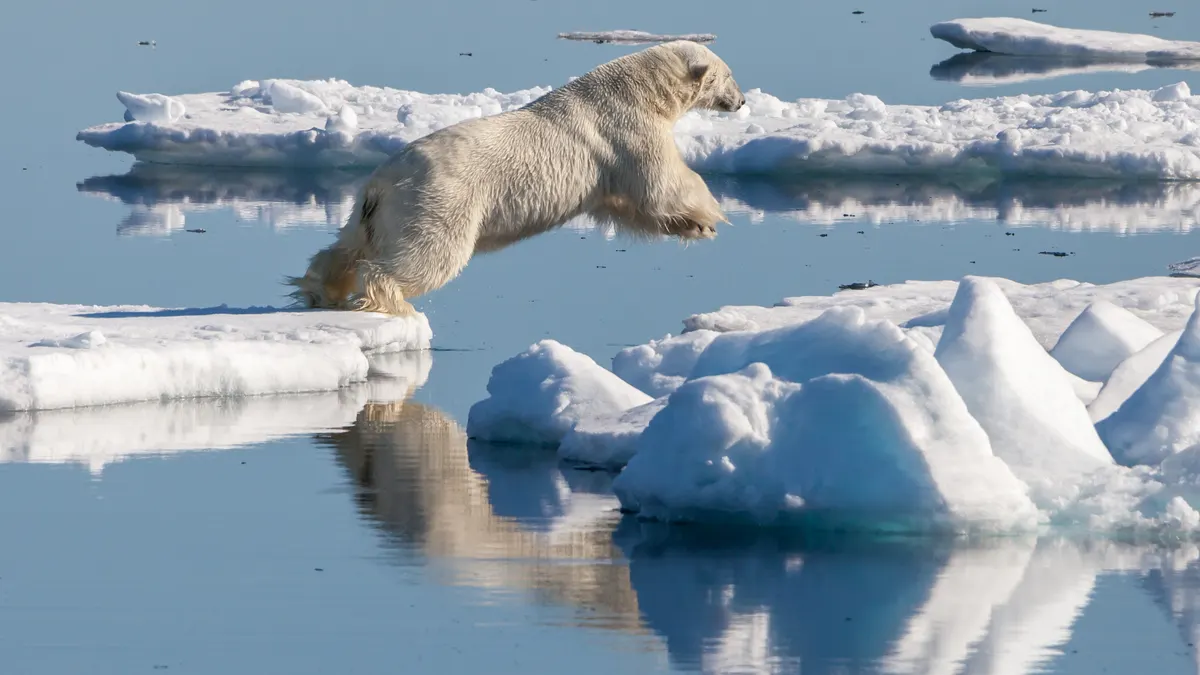
The polar bear, Ursus maritimus, hunts from Arctic sea ice. The grizzly bear, Ursus arctos horribilis, forages on northern land. That is the difference from which almost everything else follows.
Sea ice is not merely cold habitat for a polar bear; it is a hunting platform, a travel route, and the access point to its prey. A grizzly needs none of it. Both are bears in the genus Ursus, and the grizzly is a North American form of brown bear.
The shoulder hump and the long neck
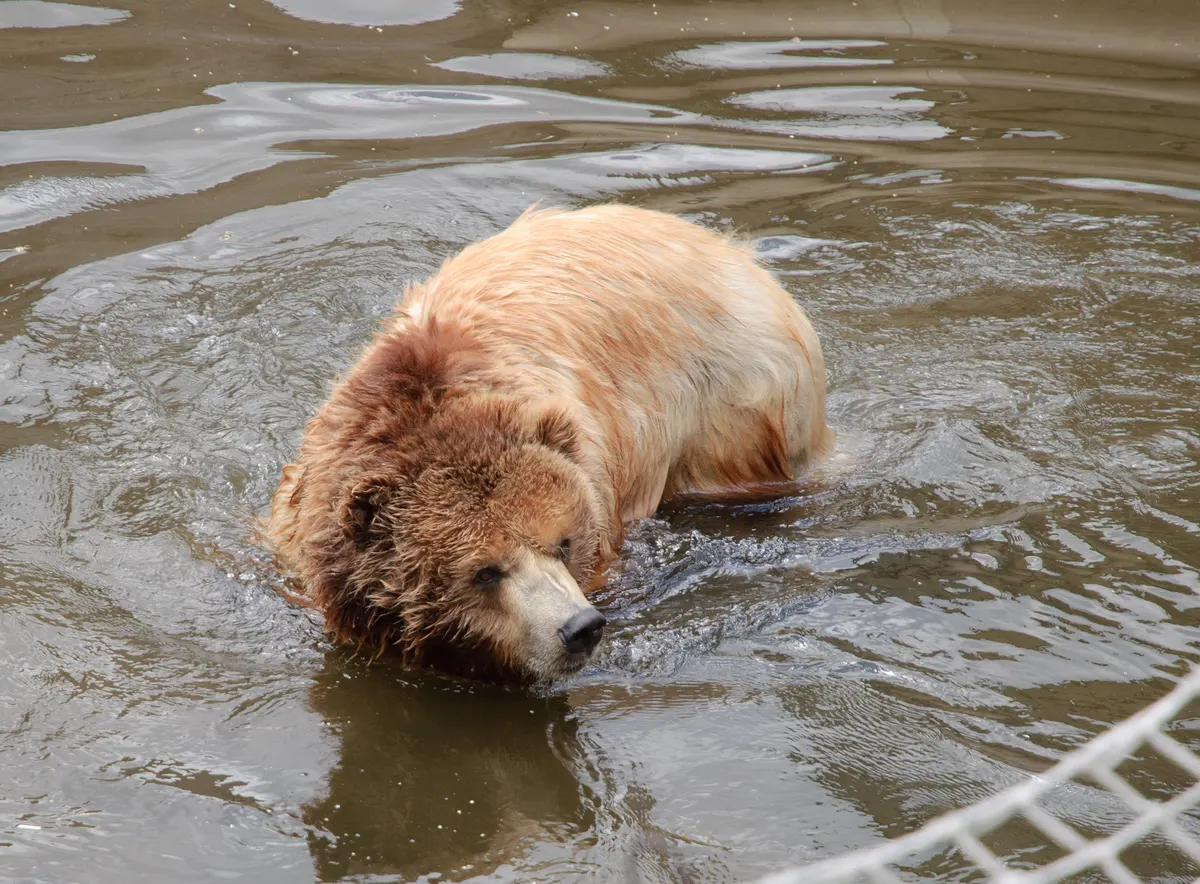
Two body features separate them at a distance. A grizzly has a pronounced shoulder hump — muscle, not fat — that powers digging with long claws. A polar bear has no comparable hump but does have a longer neck and a relatively narrow head, which can make it look more elongated.
Coat and paws follow the habitat. A polar bear's fur is water-repellent and its hairs are hollow, so it looks white while the skin underneath is black; broad paws support travel over ice and swimming between floes. A grizzly's claws are digging tools rather than snow gear.
Polar bears reach the higher weight
Polar bears measure about 6–9 feet and weigh 550–1,700 pounds, standing around 3.5–5 feet at the shoulder. Grizzlies measure roughly 5–8 feet and weigh 300–800 pounds, standing about 3–4 feet. At the top of each range the polar bear is roughly twice the mass and is the largest bear in the world.
Individual size varies considerably with sex, age, season, and local food supply, so the ranges matter more than a single headline figure. Both also move faster than most people expect over short distances: up to 25 mph for a polar bear and up to 35 mph for a grizzly. Speed is not a safe basis for judging either animal's distance from you.
Seals against berries and salmon
Diet is the most important ecological difference. The polar bear is a carnivore whose recorded prey is ringed, bearded, and harp seals, plus walrus calves and fish, and its sense of smell can locate a seal nearly a mile away. Seal fat is the energy source that makes an Arctic winter survivable, which is why access to sea ice is not optional.
The grizzly is an omnivore: berries, roots, salmon, insects, grasses, and small mammals, plus carrion and occasionally larger prey. It builds fat reserves through a seasonal cycle and dens for the winter. A polar bear may look like a pale brown bear, but its feeding system is marine.
Waiting at a breathing hole against fishing a river
Polar bears are generally solitary hunters that travel across ice, wait near seal breathing holes, and swim long distances when conditions require. Pregnant females use snow dens for birth, and cubs are born very small during the Arctic winter.
Grizzlies are also often solitary, but their behaviour is organised around seasonal land food: digging for roots, foraging berries, fishing salmon runs, taking insects, then denning. Where food concentrates, several grizzlies may tolerate one another at a distance without forming a permanent group. Cubs of both species are born tiny during the mother's winter denning and stay with her for an extended period.
They can hybridize where ranges meet
The two species are close enough to interbreed where their ranges overlap, and hybrids have been documented. That biological fact is worth knowing, and it does not erase the distinction between their ecological roles — a hybrid inherits neither a complete sea-ice hunting system nor a complete land-foraging one.
Polar bears occupy Arctic sea ice and adjacent coasts across North America and Europe in this record. Grizzlies use forest, mountain, and tundra-edge habitat in the United States and Canada, needing space, seasonal food, and secure denning sites.
Vulnerable against Least Concern
The polar bear is Vulnerable with a decreasing trend; the grizzly is Least Concern with a stable trend. Neither global label describes a particular population — some grizzly populations remain small and isolated, and the rate of change in specific polar-bear regions is faster than a single category can convey.
The mechanism behind the polar bear's listing is specific rather than general: earlier ice breakup shortens the hunting season, so a bear can be pushed onto land with its main food source out of reach even in a year that is not unusually warm.