
Animal guides
Why Do Polar Bears Need Sea Ice?
Sea ice places polar bears where seals surface; when the ice retreats, many bears lose hunting time and fast longer on land.
By An Nguyen · Published · Updated
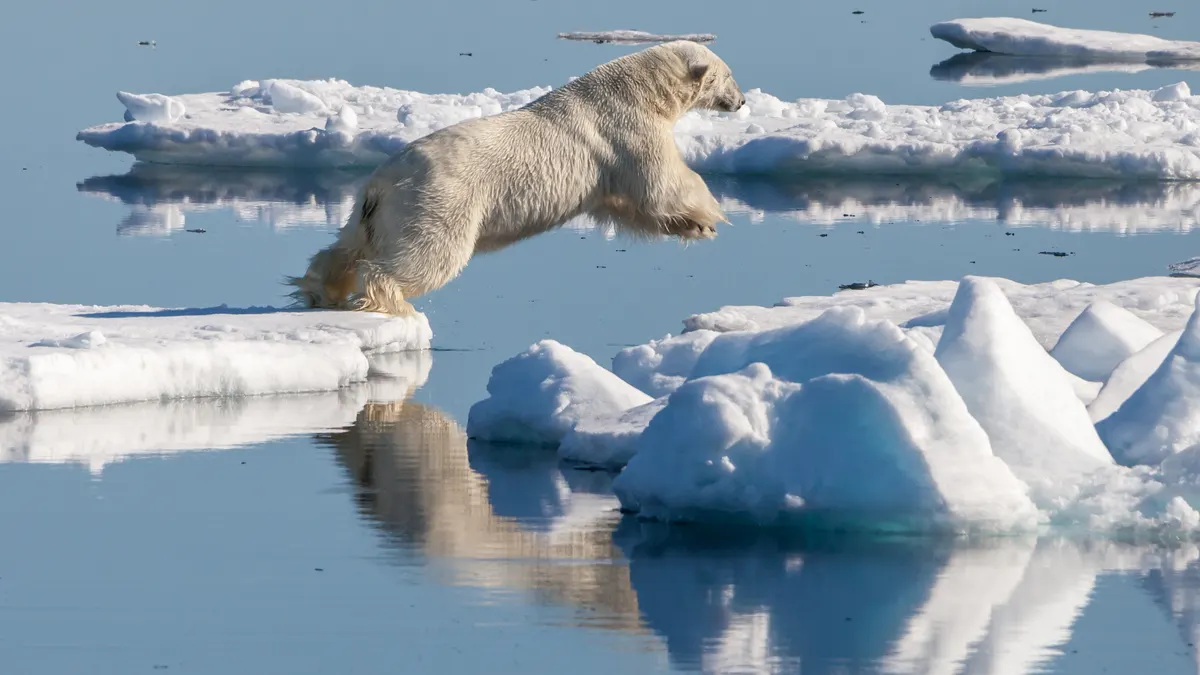
A polar bear needs sea ice mainly because the ice provides access to seals. The bear is an Arctic marine predator even though it breathes air and spends much of its time on a frozen surface. Ice places it beside seal breathing holes, resting sites, and snow-covered birth lairs.
Sea ice also functions as a travel route over productive ocean habitat. Its seasonal growth, movement, and retreat shape where a bear can hunt and how long it can build fat reserves before spending time on land or swimming through open water.
How do polar bears hunt from ice?
Ringed and bearded seals must surface to breathe. A polar bear can wait beside a breathing hole, remaining still until a seal appears, then strike and pull it onto the ice. Bears also stalk seals resting on the surface and may break into snow lairs where ringed seals give birth.
These methods depend on a solid platform. Catching a seal in open water is far harder because the seal is faster and more maneuverable there. A bear can swim long distances, but swimming is mainly travel between ice, land, and feeding areas rather than an efficient substitute for hunting from ice.
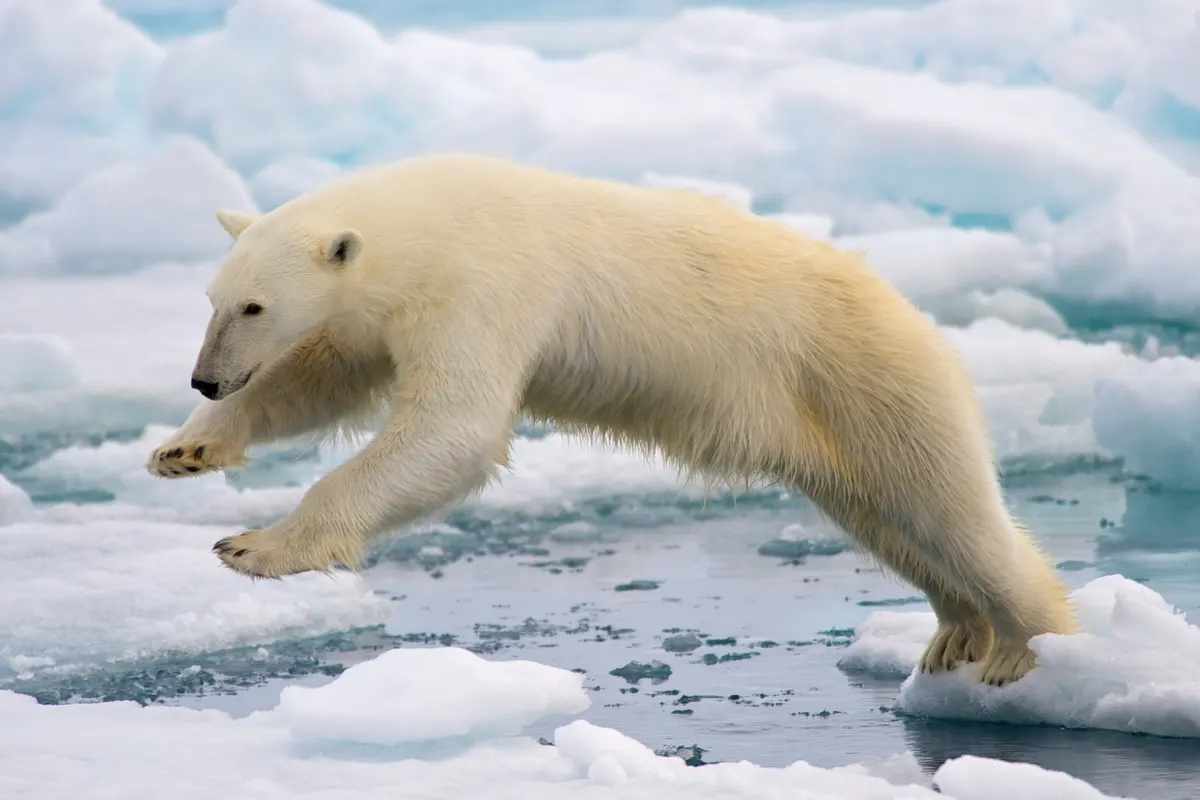
Photo by Arturo de Frias Marques via Wikimedia Commons, CC BY-SA 4.0.

Why is seal fat so important?
Seal blubber provides concentrated energy. Polar bears use it to maintain their own fat layer, support reproduction, and survive periods when hunting opportunities are limited. A successful feeding season can therefore affect body condition months later.
Some terrestrial foods are available when bears come ashore, including eggs, plants, carrion, and human refuse. These items can provide calories, but for most populations they do not replace the energy bears normally obtain from seals. Time on land is often largely a fasting period, especially where large carcasses are unavailable.
What happens when ice retreats?
Arctic sea ice naturally expands and contracts with the seasons. Polar bears have long adjusted to that cycle, and populations differ in how much time they spend on land. The problem arises when break-up occurs earlier, freeze-up occurs later, or productive ice shifts farther from shore.
A shorter ice season can mean fewer days of seal hunting and a longer fast. Bears may reach land with smaller reserves or use more energy swimming and walking. Effects vary by region, age, sex, prey conditions, and the form of sea ice, so one observation does not describe every subpopulation.
Long-term warming is reducing Arctic sea-ice extent and duration. Because access to seals is tied to ice, this is the main reason climate change threatens polar bears. The species is listed as Vulnerable; that category should not be interpreted as identical conditions or trends in every local population.
Is sea ice used for anything besides hunting?
Yes. Bears travel across ice to move between feeding areas and to find mates. Some females den on land, while others use stable ice or islands depending on the region. Mothers emerging with cubs must eventually reach feeding habitat after months without eating.
The difference from a brown bear is ecological as well as visual. Grizzlies feed broadly on plants, insects, fish, carrion, and mammals on land, while polar bears specialize in hunting marine mammals from ice. See polar bear vs grizzly bear for a direct comparison.
The short answer
Polar bears need sea ice because it gives them access to seals, especially at breathing holes and surface resting sites. The ice is also a travel platform. When it disappears earlier or returns later, many bears have less time to hunt and must fast longer on land, where available foods usually cannot replace seal fat.