Salmon Facts
"Atlantic salmon hatch in rivers but spend much of their life in the ocean."
Atlantic salmon are remarkable fish born in rivers, grown in the ocean, and famous for swimming home to spawn. They are prized by wildlife and people alike.
Loading page content

"Atlantic salmon hatch in rivers but spend much of their life in the ocean."
Atlantic salmon are remarkable fish born in rivers, grown in the ocean, and famous for swimming home to spawn. They are prized by wildlife and people alike.
Salmo salarSalmoniformesSalmonidae
Explore atlantic salmon photos organized for learning and classroom observation.
Click any photo to view it larger. 8 images available.
Core article
Habitat, diet, behavior, and more — everything on one page.
The Atlantic salmon (Salmo salar) is widely revered as the "King of Fish." Embarking on an unique, multi-year biological odyssey, this anadromous species begins its life in freshwater rivers, migrates vast distances to mature in the nutrient-rich North Atlantic, and eventually navigates thousands of miles back to its exact natal stream to spawn. Their lifecycle is a fascinating example of physiological transformation and ecological connectivity, seamlessly bridging complex marine and terrestrial ecosystems.
The Atlantic salmon belongs to the kingdom Animalia, the phylum Chordata, and the class Actinopterygii (ray-finned fishes). Within the order Salmoniformes, it is a prominent member of the family Salmonidae, which encompasses trouts, chars, graylings, and whitefishes. The species is classified in the genus Salmo, meaning "leaper" in Latin, while the specific epithet salar translates roughly to "leaper" or "dweller of salt water."
Evolutionarily, the Salmonidae family is ancient, with fossil records tracing back to the Eocene epoch. The Atlantic salmon is genetically distinct from the Pacific salmon species of the genus Oncorhynchus. A critical evolutionary divergence between the two genera is their post-spawning survival capability. While all Pacific salmon are semelparous (dying immediately after their first spawning event), Atlantic salmon are iteroparous, retaining the physiological capacity to survive spawning, return to the ocean, and spawn multiple times across their lifespan.
The morphology of the Atlantic salmon reflects its dual life as a riverine juvenile and a pelagic oceanic predator. Adult Atlantic salmon generally measure between 2 and 3.5 feet in length and weigh from 8 to 35 pounds, though historically, much larger specimens were common before commercial overfishing truncated their age distribution.
In the marine environment, their bodies are sleek and fusiform, optimized for sustained hydro-dynamic cruising and rapid acceleration. They sport a silvery lateral and ventral surface with a steely blue or green dorsum, providing effective countershading camouflage against pelagic predators. Small, X-shaped dark spots speckle the upper half of their bodies.
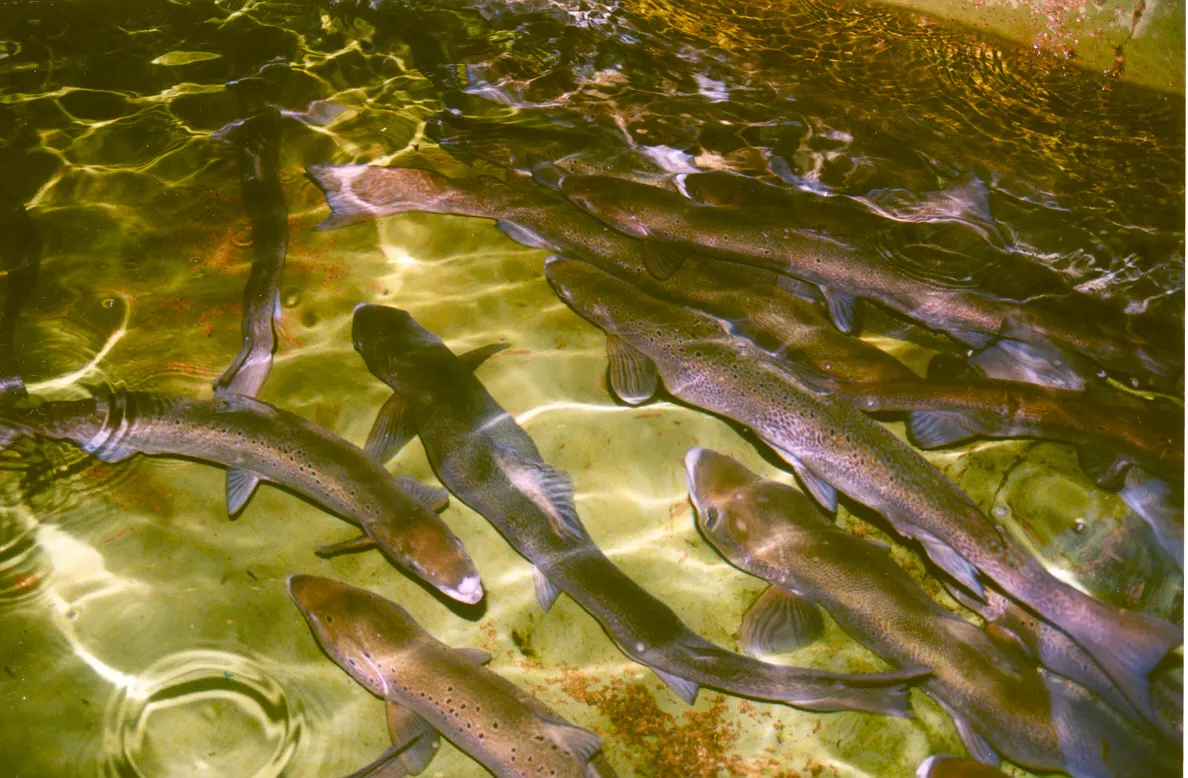
However, sexual dimorphism becomes extreme during the spawning phase. As they re-enter freshwater, adults undergo intense morphological and physiological remodeling. They cease feeding entirely, their digestive tracts shrinking as energy is shunted toward gonadal development. Their coloration shifts dramatically to dark bronze, brown, and mottled red. Adult males develop a pronounced elongation and hooking of the lower jaw, known as a kype, alongside thickened skin and enlarged teeth, which are used in aggressive agonistic encounters with competing males on the spawning grounds.
A critical internal adaptation is their osmoregulatory plasticity. Specialized chloride cells in the gills functionally reverse their ion-pumping direction, allowing the salmon to excrete salt in the ocean and retain it in freshwater, surviving a salinity gradient that is lethal to strictly marine or freshwater fish.

The historic geographic range of Salmo salar spans the entire North Atlantic basin. In the western Atlantic, they range from the rivers of northern Quebec and Newfoundland down through the northeastern United States (historically as far south as the Connecticut River). In the eastern Atlantic, their distribution stretches from the Arctic Circle in Norway and the White Sea in Russia, down along the coasts of the United Kingdom, Ireland, and historically to the rivers of Portugal and Spain.
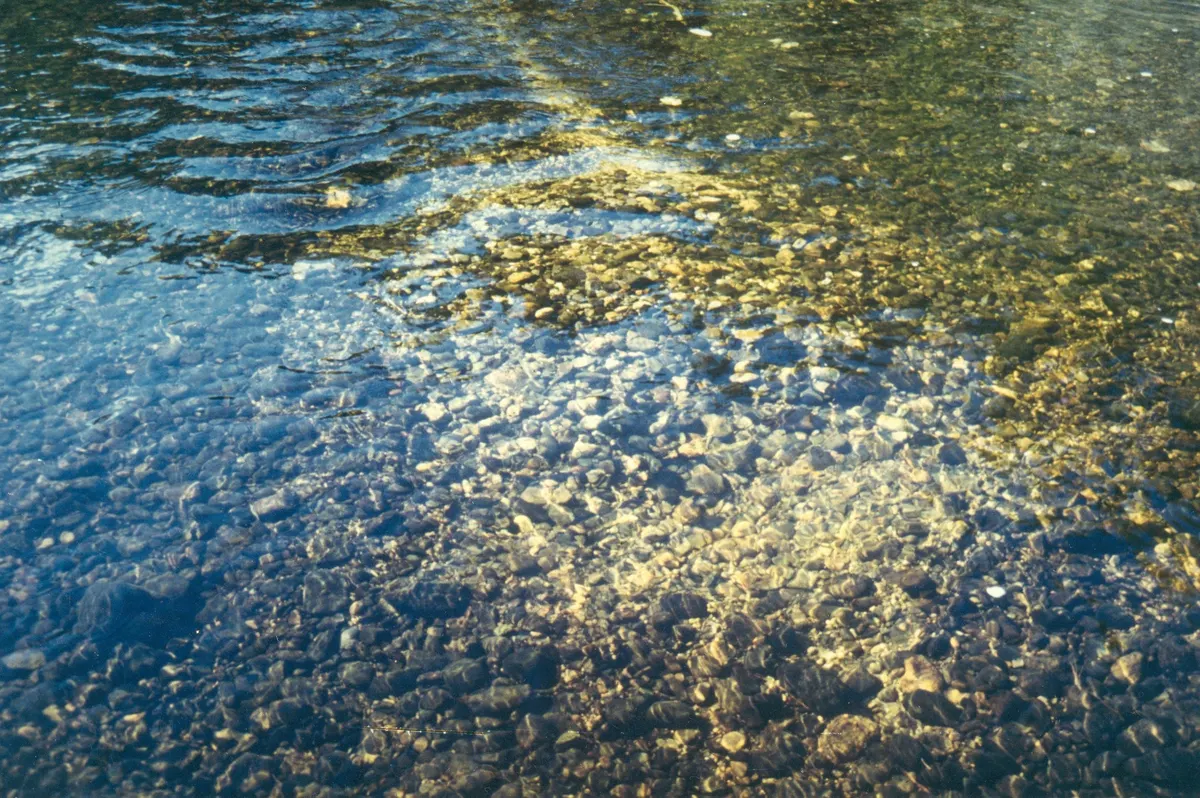
Their habitat requirements are highly phase-specific. Juveniles demand cold, pristine, highly oxygenated freshwater streams with gravel substrates and complex riverine structures like riffles and deep pools. As maturing adults, they occupy the pelagic zones of the North Atlantic Ocean, frequently migrating to rich feeding grounds off the coasts of Greenland and the Faroe Islands.

The diet of an Atlantic salmon varies drastically depending on its developmental stage and habitat. In the freshwater river systems, alevins rely entirely on their attached yolk sacs. Once they emerge from the gravel as fry and later develop into parr, they operate as drift-feeders. They establish highly defended feeding territories in the stream current, darting out to snatch aquatic macroinvertebrates, stonefly and mayfly nymphs, terrestrial insects, and tiny fish fry.
Upon migrating to the ocean as smolts, their diet shifts dramatically to support rapid somatic growth. In the marine environment, Atlantic salmon operate as apex pelagic carnivores. They feed voraciously on energy-dense prey, primarily schooling forage fish such as capelin, sand lances, and herring. They also consume significant quantities of pelagic crustaceans, including krill, amphipods, and shrimp. The carotenoid pigments found in these crustacean prey accumulate in the salmon’s muscle tissue, imparting the characteristic pink-red hue to their flesh.

While in the ocean, Atlantic salmon are largely solitary or travel in loose, dispersed feeding shoals. Their most defining behavioral trait, however, is their homing migration. Using complex navigational systems that involve perceiving the Earth’s geomagnetic field, ocean currents, and temperature gradients, adults traverse thousands of miles of open ocean to locate the mouth of their natal river.
Once in the estuary, navigation shifts to a highly refined olfactory system. Salmon essentially "smell" the unique chemical signature of their birth stream, drawn from the specific blend of minerals, vegetation, and soil of the watershed.
Upon reaching the spawning grounds, social dynamics become highly competitive. Females seek out optimal gravel beds with high subterranean water flow. Males compete fiercely for proximity to fertile females, utilizing their kypes to bite and ram rivals. Smaller, sexually mature males known as "precocious parr," which have never migrated to the ocean, employ a "sneaker" strategy. They hide near the spawning pair and dart in at the exact moment of gamete release to fertilize a portion of the eggs.

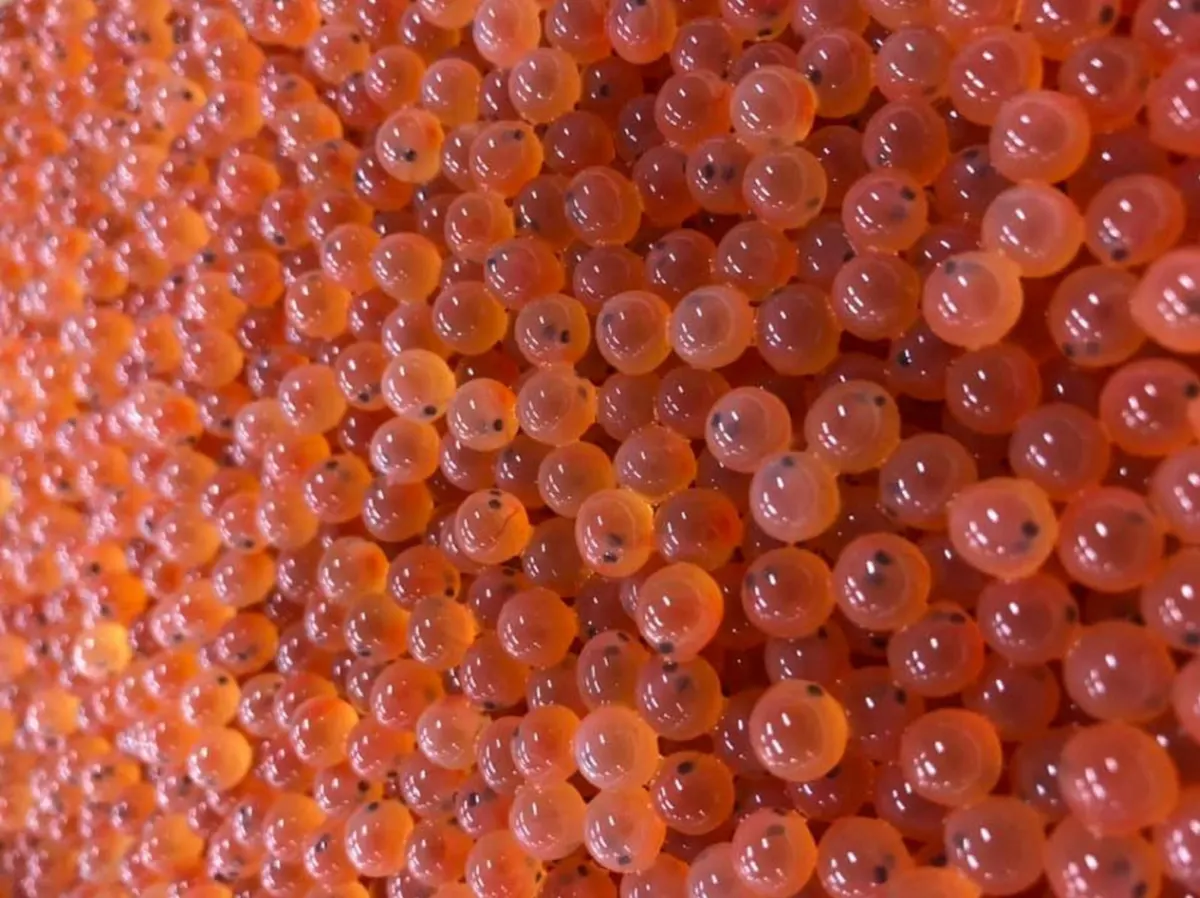
The Atlantic salmon boasts a complex, multi-stage life cycle. It begins in late autumn when the female excavates a depression in the riverbed gravel, called a redd, using violent thrusts of her tail. She deposits hundreds to thousands of eggs, which are simultaneously fertilized by a dominant male, before burying them in protective gravel.
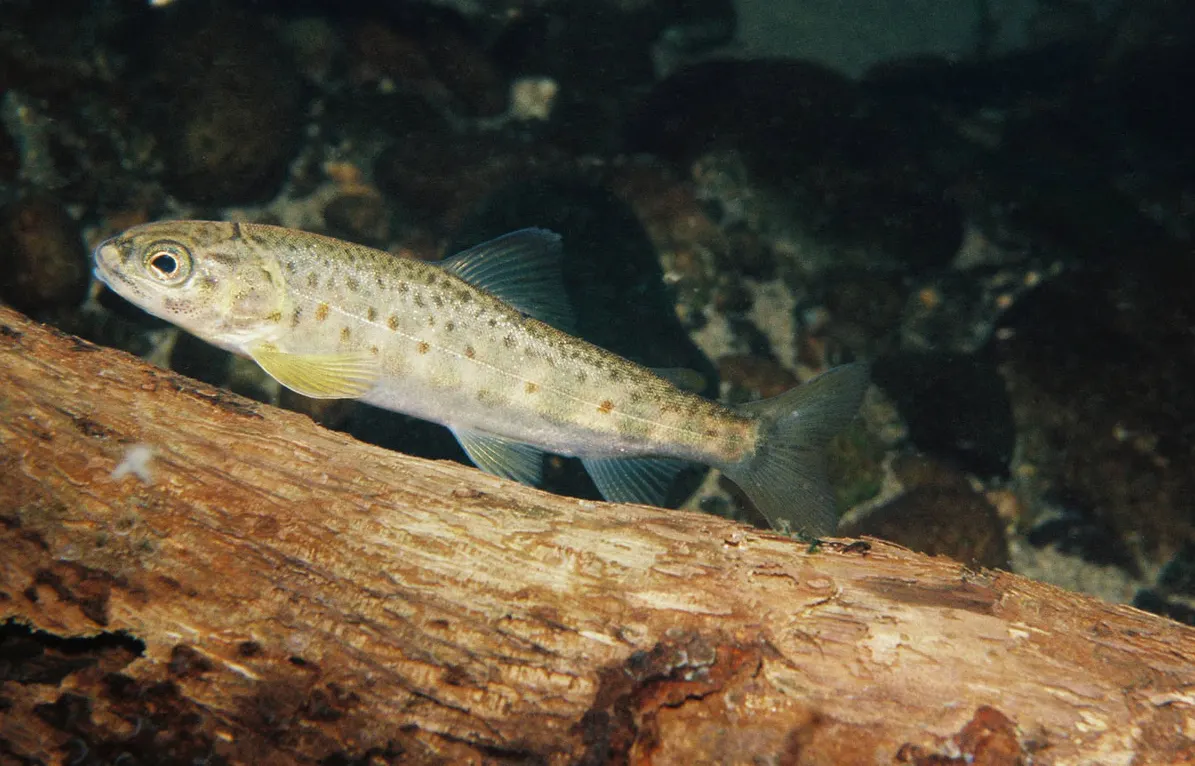
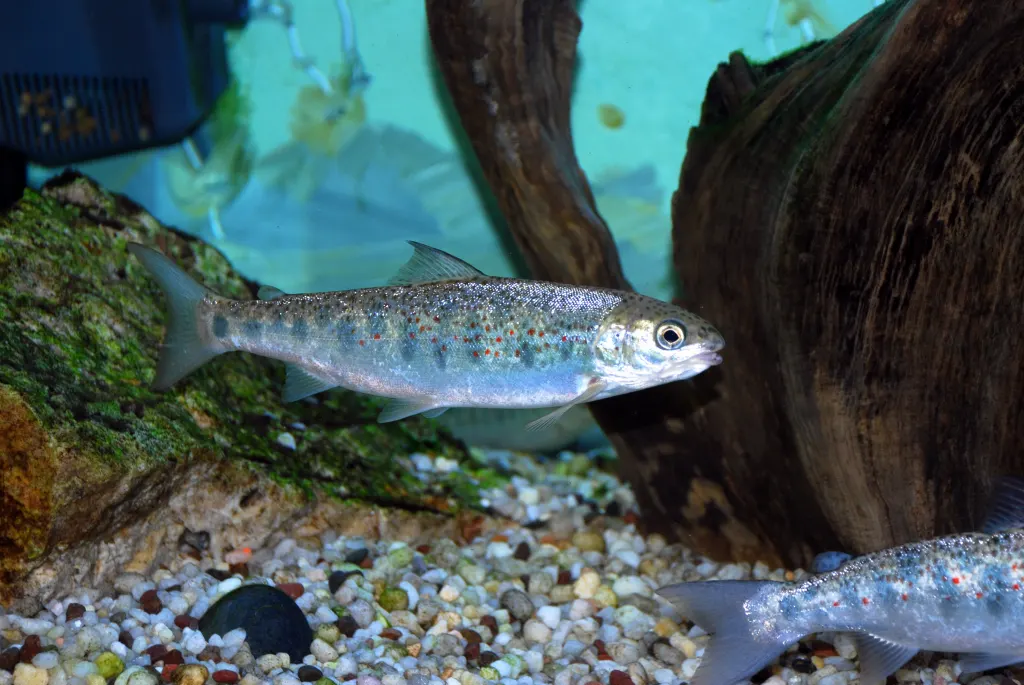
The eggs incubate through the freezing winter, hatching in early spring into alevins—tiny fish carrying a nutrient-rich yolk sac. After several weeks, they emerge from the gravel as actively feeding fry. They soon develop dark vertical stripes called "parr marks" for camouflage, becoming parr. They reside in the river for 1 to 3 years.
As they reach a critical size threshold, they undergo smoltification. The parr marks fade, their bodies turn silver, and their osmoregulatory systems undergo radical shifts in preparation for saltwater. These smolts migrate downstream to the ocean during spring floods. After spending 1 to 4 years accumulating mass at sea, they become sexually mature adults and initiate the homeward migration. While many individuals die from exhaustion after spawning, some survivors (kelts) return to the sea to feed and may return to spawn again in subsequent years.
(Population and conservation trend data sourced from the IUCN Red List of Threatened Species)
While the global species Salmo salar is currently listed as Least Concern globally due to massive aquaculture populations and stable localized stocks, wild Atlantic salmon populations have experienced catastrophic declines and regional extirpations.
Anthropogenic barriers, particularly the construction of hydroelectric dams and impassable culverts, have fundamentally severed migrating salmon from their historical spawning grounds. Habitat degradation through agricultural runoff, industrial pollution, and deforestation has smothered crucial gravel beds with silt and elevated water temperatures past their physiological tolerances.
Furthermore, historical overfishing at sea drastically depleted breeding stocks. Today, open-net pen salmon aquaculture poses severe biological threats to wild populations through the transmission of concentrated pathogens (like sea lice and infectious salmon anemia) and the genetic introgression caused by escaped farmed salmon breeding with wild stocks, which severely depresses wild fitness.
Atlantic salmon hatch in rivers but spend much of their life in the ocean.
Adult salmon can smell the river where they were born.
Salmon change color when they return from the sea to spawn.
Young salmon are called parr before becoming smolts.
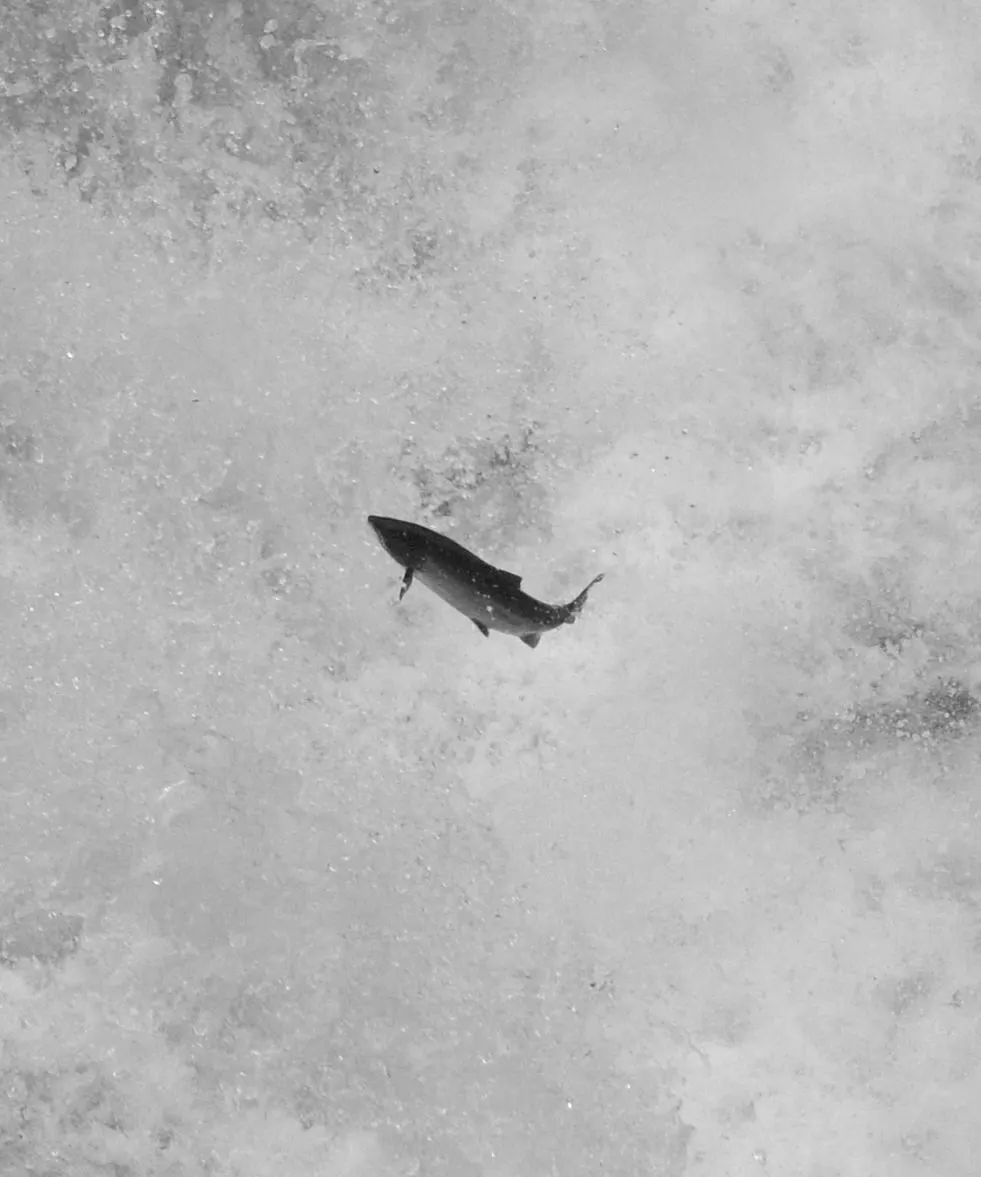
Salmon can leap waterfalls on their journey upstream.
Some salmon travel thousands of miles in the ocean.
Select a question to reveal the answer.
A salmon is a fish that hatches in freshwater rivers, grows in the ocean, and often returns to its home river to spawn.
Atlantic salmon live in the North Atlantic Ocean and spawn in rivers of Europe and North America.
Young salmon eat insects and tiny animals in rivers. Adults eat small fish, shrimp, and other ocean prey.
Adult salmon swim upstream to lay eggs in the same kind of gravel-bottom rivers where they hatched.
Very young salmon are called fry or parr. Older juveniles ready for the ocean are called smolts.
Atlantic salmon are listed as Least Concern overall, but many wild populations have declined because of dams, pollution, and habitat loss.
Salmon use their strong sense of smell to recognize the scent of their home stream.