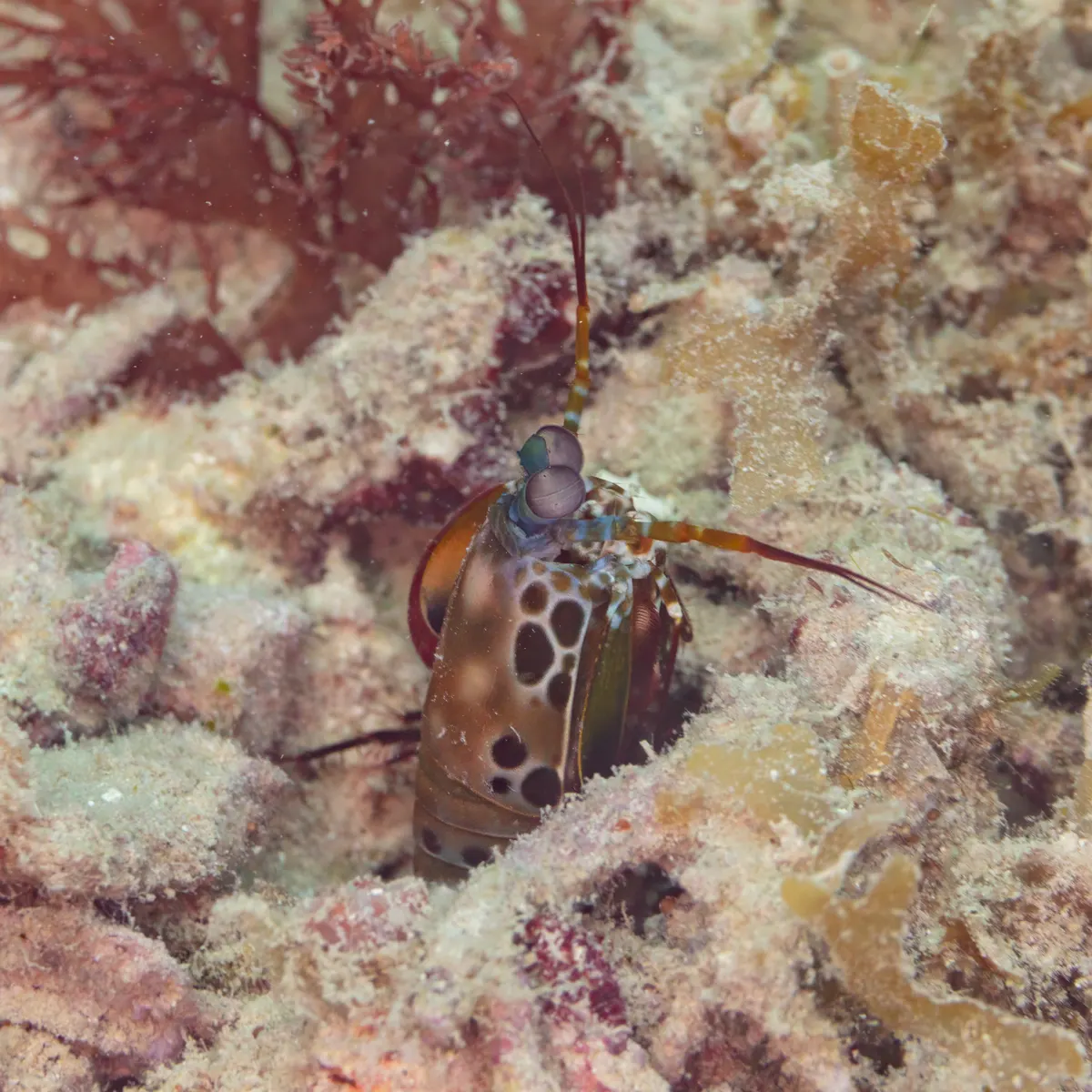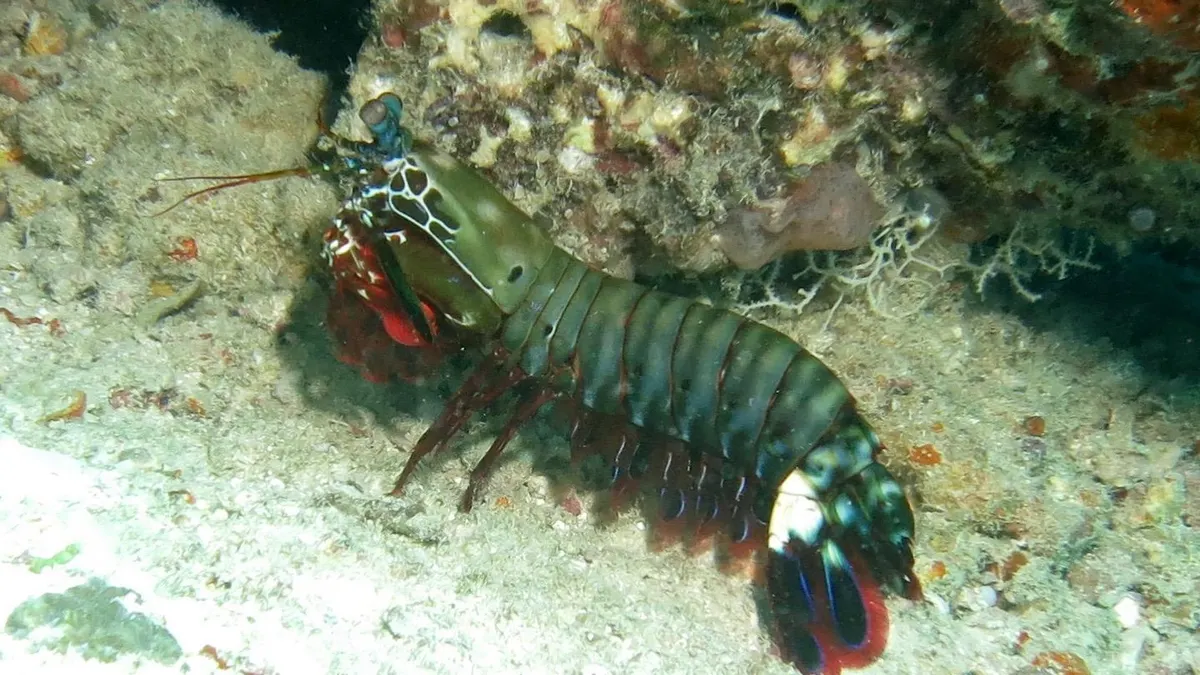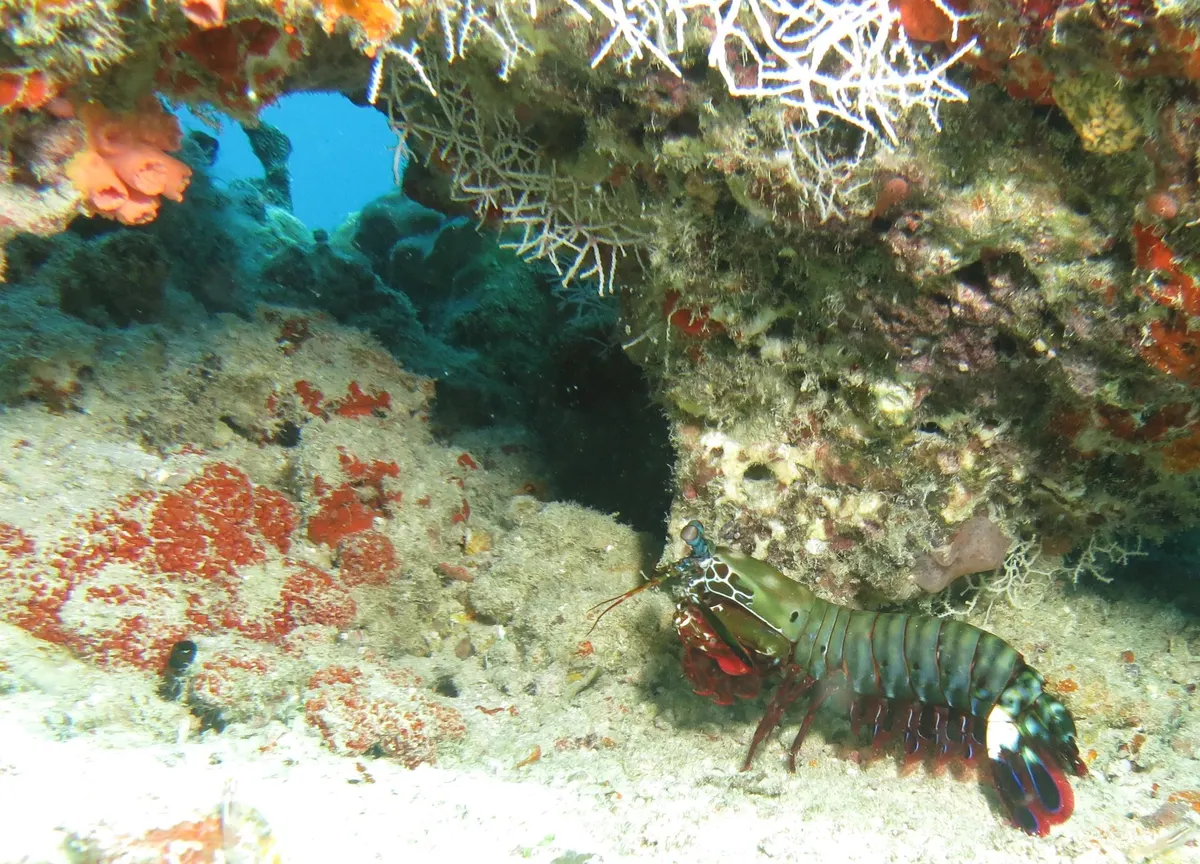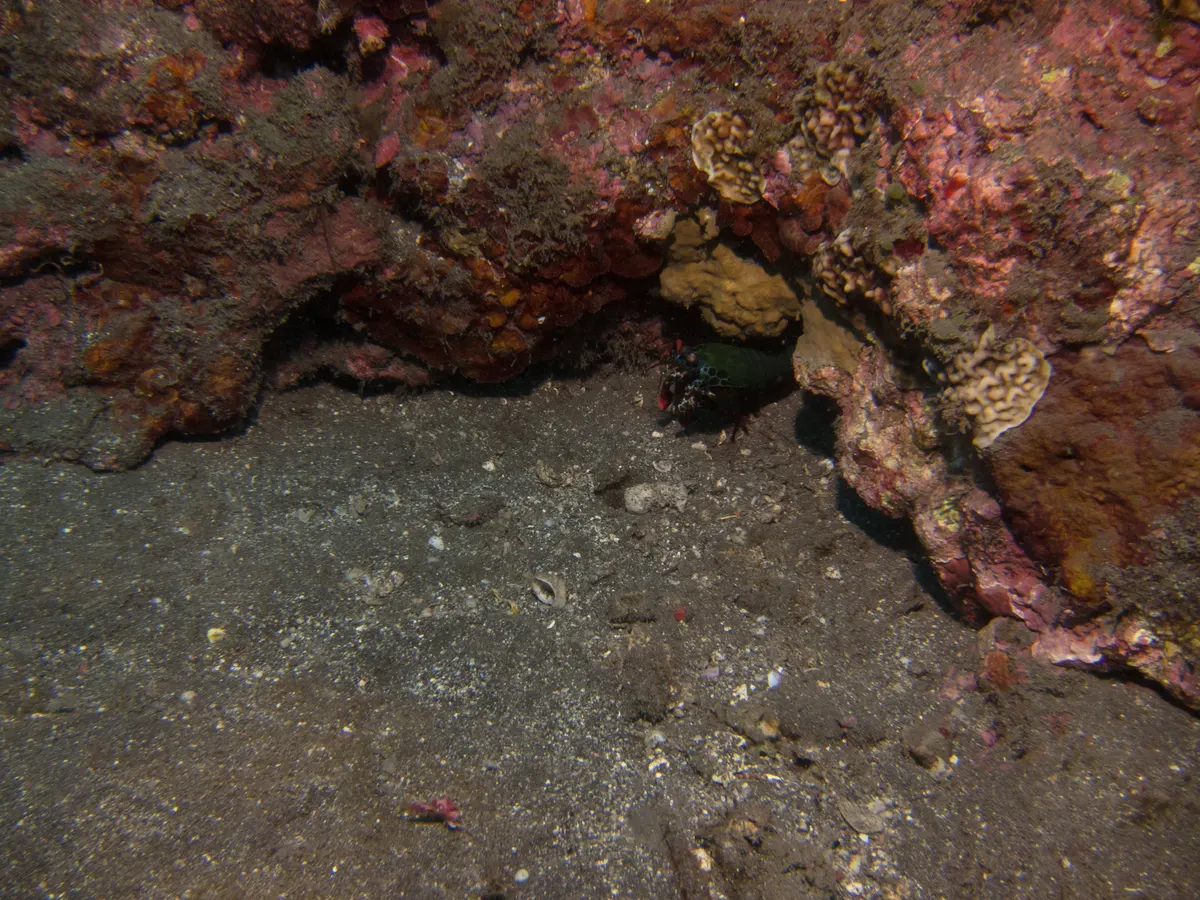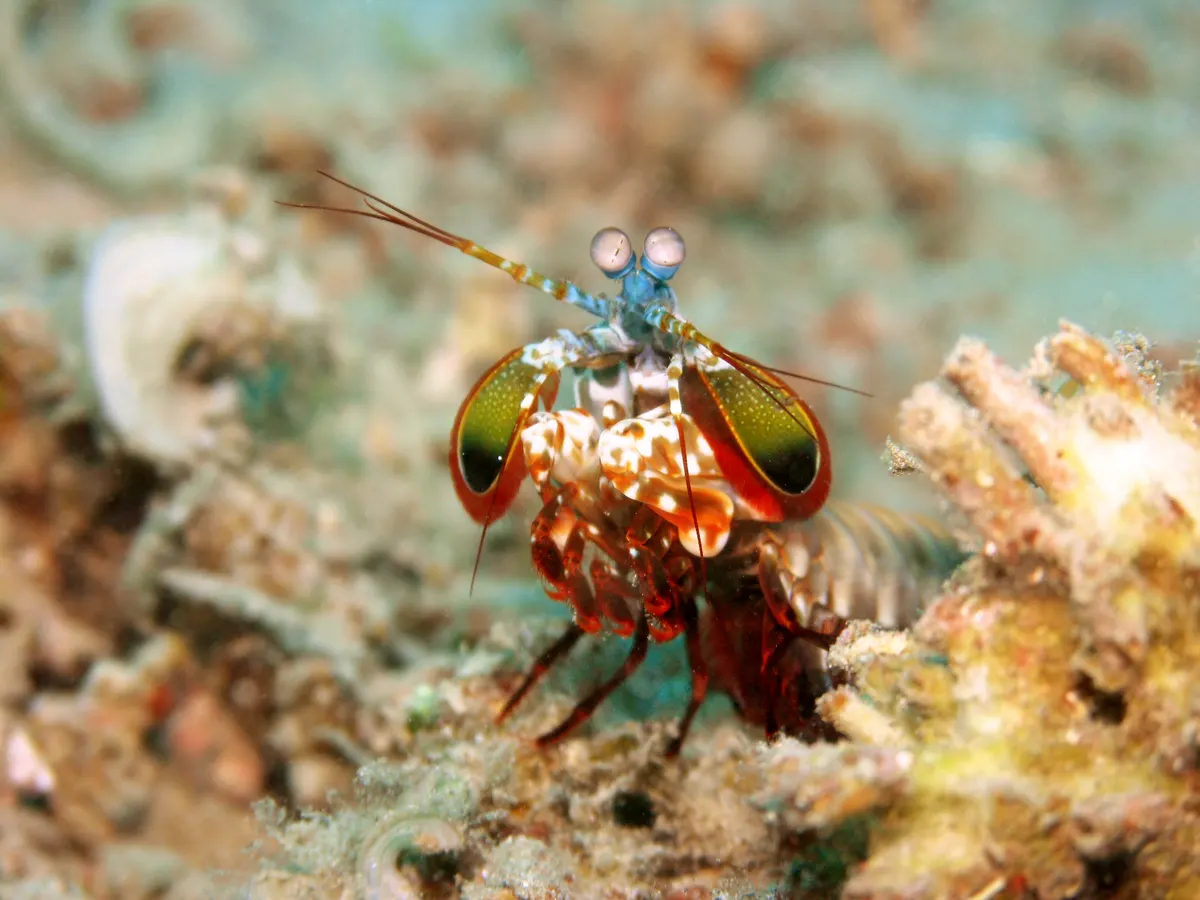
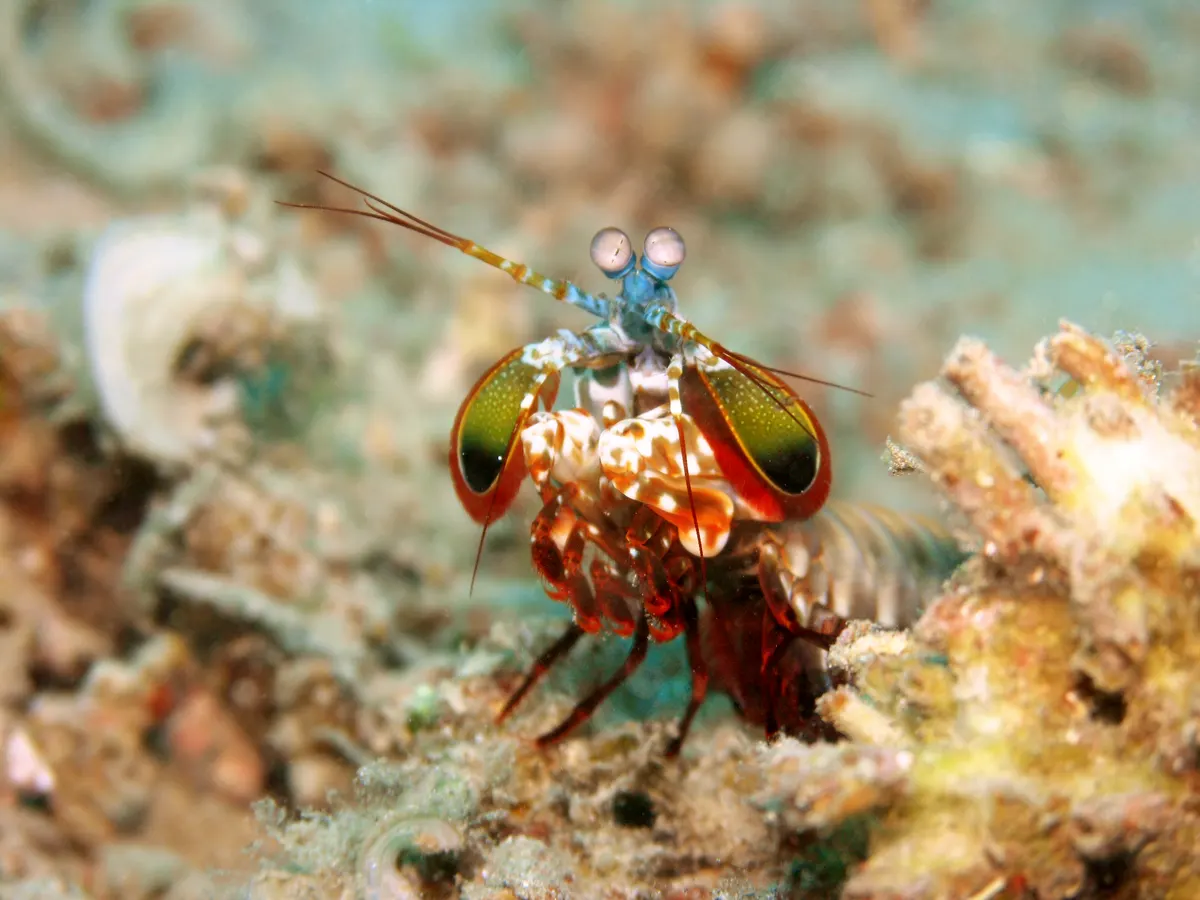
A mature peacock mantis shrimp typically measures between 2 and 6 inches in length, though some stomatopod species can reach up to 18 inches. The physical anatomy of O. scyllarus is built for heavy-duty combat. The body is heavily segmented and shielded by a tough, chitinous carapace.
The biological fascinating example of the mantis shrimp begins with its raptorial appendages, known as dactyl clubs. These clubs are composed of heavily mineralized hydroxyapatite (the same mineral found in human bones) wrapped in a shock-absorbing matrix of chitin fibers arranged in a spiraling, helicoidal pattern to prevent catastrophic structural failure upon impact. When the mantis shrimp strikes, a saddle-shaped spring mechanism in the arm is released, accelerating the club to speeds of up to 50 mph (80 km/h) in under three milliseconds, pulling upwards of 10,000 g's of acceleration.
Equally astonishing is the mantis shrimp's visual system. While humans rely on three types of color-receptive cones, the mantis shrimp possesses 16 distinct types of photoreceptors. Their large, compound eyes are mounted on highly mobile stalks, allowing for independent movement and trinocular vision in each eye—meaning a single eye can gauge depth and distance perfectly. They can perceive light spectra completely invisible to humans, including deep ultraviolet (UV) light and circularly polarized light, which they use for secret, intraspecies communication and spotting transparent prey.