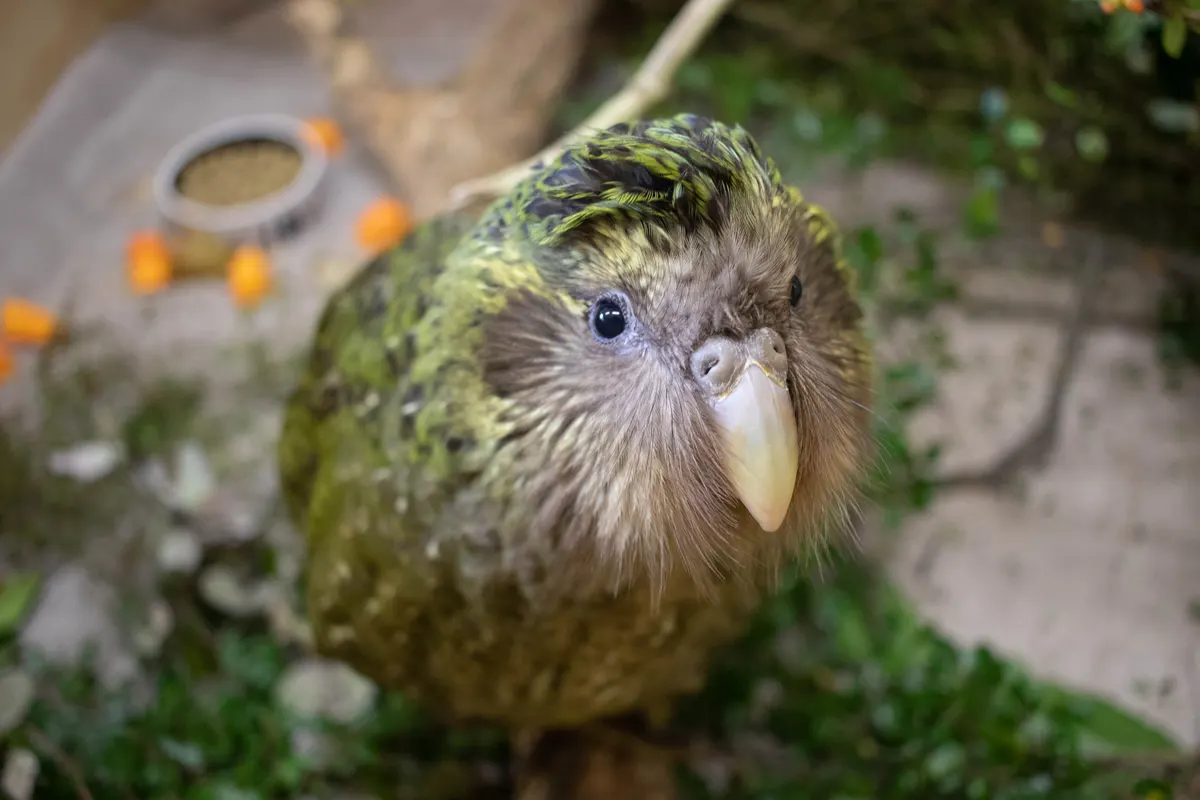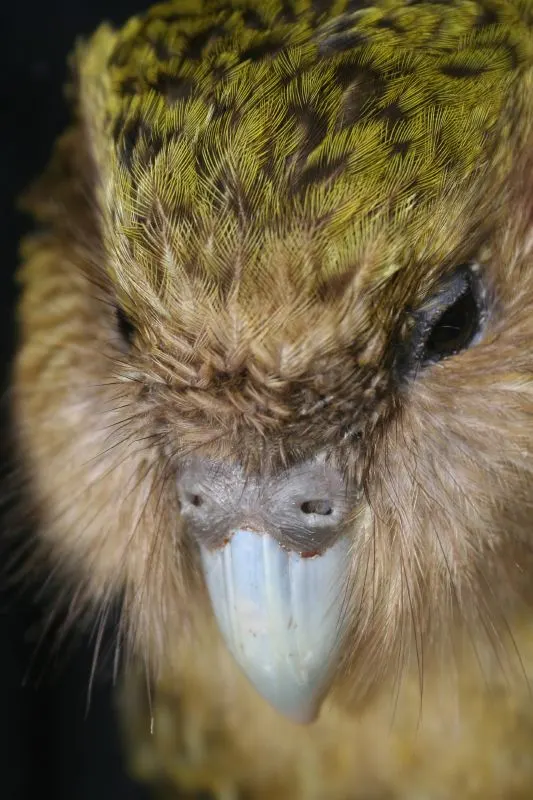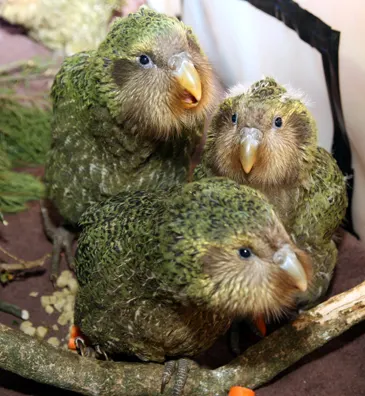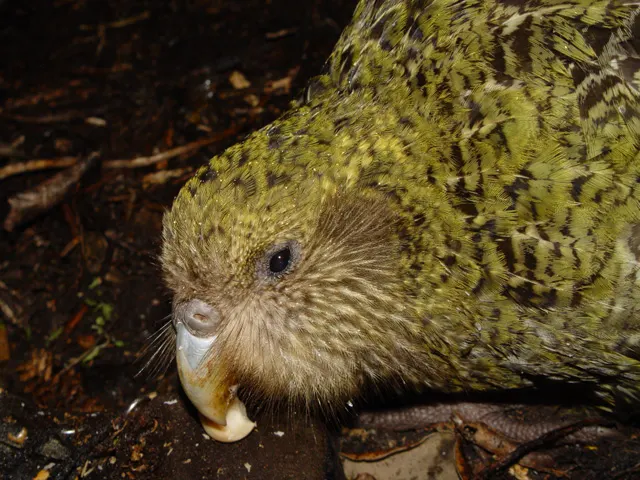
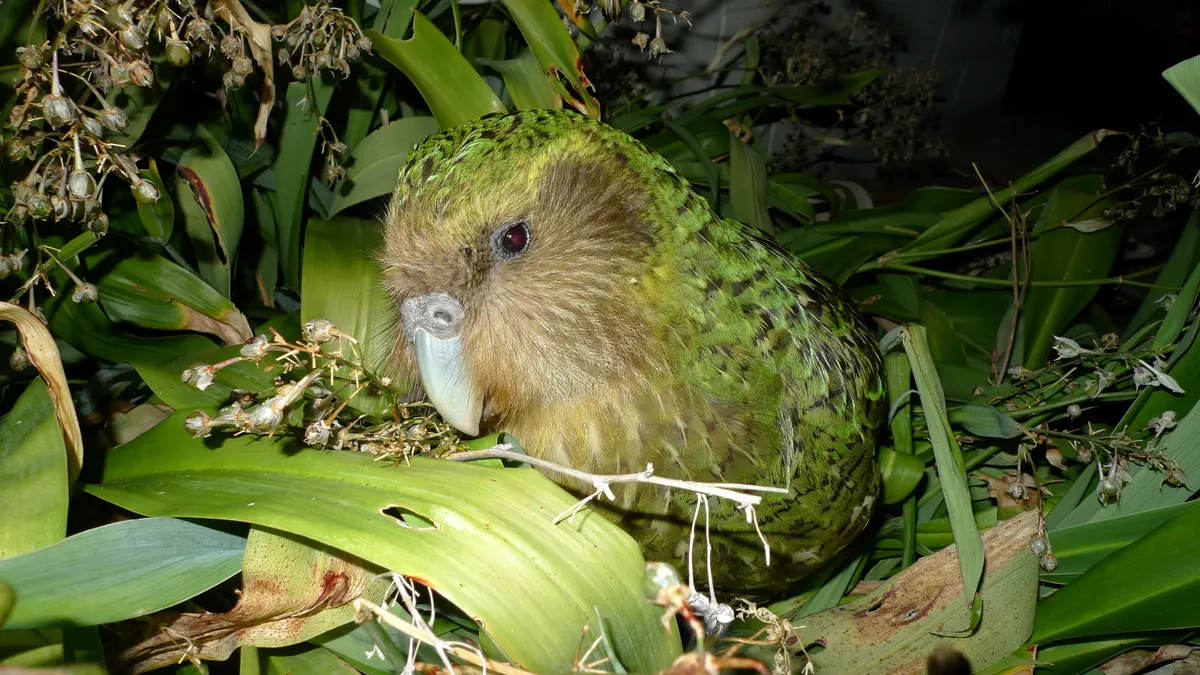
Kakapos are generally solitary creatures, crossing paths only during the highly specialized breeding season. Their defense mechanism against threats is to "freeze" completely, relying on their green plumage to mimic a mossy stump. While effective against visually hunting eagles, this strategy proved fatal against scent-hunting mammals.
The most fascinating aspect of kakapo behavior is its lek breeding system—it is the only flightless bird and the only parrot to employ this strategy. During the breeding season, males congregate in traditional display arenas, or "leks," situated on prominent ridges. They dig shallow, bowl-like depressions in the soil which serve as acoustic amplifiers.
To attract females, males inflate a large thoracic air sac and emit a deep, low-frequency "booming" call that can travel for several kilometers through the dense forest. This booming is often followed by a high-pitched "chinging" sound. A male may boom continuously for up to eight hours a night, losing a significant portion of his body weight over the months-long breeding season. Males fiercely defend their lekking bowls, engaging in violent, sometimes bloody territorial fights using their sharp claws and powerful beaks.