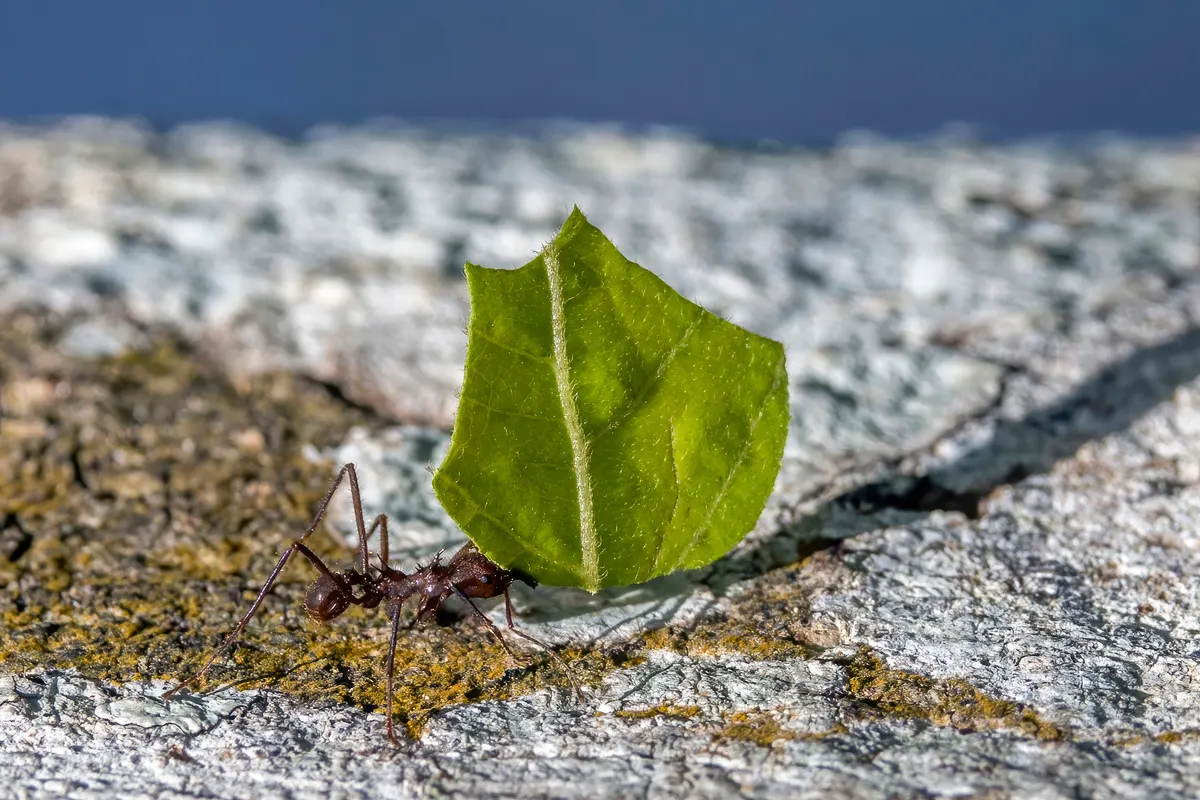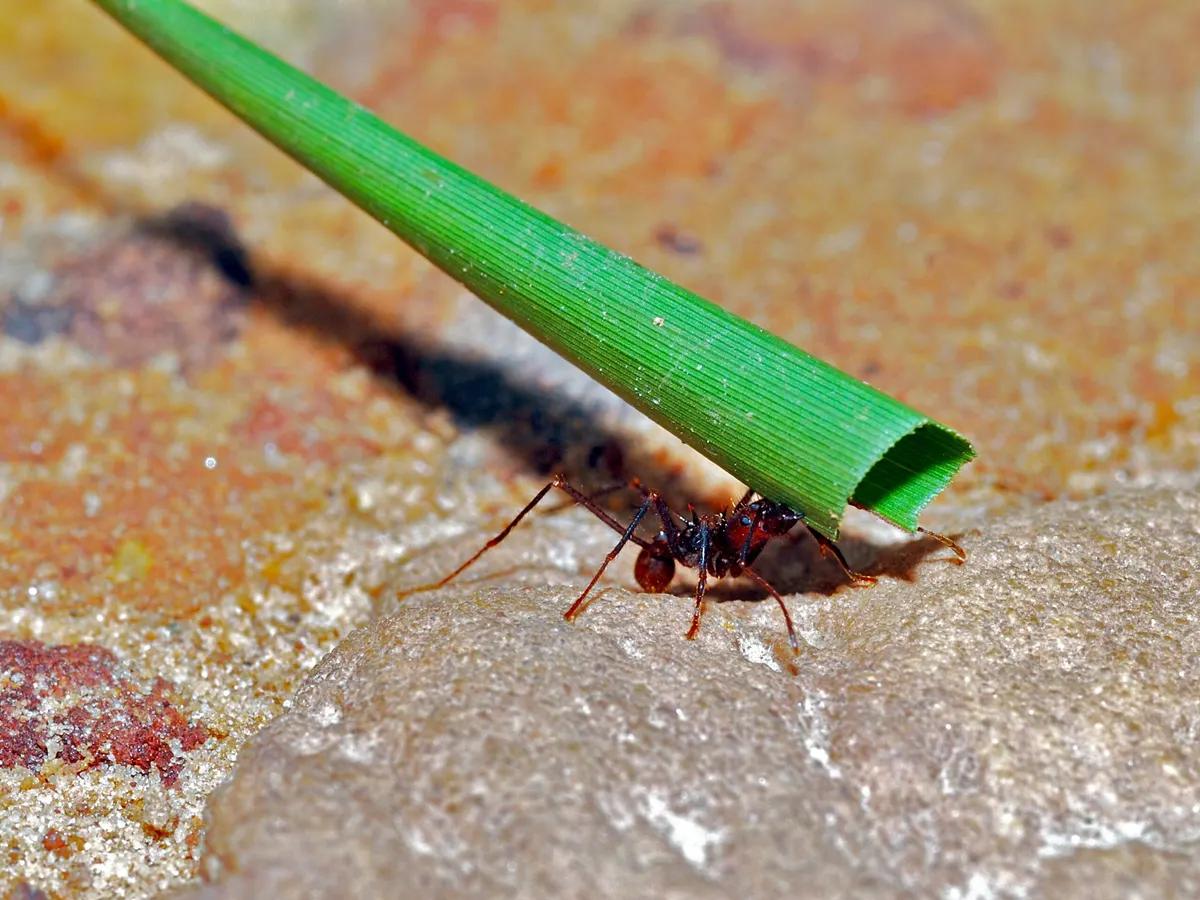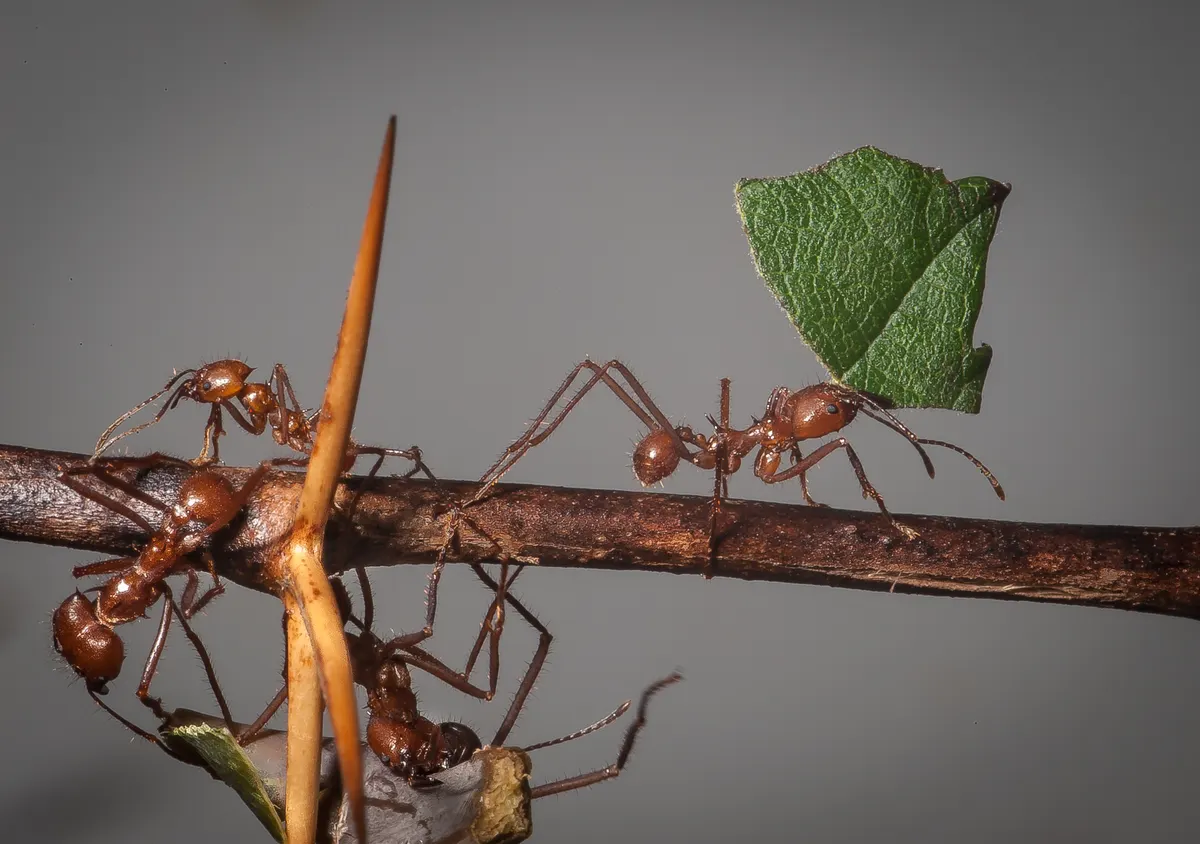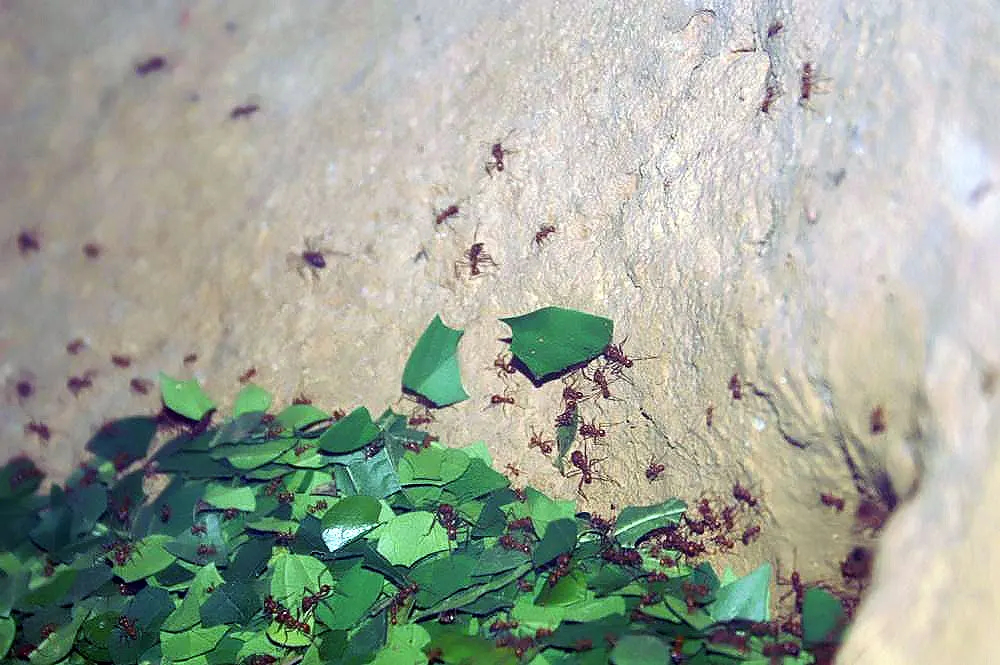
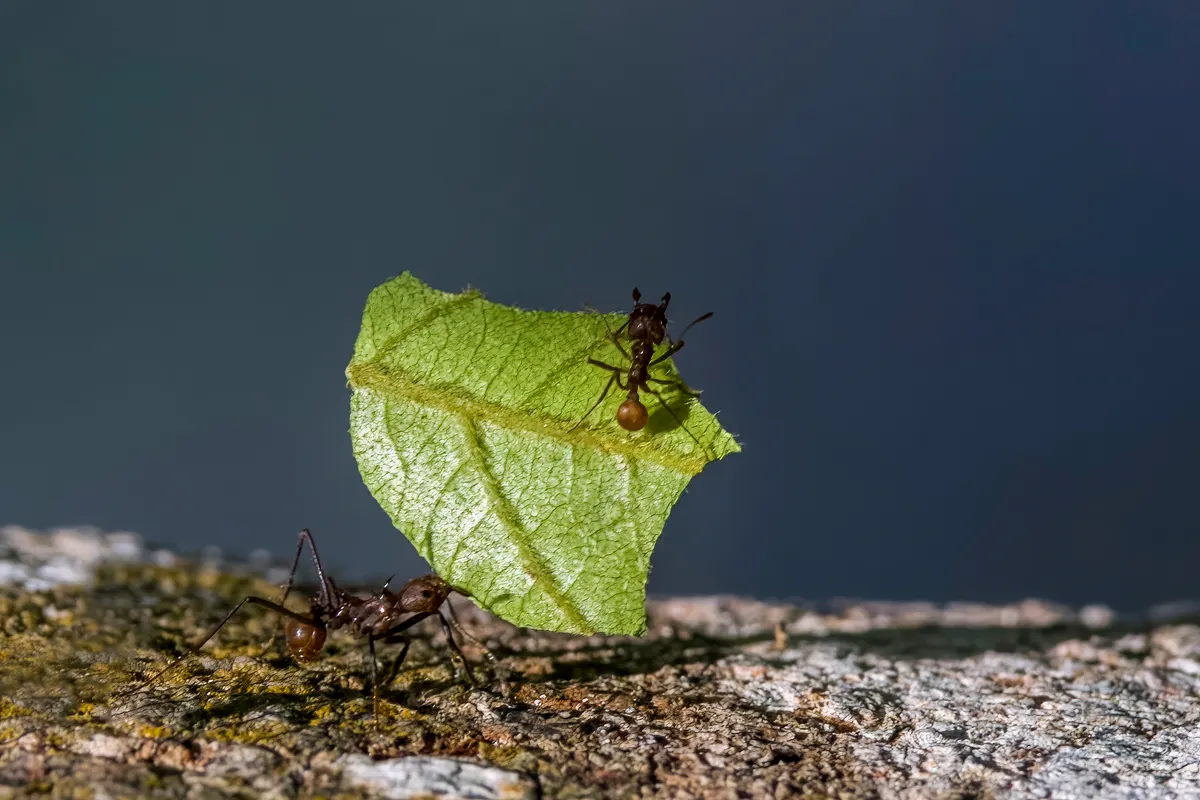
A leafcutter ant colony is a superorganism—a highly complex entity where millions of individuals function seamlessly as a single unit to ensure survival.
Communication is primarily chemical and mechanical. Ants use a complex vocabulary of pheromones to signal alarm, direct traffic, or mark food sources. Furthermore, leafcutters utilize stridulation—rubbing segments of their abdomen together—to produce vibrations. These vibrations travel through the soil and plant stems, signaling to other workers that a particularly good patch of leaves has been found, or that a nest tunnel has collapsed and requires immediate excavation.
The physical nest is a fascinating example of animal architecture. Spanning up to 30 feet across and plunging 20 feet deep, a mature nest contains thousands of interconnected chambers. The ants construct sophisticated ventilation shafts that utilize wind patterns on the surface to draw out toxic carbon dioxide and pull fresh oxygen down into the deep, heat-generating fungus chambers.