
Animal guides
Why Do Giant Pandas Eat Bamboo All Day?
A panda's bamboo habit is less about greed than energy: tough stems, an inefficient digestive system, and a body built to keep eating.
By An Nguyen · Published · Updated
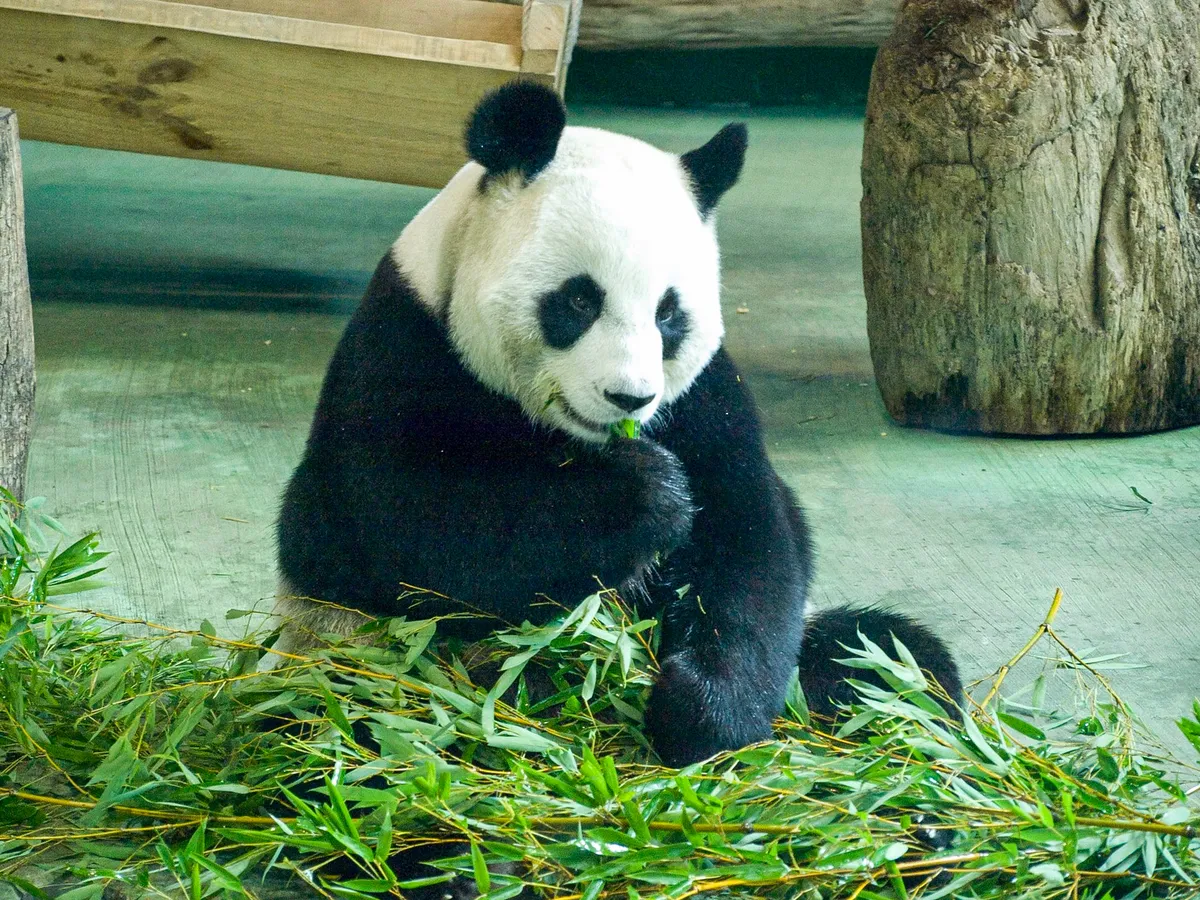
Giant pandas are bears, yet most of what they eat is bamboo. That looks like an easy life from a distance: sit down, hold a stem, chew, rest, and begin again. In reality, it is an energy problem. Bamboo is plentiful in a panda's mountain-forest home, but it is fibrous and relatively low in energy. A panda has to keep eating because it cannot get much fuel from each mouthful.
Bamboo is available, but it is not efficient fuel
Wild giant pandas live in cool, moist mountain forests in central China where bamboo grows in dense stands. That makes bamboo a dependable food source, even when it is not a calorie-rich one. The Smithsonian's National Zoo explains that pandas have a digestive system more like a carnivore's than a grazing herbivore's, so a large share of the bamboo they eat passes through without being fully broken down.
To make up for that inefficient digestion, a panda needs volume. Smithsonian reports a daily intake of roughly 70 to 100 pounds of bamboo and 10 to 16 hours spent foraging and eating. The exact amount varies with the season, the available bamboo species, and the individual animal, but the basic rule does not change: low-return food requires a lot of eating.
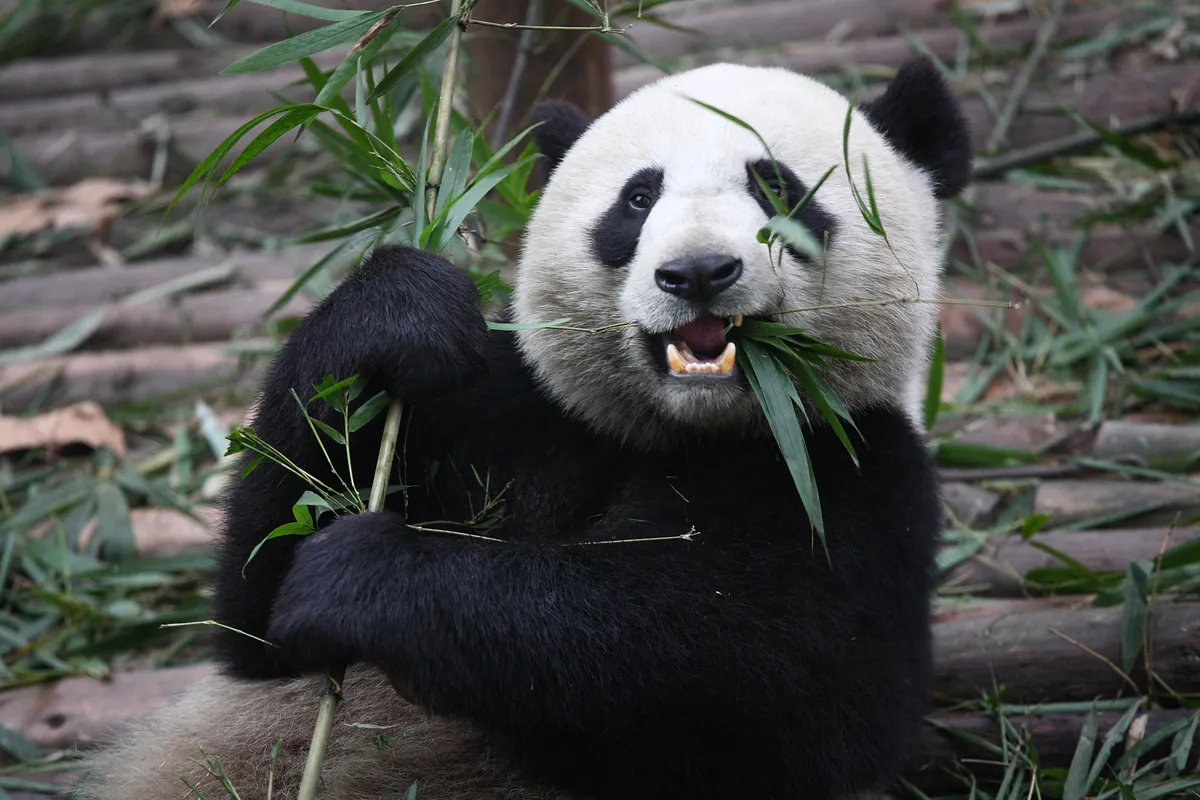
Photo by Chen Wu via Wikimedia Commons, CC BY 2.0.

A bear's body adapted to a bamboo job
Pandas did not become ordinary herbivores. Instead, they evolved a set of practical tools for handling bamboo. Their enlarged wrist bone works like a thumb, helping the front paws grip and rotate a stem. Their broad molars and strong jaw muscles crush the tough outer layers. Sitting upright leaves both paws free to manage the food.
That combination explains the familiar panda pose. It is not just charming; it is an efficient way to hold a slippery, fibrous stem while stripping leaves or chewing the softer inner tissue. Pandas also choose different parts of the plant. When shoots are available, they can be especially valuable. At other times, a panda may prefer leaves or the woody stalk, known as the culm.
The habitat and the diet are tied together
Bamboo is not simply a food choice. It shapes where giant pandas can live. A panda needs mountain forest with enough suitable bamboo over a large area, which is why habitat fragmentation is a serious conservation issue. A forest that looks green from above may still be unsuitable if its bamboo is missing, patchy, or difficult to reach.
Pandas also move through their habitat to find better feeding spots. The species is not built for speed over long distances, and spending energy carelessly would make a low-energy diet even harder to sustain. Resting between feeding bouts is therefore part of the strategy, not wasted time.
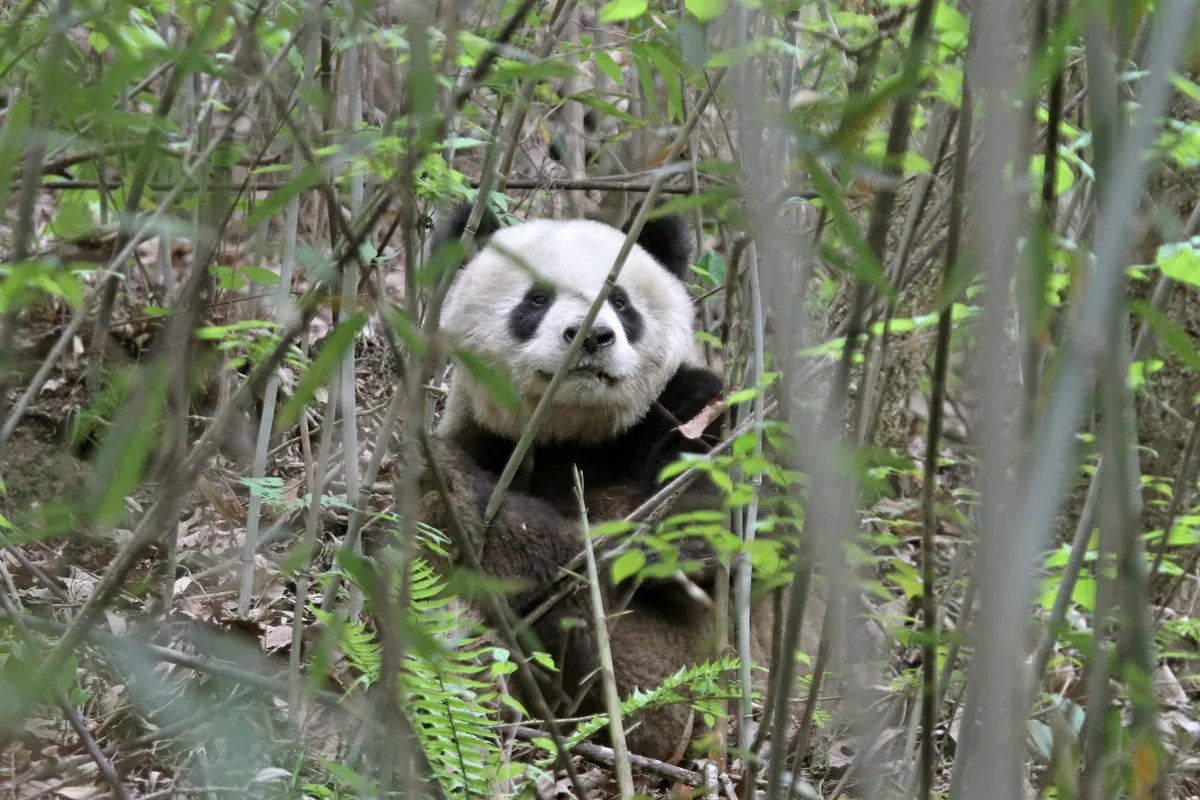
Photo by no rights reserved via Wikimedia Commons, CC0.

Do panda cubs eat bamboo straight away?
No. A newborn panda is tiny and depends entirely on its mother. As cubs grow, they gradually learn to handle bamboo and spend more time sampling the plant foods that dominate adult life. The transition matters because bamboo feeding is a learned routine as well as a physical adaptation: how to grip stems, which parts to select, and where to find food all shape a panda's day.

Photo by Sheila Lau via Wikimedia Commons, public domain.

Why do pandas not just eat meat like other bears?
Giant pandas belong to the bear family, but evolution pushed them toward a highly specialized bamboo diet. The trade-off is clear: they can use a food source that many other large mammals do not rely on, but they must spend much of the day processing it. Their anatomy still shows their bear ancestry, while their paws, teeth, jaw muscles, and daily routine show the demands of bamboo.
The short answer
Giant pandas eat bamboo all day because bamboo provides less usable energy than a panda needs from a small meal. Their body is adapted to grip and crush it, their habitat is built around it, and their schedule is built around finding, eating, and resting. What looks like a lazy habit is actually a full-time survival strategy.
For range, bamboo dependence, breeding, and conservation status, see the full giant panda profile. The taxonomic contrast with red pandas is covered in giant panda vs red panda. Related bears are listed under Ursidae.