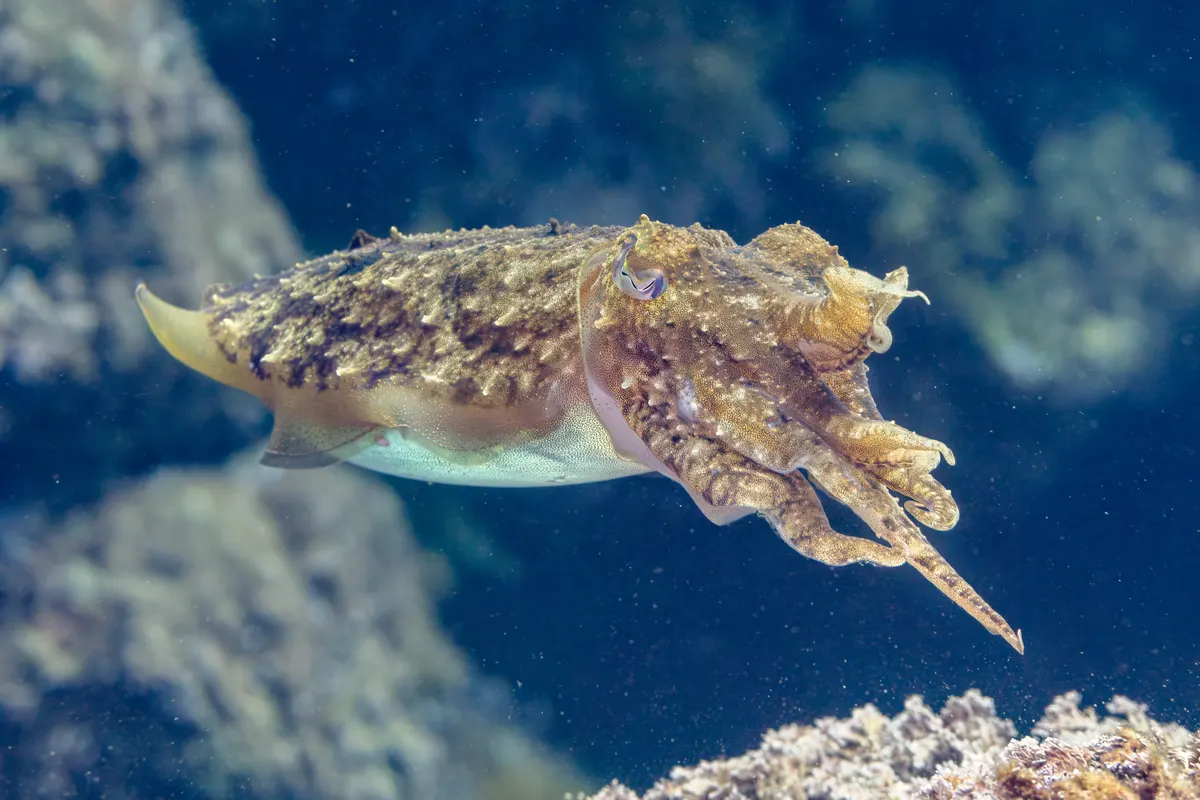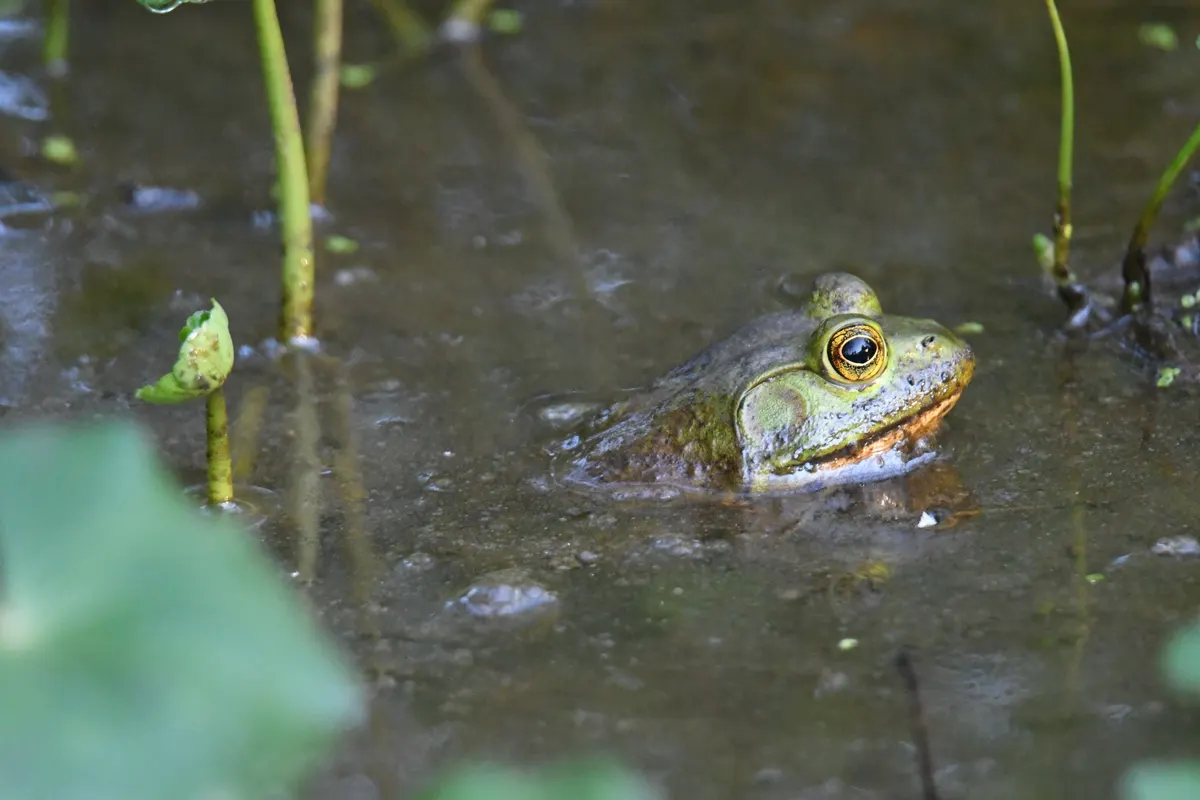
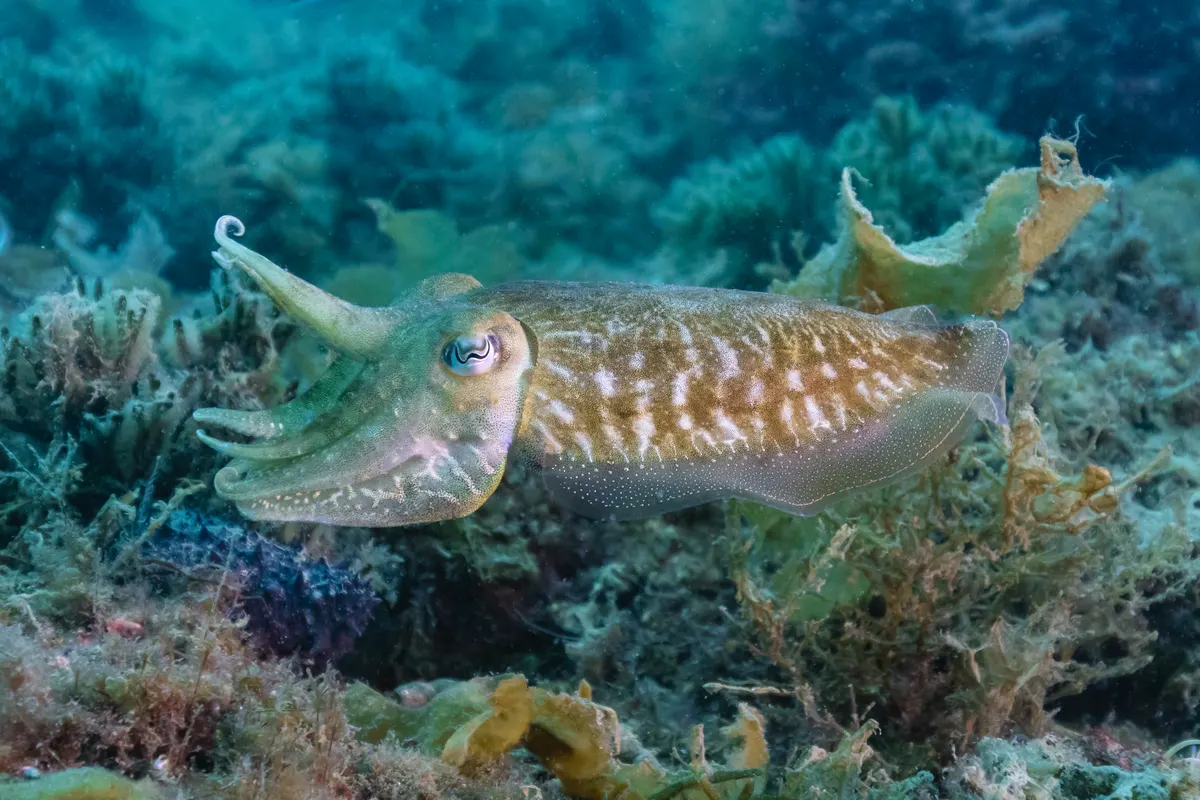
Common cuttlefish hovering over a sandy seafloor in Portugal
The common cuttlefish is a large cephalopod of coastal Atlantic and Mediterranean seas.
CephalopodaLeast Concern

Common Cuttlefish Facts

Cuttlefish have three hearts and blue, copper-based blood — just like octopuses.

The common cuttlefish is a large European cephalopod of coastal ocean waters. It changes color in seconds, hunts shrimp and crabs with two fast tentacles, and uses an internal cuttlebone to fine-tune buoyancy.
By · Updated

Quick Facts

Common Cuttlefish at a glance

Sepia officinalisSepiidaSepiidae

About their home

Kind of animal

Cephalopoda

Where they live

What they eat

How safe?

Least Concern

Size and speed

How heavy

1 pound – 9 pounds

How long

6 inches mantle – 18 inches mantle

How fast

Sudden tentacle strikes and jet-propelled escapes

Lifespan

About 1 to 2 years

Core article

Common Cuttlefish: ecology and life history

A closer look at habitat, diet, behavior, reproduction, and conservation.

Start here

Common Cuttlefish

The common cuttlefish (Sepia officinalis) is one of Europe's most familiar cephalopods — a soft-bodied ocean hunter with eight arms, two long feeding tentacles, and an internal cuttlebone that fine-tunes buoyancy like a diver's vest. In coastal ocean waters from the eastern Atlantic to the Mediterranean it disappears into sand with instant camouflage, then flashes bold color at spring breeding gatherings. A close relative of the octopus, this carnivore packs remarkable eyesight and learning into a life that usually lasts only one or two years.

Eight Arms, W-Shaped Pupils, and Skin That Changes in a Blink

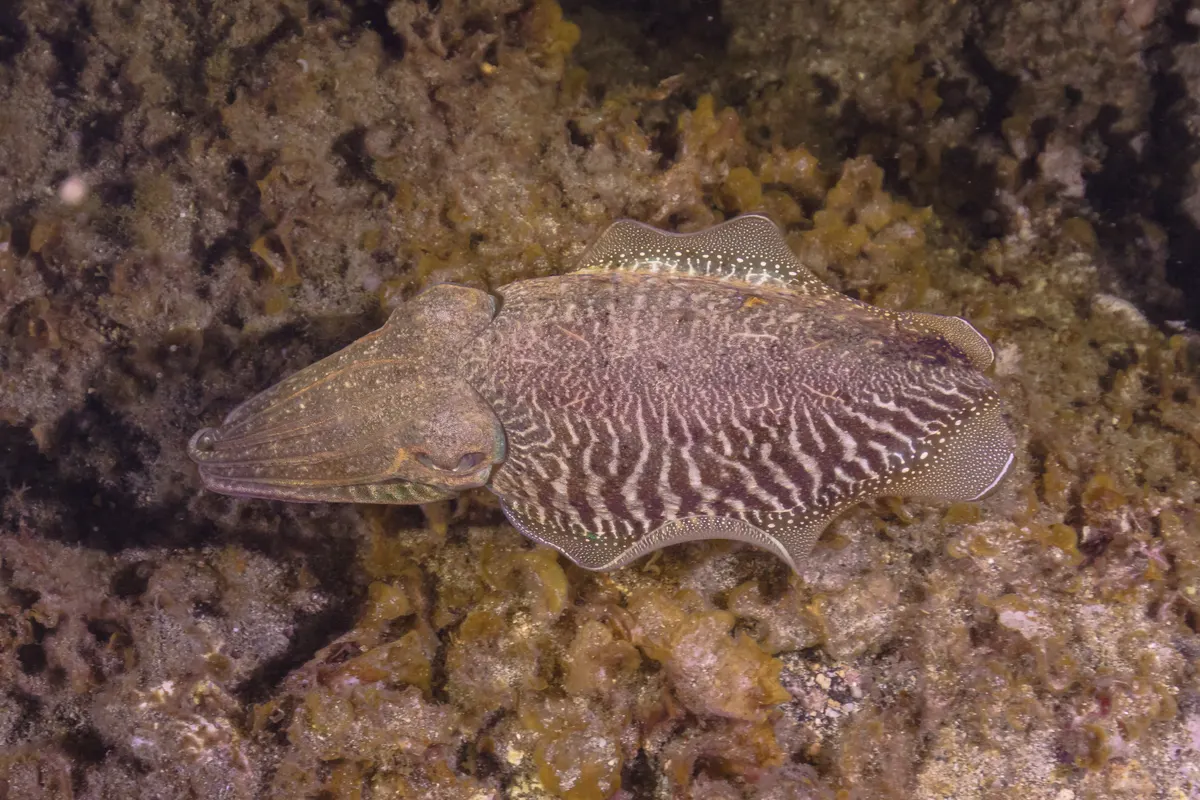
A large adult's mantle runs 6 to 18 inches, and weight ranges from about 1 to 9 pounds with age and sex. A continuous fin skirts the mantle, giving the gentle undulating swim that makes the animal look like it is flying underwater. Eight short arms ring the mouth, and two longer tentacles shoot out to seize prey and retract; the beak is sharp and parrot-like, and the eyes carry distinctive W-shaped pupils. The skin holds chromatophores, iridophores, and leucophores under brain control, changing pattern in milliseconds for camouflage and signaling, while three hearts and copper-based blue blood support an active life in cool seas. The porous internal cuttlebone — a made-over remnant of an ancestral shell — lets the cuttlefish rise, sink, or hover with precise control by adjusting gas and liquid in its chambers.

Where Cuttlefish Live

Common cuttlefish over coastal ocean habitat off Tenerife
Shallow coastal ocean waters provide hunting grounds from spring through summer.

Sepia officinalis lives in the eastern Atlantic and Mediterranean, from Norway and the British Isles south along Europe and West Africa. It favours coastal shelf waters — sandy bottoms, seagrass beds, and mixed rock — from the shallows down to a few hundred meters. In spring and summer adults move inshore to feed and spawn; in autumn and winter many shift to deeper water. It is fully marine and cannot survive in freshwater.

What Cuttlefish Eat

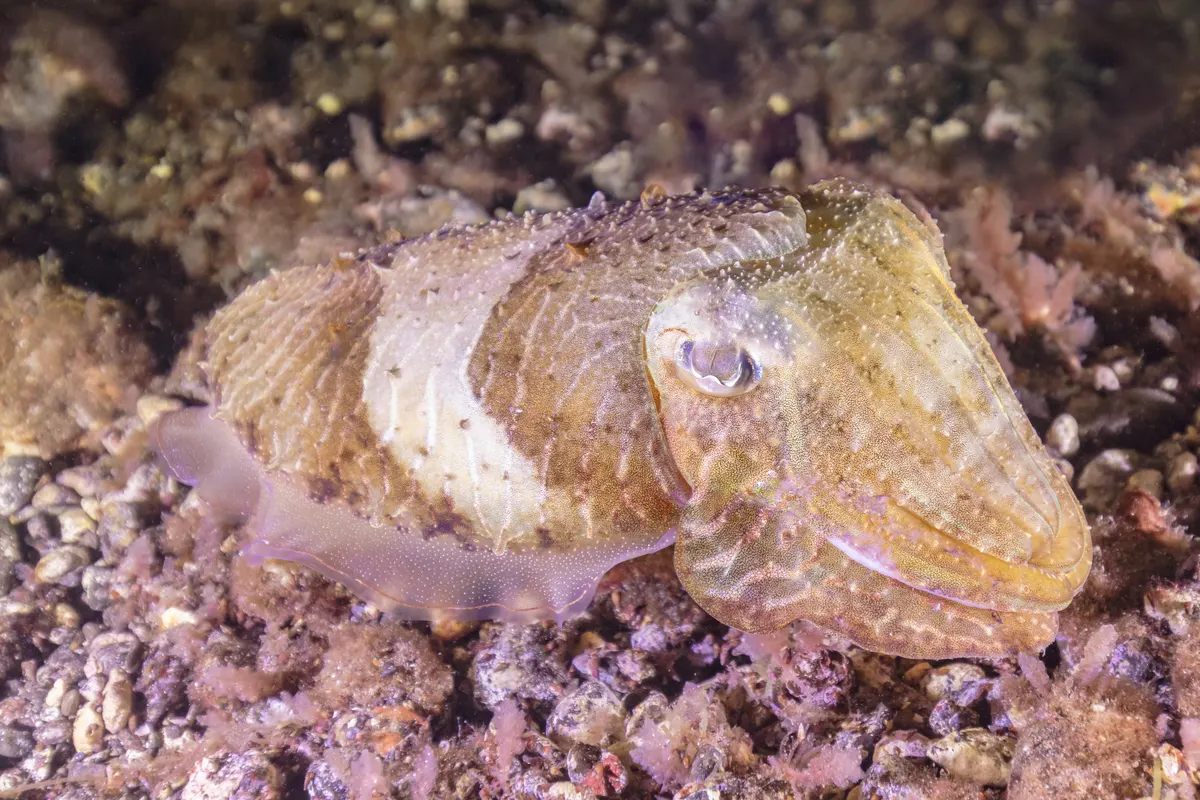
Common cuttlefish hunting posture above sand and algae
Ambush hunting and rapid tentacle strikes make crustaceans easy targets.

Common cuttlefish are active carnivores that hunt shrimp, crabs, small fish, and worms. The method blends stealth and speed: the animal melts into sand or seagrass, stalks close, then fires its two feeding tentacles in a blink to snatch prey and draw it to the beak. Sharp vision picks out motion and contrast, and the tentacle clubs lock onto slippery crustaceans. Threatened by sharks, seals, or large fish, a cuttlefish can jet away and release an ink cloud to confuse the pursuer.

Behavior: Solitary Hunters, Dramatic Spawners

Common cuttlefish in Mediterranean waters during spring gathering
Males use dramatic color displays to compete for mates without always fighting.

Outside breeding, cuttlefish are mostly solitary. At inshore spawning aggregations, males flash bold zebra-striped patterns, chase rivals, and court females with color signals — and some smaller males briefly mimic female patterning to slip past dominant males, a well-studied sneaker tactic. Cuttlefish rank among the most intelligent invertebrates, learning prey preferences, remembering solutions, and timing intricate skin displays; their social complexity peaks around mating rather than in year-round groups, and by day they often rest half-buried in sand rather than in a den like an octopus.

Life Cycle: A Short Life and a Single Spawning

Common cuttlefish egg cluster attached near Portuguese coastal cover
Hatchlings emerge as miniature cuttlefish ready to hunt tiny prey.

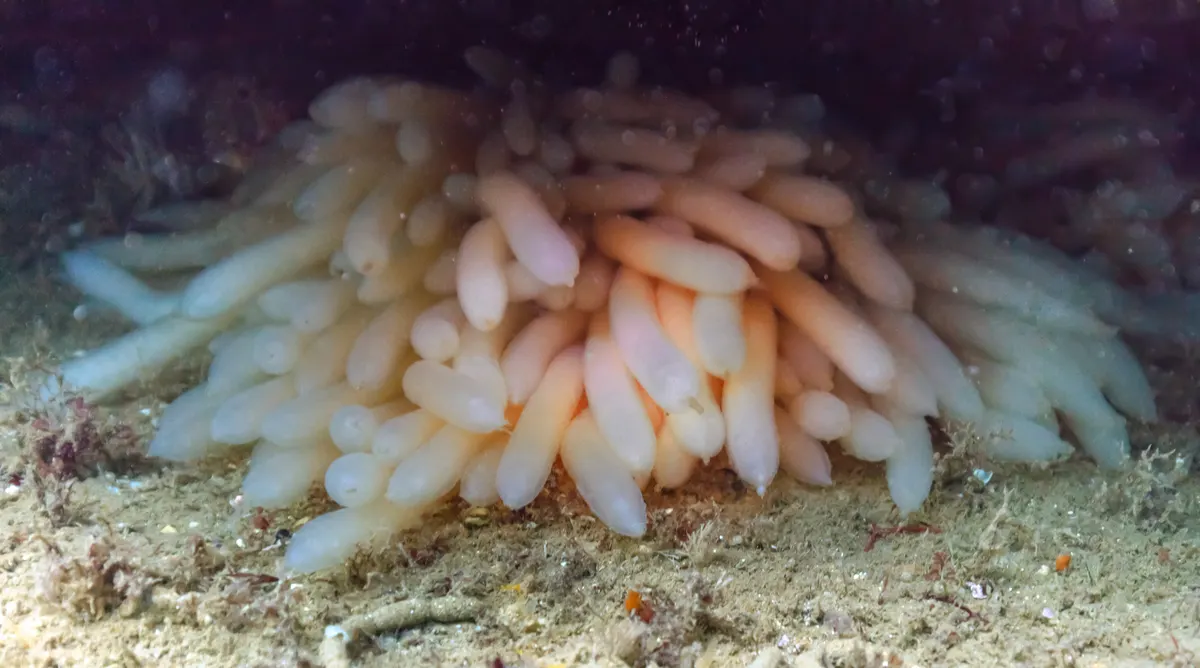
Common cuttlefish are short-lived and usually semelparous, pouring everything into one breeding season. After mating, females attach clusters of dark, grape-like eggs to algae, rock, rope, or wreckage in shallow water, and the embryos develop for roughly one to two months depending on temperature. Hatchlings emerge as miniature cuttlefish already able to hunt tiny prey, with no parental care afterward, and grow fast through their first year. Most live only one to two years, dying after they spawn, so year-class strength swings with ocean conditions and fishing pressure.

Conservation: Least Concern but Fished

Atlantic Ocean cliffs and sea stack along Portugal’s Algarve coast
European Atlantic coasts are the northern and western core of this species’ range.

The IUCN rates Sepia officinalis Least Concern; it is widespread across European and adjacent Atlantic and Mediterranean waters, though global population trends are hard to measure and often listed as unknown. Natural predators include sharks, dolphins, seals, and large fish; human pressure comes mainly from commercial and artisanal cephalopod fisheries, bycatch, and coastal change to seagrass and nursery grounds. A short generation time and high fecundity let populations rebound when fishing and habitat pressures are managed, but local overharvest can still strip a favoured spawning bay quickly.

References and Authoritative Sources

Common Cuttlefish: classification and fun facts

Classification

Scientific Taxonomy
  1. Kingdom

    Animalia

  2. Phylum

    Mollusca

  3. Class

    Cephalopoda

  4. Order

    Sepiida

  5. Family

    Sepiidae

  6. Genus

    Sepia

  7. Species

    S. officinalis

Did You Know?

Fun Facts

1

Cuttlefish have three hearts and blue, copper-based blood — just like octopuses.

2

The white “cuttlebone” sold in bird shops is the animal’s internal buoyancy shell.

3

They can change skin color and texture in a fraction of a second.

4

Two long feeding tentacles shoot out to grab prey, then retract under the shorter arms.

5

Males sometimes disguise themselves with female-like patterns to sneak past rival males.

6

Common cuttlefish usually live only one or two years and breed once.

Common Questions

FAQ about Common Cuttlefish

Select a question to reveal the answer.

What is a common cuttlefish?

The common cuttlefish (*Sepia officinalis*) is a soft-bodied cephalopod with eight arms, two long tentacles, and an internal cuttlebone. It is one of the best-known cuttlefish of Europe and the Mediterranean.

Where do cuttlefish live?

They live in coastal ocean waters of the eastern Atlantic and Mediterranean, from Norway and the British Isles south to West Africa, usually on sandy or seagrass bottoms.

What do cuttlefish eat?

Cuttlefish are carnivores. They eat shrimp, crabs, small fish, and worms, catching prey with two extendable feeding tentacles.

How are cuttlefish different from octopuses?

Cuttlefish have an internal cuttlebone and a broader body with a fin fringing the mantle. Octopuses lack a cuttlebone, have a rounder soft mantle, and usually live in dens among rocks.

What is a cuttlebone?

The cuttlebone is a lightweight, chambered internal shell that lets the cuttlefish add or remove gas to rise or sink in the water — like a built-in buoyancy vest.

How do cuttlefish change color?

Millions of chromatophore cells expand or shrink under nerve control, instantly shifting patterns for camouflage, hunting, and mating displays.

Show 4 more questionsExpand
Do cuttlefish lay eggs?

Yes. Females attach grape-like black or dark eggs to seaweed, rocks, or wrecks in shallow water. Hatchlings look like tiny adults and hunt on their own.

How long do cuttlefish live?

Most common cuttlefish live about one to two years. Adults typically spawn once and then die.

Are cuttlefish endangered?

Sepia officinalis is listed as Least Concern, though local populations can be affected by fishing pressure and coastal habitat change.

Can cuttlefish squirt ink?

Yes. When threatened they release a dark ink cloud and jet away, similar to octopuses and squids.