
Ocean life
Why Are Blue Whales So Big?
The largest animal ever known lives on tiny krill. Its size works because the ocean can sometimes concentrate an extraordinary amount of food.
By An Nguyen · Published · Updated
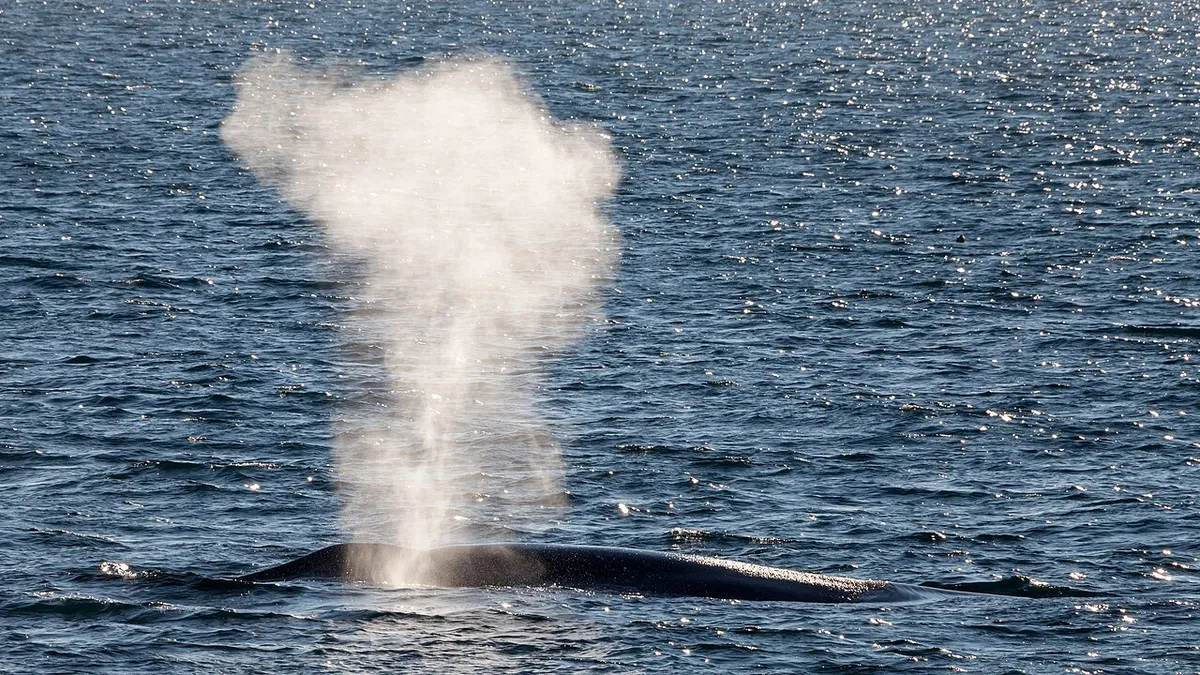
Blue whales are the largest animals known to have lived on Earth, yet they eat tiny shrimp-like animals called krill. Their size is possible because the ocean can gather huge quantities of krill into dense feeding patches.
Size on that scale is not a free upgrade. A blue whale needs enough food, enough water support, and enough time to grow. The body plan works only where those conditions line up.
Baleen turns a small meal into a large one
Blue whales do not use teeth to catch one large prey animal at a time. They take in a large volume of water and krill, then push the water back out through baleen plates. The baleen retains the krill. When food is concentrated enough, this method can deliver a great deal of energy in a short time.
NOAA reports that the biggest blue whales can reach roughly 100 feet and may consume several tons of krill a day while feeding. Their extreme size is not free: a giant body only works when prey is abundant enough. Sparse krill would not repay the cost of lunging, filtering, and moving a body that heavy.
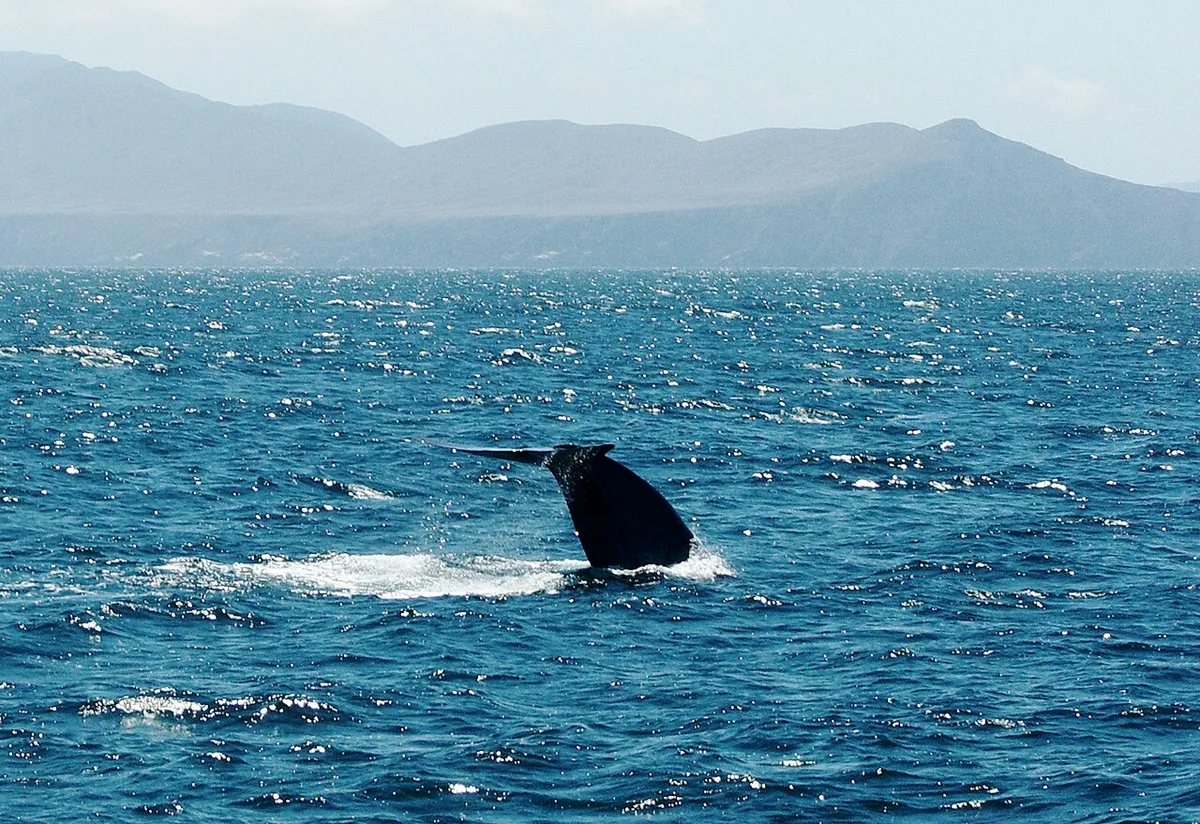
Photo by Shulman via Wikimedia Commons, public domain.

The ocean gives whales room to grow
Water supports a heavy body in a way land cannot. A whale does not need legs strong enough to hold its full mass against gravity, but it still needs a powerful heart, muscles, and tail to travel through the sea. Blue whales use long migrations to connect productive feeding areas with other parts of the ocean.
Buoyancy removes one barrier to giant size, but it does not erase physiology. Heat loss, oxygen storage, and the energy cost of swimming still set limits. The ocean simply makes a larger ceiling possible than open land would allow for a mammal of that mass.
Why krill density matters more than prey size
People often assume the largest predators eat the largest prey. Blue whales reverse that intuition. By filtering huge numbers of small animals from dense patches, they convert a plankton resource into whale biomass. The key variable is concentration: a dense swarm is worth the effort; a thin soup is not.
That feeding ecology also ties blue whales to productive marine systems. Upwelling, seasonal blooms, and cold-water food webs can create the krill aggregations the whales need. When those conditions shift, the energy budget of a giant filter feeder shifts with them.
Big does not mean safe
Blue whales remain endangered. A body that huge can still be harmed by ship strikes, entanglement in fishing gear, and ocean noise. Their size makes them remarkable, but it does not remove the need for protected, usable ocean habitat.
Commercial whaling reduced populations severely in the twentieth century. Recovery since legal protection has been uneven across ocean basins. A long-lived animal that breeds slowly cannot refill depleted stocks quickly, even when individual adults look invincible in photographs.
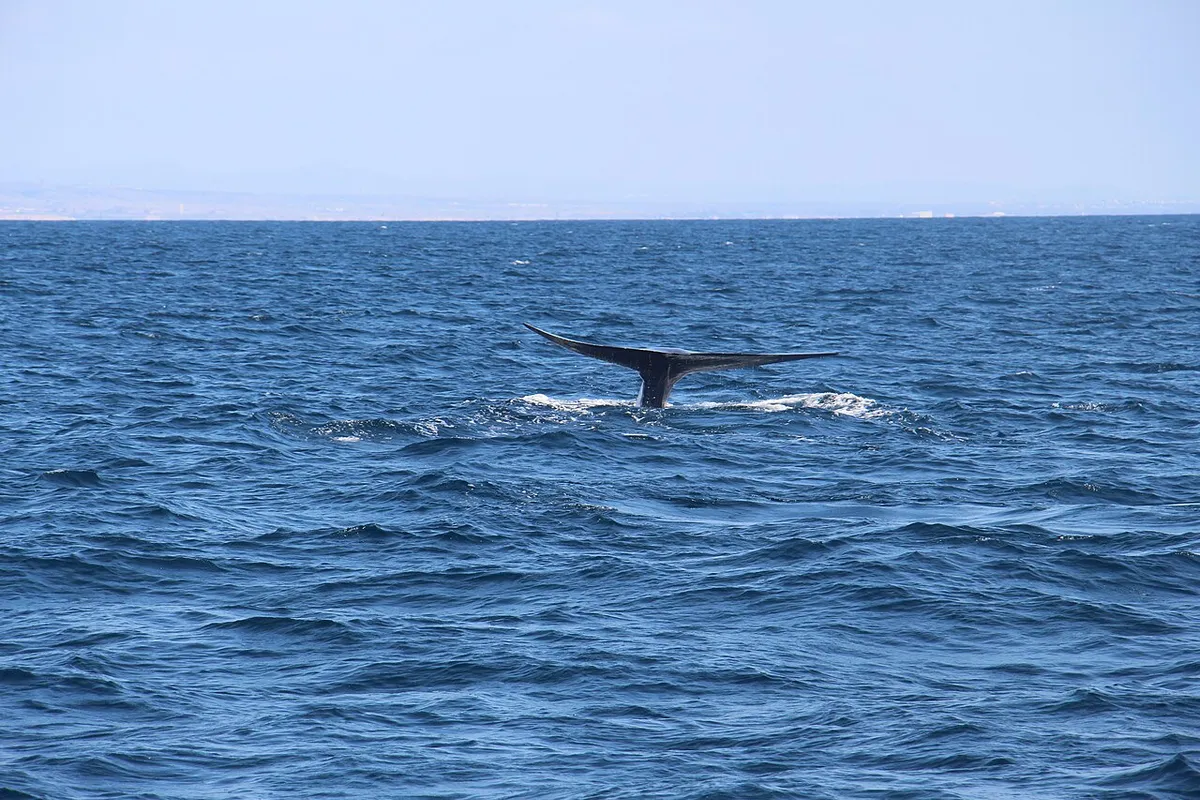
Photo by Myriamdc via Wikimedia Commons, CC BY-SA 4.0.

Size inside the rorqual family
Blue whales belong to the rorqual group of baleen whales, family Balaenopteridae. Expandable throat grooves let them engulf large volumes of water during a lunge. That anatomy is shared with relatives, but the blue whale pushed the design further than any other living species.
Being the largest does not mean being the most aggressive or the most generalized feeder. It means the species found a way to harvest an unusually rich, patchy resource at a scale other animals cannot match.
The short answer
Blue whales can become so large because baleen feeding lets them exploit dense krill patches, while seawater supports their enormous bodies. Their size depends on a productive ocean, not on eating large prey.
For length, weight, range, and conservation status, see the full blue whale profile.