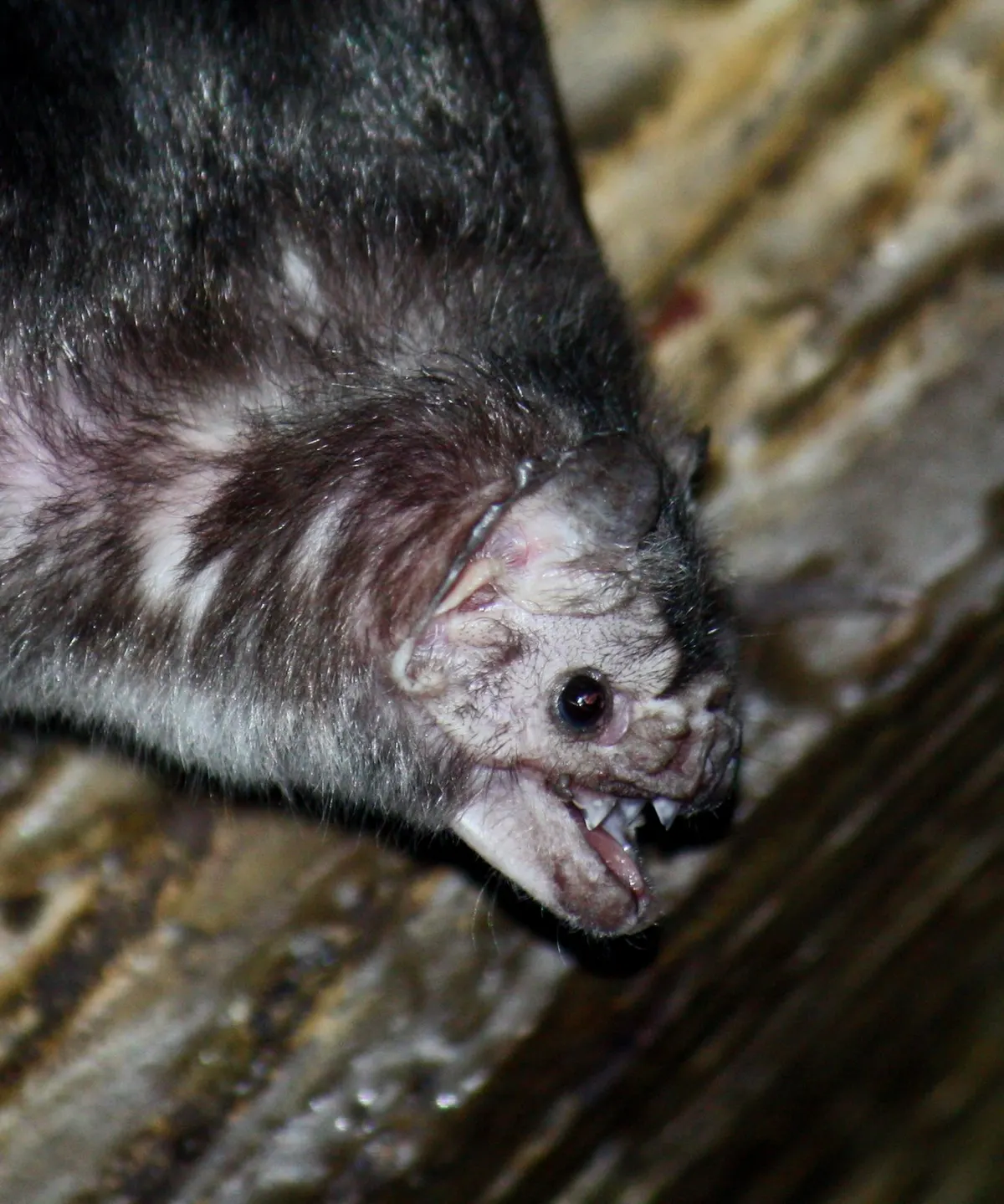
Common vampire bat hanging with folded wings in Brazil
The common vampire bat is a small leaf-nosed bat found only in the Americas.
MammaliaLeast Concern

Common Vampire Bat Facts

Common vampire bats can walk, hop, and even run on the ground using their wings and thumb claws.

The common vampire bat is a small leaf-nosed bat of the Americas that feeds only on blood. It walks on the ground, shares meals with roost mates, and roosts in forests, caves, and hollow trees from Mexico to Argentina.

By · Updated

Quick Facts

Common Vampire Bat at a glance

Desmodus rotundusChiropteraPhyllostomidae

About their home

Kind of animal

Mammalia

Where they live

What they eat

How safe?

Least Concern

Size and speed

How heavy

1 ounce – 2 ounces

How long

2.5 inches – 3.5 inches

How fast

Agile flyer; also walks, hops, and runs on the ground

Lifespan

About 9 to 12 years

Core article

Common Vampire Bat: ecology and life history

A closer look at habitat, diet, behavior, reproduction, and conservation.

Start here

Common Vampire Bat

The common vampire bat (Desmodus rotundus) is a small leaf-nosed bat and the only mammal that feeds exclusively on blood. Found from northern Mexico through Central America into South America, it roosts by day in caves, hollow trees, and abandoned buildings, then flies out after dark to find sleeping livestock or wildlife. Far from the monster of legend, this carnivore takes only a small nighttime meal, walks and even runs on the ground, and shares food with hungry roost mates — a rare cooperative behavior among mammals.

The Only Mammal That Lives on Blood

Common vampire bats are small: 2.5 to 3.5 inches long, 1 to 2 ounces, with a 13-to-14-inch wingspan, gray-brown fur, a short blunt snout, and a reduced nose leaf. The feeding tools are on the face and in the mouth: pits near the nose sense infrared warmth to find where blood vessels run close to the skin, blade-like upper incisors shear a shallow wound without deep piercing, and a grooved tongue plus saliva loaded with anticoagulants and mild anesthetics let the bat lap blood steadily while the host often stays undisturbed. Unlike most bats, it is agile on the ground — strong thumb claws and folded wings act like crutches so it can walk, hop, and even run toward a sleeping host or away from danger. Blood-feeding (sanguivory) evolved only once in bats and nowhere else among living mammals; the vampire bat sits within the New World leaf-nosed family Phyllostomidae and is one of three vampire species.

Where Vampire Bats Live

Tropical rainforest understory in Tabasco, Mexico
Humid forest and cave-rich landscapes provide daytime roosts across their range.

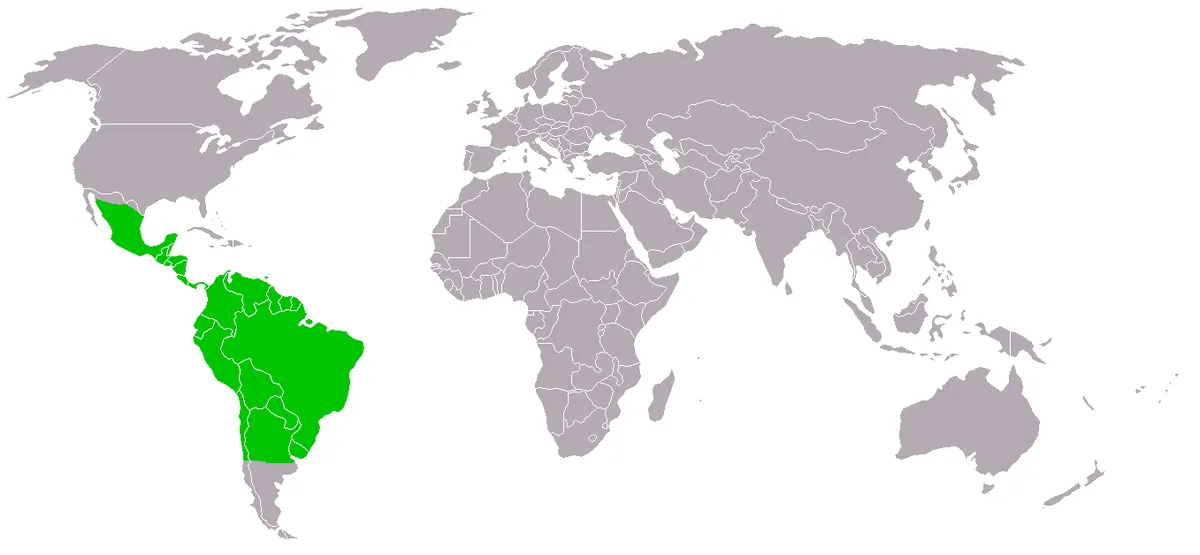
Desmodus rotundus ranges from northern Mexico through Central America and across much of South America to northern Argentina and Uruguay, favouring warm climates and scarce in cold highlands and the far south. Daytime roosts include caves, mine shafts, hollow trees, and quiet human structures, and at night the bats forage over forest, pasture, and woodland edges where mammals sleep. Colonies hold from a few dozen to several hundred, with females often forming stable associations and males defending access to groups, and because livestock make reliable nighttime targets, vampire bats are frequently found near farms as well as wild forest.

What Vampire Bats Eat

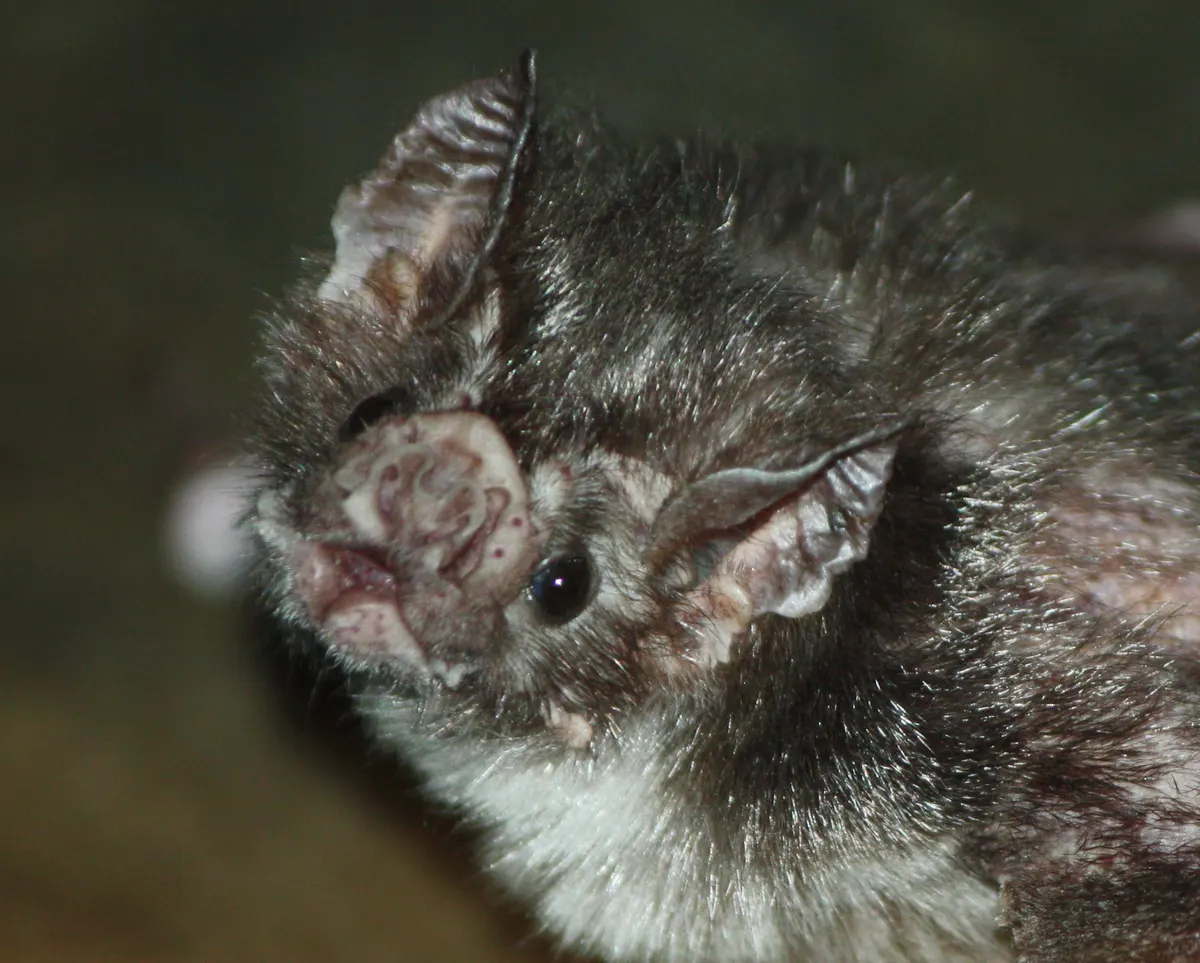
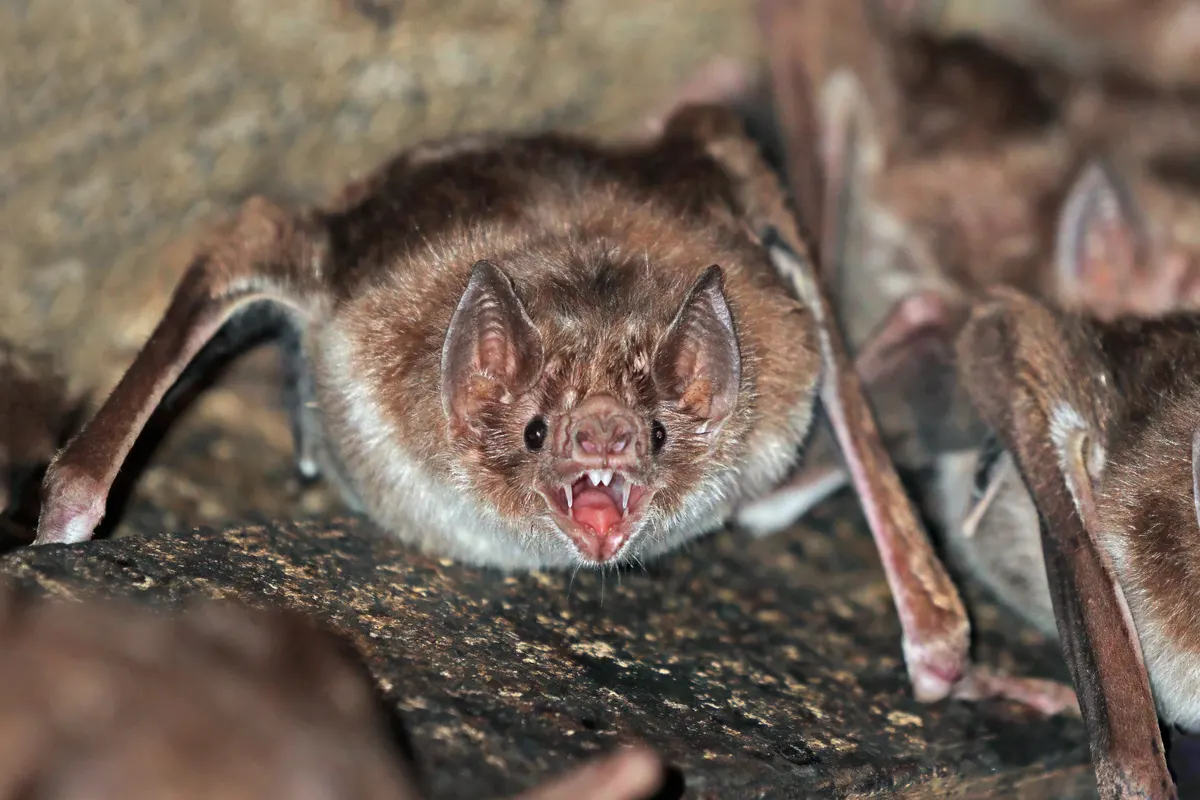
Common vampire bat portrait highlighting sensory face adaptations
Specialized saliva keeps a shallow wound from clotting while the bat feeds.

The common vampire bat is an obligate blood-feeder, recorded here under the carnivore diet type because it consumes animal tissue rather than plants. A successful night yields only a tablespoon or two of blood — enough calories without draining the host. Hunting is nocturnal: the bat lands near a sleeping mammal (often cattle, horses, goats, or pigs, sometimes wild mammals), approaches on foot, and uses heat-sensing to choose a thin-skinned spot like an ankle or ear, then laps blood for about 20 to 30 minutes after a tiny cut. If a bat fails to feed for roughly two nights, starvation risk climbs sharply — which helps explain the species' famous food-sharing.

Behavior: Social Bats That Share Blood Meals

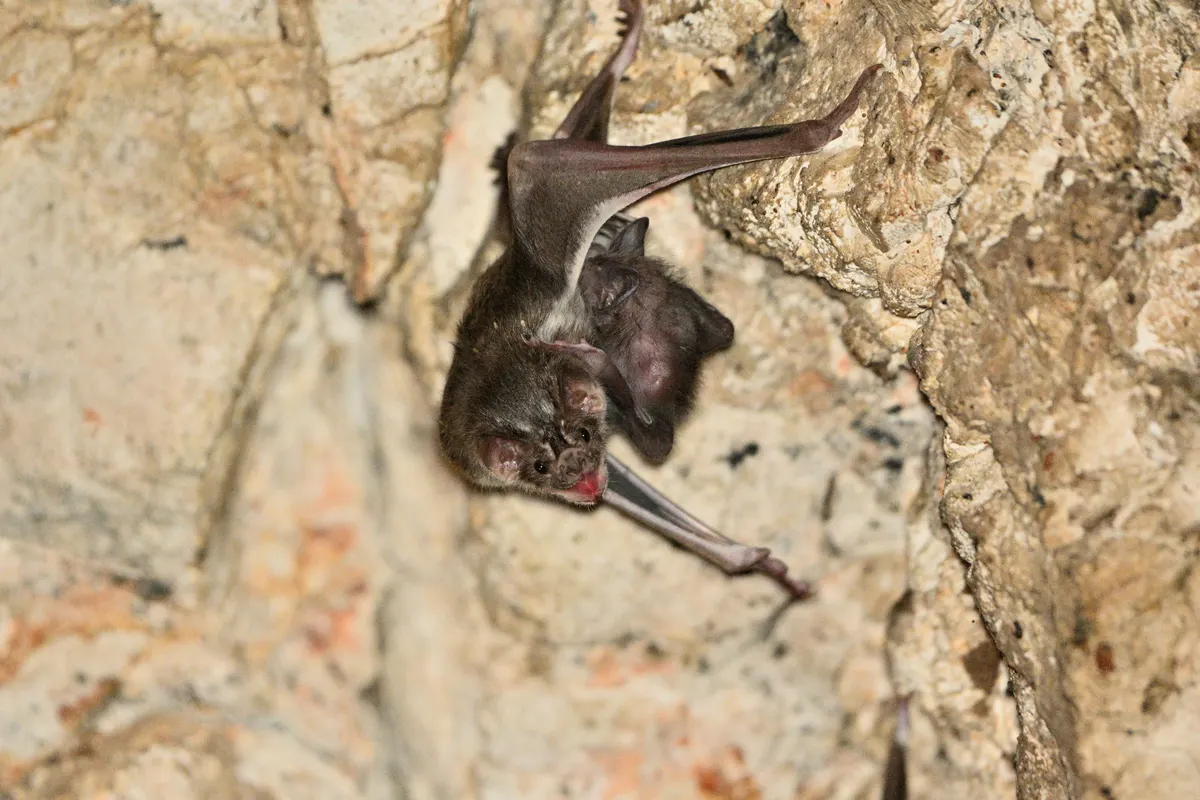
Common vampire bat hanging upside down in a zoo roost
Colonies can number dozens to hundreds, with females forming stable social groups.

Common vampire bats are highly social. Within a roost, females groom one another and will regurgitate a blood meal to help an unsuccessful colony mate, and studies show the sharing often follows social bonds — bats that have received help are more likely to give it. They navigate the dark by echolocation and stay alert to predators like owls and snakes, and their unique ground-walking gait allows quiet approaches to sleeping animals. Colony members return to familiar roosts and keep ties that can last years.

Life Cycle: A Single Well-Tended Pup

Common vampire bat representing a small juvenile-sized individual
A single pup is typical; mothers and roost mates help keep young fed.

Breeding can happen year-round across much of the tropical range. Gestation lasts about seven months, and most births are a single pup (twins are rare). Newborns nurse on milk, and as they grow they may receive shared regurgitated meals from the mother or close associates while learning to forage, clinging to the mother and staying dependent for weeks to months until night-flying and hunting skills mature. Wild lifespan is often around 9 to 12 years. Because a mother invests heavily in one pup at a time, colony cooperation improves offspring survival when feeding nights are uneven.

Conservation: Least Concern but in Conflict With Ranchers

Alternate range map for the common vampire bat in the Americas
The species is absent from Chile’s cold south and much of high Andean habitat.

The common vampire bat is Least Concern, broadly stable and widespread across the Americas. Its problems are mainly human conflict rather than rarity: in ranching regions it may be controlled because it reduces livestock productivity and can transmit rabies in some areas, and habitat change, roost disturbance, and persecution can shrink local colonies. Vaccinating livestock and carefully managing problem roosts are more effective long-term than indiscriminate bat killing, which also harms beneficial insect-eating species.

References and Authoritative Sources

Common Vampire Bat: classification and fun facts

Classification

Scientific Taxonomy
  1. Kingdom

    Animalia

  2. Phylum

    Chordata

  3. Class

    Mammalia

  4. Order

    Chiroptera

  5. Family

    Phyllostomidae

  6. Genus

    Desmodus

  7. Species

    D. rotundus

Did You Know?

Fun Facts

1

Common vampire bats can walk, hop, and even run on the ground using their wings and thumb claws.

2

They sense warmth with special pits on their nose to find good feeding spots on sleeping animals.

3

Roost mates share meals by regurgitation if a bat misses a night of feeding.

4

Their saliva contains anticoagulants that keep a tiny wound from clotting while they feed.

5

Only three living bat species drink blood; Desmodus rotundus is the most widespread.

6

A night’s meal is usually a tablespoon or two of blood — enough for the bat, not a full draining.

Common Questions

FAQ about Common Vampire Bat

Select a question to reveal the answer.

What is a common vampire bat?

The common vampire bat (*Desmodus rotundus*) is a small leaf-nosed bat native to the Americas. It is one of three living vampire bat species and the only one that mainly feeds on mammal blood.

Where do vampire bats live?

They live in tropical and subtropical forests, caves, hollow trees, and abandoned buildings from northern Mexico through Central America into northern Argentina and Chile’s border areas.

What do vampire bats eat?

They are carnivores that feed only on blood (a diet called sanguivory). At night they find sleeping livestock or wildlife, make a tiny shallow cut with sharp teeth, and lap a small amount of blood.

Do vampire bats suck blood?

No. They do not suck blood through hollow fangs like movie vampires. They make a small cut and lick or lap blood from the surface, helped by saliva that slows clotting.

Are vampire bats dangerous to people?

Feeding on people is uncommon. The bigger public-health concern is that vampire bats can carry rabies in some regions, so wildlife officials monitor colonies near farms and treat livestock when needed.

How do vampire bats find food?

They fly low at night, use smell and hearing, then use heat-sensing pits on the nose to find warm body spots such as ankles or ears of sleeping animals.

Show 4 more questionsExpand
Why do vampire bats share food?

A bat that fails to feed for two nights in a row can starve. Colony mates — especially females — regurgitate blood meals for hungry roost partners, which strengthens social bonds.

How big are vampire bats?

Adults are about 2.5 to 3.5 inches (6–9 cm) long, weigh roughly 1 to 2 ounces (25–40 g), and have a wingspan near 13 to 14 inches (33–35 cm).

Are vampire bats endangered?

The common vampire bat is listed as Least Concern. Local control campaigns exist where livestock losses or rabies are a problem, but the species remains widespread.

How are vampire bats related to other animals?

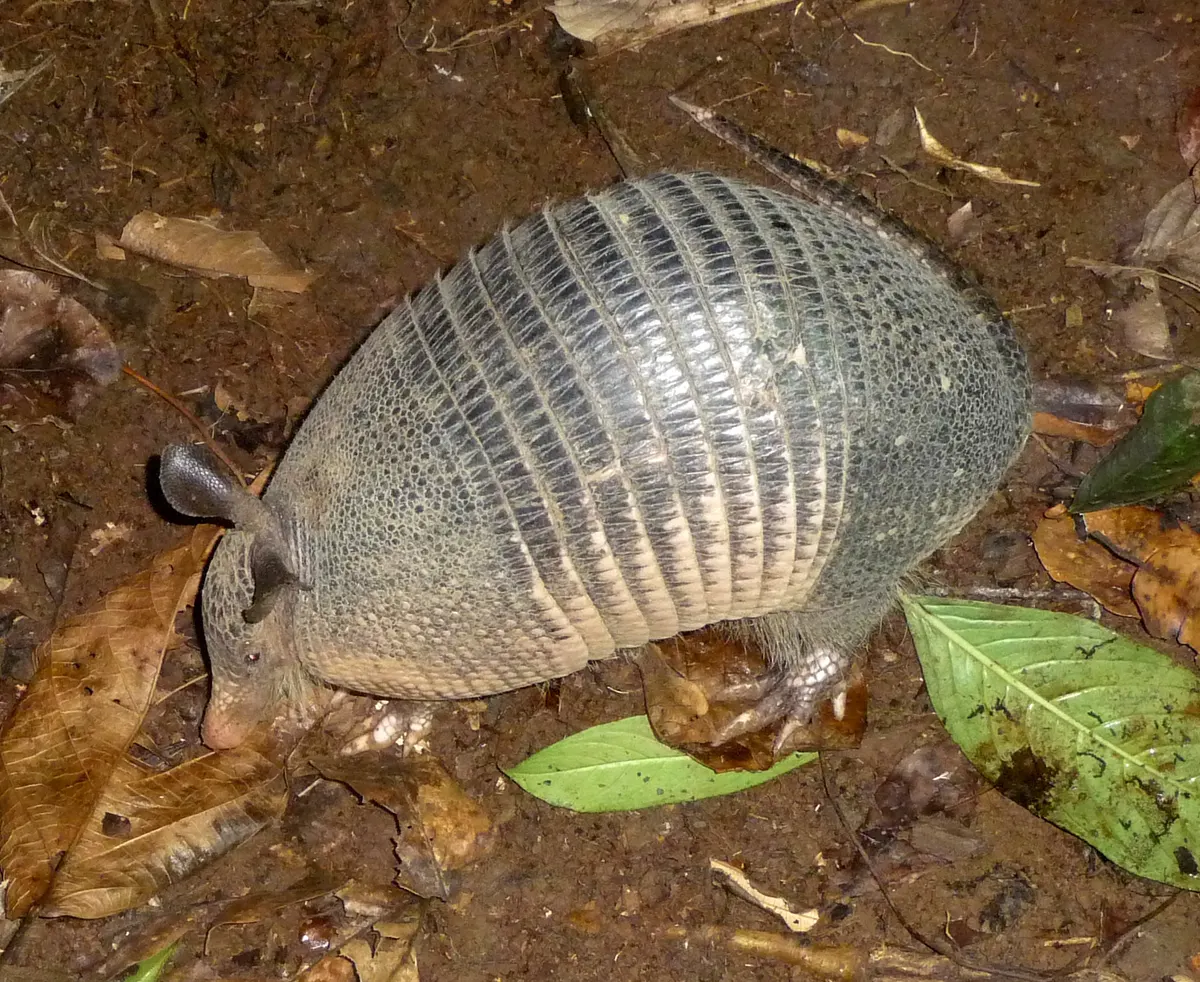
They are New World leaf-nosed bats (Phyllostomidae). On WildlifeDB they pair well with other American mammals such as the armadillo and forest neighbors like the sloth.