Moose Facts
"Moose are the largest deer in the world."
Moose are the largest members of the deer family, with long legs, a bulbous nose, and huge antlers on bulls. They live in northern forests and wetlands and...
Loading page content

"Moose are the largest deer in the world."
Moose are the largest members of the deer family, with long legs, a bulbous nose, and huge antlers on bulls. They live in northern forests and wetlands and...
Explore moose photos organized for learning and classroom observation.
Click any photo to view it larger. 8 images available.
Core article
Habitat, diet, behavior, and more — everything on one page.
The moose (Alces alces) is an imposing and iconic figure of the boreal landscapes. As the largest extant species in the deer family (Cervidae), the moose is immediately recognizable by its massive, palmate antlers, long spindly legs, and bulbous, pendulous muzzle. These ungulates are uniquely adapted to the harsh, freezing climates of the Northern Hemisphere, inhabiting the vast taiga and wetland ecosystems of North America, Europe, and Asia. Despite their somewhat ungainly appearance on land, moose are exceptionally powerful, displaying profound aquatic adaptations and a formidable physical presence that allows them to thrive in regions where winter temperatures plummet and snow accumulates deep on the forest floor.
Scientifically classified as Alces alces, the moose belongs to the kingdom Animalia, phylum Chordata, class Mammalia, and order Artiodactyla (even-toed ungulates). Within the family Cervidae, they are the sole members of the genus Alces. In Eurasia, the species is commonly referred to as the "Eurasian elk" or simply "elk," which can occasionally cause confusion with the North American elk (Cervus canadensis). Fossil records indicate that the genus Alces originated in Eurasia during the Pleistocene epoch and subsequently migrated into North America across the Bering land bridge. Evolutionary adaptations over millennia have resulted in significant sexual dimorphism, primarily observed in the massive antlers borne only by males (bulls), which serve a crucial role in reproductive success and intra-sexual competition.
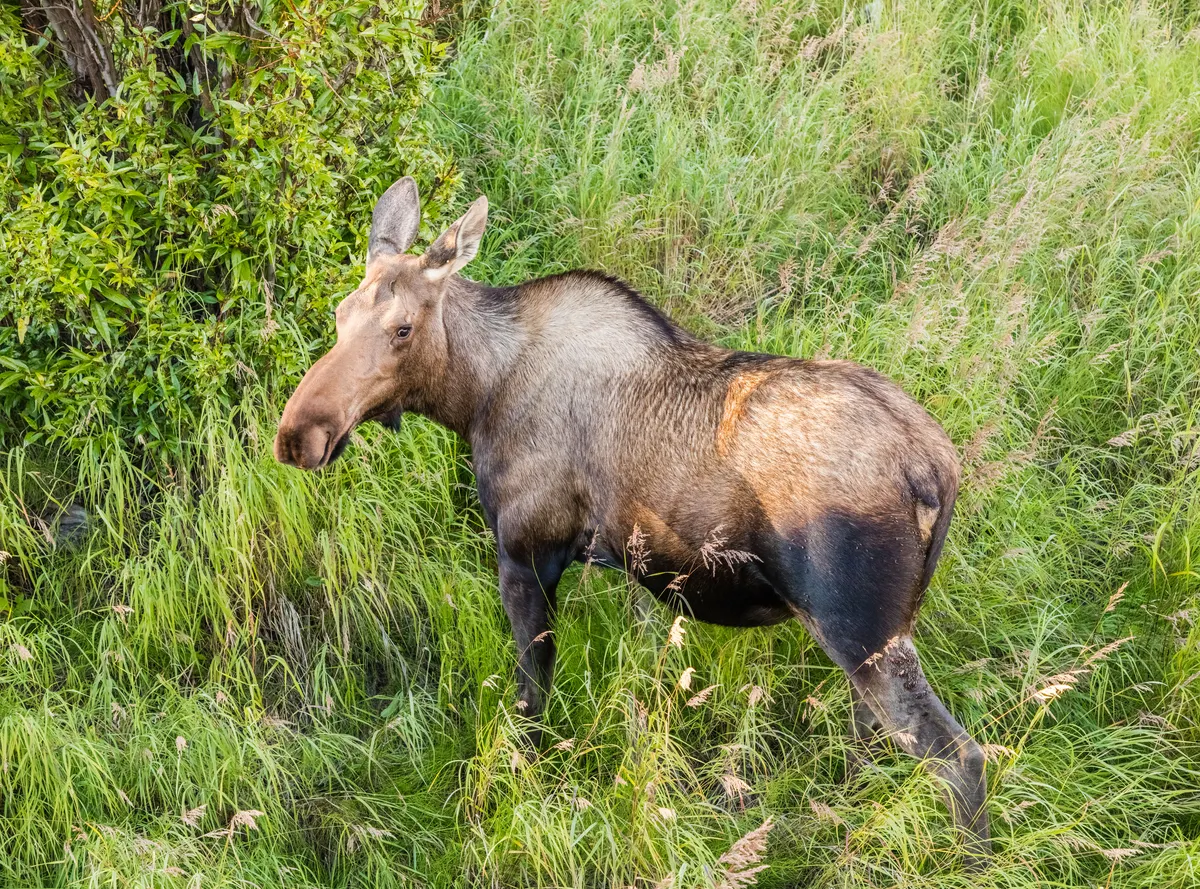
The sheer scale of a moose is staggering. Adult males can reach lengths of 7 to 10 feet and stand over 6 feet tall at the shoulder. Their body mass exhibits significant sexual dimorphism, with weights ranging from 800 to an astonishing 1,500 pounds for mature bulls. Their anatomy features several highly specialized adaptations for survival in cold, snowy environments.
Their legs are disproportionately long, functioning much like stilts to navigate through deep snowdrifts and murky wetland bogs. These long limbs are anchored by wide, cloven hooves that distribute their immense weight, acting as natural snowshoes and providing traction in slippery, muddy substrates. The moose's distinctive, bulbous nose is an evolutionary masterpiece of thermoregulation. The intricate cartilaginous structure and high concentration of blood vessels within the nasal cavity effectively warm frigid winter air before it reaches the lungs, preventing respiratory shock.
The most visually striking feature of the bull moose is the enormous palmate antlers. Composed of rapidly growing bone tissue, these antlers can span over six feet from tip to tip and weigh up to 40 pounds. The growth of antlers is driven by testosterone and heavily dependent on nutritional intake during the summer months. Covered in a highly vascularized layer of skin called "velvet" during the growing phase, the antlers mineralize and harden prior to the autumn mating season, after which they are shed and regrown annually in a remarkably energy-intensive process.

Moose are strictly holarctic in their distribution, meaning they are found throughout the northern regions of the globe. Their range encompasses the vast boreal forests (taiga) and temperate broadleaf and mixed forests of North America, Europe, and Asia. Major populations are distributed across Canada, the northern United States (especially Alaska, Maine, and the Rocky Mountain regions), Norway, Sweden, Finland, Poland, and Russia.
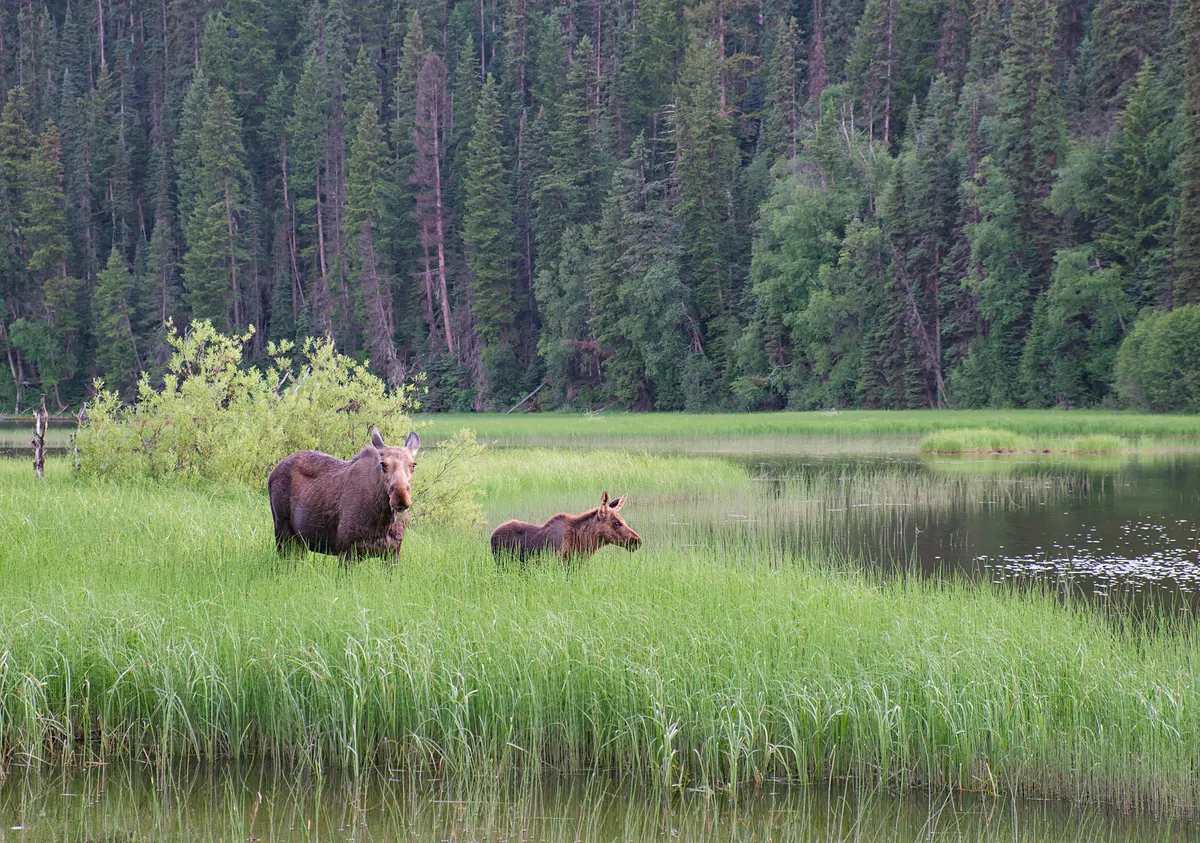
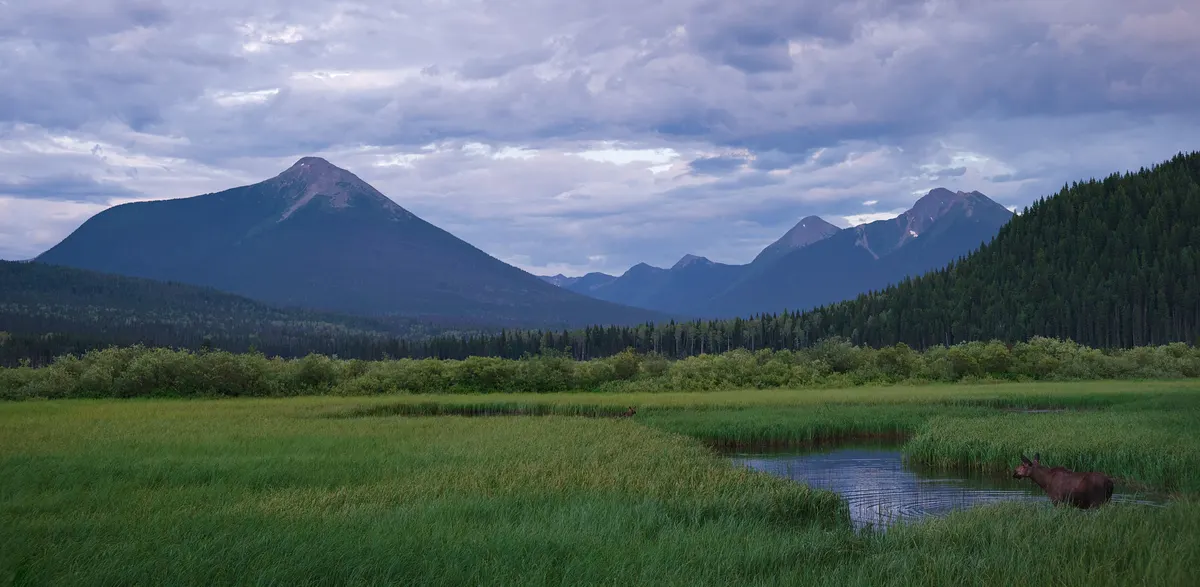
The ideal moose habitat is a mosaic of dense forest cover—which provides critical refuge from winter winds and deep snow—interspersed with open wetlands, swamps, lakes, and riparian zones. These aquatic environments are not merely peripheral; they are essential for thermoregulation during the summer, as moose are highly susceptible to heat stress due to their immense body size and thick, insulating pelage. Furthermore, wetlands provide access to nutrient-rich aquatic macrophytes, which are crucial components of their seasonal diet.

As obligate herbivores, moose possess a highly specialized diet categorized broadly as browsing rather than grazing. The very word "moose" is derived from the Algonquian term moosh, translating roughly to "twig eater." Their digestive anatomy features a multi-chambered ruminant stomach designed to ferment and break down complex cellulose via symbiotic microflora.
During the winter, when vegetation is scarce and heavily covered in snow, their diet shifts almost entirely to woody browse. They consume vast quantities of twigs, bark, and buds from deciduous and coniferous trees, including willow, birch, aspen, and balsam fir. A mature moose must consume up to 40 to 50 pounds of browse daily to maintain its caloric needs in sub-zero temperatures.
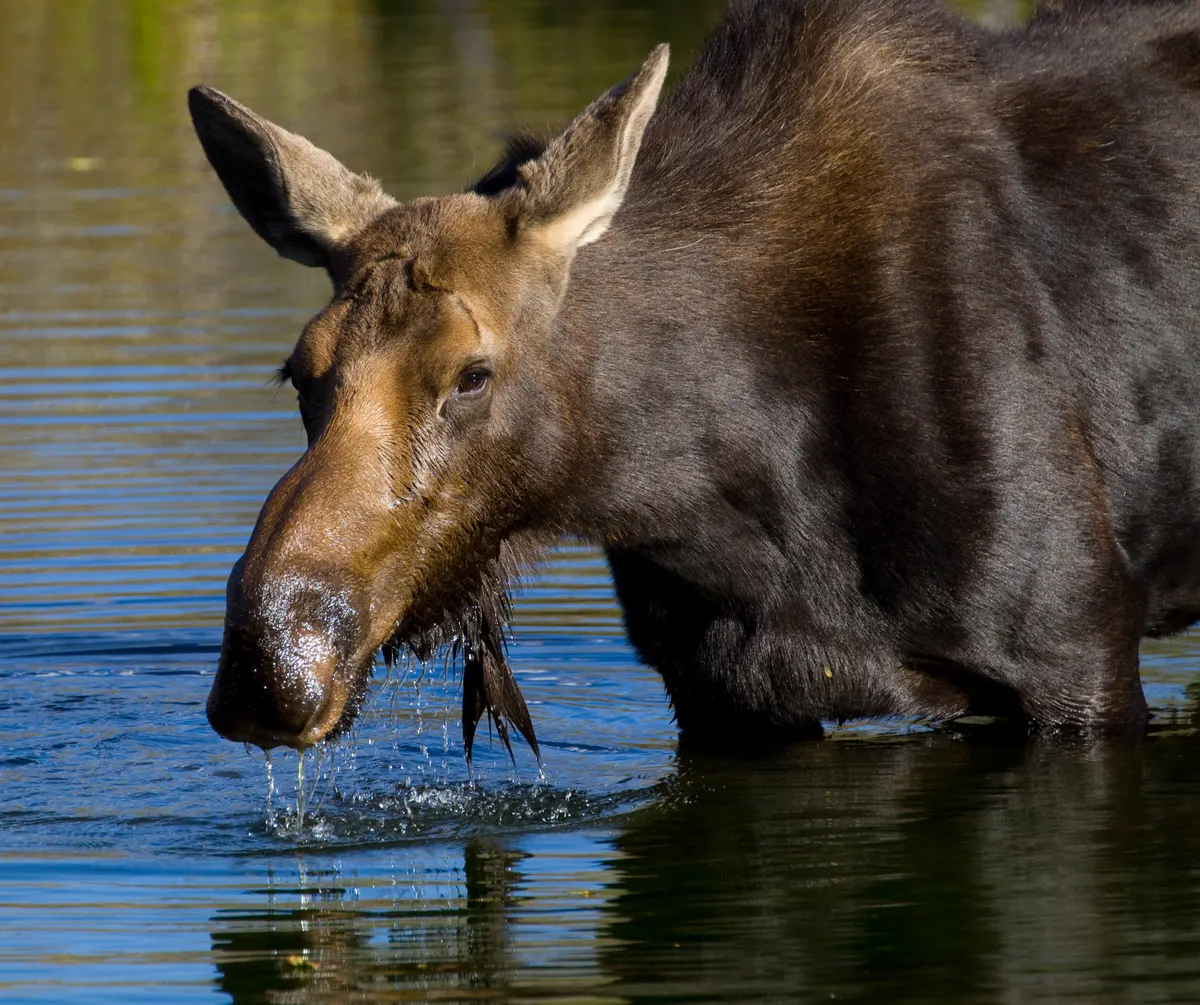
In the warmer months, their feeding strategy undergoes a dramatic shift towards aquatic environments. Moose are remarkably adept swimmers and will frequently wade into lakes and rivers, occasionally submerging entirely to a depth of up to 20 feet to forage on aquatic vegetation. Plants such as water lilies, pondweed, and horsetails are heavily targeted because they contain extremely high concentrations of sodium and other macrominerals that are typically deficient in terrestrial woody browse, making aquatic foraging an absolute physiological necessity for electrolyte balance and antler growth.

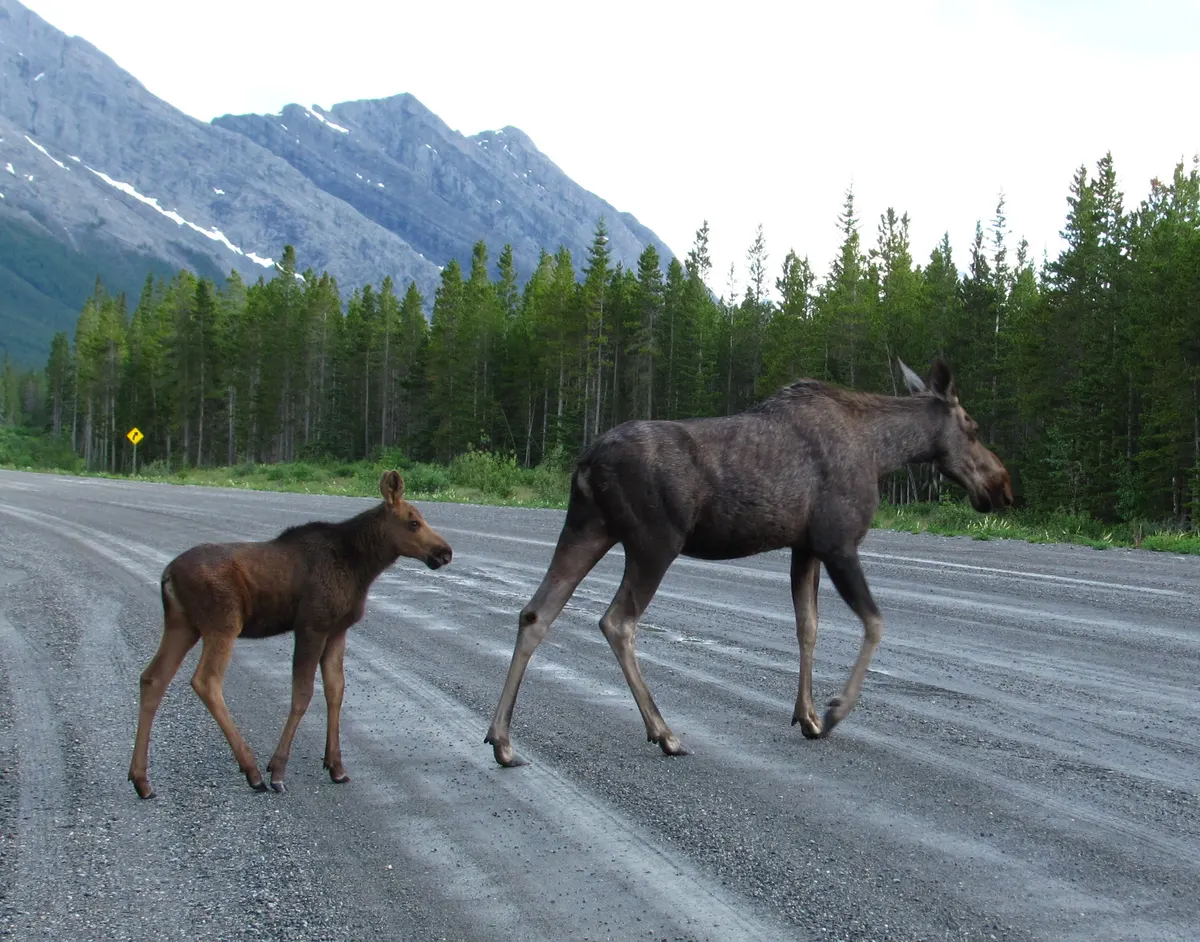
Contrary to many other cervids that form large, cohesive herds, moose exhibit a predominantly solitary social structure. This solitary behavior is an adaptation to the dispersed nature of their food resources in the boreal forest. The only persistent social bond is the maternal unit, consisting of a cow and her calves.
Despite their ungainly appearance, moose are incredibly agile and swift, capable of reaching speeds up to 35 miles per hour in short bursts to evade predators. They are primarily crepuscular, meaning their activity peaks at dawn and dusk.
The social dynamics drastically shift during the annual mating season, known as the rut, which occurs in September and October. Bulls enter a state of heightened aggression and hormonal surge, abandoning foraging to seek out receptive females. They create "wallows"—mud pits heavily saturated with their own urine—which they roll in to establish a potent olfactory profile to attract cows. Intense, violently physical intra-sexual combat frequently erupts between rival bulls. These contests involve locking antlers and engaging in fierce shoving matches that can occasionally result in severe injury or, rarely, death if antlers become permanently entangled.

The reproductive cycle of the moose is deeply synchronized with the seasonal availability of resources. Following successful mating during the autumn rut, cows undergo a gestation period of approximately eight months (roughly 230 to 240 days). Parturition typically occurs in late May or June, timing the arrival of offspring with the flush of highly nutritious spring vegetation.
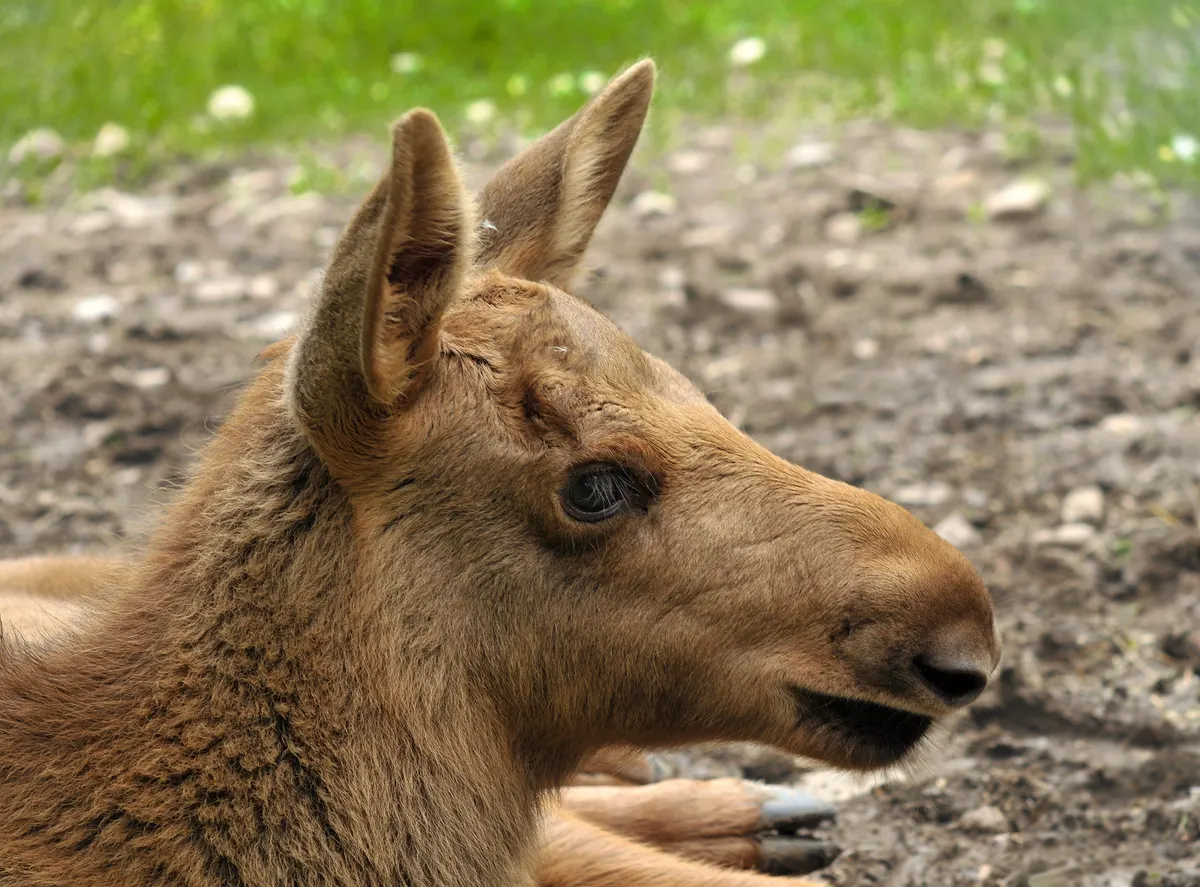
A cow typically gives birth to one or two calves, though twins are highly indicative of excellent maternal body condition and high habitat quality. Calves are exceptionally precocial; they are capable of standing and nursing within hours of birth and can closely follow their mother within a few days. The mother is fiercely protective, utilizing her powerful front hooves to deliver lethal blows to any approaching predators, including wolves and bears.
Calves undergo a rapid growth phase fueled by the rich, high-fat milk of the mother (allonursing is not observed; cows strictly nurse their own offspring). They are weaned after about five months but will remain with their mother throughout their first winter, learning crucial foraging techniques and survival skills. The maternal bond is abruptly severed just prior to the birth of the next year's calf, forcing the yearling into independence. In the wild, a moose has an average lifespan of 15 to 20 years, though environmental stressors, predation, and disease heavily influence mortality rates.
(Population and conservation trend data sourced from the IUCN Red List of Threatened Species)
Currently, the IUCN Red List assesses the moose (Alces alces) as a species of "Least Concern," reflecting their massive geographic range and generally stable global population, which numbers in the millions. However, this broad classification obscures significant localized threats and regional population declines.
Apex predators, including gray wolves, brown bears, and occasionally cougars, exact a heavy toll on calf populations. Yet, the most insidious contemporary threat is anthropogenic climate change. Because moose are physiologically adapted to deep cold, warming temperatures cause severe heat stress, forcing them to expend crucial energy seeking thermal refugia rather than foraging. Furthermore, milder winters have facilitated the explosive northern expansion of winter ticks (Dermacentor albipictus). A single moose can be parasitized by tens of thousands of ticks, leading to severe blood loss, emaciation, and hypothermia as the moose rubs off its insulating hair in a desperate attempt to dislodge the parasites.
Habitat fragmentation due to logging, infrastructure development, and vehicular collisions also pose substantial risks in populated areas. Consequently, wildlife management agencies heavily monitor moose populations through aerial surveys and carefully regulated hunting quotas to ensure the long-term viability of this keystone boreal species.
Moose are the largest deer in the world.
Only bull moose grow the huge wide antlers.
Moose are excellent swimmers and can dive for plants.
A moose's nose helps cool warm air in summer.
Calves can stand within hours of being born.
Moose are most active at dawn and dusk.
Select a question to reveal the answer.
A moose is a very large deer with long legs, a long face, and big antlers on males. It is the largest member of the deer family.
Moose live in northern forests and wetlands across Canada, Alaska, Scandinavia, Russia, and parts of Europe and Asia.
Moose eat leaves, twigs, bark, and water plants. They browse on land and wade into lakes to feed.
Adult moose can stand over 6 feet tall at the shoulder and weigh more than 1,000 pounds.
A baby moose is called a calf. Calves are born in spring and stay with their mother for about a year.
Bull moose grow antlers to compete for mates. They shed and regrow them each year.
Moose usually avoid people, but cows with calves and bulls in rut can be aggressive and should be given space.