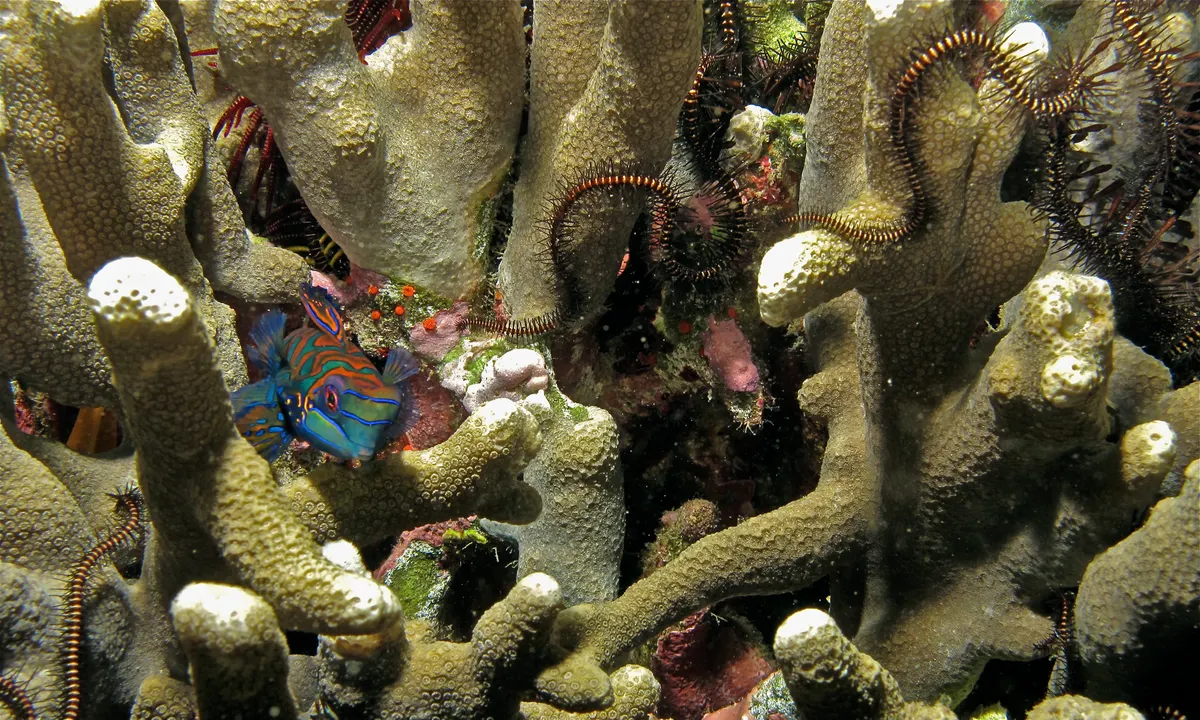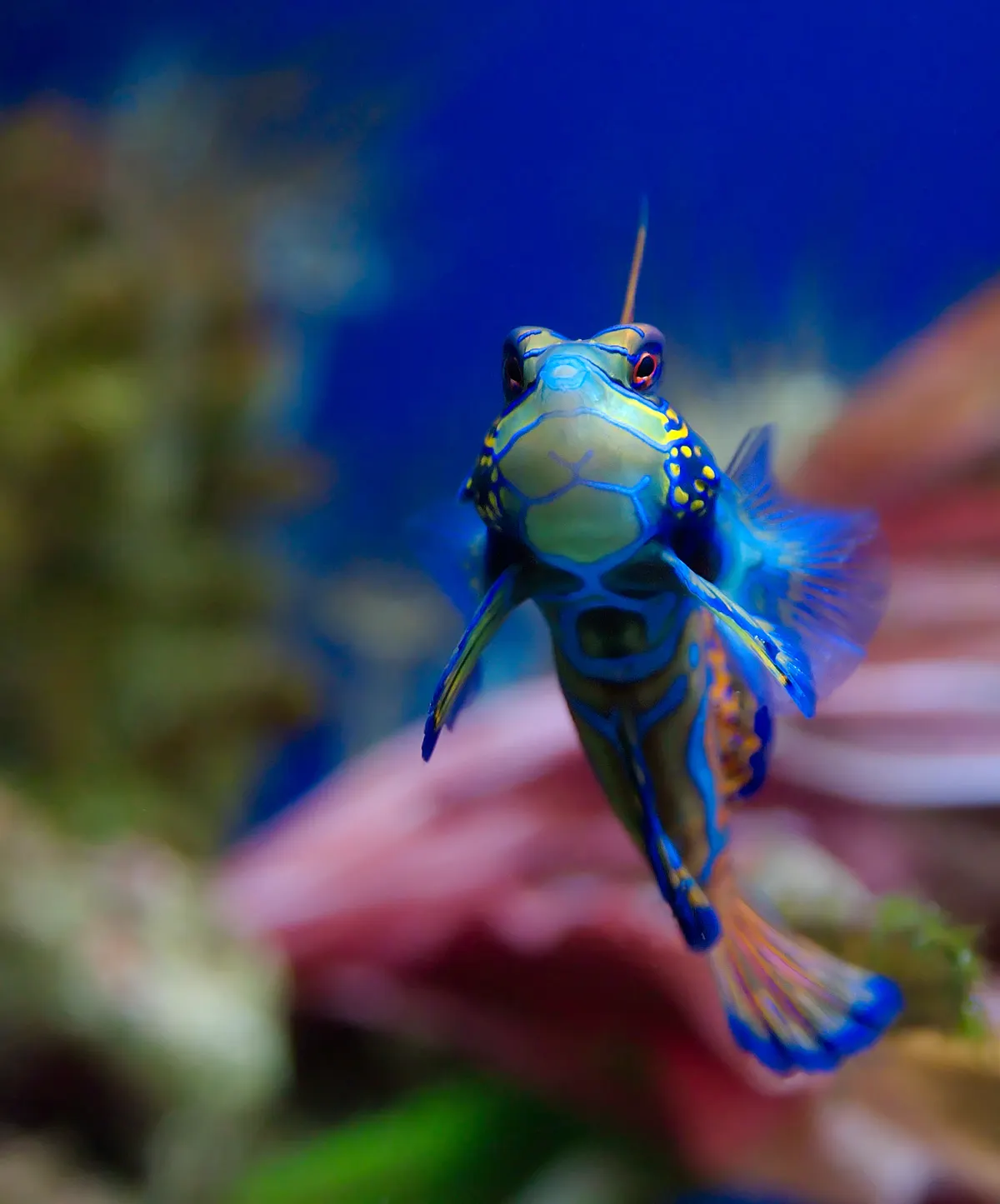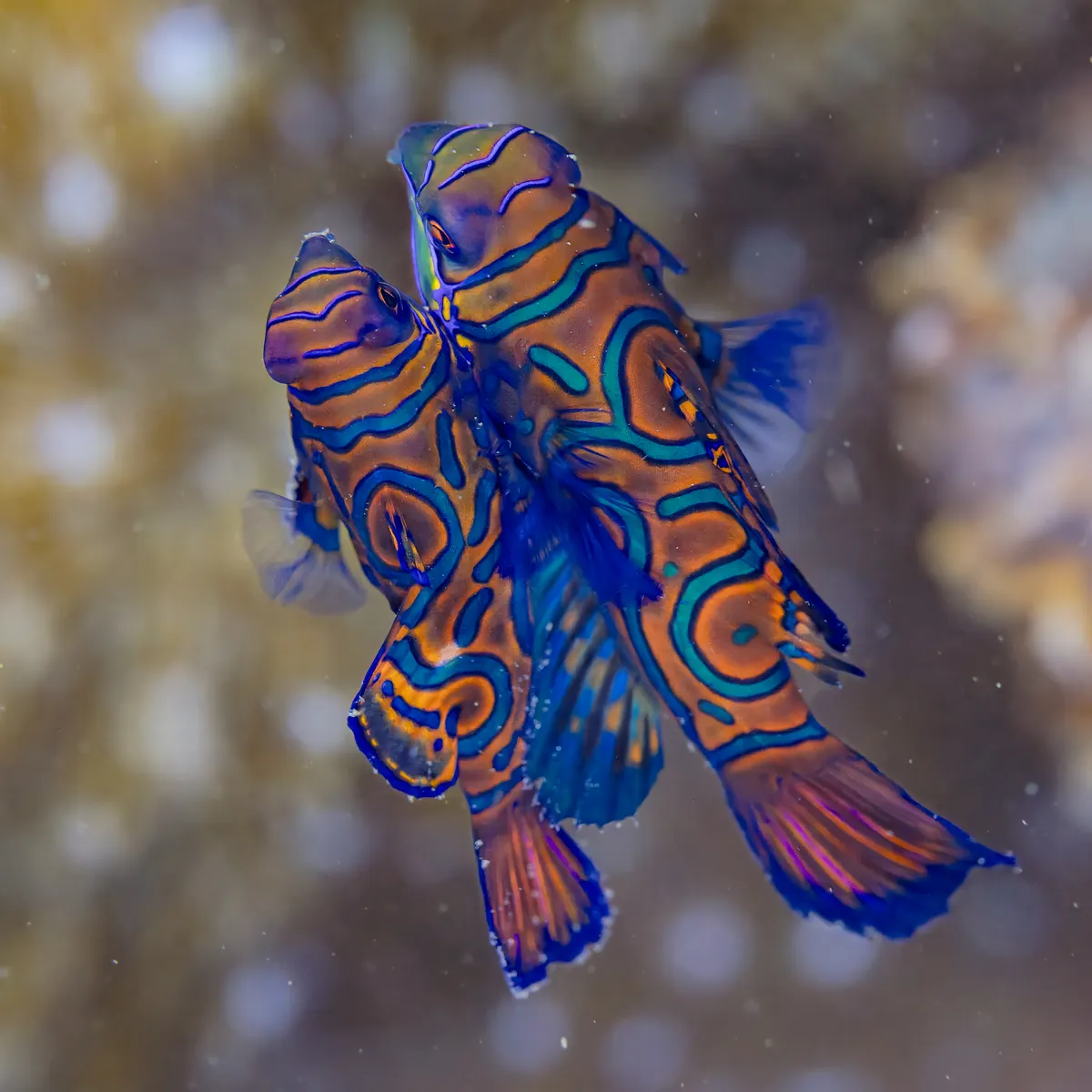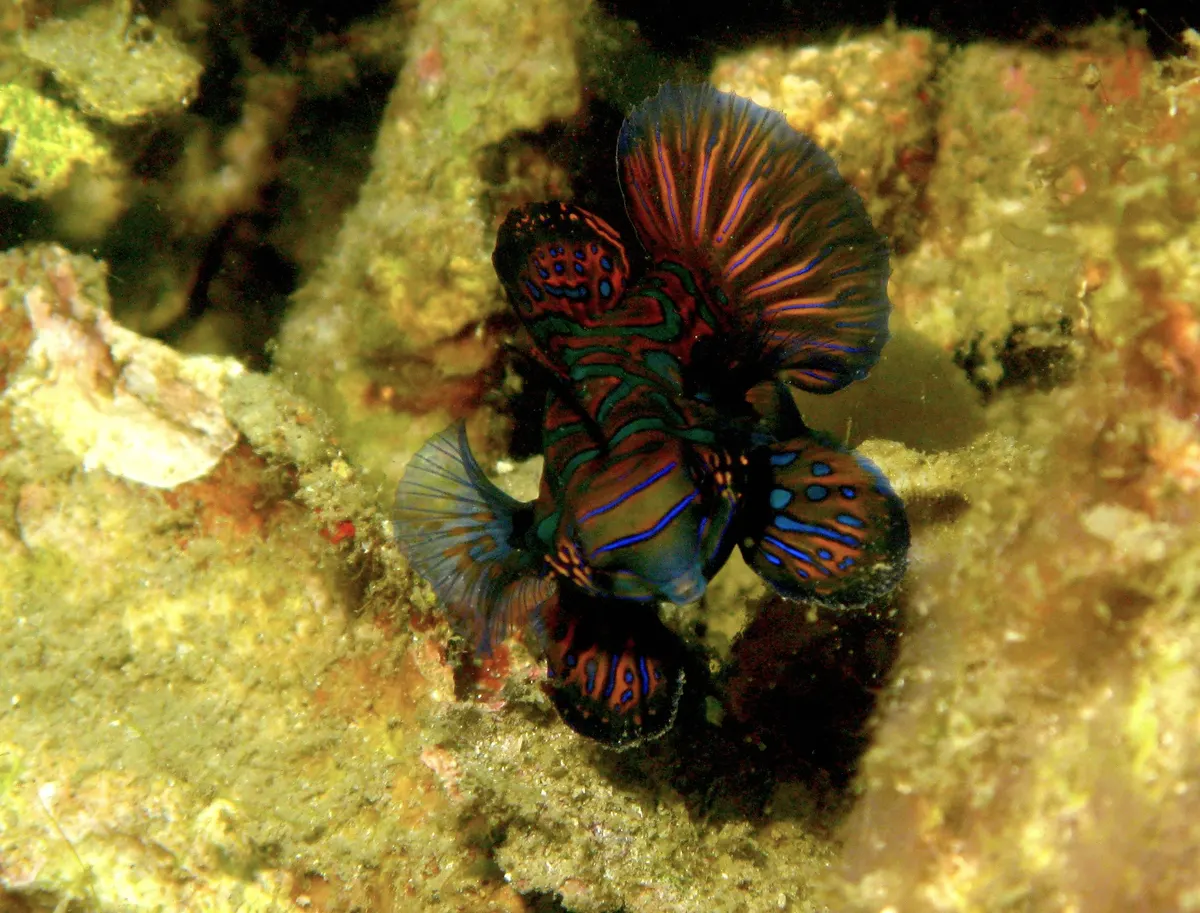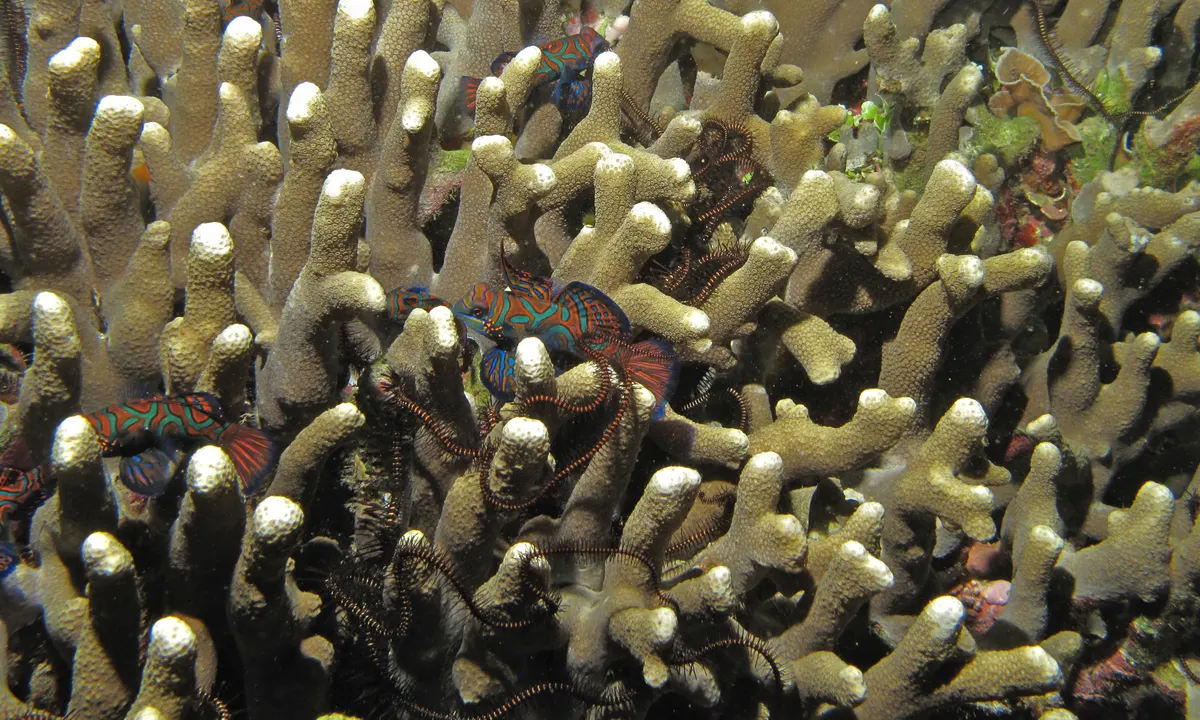
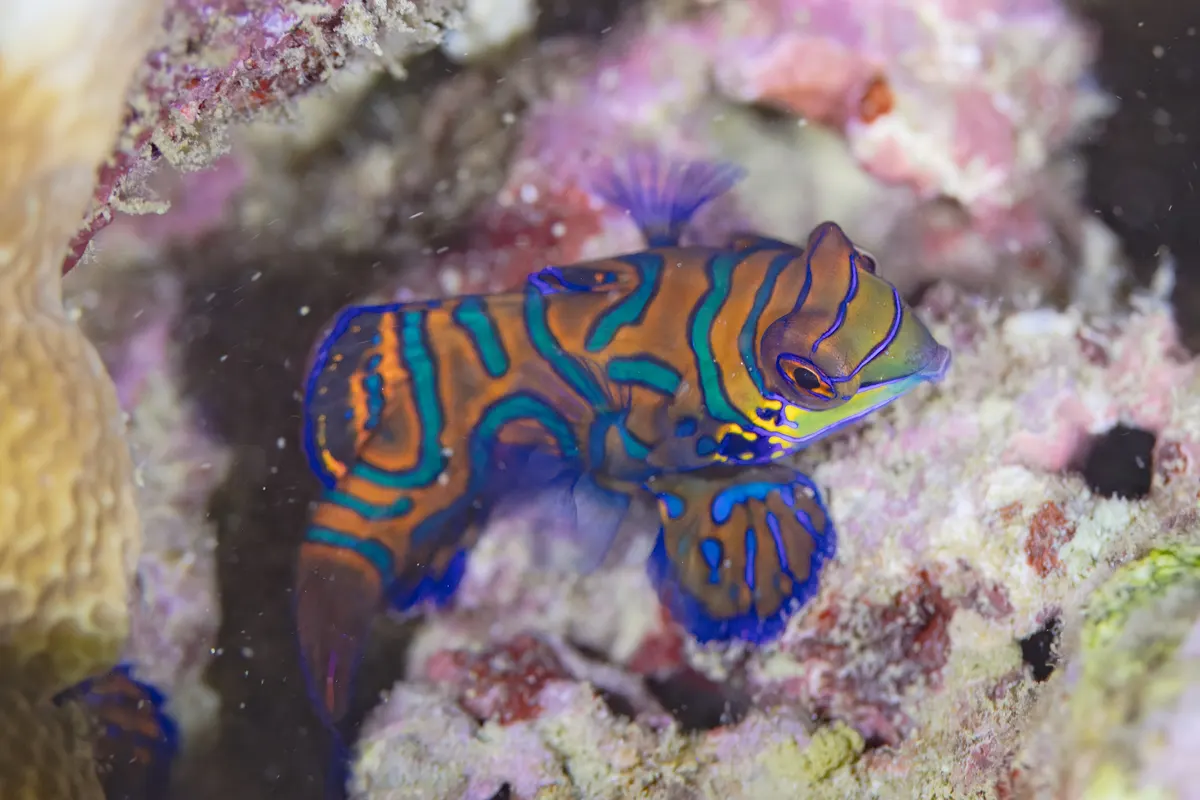
A mature mandarinfish is exceptionally small, rarely exceeding 3 to 4 inches (0.2 to 0.3 feet) in length and weighing a mere 0.02 to 0.05 pounds. Its body morphology is adapted for a highly specialized benthic lifestyle. It possesses an elongated, slightly flattened body terminating in a broad, rounded caudal fin. The mouth is highly protrusible and tubular, functioning like a precision vacuum to suck microscopic invertebrates out of porous coral rock.
The biological fascinating example of the mandarinfish lies in its integumentary system. The vast majority of blue-colored animals in nature—from Morpho butterflies to blue jays—achieve their color through structural physics, utilizing microscopic light-scattering crystals to reflect blue wavelengths. The mandarinfish, however, possesses specialized pigment cells known as cyanophores. These cells synthesize and store a true blue pigment, a trait unique among known vertebrates. Because it is scaleless, the mandarinfish protects its delicate skin by secreting a thick, viscous mucus. This heavy slime coat not only encapsulates the fish in a foul-tasting toxin to deter predators like scorpionfish and moray eels but also acts as an impenetrable barrier against highly pervasive parasitic skin infections common in the reef environment.
To navigate the tight confines of its habitat, the mandarinfish uses highly modified, large pectoral fins. These fins are heavily vascularized and possess strong, independent musculature, allowing the fish to flutter them rapidly—much like the wings of a hummingbird—enabling the mandarinfish to hover perfectly stationary in the water column while inspecting a crevice.