
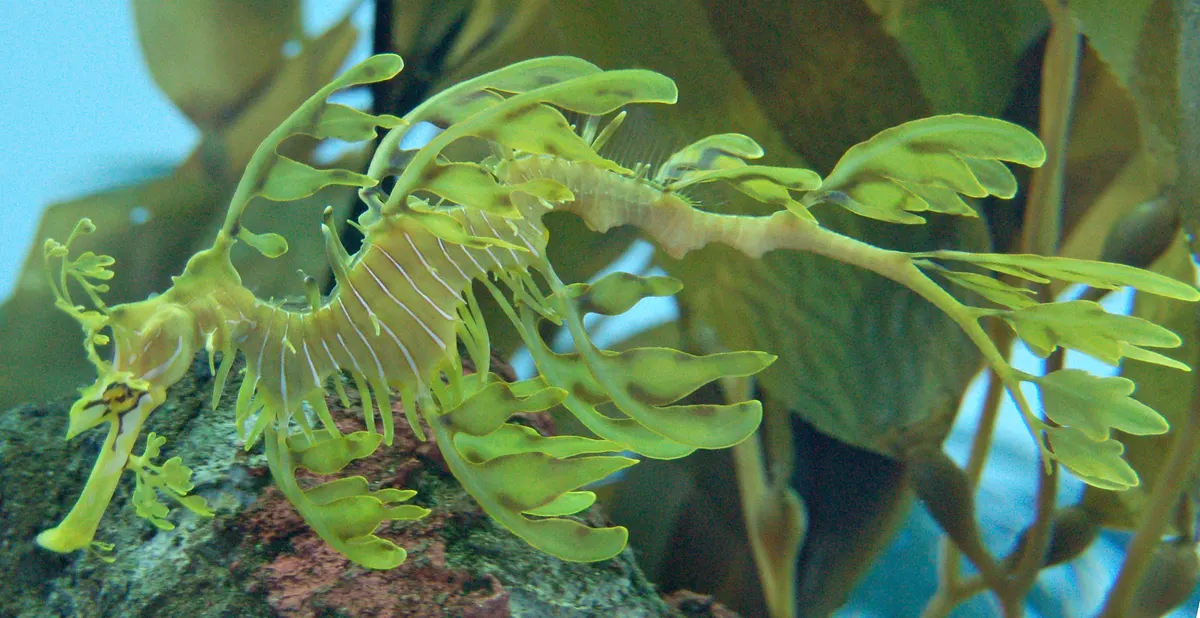
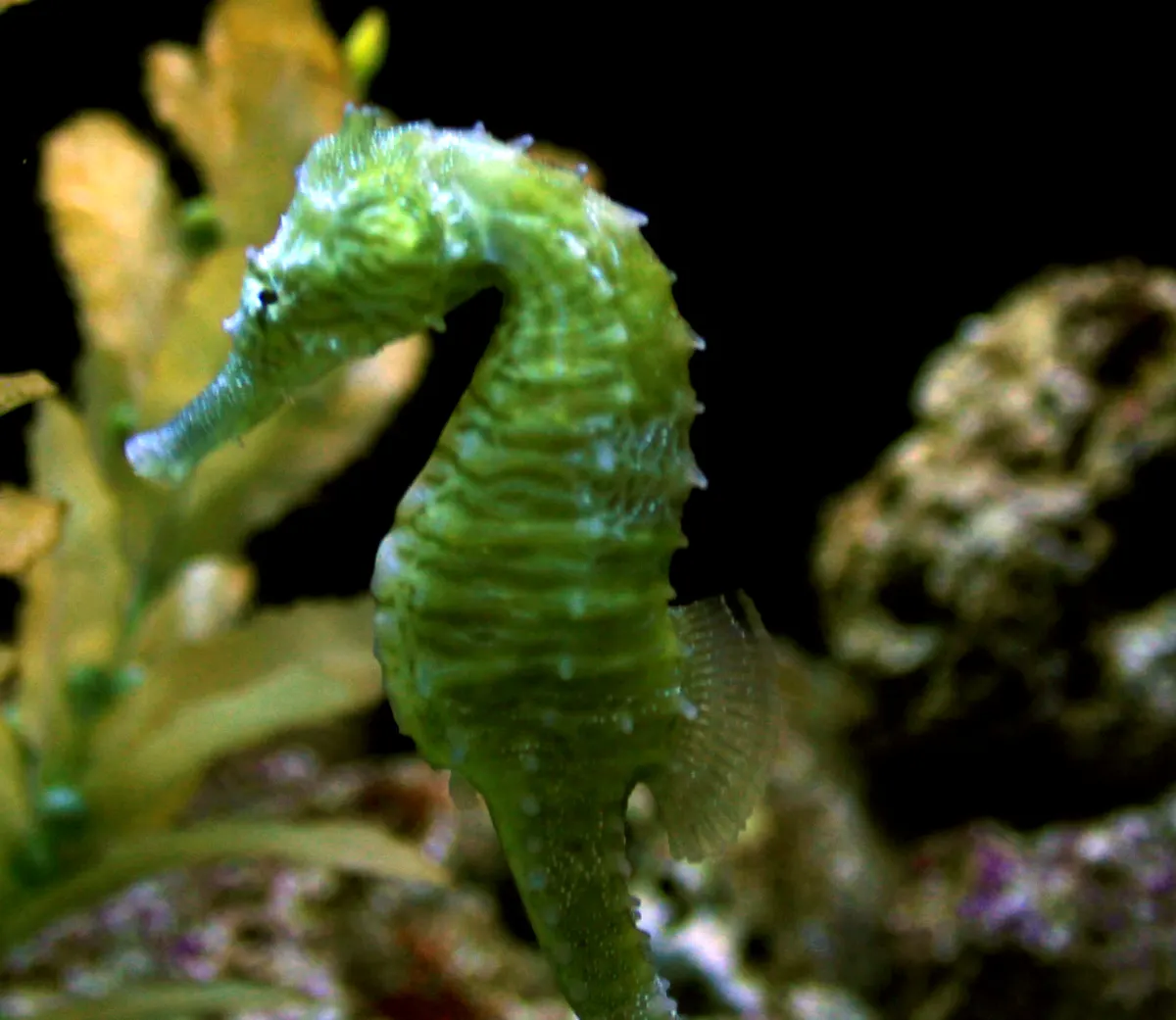
Females deposit eggs into a pouch on the male's body; he fertilizes and carries them until they hatch. Both species rely on camouflage rather than speed in ocean shallows. They are carnivores feeding on small invertebrates — see each profile for range, aquarium trade pressure, and habitat protection.
Families hub
Syngnathidae Animals
Explore animals in the Syngnathidae family with wildlife photos, taxonomy context, and related species pages.
- Species listed
- 2
- Diet mix
- 2 carnivore
- Updated
- September 2026
2 related species in this hub
Measured spread
How much this family varies
Computed from the 2 species listed here, using the published figure on each profile.
| Measure | Smallest listed | Largest listed |
|---|---|---|
| Body mass (adult max) | Seahorse14.17 g | Leafy Seadragon226.8 g |
| Body length (max) | Seahorse15.2 cm | Leafy Seadragon35.6 cm |
| Lifespan in the wild (max) | Seahorse5 yr | Leafy Seadragon10 yr |
Overview
Seahorses and seadragons
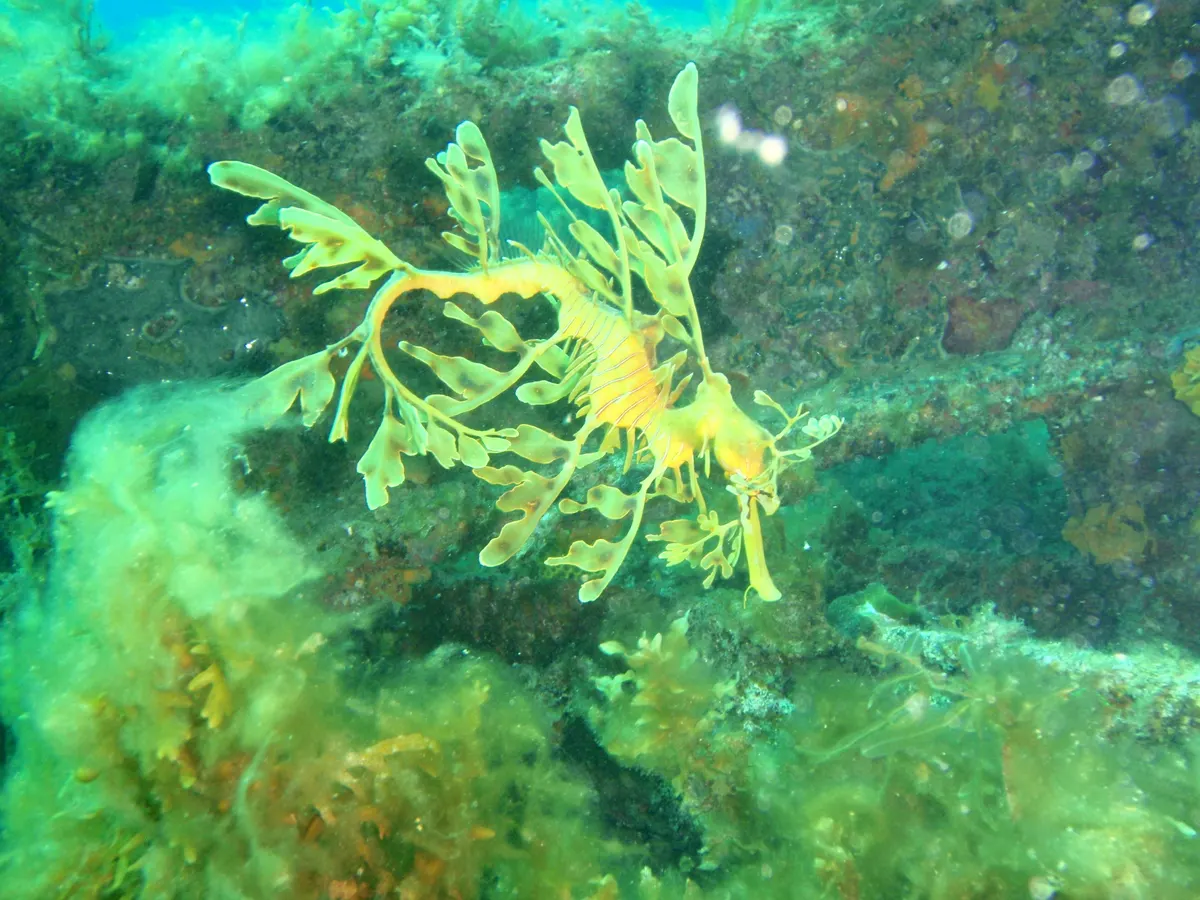
Syngnathidae are pipefish relatives with elongated bodies, fused jaws, and armored plates. Seahorse anchors by its prehensile tail and sucks in tiny crustaceans. Leafy Seadragon drifts through Australian kelp looking like floating seaweed.
Start here
Featured species
2 entry points into this cluster — each profile has range, diet, behavior, and conservation detail.
Species directory
All 2 animals in this hub
Flagship species appear first. Open any card for range maps, diet, behavior, and conservation status.
Field guide
Ecology & context
Adaptations, threats, and comparisons — background for readers who want more than the species directory.
Slow swimmers, heavy armor
Bony plates and cryptic shapes replace speed. Seahorse anchors to seagrass. Leafy Seadragon drifts with kelp fronds in southern Australian waters.
Aquarium trade
Wild collection and habitat damage threaten some populations. Captive breeding programs exist for Seahorse but do not remove pressure on wild reefs and seagrass beds.
Pipefish relatives worldwide
Syngnathidae also includes pipefish and weedy seadragons not yet profiled on WildlifeDB. All share elongated snouts for sucking prey and reduced pelvic fins. They thrive where structure — seagrass, kelp, or coral — breaks currents so slow swimmers can hover.
Climate and coastal development
Warming water and coastal construction remove seagrass beds that Seahorse needs. Storm runoff adds sediment that smothers holdfast plants. Marine protected areas help when they include shallow nursery habitat, not only deep reef.
Common Questions
FAQ about Syngnathidae Animals
Select a question to reveal the answer.
Why do male seahorses carry young?
Females deposit eggs in the male pouch; he fertilizes and broods them until they hatch — rare among vertebrates.
Are seadragons related to seahorses?
Yes — same family, Syngnathidae, with even more extreme camouflage.
Where should I start?
Compare Seahorse for upright posture and Leafy Seadragon for open-water camouflage.
Keep exploring
Related hubs
Same cluster, different angle — open a diet or habitat hub to compare species side by side.