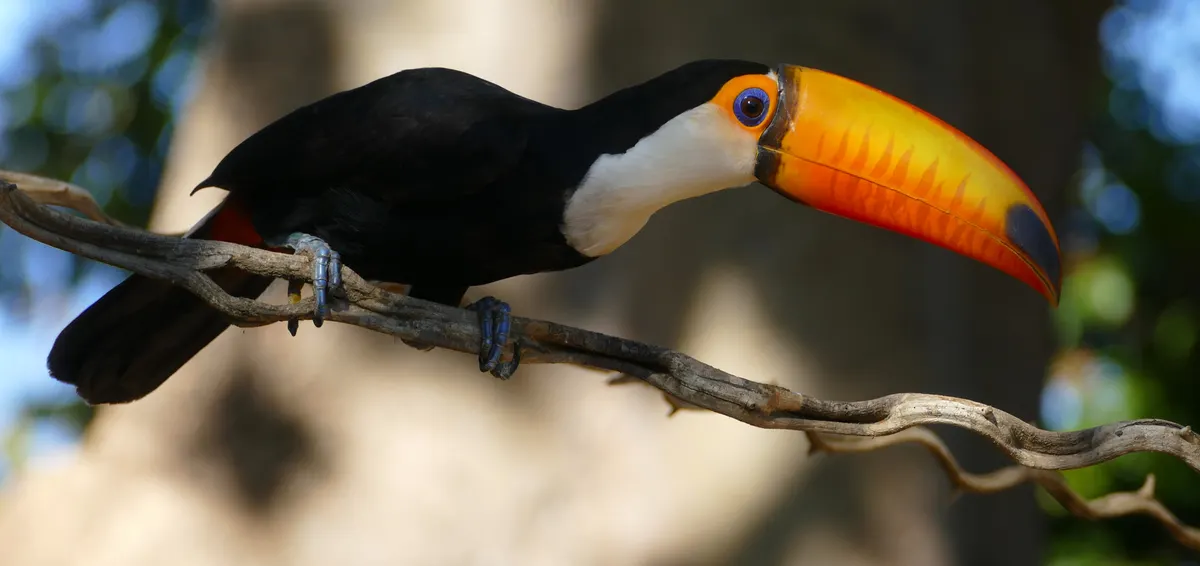

The toco toucan is a medium-sized bird, measuring between 55 and 63 centimeters (21 to 25 inches) in length, and weighing between 500 and 850 grams (1.1 to 1.8 pounds). Their plumage is predominantly stark black, contrasting sharply with a bright white throat and chest, and a vibrant ring of bare, orange skin surrounding their blue eyes.
The defining feature of the toucan is, undeniably, its bill. Measuring up to 8 inches (20 cm) in length, the bill accounts for roughly one-third of the bird's entire total length. While it appears heavy and cumbersome, it is an engineering fascinating example. The bill is composed of keratin—the same lightweight protein found in human fingernails and hair—supported internally by a rigid matrix of spongy bone tissue filled with air pockets. This structure provides immense strength without adding significant weight.
Beyond foraging, the bill serves a vital physiological function: thermoregulation. The toucan's bill is laced with an extensive network of blood vessels. When the tropical heat becomes oppressive, the bird pumps warm blood into the bill, where the heat rapidly dissipates into the air, acting much like a radiator. Conversely, they can restrict blood flow to conserve heat when temperatures drop.
Their feet are also highly specialized. Toucans possess zygodactyl feet, meaning two toes point forward and two point backward. This arrangement provides an exceptionally strong grip, allowing them to balance securely and hop with agility among the branches, which is essential given that they are relatively poor, awkward fliers that prefer short, heavy-flapping glides.